Espresso powder isn’t the same as instant coffee. You’ll find espresso powder is a finely ground, concentrated product made from high-pressure brewed Arabica beans. This gives it a stronger, richer flavor that’s ideal for baking and cooking.
Instant coffee, by contrast, comes from brewed blends often including Robusta. It has a coarser texture and a milder taste, which makes it better suited for quick coffee fixes.
If you want to understand how these differences affect your recipes and substitutions, there’s more to explore. It’s pretty interesting once you dive into it!
What’s Espresso Powder And How Is It Made?
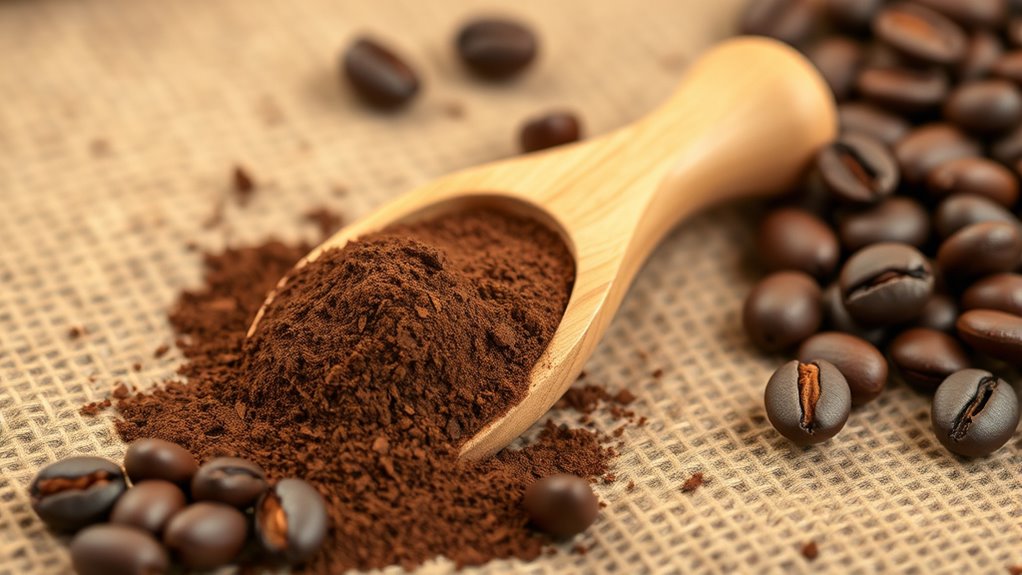
Although espresso powder shares its coffee origins with instant coffee, it undergoes a distinct production process that sets it apart. You start with finely ground dark-roasted Arabica beans, brewed under high pressure to extract a concentrated, intense espresso.
Espresso powder begins with finely ground dark-roasted Arabica beans brewed under high pressure for intense flavor.
This brewed espresso then goes through a dehydration method, either freeze-drying or spray-drying, to convert it into a fine, dark powder.
This process preserves the rich, roasted flavors while making the powder water-soluble, allowing it to dissolve easily in recipes or liquids. Unlike regular ground coffee, espresso powder is crafted specifically for culinary use, especially in baking and cooking.
You’ll find it enhances chocolate and dessert recipes by adding a robust coffee flavor without bitterness or graininess. Proper storage, including keeping the powder in a cool, dry place, helps maintain its optimal flavor quality over time.
How Does Instant Coffee Differ From Espresso Powder?
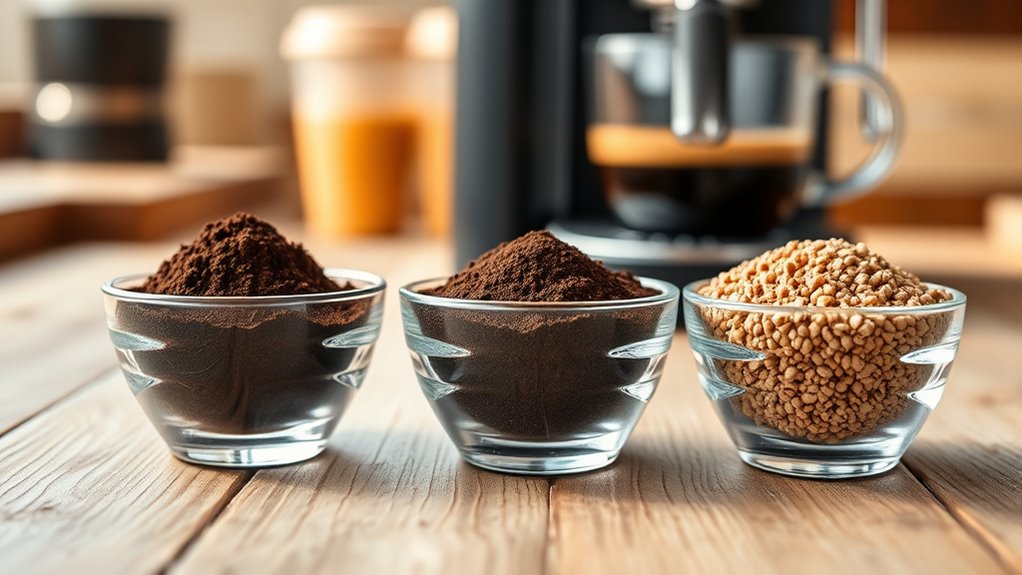
How exactly does instant coffee differ from espresso powder? The differences lie in production, texture, caffeine content, and usage.
Instant coffee is made by freeze-drying or spray-drying brewed coffee, creating larger crystals with a milder flavor.
Espresso powder comes from dehydrated espresso, resulting in a fine, concentrated dark powder.
Instant coffee has lower caffeine per serving (30-90 mg per 8 oz), while espresso powder is more concentrated, with caffeine close to a shot of espresso (about 63 mg).
Instant coffee dissolves quickly in hot or cold water and is mainly used for drinking.
Espresso powder enhances flavor in baking and cooking and isn’t typically used for beverages.
The brewing process for espresso powder uses high pressure, producing a distinctly different texture and culinary application than instant coffee.
Adjusting the espresso dose is crucial for achieving consistent flavor profiles, which highlights how finely controlled espresso production differs fundamentally from instant coffee preparation.
Flavor And Texture Differences: Espresso Powder Vs. Instant Coffee
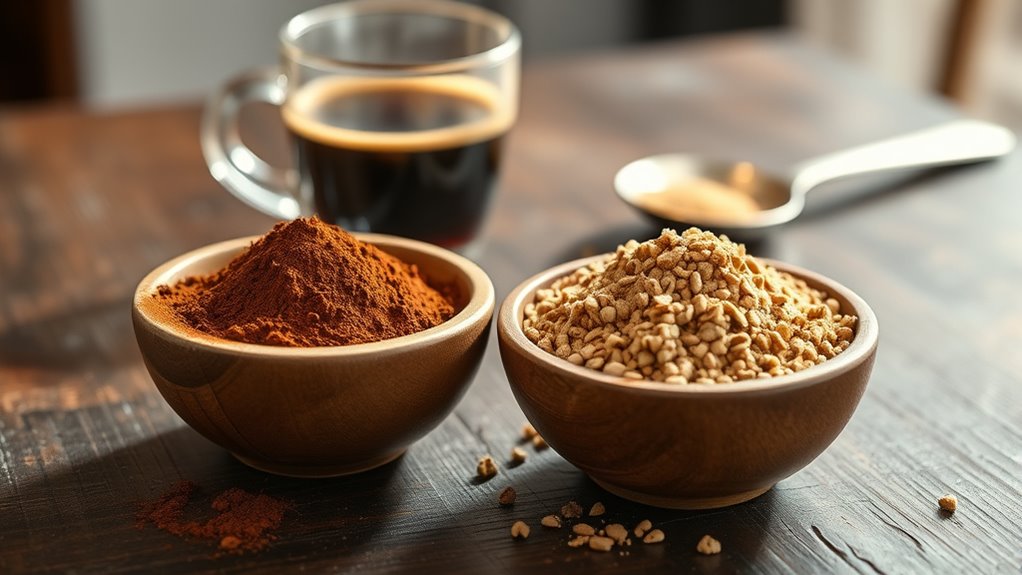
When you compare espresso powder to instant coffee, you’ll notice a stark contrast in both flavor and texture. Espresso powder is finer, darker, and more concentrated. It delivers a robust, intensely roasted, and bitter profile.
In contrast, instant coffee is coarser with a milder, slightly sweeter taste. This often comes from its Robusta bean blend. Espresso powder’s Arabica base deepens its flavor, making it more suitable when you want a rich coffee essence without adding excess bulk.
The roast level and extraction process play a crucial role in developing espresso powder’s intense flavor and finer texture compared to instant coffee.
| Attribute | Espresso Powder | Instant Coffee |
|---|---|---|
| Texture | Fine, dark, concentrated | Coarser granules |
| Flavor | Intense, roasted, bitter | Milder, slightly sweet |
| Bean Type | Arabica | Often Robusta blend |
This difference shapes how each impacts flavor intensity and texture in your recipes. So depending on what you’re making, choosing the right one can make all the difference.
When To Use Espresso Powder Or Instant Coffee In Recipes
You’ll want to use espresso powder when you need a strong, concentrated coffee flavor that really boosts the chocolate without adding any extra liquid.
On the other hand, instant coffee is better for when you want a milder coffee taste or are making something quick, like frosting, where you don’t need that intense coffee punch.
Knowing these little flavor differences makes it easier to pick the right ingredient for brownies, tiramisu, or any coffee-flavored dessert you’re whipping up.
For the best results in recipes, understanding the extraction time of espresso can help you appreciate why espresso powder delivers a richer and more concentrated flavor.
Flavor Intensity Differences
Although both espresso powder and instant coffee add coffee flavor to recipes, their intensity and impact differ markedly. Espresso powder delivers a deeper, more concentrated flavor, perfect when you want bold coffee notes. Instant coffee, by contrast, provides a milder, sweeter taste, better for subtle coffee hints.
Consider these key differences:
- Espresso powder requires less quantity due to its potency.
- Instant coffee needs 1.5 to 2 times more to match espresso’s strength.
- Espresso powder enhances chocolate richness without overt coffee taste.
- Instant coffee imparts a gentler aroma, blending softly with other flavors.
Understanding these distinctions helps you adjust quantities and flavor expectations in your cooking or baking. So, knowing which one to pick can really make a difference in your final dish. Espresso powder’s potency is due in part to its concentrated extraction process, similar to how espresso shots are made under high pressure to maximize flavor.
Best Recipe Applications
Since espresso powder offers a more concentrated and intense coffee flavor, you’ll want to use it in recipes like brownies, tiramisu, and chocolate cakes to amplify the cocoa notes without adding bitterness.
It’s also ideal for savory dishes such as chili or meat rubs, where it deepens flavor with a bold coffee richness.
When substituting instant coffee, increase the quantity by 1.5 to 2 times to compensate for its milder profile.
Instant coffee works best in frostings or mousses, providing a subtle coffee aroma that won’t overpower other ingredients.
Reserve espresso powder for recipes demanding strong coffee intensity, and rely on instant coffee when you need a quick, gentle coffee enhancement without altering the dish’s balance.
It’s all about matching the coffee strength to what the recipe really needs.
For best results, always store espresso powder in an airtight container in a cool, dark place to preserve its rich flavor and aroma.
Can You Substitute Instant Coffee For Espresso Powder?
You can definitely substitute instant coffee for espresso powder. Just keep in mind, you’ll need about 1.5 to 2 times more to get a similar strength.
Instant coffee tends to have a milder flavor, so it might slightly change the overall depth and texture of your dish.
Picking a high-quality, 100% Arabica instant coffee can help keep the taste closer to what you’d get with espresso powder.
However, because espresso is brewed under high pressure, it typically has a richer and more complex flavor profile than instant coffee.
Flavor Differences Impact
When considering whether to substitute instant coffee for espresso powder, you’ll notice a significant difference in flavor intensity. Espresso powder delivers a concentrated, robust, and deeply roasted profile that instant coffee can’t fully replicate. Using instant coffee results in a milder, less pronounced coffee flavor, which may affect your recipe’s expected richness and depth.
Here’s what to keep in mind:
- Espresso powder has a darker, more intense taste than instant coffee.
- Instant coffee’s milder flavor leads to less impactful coffee notes.
- Matching espresso powder’s strength with instant coffee often alters the flavor balance.
- Substituting may work temporarily but compromises the boldness critical in desserts like brownies or tiramisu.
Understanding these differences helps you decide when substitution is appropriate without disappointing flavor results. So, if you want your dessert to really shine, it’s good to stick with espresso powder whenever you can. Additionally, the extraction time and method used to create espresso powder contribute significantly to its concentrated flavor profile.
Quantity Adjustment Tips
Recognizing the flavor differences between espresso powder and instant coffee naturally leads to thinking about how to adjust quantities when substituting. Since instant coffee is milder, you’ll need about 1.5 to 2 times the amount to match the strength espresso powder provides.
To keep the flavor balanced, dissolve the instant coffee in a small amount of hot water before mixing it in. This helps with even distribution and stops clumping.
Just be mindful that adding more instant coffee might add a bit of extra liquid, which could subtly change your recipe’s outcome. Start with the recommended ratio, then tweak based on your taste if you want a stronger coffee flavor.
This way, you can replicate espresso powder’s intensity without overpowering your dish. It’s all about finding that perfect balance that works for you! Keep in mind that caffeine content varies with roast level and extraction, which can impact the strength of your coffee flavor in recipes.
Effect On Texture
Although instant coffee can serve as a substitute for espresso powder, its coarser texture and lower concentration often affect the final product’s consistency. When you swap instant coffee in recipes, consider these texture-related impacts:
Instant coffee’s coarser granules may cause a slightly gritty texture, unlike the smoothness espresso powder provides. It dissolves less readily, so you’ll want to mix thoroughly to avoid clumps in your batter.
Also, using more instant coffee to match flavor strength can add unintended moisture, which might change the texture a bit.
The milder coffee flavor from instant coffee often means less richness and depth in the dessert’s mouthfeel. So, keep that in mind if you’re aiming for a bold coffee taste.
It’s a handy substitute, but it does come with some trade-offs.
Keep in mind that espresso powder typically contains a higher caffeine concentration than instant coffee, which can subtly influence the flavor intensity in your recipes.
Choosing Between Espresso Powder And Instant Coffee For Baking And Drinks
How do you decide between espresso powder and instant coffee for your baking or beverages? If you want a bold, intense coffee flavor in your baked goods, espresso powder is your best bet. It’s made from dehydrated brewed espresso, offering a deep, roasted taste that instant coffee can’t match.
When substituting instant coffee for espresso powder in recipes, use 1.5 to 2 times more to make up for its milder flavor.
For drinks, instant coffee dissolves quickly, which makes it super convenient. It also provides a gentler coffee note, perfect if you want a mild flavor boost.
Frequently Asked Questions
Is Espresso Powder Gluten-Free?
Espresso powder is usually gluten-free since it’s made from pure coffee beans. However, you should check labels or contact manufacturers to confirm. Cross-contamination or additives could introduce gluten, especially if certification is absent.
How Should Espresso Powder Be Stored?
Think of espresso powder as a secret treasure. Keep it sealed tight in an airtight container and store it in a cool, dark place.
Don’t refrigerate it because humidity is the enemy. Always use a dry spoon to maintain its bold flavor and potency. That way, your espresso powder stays fresh and flavorful for longer.
Can Espresso Powder Be Used in Savory Dishes?
Yes, you can use espresso powder in savory dishes. It intensifies umami, adds smoky depth, and complements spices like cumin and paprika.
Just be sure to use it sparingly. This way, it enhances stews, chili, or meat rubs without overpowering the other flavors. Give it a try next time you want to add something extra to your savory dishes!
Does Espresso Powder Contain Caffeine?
Espresso powder holds caffeine like a hidden river beneath the earth’s surface. It’s powerful and concentrated.
You’ll find about 63 mg per teaspoon, giving your recipes and drinks a potent, precise caffeine boost you can count on.
It’s a great way to add a little extra kick without changing the flavor too much. Just a small amount goes a long way!
Where Can I Buy High-Quality Espresso Powder?
You can buy high-quality espresso powder from specialty food stores, gourmet supermarkets, and online retailers like Amazon. Look for reputable brands such as King Arthur or DeLallo, and check customer reviews to guarantee product quality.
It’s pretty easy to find good options once you know where to look. Just keep an eye out for fresh products and trusted sellers. That way, you’ll get the best flavor for your coffee or baking needs.
Conclusion
Now that you know espresso powder and instant coffee aren’t twins but distant cousins, you can pick the right one for your recipe with confidence. Espresso powder delivers a richer, more intense flavor, while instant coffee offers convenience and milder notes.
Substituting is possible but not always perfect. Choosing wisely can transform your baking or drinks from ordinary to spectacular. It’s like turning a simple cup into a volcanic eruption of bold taste.