You’ll find espresso offers a bold bitterness balanced by bright acidity and subtle sweetness. The flavors range from rich chocolate and caramel to nutty, spicy, and fruity hints like lemon zest or green apple.
Roast level and bean origin shape this profile. Lighter roasts highlight floral and fruity notes, while darker roasts bring smoky, chocolatey depth.
As you explore its aroma, body, and finish, you’ll uncover layers that deepen your appreciation and tasting skills. It’s a journey worth taking!
Key Flavor Notes Commonly Found in Espresso
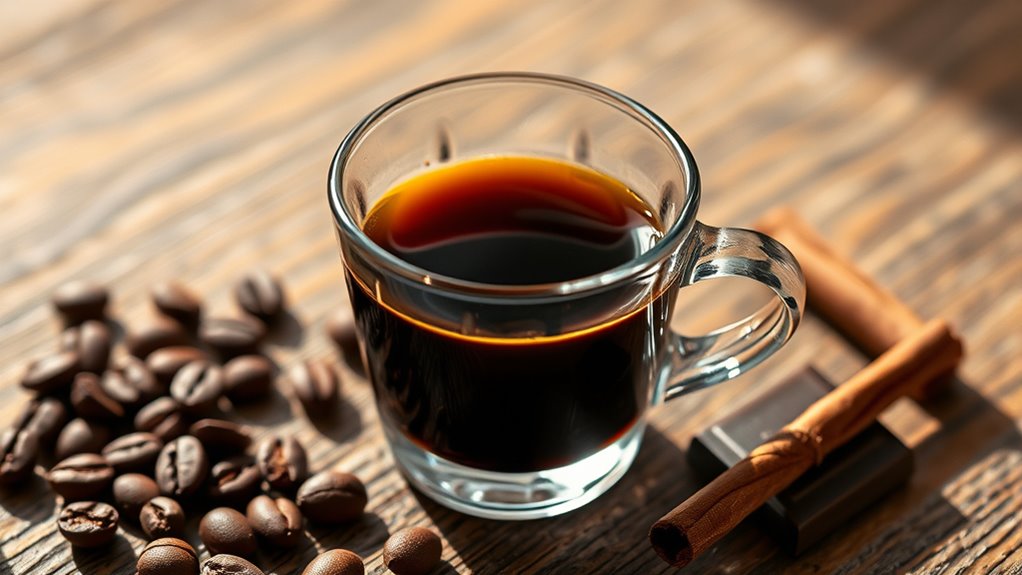
Although espresso is known for its intense bitterness, you’ll find that a well-crafted shot reveals a complex interplay of flavors, including bright acidity and subtle sweetness. When you taste espresso, expect notes that range from rich chocolate and smooth caramel to nutty and spicy undertones.
Depending on the coffee’s origin and roast, fruity hints like green apple or lemon zest add a lively brightness. Darker roasts emphasize deep, roasted flavors, while lighter roasts highlight distinct floral or fruity characteristics unique to their region.
The balance between bitterness, acidity, and sweetness creates that rich, layered taste you associate with quality espresso. Understanding these flavor notes helps you appreciate the craftsmanship behind every shot you enjoy. Extraction under high pressure enhances the aroma and richness that define espresso’s distinctive flavor.
How Espresso Aroma Shapes Your Experience
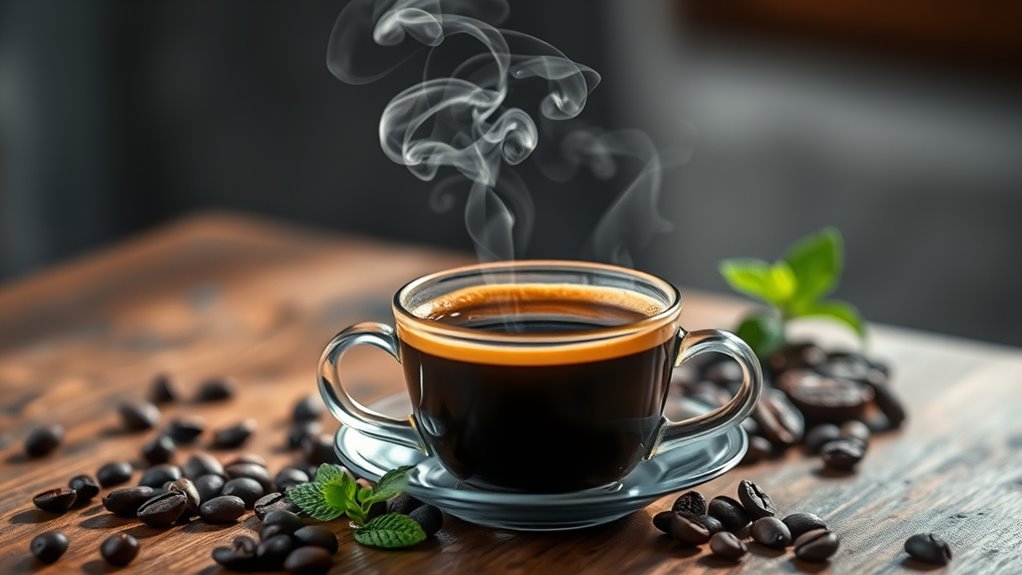
When you breathe in espresso’s aroma, you’re getting the first hint of its complex flavor profile. Take your time to savor those fragrances—they reveal subtle notes that really shape your overall experience.
And as you sip, pay attention to how the aroma changes, uncovering new layers with every taste. The intensity of espresso’s flavor is influenced by factors such as bean type and roast level, which also affect its caffeine content.
Aroma’s Role In Flavor
Because aroma is the first sensory cue you encounter when lifting your espresso cup, it plays a crucial role in shaping your entire flavor experience. The complex scents you detect through smell prepare your palate for the tastes to come, enhancing your perception of the espresso’s flavor profile. If you rush past this moment, you miss essential nuances that deepen your appreciation.
Specific aromas can reveal details about the coffee’s origin, roast level, and processing method, offering insights beyond taste alone.
As you sip, revisiting the aroma helps you notice evolving scents and subtle flavor shifts, enriching your overall experience. By fully engaging your sense of smell, you reveal espresso’s layered character and savor it more completely. Proper extraction time and temperature are key factors that influence these aromatic qualities and the ultimate flavor balance.
Savoring Espresso Fragrances
As you lift the espresso cup and inhale deeply, you reveal a complex world of fragrances that set the stage for your tasting experience. By inhaling slowly, you allow vibrant notes like fruity bursts, delicate florals, smoky undertones, or earthy richness to unfold fully. Rushing this moment diminishes the nuanced aroma, so take your time to savor subtle hints that hint at the coffee’s origin, roast level, and processing style.
These scent clues prepare your palate and shape your flavor expectations before your first sip. After tasting, revisiting the aroma sharpens your awareness of evolving fragrance layers. This enriches your overall appreciation.
Embracing the espresso’s aroma as an integral part of the ritual elevates how you connect with each cup. It turns a simple drink into a sensory journey. Even with decaf espresso, you can enjoy rich aromas and flavors, though caffeine levels are significantly reduced.
Aroma Evolution During Tasting
The aroma you notice before your first sip is only the beginning of the espresso’s sensory story. As you taste, reevaluate the scent after each sip to uncover how it evolves and enriches your experience. The initial aroma lifted from the cup often contrasts with the fragrance perceived during or after tasting, revealing complex flavor development.
As your espresso cools slightly, subtle notes, like fruity, floral, or smoky, emerge and reshape your flavor perception. These aromas can evoke memories or emotions, subtly influencing how you interpret taste and overall enjoyment. Keep paying attention to the aroma—it really sharpens your understanding of the coffee’s profile.
There’s a close connection between scent and flavor. This evolving aroma deepens your appreciation and transforms each espresso moment into a layered, sensory journey. It’s pretty amazing how much there’s to discover in every cup. Understanding how extraction variables like temperature and grind size influence the aroma can help you better appreciate the nuances in your espresso.
Espresso Body: Texture and Mouthfeel
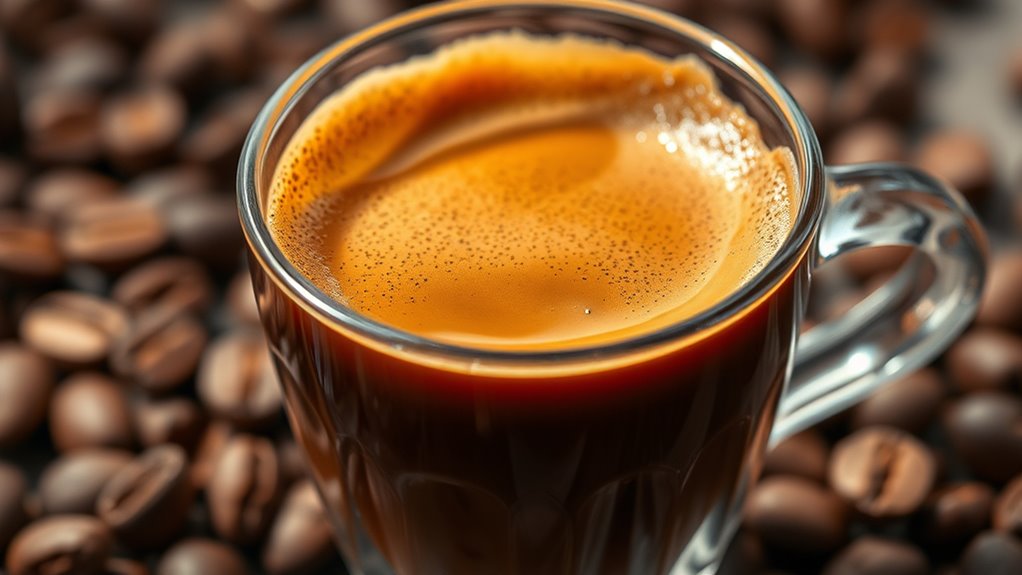
When you take a sip of espresso, its body reveals much about its character through texture and mouthfeel. The body refers to how the coffee feels on your palate, whether light, medium, or full-bodied. You’ll notice this as a delicate, floral lightness or a dense, syrupy richness.
Factors like the bean type and extraction process shape this texture, influencing how thick or smooth the espresso feels. To truly assess the body, let the espresso linger on your tongue and swirl it gently. Pay attention to how it coats your mouth.
Typically, a fuller-bodied espresso carries flavors reminiscent of chocolate, caramel, or nuts. This gives you a richer, more satisfying experience with each sip. Using freshly brewed espresso rich in crema contributes to a velvety texture and enhances the overall mouthfeel.
How Roast Level Affects Espresso Taste
Although espresso’s flavor hinges on many factors, the roast level plays a crucial role in shaping its taste profile. If you choose a light roast, expect a brighter, more acidic espresso with vibrant fruity and floral notes that lift the cup.
Medium roasts offer a balanced experience, blending lively acidity with fuller body. You’ll often notice caramel and nutty undertones that make the flavor more rounded and enjoyable.
When you opt for dark roasts, you get bold, bitter flavors enriched with smoky, chocolatey, and roasted characteristics.
Roast level also influences sweetness. Darker roasts deliver more caramelization, which enhances that sugary depth.
Aromatically, lighter roasts present complex, vibrant scents, while darker roasts emphasize smoky, roasted aromas.
Understanding how roast level affects espresso helps you tailor your brew to your preferred flavor nuances.
Proper grind size adjustment is also essential to maximize the flavor potential of different roast levels.
Espresso Flavor Profiles by Bean Origin
Because the origin of your espresso beans profoundly shapes the cup’s character, understanding regional flavor profiles can really elevate your tasting experience. Each coffee-growing region brings its own distinct notes, acidity levels, and body to your espresso. This means you can tailor your choice based on the flavors you prefer.
Ethiopian beans typically offer bright, fruity, and floral notes with lively acidity. You’ll often find citrus and berry flavors that really invigorate your palate.
Indonesian coffees, like Sumatra, deliver smoky, earthy, and spicy profiles with a full body and low acidity. This adds depth and richness to your espresso.
Colombian beans strike a nice balance with nutty, caramel, and mild fruity tones. They come with smooth acidity, making for a rounded cup.
Knowing these profiles helps you pick beans that perfectly match the espresso experience you’re after. Espresso blends are often crafted by mixing beans from different regions to achieve a balanced flavor that highlights the best characteristics of each origin.
What the Finish Reveals About Espresso Quality
The flavors you experience from different bean origins don’t end with the initial sip. They extend into the finish, which reveals a lot about your espresso’s quality. A long-lasting, sweet fruit finish usually signals balance and high-quality beans.
On the other hand, a dry or overly acidic aftertaste often points to under-extraction or inferior beans. Bitter or harsh notes in the finish suggest over-extraction, which tends to mask complexity and sweetness.
When your espresso has a clean, smooth, and lingering finish, it means it was brewed expertly with fresh beans. This final impression is really important to assess your espresso’s overall harmony and excellence. Factors such as brewing methods and bean type directly influence the flavor and caffeine concentration of your espresso.
| Finish Characteristic | What It Indicates |
|---|---|
| Sweet, long-lasting | Well-balanced, high-quality shot |
| Dry or overly acidic | Under-extraction, poor beans |
| Bitter or harsh | Over-extraction |
| Clean, smooth, lingering | Proper brewing, fresh beans |
Tips for Perfecting Your Espresso Tasting
When you want to truly appreciate your espresso’s nuances, start by evaluating its aroma both before and after tasting. This helps you detect evolving flavor notes and spot any flaws. Keep your palate clean by sipping water between tastings to avoid flavor carry-over and preserve clarity.
Focus closely on the espresso’s body, flavor, and finish to gain a full picture of its quality. To refine your tasting skills, try these tips:
- Experiment with grind size, extraction time, and water temperature to observe changes in taste.
- Compare different espresso shots side by side to identify subtle differences.
- Take detailed notes on each espresso’s aroma, body, flavor, and finish for ongoing learning.
These practices sharpen your perception and deepen your espresso appreciation. Give them a try and see how your tasting experience improves! Understanding the concentration of espresso powder can also enhance your insight into espresso’s flavor complexity.
How to Develop Your Palate for Better Espresso Appreciation
If you want to truly enhance your espresso appreciation, developing your palate is essential. Start by regularly tasting diverse foods like fruits, chocolates, and wines to broaden your flavor vocabulary and sharpen your recognition of subtle espresso notes. Use flavor wheels to distinguish common profiles such as fruity, nutty, or smoky.
Try practicing side-by-side comparisons of espresso shots from various origins and roast levels. This will help you become more sensitive to nuanced differences. Keep detailed tasting notes on aroma, body, flavor, and finish to monitor your progress.
Also, experiment with food pairings and palate cleansers like water or mild snacks to reset your taste buds. This way, you can better perceive the complex flavors. Taking this deliberate and structured approach will deepen your sensory awareness and elevate your espresso experience.
Frequently Asked Questions
How Does Water Quality Impact Espresso Taste?
Water quality is the canvas for your espresso’s flavor. Hard minerals can make it bitter, while soft, slightly acidic water lets bright, balanced notes shine.
Make sure to avoid chlorine and impurities, or your shot’s aroma will suffer. Trust me, the difference is noticeable and worth the effort!
Can Espresso Taste Differ Between Espresso Machines?
Yes, espresso taste can differ between machines because pressure, temperature, and extraction consistency vary. You’ll notice that high-end machines deliver richer, balanced flavors, while lower-quality ones might produce weaker or uneven shots.
It’s kind of like how different ovens can bake the same cake but end up with slightly different results. So, if you’re aiming for that perfect cup, the machine you use really does matter.
What Role Does Grind Size Play in Espresso Flavor?
Think of grind size like a faucet’s flow. If it’s too coarse, your espresso tastes sour and weak. Too fine, and it’s bitter and harsh.
You adjust grind size to balance extraction. That way, you reveal the perfect espresso flavor. It’s all about finding that sweet spot.
How Does Espresso Taste Change When Used in Milk-Based Drinks?
When you mix espresso with milk, its bitterness softens, and the acidity mellows. You’ll notice sweeter, creamier flavors emerge, like caramel or chocolate. Milk also brings out espresso’s floral or fruity notes, balancing the overall taste beautifully.
It’s like the milk wraps the espresso in a smooth, rich blanket, making it easier to enjoy those complex flavors. So, next time you have a latte or cappuccino, pay attention to how the milk changes the espresso’s character. It’s a tasty transformation!
Does Espresso Flavor Change Over Time After Brewing?
Yes, your espresso flavor changes quickly after brewing. You’ll notice acidity and brightness fade, crema dissipates, and bitterness intensifies.
Conclusion
Now that you’ve uncovered the subtle whispers and bold statements espresso offers, you’re ready to savor each cup with newfound appreciation. Don’t just drink your espresso. Explore its hidden layers and let its rich character unfold on your palate.
Remember, every sip is a gentle invitation to deepen your tasting journey. With patience and curiosity, you’ll transform simple mornings into extraordinary rituals. You’ll discover the true essence behind every shot.

Pingback: Can You Use Regular Coffee In An Espresso Machine – Facts