You can enjoy an Espresso Martini as gluten-free if you carefully verify key ingredients. Vodka and coffee liqueur are typically gluten-free due to distillation, but only if they don’t contain flavorings or additives with gluten.
Espresso and sugar are naturally gluten-free, yet cross-contamination is possible through shared equipment or poor sanitation. Choosing certified gluten-free brands and ensuring strict preparation protocols will keep your drink safe.
Explore how to select the right ingredients and avoid hidden gluten risks for your next cocktail. It’s easier than you might think once you know what to look for!
Are Espresso Martinis Gluten-Free?
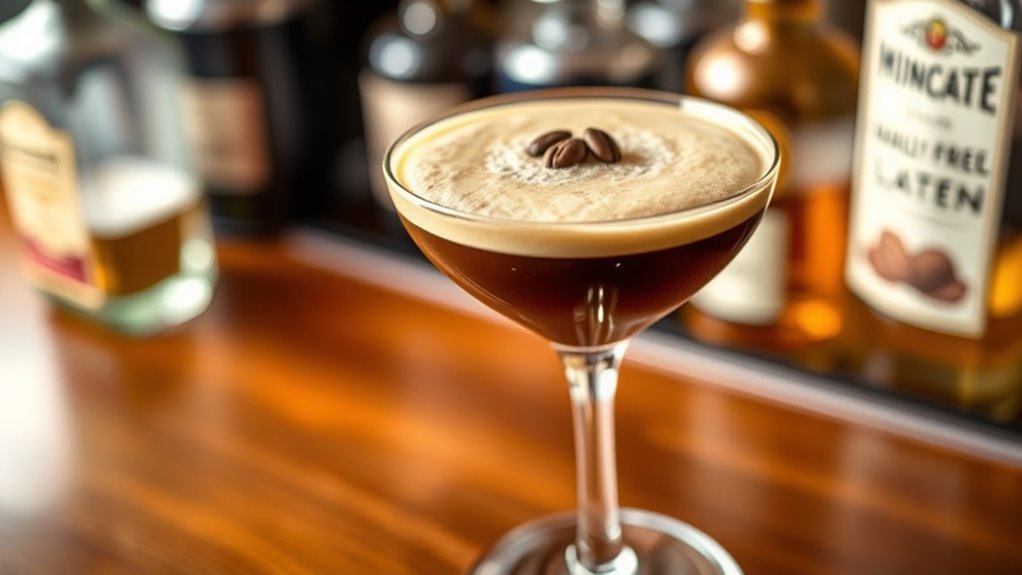
How can you be sure if an espresso martini is gluten-free? Traditional recipes mainly include vodka, espresso, coffee liqueur, and sugar. None of these ingredients inherently contain gluten.
Most standard vodkas go through distillation, which removes gluten proteins, making them gluten-free. However, some flavored vodkas might’ve gluten-derived additives, so it’s a good idea to check the labels.
Most standard vodkas are gluten-free due to distillation, but always check flavored vodka labels for gluten additives.
Coffee liqueurs like Kahlúa are generally gluten-free, but some brands may vary due to additives or cross-contamination.
Cross-contact during processing is rare for these ingredients, but it can still be a concern, especially if you have celiac disease or severe gluten sensitivity.
To be sure, verify the gluten-free status of the specific vodka and coffee liqueur brands you use in your espresso martini.
Since espresso is made by forcing hot water through finely ground coffee under high pressure, it does not introduce gluten into the drink, making the espresso component naturally gluten-free.
What Are the Core Ingredients of an Espresso Martini?
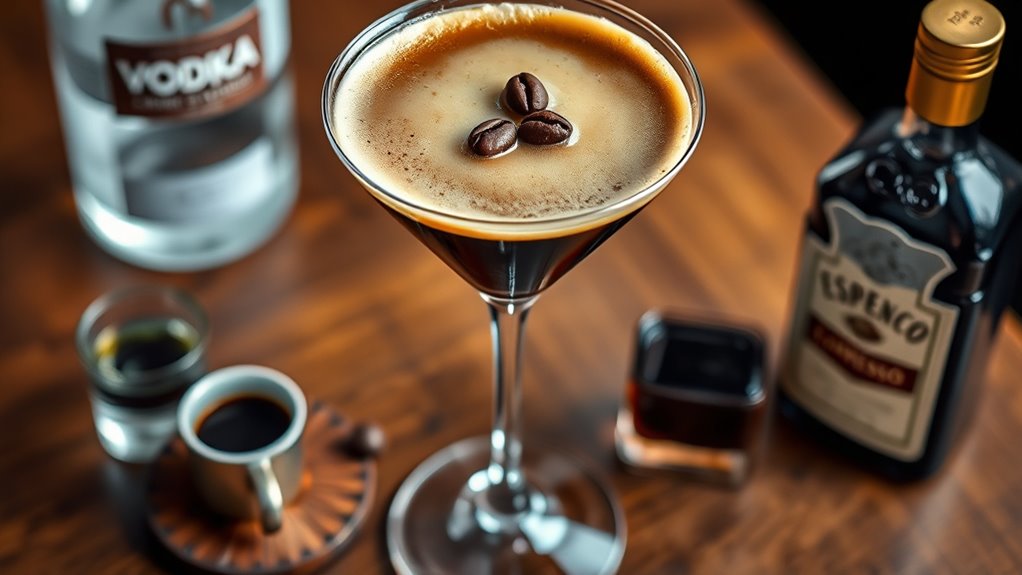
Understanding whether an espresso martini is gluten-free starts with knowing its core components. The cocktail primarily consists of vodka, coffee liqueur, and freshly brewed espresso, with simple syrup sometimes added for sweetness.
Vodka and coffee liqueur, both distilled spirits, typically lack gluten. However, their gluten status depends on specific brands and production methods.
Espresso, derived from coffee beans, is naturally gluten-free, though cross-contamination risks exist during processing or handling.
Variations may include flavorings or garnishes, but these don’t alter the core ingredients. To accurately determine gluten content, you must identify the exact vodka and coffee liqueur brands used and verify their gluten-free certification.
This technical understanding is vital before evaluating whether the espresso martini, as a whole, is gluten-free. Additionally, the extraction time of the espresso can influence the flavor profile, which is an important consideration in crafting a consistent cocktail experience.
Are the Core Ingredients Gluten-Free?
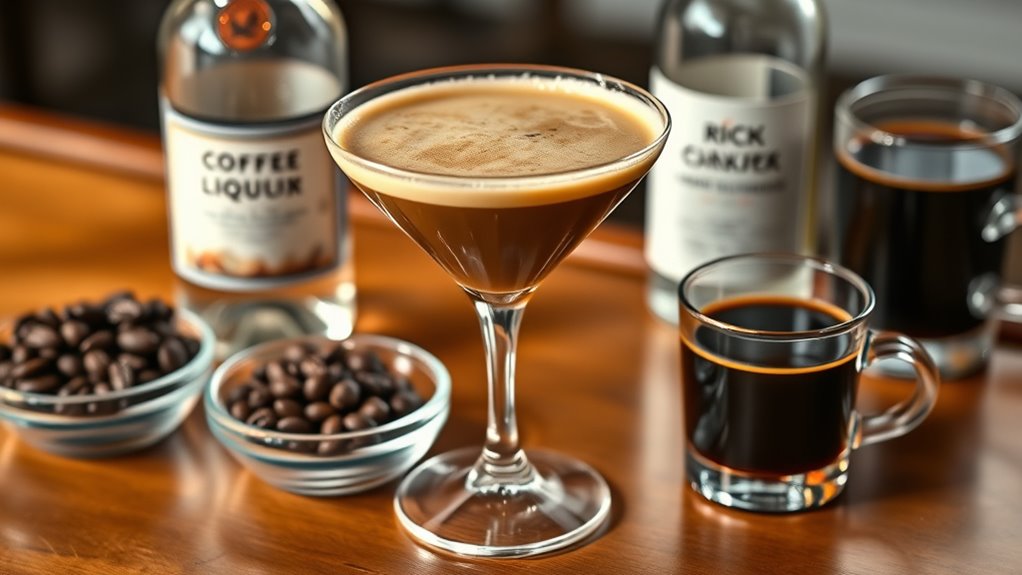
When evaluating whether the core ingredients of an espresso martini are gluten-free, you need to examine each component’s source and production process.
Vodka is generally gluten-free because distillation removes gluten proteins. But flavored vodkas may contain gluten, so checking the label is really important.
Coffee liqueurs, like Kahlúa, are usually gluten-free. However, it’s a good idea to verify that no gluten-containing additives are included.
Espresso, made only from brewed coffee beans, naturally contains no gluten.
Keep in mind that cross-contamination risks exist if ingredients are processed or stored near gluten-containing products. So choosing certified gluten-free brands or thoroughly reviewing product labels will help guarantee safety.
Do Coffee Liqueurs in Espresso Martinis Contain Gluten?
Why should you scrutinize coffee liqueurs in your espresso martini for gluten content? Although most coffee liqueurs, like Kahlúa, are generally gluten-free, you need to verify labels for gluten-containing additives or potential cross-contact during production.
Distilled spirits, including those used in coffee liqueurs, usually don’t retain gluten proteins. However, added flavorings or ingredients might introduce gluten. Since manufacturers aren’t always required to disclose gluten unless intentionally included, absence of clear labeling doesn’t guarantee safety.
For example, Baileys Almande, a dairy-free almond liqueur, is confirmed gluten-free and suitable for sensitive individuals.
To minimize risk, carefully review ingredient lists and production details. Even trace gluten from shared equipment can impact those with gluten intolerance or celiac disease.
Understanding the extraction process in espresso preparation highlights the importance of ingredient purity and careful handling to avoid contamination.
How Do You Choose Gluten-Free Vodka and Coffee Liqueurs?
Choosing gluten-free vodka and coffee liqueurs requires careful attention to product labels and manufacturing practices.
For vodka, focus on brands explicitly labeled gluten-free or verify directly with the manufacturer. Distillation generally removes gluten, but cross-contamination can occur.
Brands like Tito’s Handmade and Smirnoff are typically gluten-free, yet confirmation is essential.
When selecting coffee liqueurs, scrutinize ingredient lists for gluten-containing additives or thickeners. Some may introduce gluten despite distillation.
Opt for products like Kahlúa that explicitly state gluten-free status. Reviewing third-party certifications or testing results further guarantees product safety.
Prioritize reputable brands with transparent gluten-free production standards to minimize risk.
This evidence-based approach helps you confidently choose gluten-free spirits for your espresso martini without compromising safety.
Additionally, using filtered water in your espresso preparation can enhance flavor and reduce potential contaminants, contributing to a better overall drink experience.
Is Cross-Contamination a Risk When Making Espresso Martinis?
You should know that cross-contact can happen if shared equipment isn’t cleaned properly or if ingredients have gluten residues. That’s why proper barista training is super important—to make sure strict sanitation protocols are followed and contamination risks are kept to a minimum.
Without using dedicated tools and doing thorough cleaning, the chance of gluten exposure in your espresso martini goes up quite a bit. Using high-quality espresso and ensuring proper equipment sanitation can help reduce contamination risks significantly.
Cross-Contact Sources
Although Espresso Martinis often rely on gluten-free base ingredients, cross-contamination can still pose a risk during preparation. You need to be aware of specific sources that might introduce gluten unintentionally.
Key cross-contact sources include:
- Shared equipment such as shakers, strainers, or glassware not thoroughly cleaned between uses, allowing gluten residue to transfer.
- Flavored liqueurs and syrups that may contain gluten or be processed in gluten-handling facilities, posing contamination risks.
- Environmental contamination from flour dust or gluten-containing powders settling on utensils or surfaces in the bar area.
To minimize risk, you must guarantee dedicated gluten-free ingredients and rigorous sanitation protocols. This approach reduces gluten exposure and helps keep cocktails safe for gluten-sensitive consumers.
It’s all about being careful and consistent with your prep, so everyone can enjoy their drink without worry. Additionally, understanding the importance of equipment cleanliness is essential to preserve the flavor and quality of espresso-based drinks like the Espresso Martini.
Barista Training Importance
Cross-contamination is a big concern when making Espresso Martinis, especially if baristas use shared equipment like shakers, strainers, and glasses without cleaning them properly. If tools like jiggers and mixing utensils aren’t sanitized between uses, gluten particles can transfer and pose risks to people who are gluten-sensitive.
Proper barista training is really important because it teaches you how to clean thoroughly and why you need to keep gluten-free ingredients separate. Without regular training or awareness about allergens, you might accidentally expose customers to gluten through cross-contact.
To reduce this risk, you need to know and follow allergen-handling procedures carefully. Taking this evidence-based approach helps you keep Espresso Martinis truly gluten-free and protects your customers’ health effectively.
Sanitation Practices Impact
When preparing Espresso Martinis, the risk of gluten transfer depends a lot on how clean your equipment and utensils are. Cross-contamination usually happens when shared shakers, strainers, or glassware haven’t been washed properly after coming into contact with gluten-containing ingredients.
Baristas who don’t stick to strict gluten-free protocols can increase this risk. So, to keep things safe, you should always wash all tools thoroughly between making drinks using hot, soapy water.
If possible, use equipment dedicated just for gluten-free cocktails. Also, it’s super important to train your staff well on sanitation standards that focus specifically on preventing gluten cross-contact. Regular cleaning and maintenance of your espresso machine and utensils are essential to prevent residue buildup and maintain hygiene, especially in the milk system milk system maintenance.
How Can You Make Sure Your Espresso Martini Is Gluten-Free?
You’ll want to take a close look at all the ingredient labels to make sure they’re officially certified gluten-free. This is especially important for vodka and coffee liqueur brands.
It’s best to steer clear of any syrups or mixers that don’t clearly say they’re gluten-free to keep things safe.
And don’t forget—always use clean equipment that’s reserved just for gluten-free drinks to avoid any cross-contamination.
Check Ingredient Labels
Although many spirits go through distillation processes that usually remove gluten proteins, you should still check the ingredient labels of all the components in your Espresso Martini carefully.
Distillation often gets rid of gluten, but sometimes added ingredients can sneak it in.
To make sure your cocktail is gluten-free, start by verifying that the vodka or spirit is labeled gluten-free, even if it’s made from gluten-containing grains.
Then, take a close look at pre-made mixers and liqueurs for certified gluten-free status.
Keep an eye out for any added flavorings or syrups that might contain gluten.
If the labels aren’t clear, don’t hesitate to reach out to the manufacturers.
This is especially important for flavored or specialty liqueurs, which might’ve gluten additives or stabilizers you wouldn’t expect.
Avoid Cross-Contamination Risks
Ensuring your Espresso Martini remains gluten-free means being careful about cross-contamination risks during preparation. Use fresh, clean equipment that’s used only for gluten-free drinks. This helps prevent any gluten residue from transferring.
Make sure to check all ingredients, like liqueurs and flavorings, to confirm they’re certified gluten-free by the manufacturers. It’s also a good idea to store gluten-free components separately from anything containing gluten. This way, there’s less chance of accidental contact or airborne contamination.
Don’t forget to sanitize utensils, shakers, and glassware thoroughly and regularly. That helps get rid of any leftover gluten particles from previous uses.
And be sure to clearly tell the bartender or whoever’s making your drink about your gluten sensitivity. That way, they can follow the right hygiene and handling steps.
Taking these precautions together really helps minimize gluten exposure. It keeps your Espresso Martini safe and tasty, and protects you from any unwanted reactions.
Are Flavored or Specialty Espresso Martinis More Likely to Contain Gluten?
When flavored or specialty Espresso Martinis incorporate ingredients like flavored syrups, liqueurs, or mixers, they increase the likelihood of containing gluten. These components can be derived from gluten-containing grains or processed in facilities handling gluten, which raises contamination risks. You should consider a few things here.
First, flavored syrups and extracts—ingredients such as caramel or vanilla flavorings—may contain gluten depending on their source and manufacturing. Then there are liqueurs. Certain premium or flavored liqueurs might include gluten or be produced alongside gluten-containing products.
Also, if you’re making homemade preparations, using unverified ingredients or having cross-contamination during mixing can elevate the risk of gluten presence. Unless an Espresso Martini is explicitly labeled gluten-free, flavored or specialty versions generally pose a higher gluten risk compared to classic recipes.
What Should You Watch For When Ordering Espresso Martinis at Bars?
When you’re ordering espresso martinis, it’s a good idea to ask if the vodka and any mixers they use are certified gluten-free. Some ingredients might contain gluten or could be cross-contaminated, so it’s better to check.
Also, keep an eye out for the possibility that shared equipment or garnishes might introduce gluten particles into your drink.
And don’t hesitate to make sure the bar staff are trained to prevent cross-contact — that way, you can feel confident your cocktail is safe to enjoy.
Potential Gluten Ingredients
Although espresso martinis generally consist of vodka, coffee liqueur, and espresso, you need to be vigilant about potential gluten sources, particularly in the liqueur and flavored vodka. Not all coffee liqueurs are gluten-free, so verifying the brand is critical.
Flavored vodkas may also contain gluten if derived from wheat, barley, or rye.
When ordering, focus on these potential gluten ingredients:
- Coffee Liqueur: Confirm it’s gluten-free like Kahlúa or check the label for gluten-containing additives.
- Flavored Vodka: Verify the base grains and production methods to rule out gluten presence.
- Additives: Watch for flavorings or thickeners that might include gluten-derived components.
Always ask bartenders about specific brands to ensure your espresso martini is safe for a gluten-free diet. It’s better to double-check than to risk a reaction!
Cross-Contamination Risks
Since espresso martinis often rely on shared bar tools and ingredients, you need to be vigilant about cross-contamination risks that could introduce gluten.
Vodka is usually distilled and gluten-free, but it can still become contaminated if equipment like shakers or strainers is shared without proper sanitation.
Flavored liqueurs or syrups may contain gluten-derived ingredients, so always verify their sources with the bartender.
Also, bars sometimes dust glasses or use additives processed with flour, which increases gluten exposure risk.
To minimize this, ask about the cleaning protocols for utensils and the gluten status of all ingredients.
Understanding these factors helps you avoid inadvertent gluten ingestion when ordering an espresso martini at bars.
Additionally, using a chilled martini glass can help maintain the drink’s quality and reduce the chance of contamination during serving.
Bar Staff Training
Because gluten contamination can happen through ingredients and equipment, bar staff need thorough training on what goes into espresso martinis and the potential gluten risks. You want to watch for bartenders who clearly know where their ingredients come from and how to prevent cross-contact.
Key points include identifying gluten-containing additives or flavorings and making sure gluten-free alternatives like vodka or syrups are used. It’s also important to have strict sanitation protocols and avoid sharing equipment that might transfer gluten residues.
Communication is key, too. Bartenders should openly talk with customers about gluten sensitivities and double-check that all mixers are gluten-free before making the drink.
When you order, make sure the staff follow these steps to keep contamination risk low. Proper training really makes a difference, especially if you have gluten intolerance or celiac disease.
What Are the Best Gluten-Free Alternatives for Espresso Martini Lovers?
When choosing gluten-free alternatives for your Espresso Martini, you’ll want to focus on spirits and ingredients that have been rigorously tested and certified gluten-free. Vodkas from brands like Tito’s, Smirnoff, and Ciroc provide reliable gluten-free bases.
Additionally, coffee liqueurs such as Kahlúa, confirmed gluten-free by manufacturers, maintain authenticity.
Use freshly brewed or cold brew coffee to eliminate gluten contamination risks associated with pre-made mixes.
To diversify flavor while staying gluten-free, consider substituting traditional cream with coconut or almond milk, both naturally gluten-free.
Always verify ingredient labels and consult manufacturers to guarantee all components meet gluten-free standards.
Following these precise guidelines helps you craft an Espresso Martini free from gluten, supporting dietary restrictions without compromising taste or quality.
Frequently Asked Questions
Can Espresso Martinis Trigger Gluten Allergies in Sensitive Individuals?
Yes, espresso martinis can trigger gluten allergies if the coffee liqueur contains gluten or additives.
It’s important to check specific brands and production methods carefully. That way, you can avoid cross-contamination and keep things safe for sensitive individuals.
Always double-check the ingredients if gluten is a concern for you or someone you’re serving. Better safe than sorry!
How Does Gluten Sensitivity Differ From Celiac Disease Regarding Cocktails?
You’ll find gluten sensitivity causes immune responses without intestinal damage, allowing some gluten tolerance. Celiac disease, on the other hand, demands strict avoidance because it causes autoimmune damage to the intestines.
When it comes to cocktails, safety really depends on the gluten content of the ingredients and the risk of cross-contamination. So, it’s important to check what’s in your drink and how it’s prepared.
Are There Gluten-Free Dessert Pairings That Complement Espresso Martinis?
You can pair your Espresso Martini with gluten-free desserts like panna cotta, flourless chocolate cake, or almond flour biscotti.
Just make sure to always verify ingredient labels to guarantee no gluten contamination, especially in processed or mixed dessert ingredients. It’s better to be safe than sorry, right?
These pairings really bring out the rich flavors of the cocktail while keeping things gluten-free and delicious.
Does the Espresso Brewing Method Affect Gluten Content in the Drink?
No, the espresso brewing method doesn’t affect gluten content. You can trust that high temperature and pressure extraction won’t introduce gluten.
Any contamination comes from added ingredients or cross-contact during preparation, not from brewing itself. So, if you’re careful about what goes into your espresso and how it’s made, you should be good to go!
Can Homemade Coffee Liqueurs Be Made Gluten-Free for Espresso Martinis?
You can absolutely craft homemade coffee liqueurs gluten-free for espresso martinis. Just choose distilled spirits and verify every flavoring’s gluten-free status. Also, make sure to avoid cross-contamination.
It’s as essential as a barista’s perfect espresso shot. Simple steps like these keep your drinks safe and delicious. Easy, right?
Conclusion
You might worry that hidden gluten could sneak into your espresso martini, but rest assured, the core ingredients, vodka, espresso, and coffee liqueur, are typically gluten-free when carefully chosen. By selecting certified gluten-free vodka and liqueurs, you guarantee safety without compromising taste. Always verify labels or ask bartenders to avoid cross-contamination.
With informed choices, you can confidently enjoy your espresso martini without gluten concerns, backed by evidence and precise ingredient knowledge. It’s all about being a little cautious and knowing what to look for. So go ahead and sip away!