You might think espresso is the strongest coffee because of its bold, concentrated flavor and high caffeine density per ounce. But it’s not always the strongest in total caffeine. A single espresso shot packs about 63 mg of caffeine, which is less than an 8 oz brewed coffee’s 95 mg.
Strength really depends on factors like brewing method, bean type, and serving size. All of these shape both the flavor and caffeine power of your cup. So, keep exploring to uncover how these elements influence your perfect coffee.
Defining “Strongest Coffee”: Flavor and Caffeine
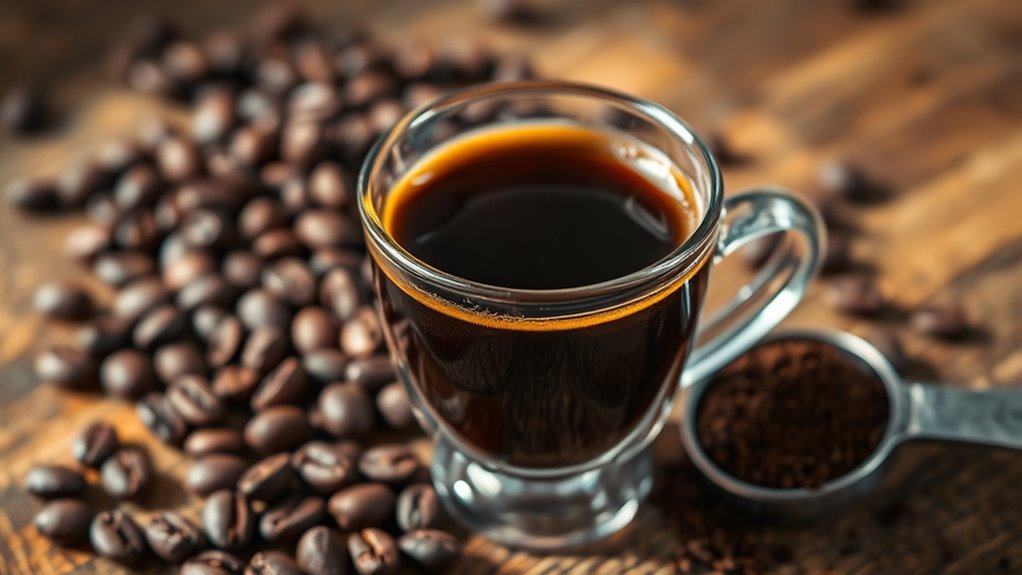
Although the term “strongest coffee” might seem straightforward, it actually depends on what you mean. Are you talking about caffeine content, flavor intensity, or concentration?
When you think of flavor strength, espresso often comes to mind. Its short, high-pressure extraction creates a bold, rich profile that feels intense on your palate. But if you’re judging by caffeine content per serving, espresso doesn’t always claim the top spot.
Brewing methods like drip coffee or cold brew can deliver more caffeine overall, especially with larger serving sizes. The strength you perceive also depends on the beans you choose and how much coffee you use.
A single shot of espresso typically contains about 63 mg of caffeine, which is less than an 8 oz cup of regular coffee.
How Much Caffeine Is in Espresso vs. Regular Coffee
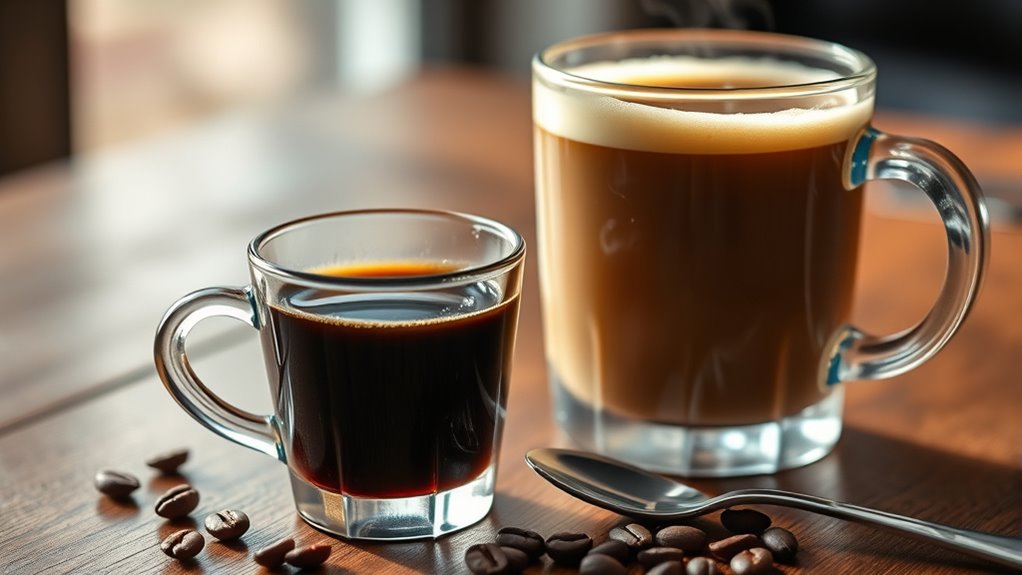
You might think espresso packs more caffeine, but it’s really about concentration versus total amount. So, a single shot actually has less caffeine than a full cup of regular coffee.
But here’s the catch—espresso contains more caffeine per ounce.
Knowing how serving size affects your caffeine intake can help you pick what works best for you. It’s all about finding that balance between strength and quantity.
The type of coffee bean and roast level can significantly influence the caffeine content in your espresso.
Caffeine Content Comparison
How much caffeine does espresso really pack compared to regular coffee? A single shot of espresso, about 1 ounce, contains roughly 63 mg of caffeine.
Meanwhile, an 8-ounce cup of brewed coffee typically holds around 95 mg.
Even though espresso has a higher caffeine concentration per ounce, its smaller volume means it usually delivers less total caffeine per serving.
But if you go for a double shot of espresso, which has about 126 mg of caffeine, you’re getting as much or even a bit more caffeine than a standard 12-ounce brewed coffee.
Just keep in mind that caffeine content can vary depending on brewing methods, bean types, and serving sizes. So, your actual caffeine intake might be different.
Knowing this helps you make better choices about how strong you want your coffee to be.
To get the best flavor and caffeine extraction from your espresso, maintaining proper extraction time is essential for balancing strength and taste.
Serving Size Impact
Understanding the caffeine content difference between espresso and regular coffee means looking beyond just concentration to the impact of serving size.
While espresso packs more caffeine per ounce, the total amount you consume depends largely on volume.
Here’s the deal: an 8-ounce cup of regular coffee contains about 95 mg of caffeine. A 1-ounce shot of espresso has roughly 63 mg of caffeine.
So, a standard cup of coffee actually delivers about 1.5 times more caffeine than a single espresso shot because of the larger volume.
If you go for double espresso shots (2 ounces), you get around 125 mg of caffeine, which is still less than what’s in an 8-ounce coffee.
Bottom line? Your total caffeine intake depends more on how much you drink than on the caffeine concentration per ounce.
However, factors like grind size and extraction time can also influence the caffeine content in each espresso shot.
Concentration Versus Total
Although espresso delivers a smaller total caffeine amount per serving compared to regular coffee, its caffeine concentration per ounce is significantly higher. A single 1-ounce shot of espresso contains about 63 mg of caffeine, making it much more concentrated than brewed coffee.
In contrast, an 8-ounce cup of regular coffee has roughly 95 mg of caffeine, spreading that amount across a larger volume.
When you order a double espresso (2 ounces), you get approximately 126 mg of caffeine, slightly more than a 12-ounce brewed coffee’s 120 mg total.
This means espresso packs more caffeine into each ounce, but regular coffee provides a greater total caffeine dose due to its larger serving size.
Consuming multiple shots of espresso can quickly approach or exceed the recommended daily caffeine limit, highlighting the importance of moderation and awareness when drinking espresso.
How Different Brewing Methods Change Your Coffee’s Strength
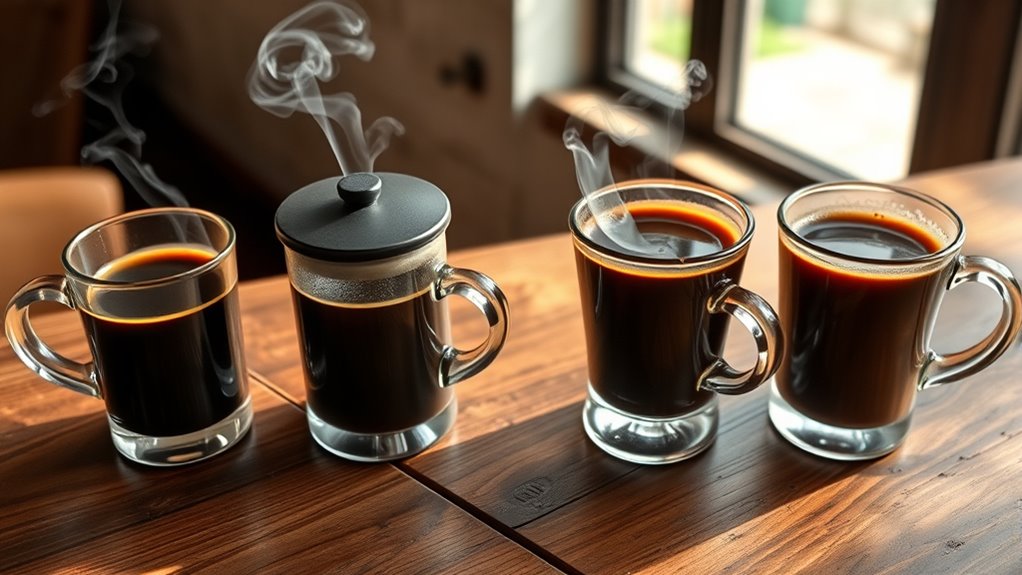
You’ll notice that brewing methods, grind size, and extraction time all play a big role in how strong your coffee ends up.
Take espresso, for example—it uses fine grounds and high pressure to pull out a quick, intense shot.
On the other hand, cold brew takes a different approach, using coarse grounds that steep slowly to really bring out the caffeine.
Once you get the hang of these variables, you can easily adjust both the flavor and caffeine level to suit your taste.
Machines that maintain precise temperature control help ensure balanced flavor and optimal strength extraction.
Brewing Method Impact
Because brewing methods vary widely in temperature, pressure, and duration, the strength of your coffee depends heavily on how it’s prepared. Each method extracts caffeine and flavors differently, affecting your cup’s intensity and caffeine levels.
Consider these impacts:
- Espresso: High pressure, finely ground, quick extraction; intense flavor but moderate caffeine per shot
- Cold Brew: Long steep (12-24 hours), cold water, coarse grounds; smooth, higher total caffeine in large servings
- Drip Coffee: Hot water, medium grind, longer contact; steady caffeine extraction, often higher total caffeine than espresso
- French Press: Immersion brewing, moderate temperature, coarse grounds; rich flavor, moderate caffeine
- Pour Over: Controlled water flow, medium grind; clean taste, caffeine depends on brew time
Your choice directly shapes the coffee’s strength and caffeine impact. So, think about how you like your coffee when picking a brewing method! Additionally, mastering the espresso extraction ratio allows precise control over the strength and character of your espresso shots.
Extraction Time Differences
When you brew espresso, the process takes just 25 to 30 seconds, producing a highly concentrated and intense shot with bold flavors. This rapid extraction quickly draws out oils and soluble compounds, resulting in a rich, dense brew.
In contrast, cold brew relies on 12 to 24 hours of steeping, gently extracting caffeine and flavors over time. This gives you a smoother, less acidic profile but often higher caffeine content per serving.
Drip coffee falls in between, with a 4 to 6-minute extraction that steadily pulls flavors and caffeine, balancing strength and clarity.
The key takeaway is that shorter extraction times yield concentrated flavors but don’t necessarily mean more caffeine.
Your coffee’s strength really depends on how long you let water interact with the grounds during brewing. So, it’s all about timing and what kind of flavor or caffeine kick you’re after.
Balancing variables such as grind size and tamping is essential to achieve the desired extraction and flavor profile in espresso.
Grind Size Effects
Although grind size might seem like a small detail, it plays a crucial role in determining your coffee’s strength and flavor profile. Adjusting the grind changes how quickly flavors and caffeine extract, impacting every cup you brew.
Here’s how grind size affects different methods: Espresso demands a fine grind, increasing surface area for rapid extraction under pressure. Ristretto uses an even finer grind, creating a bolder, more concentrated shot.
Coarser grinds in drip or French press slow extraction, yielding milder flavor and less caffeine per ounce. Too fine a grind in French press causes over-extraction and bitterness, masking strength.
Grind size controls extraction time and caffeine release, with smaller particles producing a stronger, more intense brew. Mastering grind size helps you tailor your coffee’s strength precisely.
It’s a simple tweak that can really change your daily cup for the better. For best results, aim for a grind size resembling gritty table salt to balance extraction time and flavor intensity.
Why Espresso Tastes More Intense Than Brewed Coffee
Since espresso is brewed under high pressure using finely ground coffee, it delivers a flavor that feels much more intense than brewed coffee. The high pressure extracts a greater amount of oils and soluble compounds, enriching the flavor profile with bold, concentrated notes.
The fine grind increases surface area, allowing for efficient extraction within a short brewing time of 25-30 seconds. This rapid process produces a dense, potent shot packed with flavor.
Plus, the crema, a golden, velvety foam atop the espresso, adds sweetness and smooth texture, enhancing its perceived strength and richness.
While espresso contains more caffeine per ounce, its small serving size concentrates both taste and intensity. This makes each sip a powerful experience compared to the milder, larger servings of brewed coffee.
Espresso’s intensity is also influenced by the roast level, with lighter roasts like blonde espresso offering brighter, more vibrant flavors and slightly higher caffeine content.
How Bean Type and Roast Influence Coffee’s Power
You’ll find that the type of bean you pick really makes a difference in how much caffeine ends up in your coffee. For example, robusta beans pack nearly twice the caffeine compared to arabica.
And it’s not just the bean type—roast level plays a part too. Lighter roasts tend to hold onto a bit more caffeine, while darker roasts lose some during the process.
Bean Type Impact
When choosing coffee, the type of bean you select plays a crucial role in determining its caffeine strength and flavor profile. Robusta beans pack nearly twice the caffeine of Arabica beans, making your espresso inherently stronger if you opt for Robusta.
This difference also affects flavor, with Robusta delivering a bold, bitter punch, while Arabica offers a smoother, nuanced taste.
Keep these points in mind:
- Robusta contains almost double the caffeine of Arabica
- Arabica provides a milder, complex flavor
- Robusta yields a more bitter, robust taste
- Espresso with Robusta beans has a higher caffeine concentration
- Bean type influences caffeine more than roast level
Understanding bean type helps you choose a coffee that matches your desired strength and flavor intensity.
Roast Level Effects
Although roast level subtly influences caffeine content, its impact on coffee’s strength isn’t as big as the type of bean or the brewing method. Light roasts usually have a bit more caffeine by weight than dark roasts, but once brewed, that difference hardly matters.
Dark roasts develop bolder, richer flavors because they’re roasted longer. This process breaks down some caffeine molecules and makes the beans less dense. Interestingly, roasting causes beans to lose mass and moisture, which actually concentrates caffeine in darker roasts even though they’re less dense.
That said, how strong your coffee tastes depends more on the flavor intensity and how it’s extracted than just the roast level. And don’t forget, Robusta beans pack nearly twice the caffeine of Arabica, which plays a much bigger role in how powerful your coffee feels compared to whether the beans are light or dark roasted.
Caffeine Content Variation
Since the type of coffee bean largely determines its caffeine punch, understanding the differences between Arabica and Robusta is key to grasping coffee’s strength. Robusta beans pack almost twice the caffeine of Arabica, making them naturally more potent.
However, the roast level plays a smaller role in caffeine variation than you might expect. Light roasts contain slightly more caffeine by weight, but brewing methods and the amount of grounds used heavily influence the final caffeine content.
Keep these factors in mind:
- Robusta beans have higher caffeine concentration than Arabica.
- Light roasts retain marginally more caffeine than dark roasts.
- Brewing time and coffee quantity impact caffeine more than roast.
- Espresso’s caffeine strength varies with bean type.
- Roast level minimally affects caffeine compared to bean type and brewing.
This helps you better understand coffee’s true caffeine power.
The Role of Serving Size in Perceived Coffee Strength
Because serving size greatly influences how you perceive coffee strength, it’s important to take into account both volume and caffeine concentration.
A single ounce of espresso packs a high caffeine concentration, making its flavor and intensity feel bold and intense. However, its small volume means the total caffeine content often falls short compared to an 8-ounce cup of regular coffee.
Larger servings typically deliver more total caffeine, leading you to perceive them as stronger, even if their concentration per ounce is lower. So, when you judge coffee strength, remember that a bigger cup might provide a more sustained energy boost, while a small, concentrated espresso hits you with a sharper punch.
Serving size shapes your experience as much as caffeine density.
How Fast Espresso and Coffee Consumption Changes Your Caffeine Experience
When you drink espresso quickly, caffeine floods your bloodstream within about 15 minutes, delivering an intense and rapid energy boost.
In contrast, sipping regular coffee slowly results in a gradual caffeine release, extending your alertness over time.
How fast you consume your coffee shapes your caffeine experience markedly.
Think about it like this: rapid espresso intake causes a quick, sharp caffeine spike.
On the other hand, slower drinking of regular coffee leads to sustained energy levels.
Fast caffeine absorption can also trigger jitters or heart rate increases sooner.
Interestingly, the total caffeine amount matters less than how fast you drink it.
And your body’s reaction varies depending on the pace of intake.
Understanding this helps you tailor your caffeine boost to your needs and avoid unwanted side effects.
Espresso Drinks That Give You an Extra Kick
If you’re looking to amplify your caffeine intake beyond a standard espresso shot, several espresso drinks deliver a powerful energy kick. A single espresso shot packs about 63 mg of caffeine.
But drinks like the Red Eye or Black Eye combine espresso with brewed coffee, doubling or even tripling the caffeine content.
Drinks like the Red Eye or Black Eye mix espresso with brewed coffee, boosting caffeine levels significantly.
Opting for a double or triple shot espresso considerably raises your caffeine intake. Double shots contain around 128 mg, offering a rapid, intense boost.
Specialty drinks such as Americanos or lattes with multiple shots are also excellent choices. They provide sustained energy through concentrated caffeine.
When to Choose Espresso or Regular Coffee for Energy
Although both espresso and regular coffee provide caffeine, you’ll want to choose espresso when you need a quick, concentrated boost since a single shot delivers about 63 mg of caffeine in just a small, intense serving.
Regular coffee, on the other hand, suits those seeking sustained energy over time with about 95 mg caffeine per 8-ounce cup.
Consider these points when deciding: Espresso offers immediate alertness due to high caffeine concentration per ounce. Regular coffee provides a gradual, steady caffeine release.
Larger servings of regular coffee can deliver more total caffeine in one sitting.
Your drinking pace matters: espresso is fast, regular coffee is leisurely.
Personal preference shapes whether you want a sharp jolt or prolonged energy.
Choose wisely based on how and when you want your energy boost.
Maximizing Flavor Without Excess Caffeine
To maximize espresso’s flavor without upping caffeine, focus on the quality and preparation of your beans. Choose high-quality, finely ground beans tailored for espresso to guarantee a balanced extraction.
Maximize espresso flavor by selecting high-quality, finely ground beans for a perfectly balanced extraction.
Opt for ristretto shots, which use less water and shorter extraction times, intensifying flavor while slightly reducing caffeine content.
Pay attention to tamping pressure and maintain brewing temperatures between 190-205°F to extract rich, full-bodied flavors without bitterness.
Darker roasts deepen espresso’s taste profile without considerably changing caffeine levels, so rely on technique rather than roast strength.
Additionally, enhance your espresso by adding natural flavorings like vanilla, caramel, or spices. These enrich the taste without adding caffeine.
With these methods, you’ll enjoy a robust, flavorful espresso that delivers satisfaction without excess caffeine.
Frequently Asked Questions
Can Espresso Cause More Jitters Than Regular Coffee?
Yes, espresso can cause more jitters than regular coffee because its higher caffeine concentration and rapid consumption deliver a quick, intense caffeine boost. This can overstimulate your nervous system, especially if you’re sensitive to caffeine.
Does Espresso Have More Antioxidants Than Brewed Coffee?
When you sip espresso’s rich, dark shot, you get more antioxidants per ounce than brewed coffee. But since brewed coffee’s volume is larger, your total antioxidant intake might actually be higher with a full cup.
How Does Espresso Impact Hydration Compared to Regular Coffee?
Espresso impacts your hydration similarly to regular coffee since both contain caffeine with mild diuretic effects.
However, because espresso’s smaller volume means less fluid, regular coffee generally contributes more to your overall hydration.
Is Espresso Better for Post-Workout Energy Than Regular Coffee?
You’ll get a quick 63 mg caffeine hit with espresso, making it ideal for fast post-workout energy.
If you want sustained alertness, regular coffee’s higher caffeine and volume serve better over time.
Choose based on what you need.
What Is the Historical Origin of Espresso Coffee?
You trace espresso’s origin back to early 20th-century Italy, where Luigi Bezzera patented the first machine in 1901. Its high-pressure brewing, perfected by Achille Gaggia in the 1930s, created the rich, fast-extracted shot you enjoy today.
Pretty cool, right? This invention really changed the way people make and enjoy coffee, making it faster without losing any flavor. It’s the reason why espresso has such a strong, bold taste in just a few seconds.
Conclusion
So, is espresso the strongest coffee? Not quite. Its bold flavor might fool you, but regular coffee usually packs more caffeine per serving.
You see, strength isn’t just about the buzz. It’s about taste, roast, and how you sip. Whether you crave espresso’s sharp punch or brewed coffee’s steady lift, understanding these nuances lets you choose wisely.
Remember, strength in coffee is a dance of flavor and caffeine. Know the steps, and enjoy every sip.