If you drink five shots of espresso, you’ll consume about 300 to 375 mg of caffeine. That nears or even exceeds the daily recommended limit of 400 mg for most adults.
This amount is roughly equal to 2.5 to 3 cups of brewed coffee, but espresso is much more concentrated. Keep in mind, factors like bean type, roast, and brewing method can change the caffeine content.
Knowing these details and understanding how high caffeine intake affects you can help you manage your consumption safely and effectively. It’s all about finding the right balance for your body.
How Much Caffeine Is In 5 Shots Of Espresso?
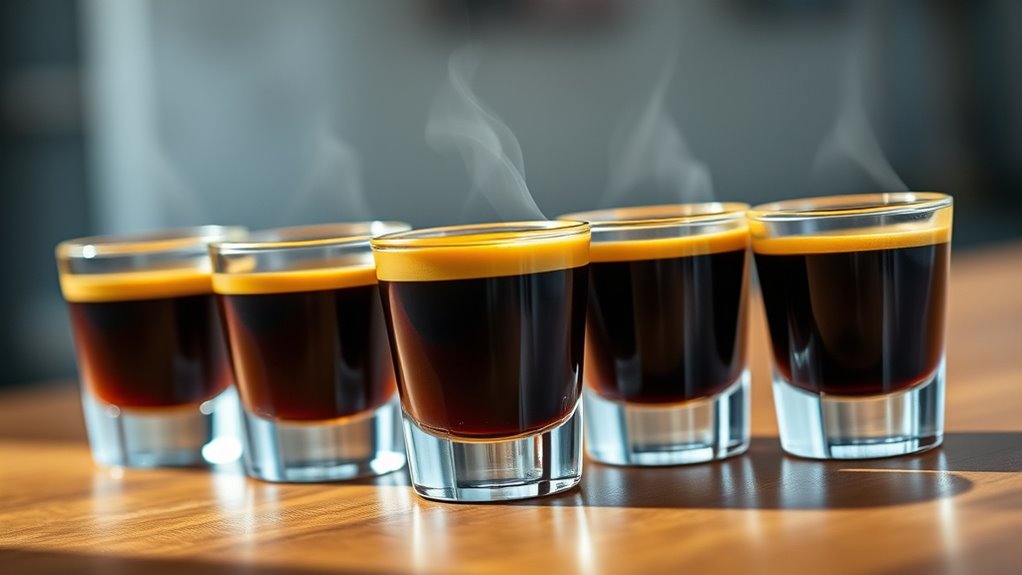
Five shots of espresso typically deliver between 300 and 375 mg of caffeine, assuming each shot contains 60 to 75 mg. This range can vary because of things like espresso strength, shot size, and how it’s brewed.
You should also keep in mind that different coffee bean types, roast levels, and grind sizes all directly affect the caffeine content per shot.
Drinking five shots can push your intake close to or even beyond the recommended daily caffeine limit of 400 mg for most adults.
If you drink them quickly, expect stronger stimulant effects, which might include jitteriness or an increased heart rate.
Knowing these factors helps you better understand your caffeine intake and manage any side effects more effectively.
Additionally, the extraction time and pressure during brewing significantly influence caffeine concentration in each shot.
How Do 5 Shots Of Espresso Compare In Caffeine To Other Coffee Drinks?
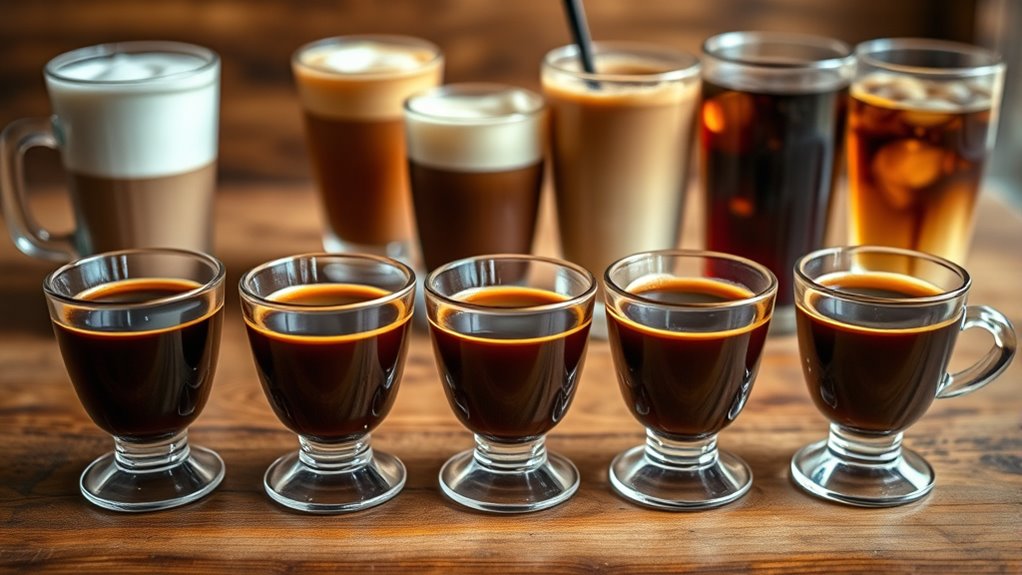
Although espresso shots are smaller in volume, their caffeine concentration makes them comparable to larger coffee servings. Five shots of espresso deliver roughly 300-375 mg of caffeine, which is about the same as 2.5 to 3 standard 8 oz cups of brewed coffee. Each of those cups contains around 80-120 mg of caffeine.
Compared to a 12 oz latte with two shots (around 126 mg), five shots pack a much higher caffeine punch. So, you get a concentrated and rapid caffeine boost with five espresso shots. It matches or even exceeds the caffeine content found in many larger coffee drinks.
That said, this amount is close to or goes over the daily recommended 400 mg caffeine limit. Because of that, it’s really important to think about moderation when you’re drinking multiple espresso shots. You don’t want to risk taking in too much caffeine. Additionally, maintaining proper espresso extraction timing ensures the flavor balance and overall quality of each shot, even when consuming multiple doses.
What Factors Affect Caffeine In Multiple Espresso Shots?
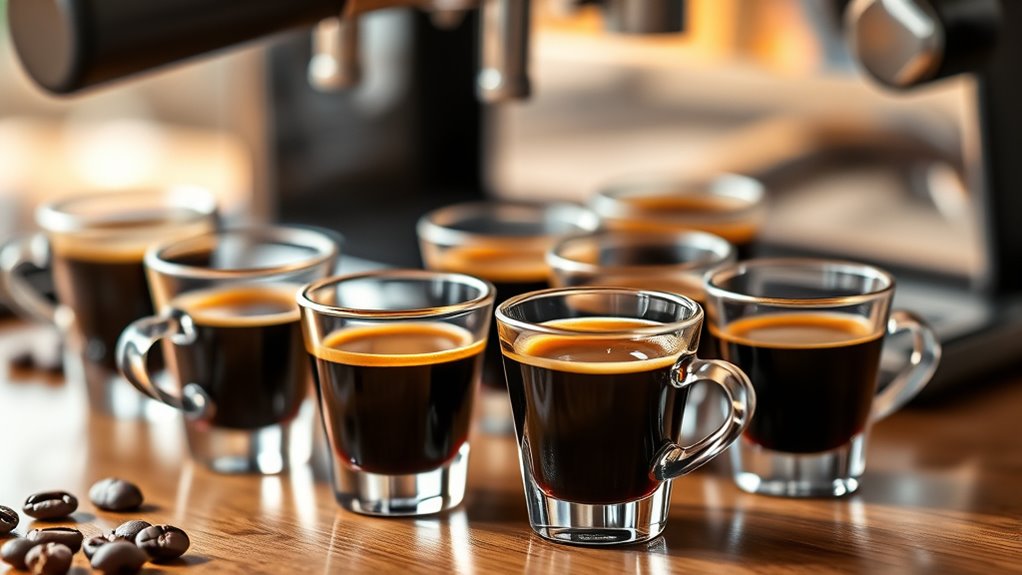
When you order multiple espresso shots, several factors determine the total caffeine content beyond simply multiplying the average per shot. Each shot typically contains 60-75 mg of caffeine, but this can vary with the coffee dose. Double shots using 14-18 grams of grounds extract more caffeine.
The type of coffee bean plays a critical role. Robusta beans have about twice the caffeine of Arabica. The roast profile also affects caffeine levels a bit, with lighter roasts retaining slightly more caffeine than darker ones.
Brewing parameters like water temperature, pressure, grind size, and extraction time influence how much caffeine is extracted. Understanding these variables helps you get a better idea of the actual caffeine in your espresso shots instead of just relying on standard averages. Additionally, espresso is often made from finely ground coffee beans that are brewed and then dried into a concentrated form called espresso powder, which contains a high caffeine concentration.
What Happens When You Drink 300+ Mg Of Espresso Caffeine?
If you consume more than 300 mg of caffeine from espresso, you’ll likely notice some physiological effects like increased jitteriness and a rapid heartbeat. This amount is about four to five shots and can bring on anxiety, restlessness, and stomach upset.
You might also find it harder to sleep and experience a temporary spike in blood pressure. For sensitive folks, palpitations can happen, which means your cardiovascular system is under some extra stress.
If you keep consuming over 300 mg daily, there’s a risk of developing caffeine dependence and tolerance. That means you’ll need more caffeine to get the same buzz.
And if you suddenly cut back, you might get withdrawal symptoms like headaches and irritability.
Since 300 mg is close to the general 400 mg daily limit advised to reduce health risks, it’s a pretty substantial amount. So, it’s important to be cautious and pay attention to how your body reacts.
Spacing espresso shots every 3-4 hours can help maintain steady energy levels and reduce negative effects like jitteriness and sleep disruption, according to safe consumption guidelines.
How Can You Safely Enjoy Multiple Espresso Shots?
Experiencing jitteriness or a rapid heartbeat from consuming over 300 mg of espresso caffeine means it’s time to manage your intake more carefully. To safely enjoy multiple espresso shots, keep your total daily caffeine below 400 mg. That’s about six single or three double shots.
Try to space your shots at least an hour apart. This gives your body time to metabolize the caffeine, which helps reduce any unwanted side effects.
Drinking espresso with fats or proteins can also slow caffeine absorption, making it easier to handle multiple doses.
It’s important to track all your caffeine sources throughout the day so you don’t accidentally go over your limit.
Taking your espresso gradually lowers the risk of overdose and jitteriness. This way, you can enjoy the benefits of espresso without feeling uncomfortable.
Maintaining a consistent brew temperature can also enhance espresso quality, helping you enjoy each shot more fully.
Frequently Asked Questions
Can Espresso Shots Affect Sleep Quality?
Yes, espresso shots can disrupt your sleep quality by delaying sleep onset and reducing REM sleep. Consuming them within six hours of bedtime often causes lighter, less restorative sleep. This is especially true if you’re sensitive to caffeine’s stimulant effects.
How Long Does Caffeine From Espresso Stay in Your System?
Caffeine from espresso stays in your system for about 8 to 14 hours, peaking within an hour. Your metabolism, age, and medications influence this. But on average, half the caffeine clears in 3 to 5 hours.
Are Espresso Shots Safe During Pregnancy?
Espresso shots during pregnancy are a bit of a double-edged sword. You should limit yourself to under 200 mg of caffeine daily to stay safe.
It’s a good idea to chat with your healthcare provider about how to balance enjoying your coffee and keeping things safe. Too much caffeine can pose risks to fetal health and development. So, moderation really is key here.
Do Espresso Shots Cause Dehydration?
Espresso shots don’t cause dehydration if you drink them moderately because the caffeine’s diuretic effect is mild. You’ll stay hydrated by balancing espresso with water and avoiding excessive intake that might increase fluid loss.
Can Espresso Shots Interact With Medications?
Yes, espresso shots can interact with medications by altering their metabolism, absorption, or side effects.
You should definitely check with your healthcare provider if you’re taking stimulants, blood thinners, or psychiatric drugs before you start drinking espresso regularly. It’s better to be safe than sorry!
Conclusion
Drinking five shots of espresso packs a potent caffeine punch, like a lightning bolt jolting your system. You need to understand how this amount compares to other drinks and consider factors like bean type and extraction method.
Consuming over 300 mg of caffeine can spike your heart rate and cause jitters, so approach with caution. By pacing yourself and listening to your body’s signals, you can safely enjoy the intense energy boost without overdoing it.
Pingback: How Many Espresso Beans In A Shot – Exact Count