Espresso roast means coffee beans roasted beyond the second crack, developing oily surfaces that boost sweetness, body, and crema for intense, full-bodied espresso shots. You’ll notice reduced acidity and enhanced caramelized, smoky flavors, perfect for high-pressure extraction.
This roast demands precise grind and extraction adjustments to balance bitterness and optimize flavor. It’s made to highlight roast-driven notes rather than bean origin. Keep exploring to uncover how this influences brewing methods and flavor nuances.
What Is Espresso Roast?
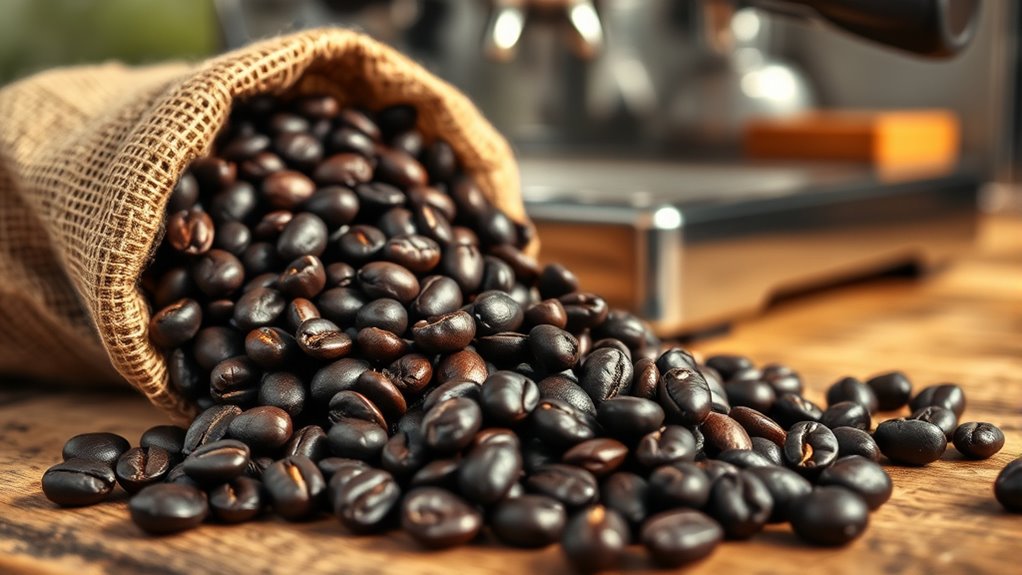
While espresso roast primarily refers to coffee beans roasted to a dark level beyond the first crack, it’s more than just the roast degree. It’s a carefully controlled process that enhances oil content, sweetness, and body to optimize beans specifically for espresso extraction.
Espresso roast is a precise process enhancing oil, sweetness, and body for the perfect espresso extraction.
You’ll notice espresso roast beans develop a shiny, oily surface. This happens because of extended roasting at higher temperatures. The result is increased surface oiliness, reduced acidity, and a fuller, richer mouthfeel.
The roast profile is calibrated to produce a smoky, slightly bitter flavor that complements espresso’s concentrated brewing method. When preparing espresso roast, you focus on precise grind size, dose, and extraction parameters to balance the intensified flavors and maintain the characteristic full-bodied shot.
Not all dark roasts qualify as espresso roast, but most espresso beans are roasted darker to achieve these traits. Additionally, espresso blends often incorporate Robusta beans to enhance caffeine content and bitterness, contributing to the bold flavor profile.
How Espresso Roast Differs From Other Roasts
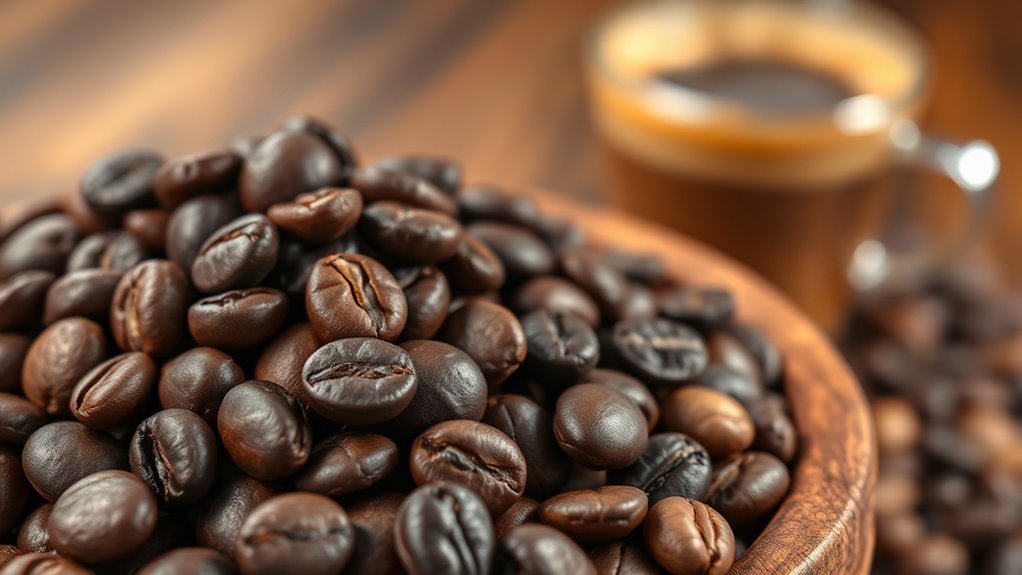
You’ll notice that espresso roast goes beyond your typical dark roast level. It often reaches the second crack, which helps boost the body and cut down on acidity.
What’s really interesting is its flavor profile—it brings out a concentrated sweetness and rich oils. This isn’t just by chance; it’s made specifically to handle the pressure of espresso extraction.
Because of this targeted roasting, the texture and taste end up being pretty unique. It’s stronger and more balanced in a way that sets it apart from other dark roasts.
The roast level impacts crema quality and extraction strength, making espresso roast ideal for producing a thick, flavorful crema.
Roast Level Characteristics
Because espresso roast undergoes a longer, darker roasting process that often passes the second crack, it develops oily surfaces and deep, smoky flavors distinct from lighter roasts. This extended roasting caramelizes sugars extensively, reducing acidity while enhancing sweetness. The oils that emerge on the bean surface are vital. They contribute to espresso’s rich crema and full-bodied mouthfeel.
Unlike lighter roasts, espresso roast emphasizes bold, roast-driven notes such as chocolate, spice, and smokiness, minimizing the prominence of origin-specific flavors. The darker roast level also speeds up extraction during brewing. This helps create a concentrated, intense flavor profile that’s essential for espresso.
Understanding these roast level characteristics helps you appreciate how espresso roast uniquely balances chemical transformations and physical changes to achieve its signature profile. It’s pretty cool how all these elements come together to make that perfect shot! The ideal extraction time used in espresso brewing is carefully controlled to balance flavor and crema development.
Flavor And Texture
The extended roasting process that defines espresso roast directly shapes its distinctive flavor and texture. You’ll notice a fuller body and thicker texture compared to lighter roasts, giving espresso a velvety mouthfeel. This happens because caramelization of sugars during prolonged roasting enhances sweetness and smoothness.
The intense heat also reduces acidity, resulting in a less tangy, more rounded flavor profile. Additionally, the darker roast level increases oil development on the bean surface, producing a syrupy consistency that adds richness.
These factors concentrate soluble compounds and oils, delivering espresso’s characteristic bold, full-bodied flavor with a creamy, thick texture.
When you brew espresso, this combination of caramelization, oil concentration, and acidity reduction creates a uniquely smooth and rich sensory experience distinct from other roast styles. It’s what makes espresso stand out and keeps people coming back for more.
To maintain this quality over time, regular machine descaling is essential to prevent mineral buildup that can affect flavor and performance.
Why Grind and Brewing Matter for Espresso Roast
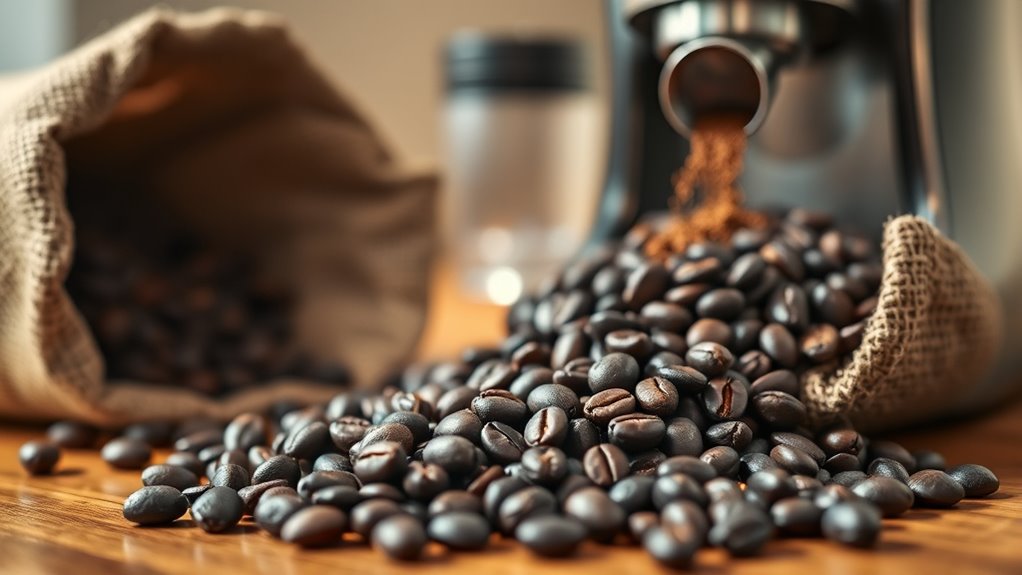
When dialing in your espresso roast, adjusting the grind size is essential to maximize extraction efficiency under high pressure. You need a very fine grind to increase surface area, allowing water to evenly and rapidly extract soluble compounds within 25–30 seconds.
If your grind’s too coarse, you risk under-extraction, resulting in a sour, weak espresso. Too fine, and you’ll over-extract, causing bitterness and harshness. Brewing pressure and temperature interact with grind size to produce the signature crema and dense mouthfeel.
Fine-tuning grind size and brewing parameters is vital when working with espresso roast beans to achieve balanced extraction. This precision prevents common issues, ensuring you extract the roast’s full potential without compromising texture or strength. Using a burr grinder is recommended to maintain consistent grind size and enhance flavor extraction.
Flavor Profiles of Espresso Roast Beans
Although espresso roast beans undergo intense heat, you’ll find their flavor profile centers on smoky, caramelized, and bitter notes developed through extended roasting. This process intensifies natural oils, which enhances the body and aroma, giving the espresso a fuller mouthfeel.
Espresso roasting deepens smoky, caramelized flavors while enriching body and aroma for a fuller, richer cup.
You’ll notice that darker roasts exhibit low acidity, shifting focus from the bean’s inherent characteristics to roast-derived flavors.
Depending on the roast level and blend, expect subtle hints of chocolate, spice, and roasted nuts. Be cautious though, over-roasting can introduce burnt or ashy flavors, compromising balance and clarity.
Understanding these flavor nuances helps you appreciate how roasting transforms the beans.
It produces the distinct espresso profile that emphasizes depth, richness, and complexity over brightness or fruitiness typical of lighter roasts.
To optimize these flavors, espresso shots from darker roasts typically require a shorter extraction time of around 25-30 seconds to avoid over-extraction and preserve flavor balance.
How Espresso Roast Level Changes Extraction and Flavor
Because espresso roast levels alter the bean’s physical and chemical properties, they’ve a big impact on extraction dynamics and flavor outcomes. Darker roasts develop a porous structure with increased surface oils, which helps speed up extraction rates. This porous matrix lets hot water quickly dissolve soluble compounds, giving your espresso a richer, fuller body.
As roasting goes beyond the first crack, caramelized sugars become more intense. This process reduces acidity and boosts sweetness in the shot. But if roasting goes on too long, it can create bitter, burnt flavors because of too much compound breakdown.
The balance between acids, sugars, and bitter substances changes a lot depending on the roast level. This balance directly shapes the taste and aroma of your espresso. Knowing how these changes happen helps you tweak grind size, extraction time, and pressure to get the best flavor.
That way, each shot really reflects the unique chemical profile and physical traits of the roast you chose. Proper roast profile adjustments enhance flavor for high-pressure extraction in espresso.
Why Darker Espresso Roasts Are Popular
You’ll notice that darker espresso roasts reduce acidity, which makes the flavor smoother and less sharp—something a lot of people really like.
On top of that, these roasts develop a richer body and a caramelized sweetness, giving each shot a bit more complexity.
And here’s the best part: their bold flavor stands out well when mixed with milk, making them perfect for lattes and cappuccinos.
Additionally, darker roasts slightly reduce the caffeine content, which can influence the overall strength of the espresso flavor.
Reduced Acidity Preference
Why do many coffee enthusiasts prefer darker espresso roasts? It’s largely due to reduced acidity, which creates a smoother, less tangy flavor. The extended roasting process breaks down chlorogenic acids, markedly lowering overall acidity. This chemical transformation leads to a more mellow profile, ideal for a rich espresso experience.
Here’s why reduced acidity matters:
- Acid Breakdown: Prolonged roasting decomposes organic acids, softening the sharpness typical in lighter roasts.
- Caramelization Effect: Sugars caramelize during dark roasting, balancing bitterness and further masking acidity.
- Milk Compatibility: Lower acidity prevents sourness from clashing with dairy in milk-based espresso drinks.
Understanding these factors helps you appreciate why darker roasts dominate espresso preferences among aficionados.
Enhanced Body And Sweetness
Along with reduced acidity, darker espresso roasts develop enhanced body and sweetness through extended caramelization of sugars during roasting. This longer roast releases more oils from the beans, creating a fuller, richer mouthfeel.
The caramelization balances bitterness with natural sweetness, while intensified roast-driven flavors highlight smoky, chocolatey, and caramel notes. These notes further enrich the cup’s body and perceived sweetness.
| Feature | Effect on Espresso |
|---|---|
| Extended Caramelization | Increases natural sweetness |
| Released Oils | Enhances mouthfeel and body |
| Roast Duration | Intensifies smoky, caramel notes |
| Bitterness Balance | Sweetness counters roast bitterness |
| Flavor Profile | Bold, full-bodied, rich experience |
You’ll find these characteristics are exactly why darker roasts remain popular among espresso enthusiasts.
Milk-Based Drink Compatibility
Because darker espresso roasts have a bold, smoky flavor and reduced acidity, they pair exceptionally well with the creaminess and sweetness of milk in drinks like lattes and cappuccinos. This compatibility arises from several technical factors:
- Flavor Balance: The robust, intense roast profile prevents milk from overpowering the coffee. This helps preserve a rich, full-bodied taste.
- Acidity Reduction: Lower acidity creates a smoother, more harmonious blend when mixed with milk’s natural sweetness.
- Crema Stability: Dark roasts produce a thicker, more stable crema, which enhances texture and visual appeal in milk-based drinks.
Because these characteristics withstand dilution and blending, darker espresso roasts remain the preferred choice for baristas aiming to optimize milk-based espresso beverages. It’s no wonder they’re often the go-to for creamy coffee drinks. Additionally, the presence of a rich crema is essential for creating frothy textures in espresso-based milk drinks, enhancing both flavor and mouthfeel.
Roast Level’s Effect on Espresso Crema, Body, and Sweetness
Although espresso’s flavor hinges on many factors, the roast level plays a crucial role in shaping its crema, body, and sweetness. Darker roasts produce thicker, more persistent crema due to increased surface oils, contributing to a fuller, more viscous mouthfeel.
Roast level significantly influences espresso’s crema, body, and sweetness, with darker roasts offering richer, thicker crema and mouthfeel.
You’ll notice that as the roast darkens, natural sweetness diminishes slightly; however, caramelization counterbalances this by enhancing perceived sweetness.
Conversely, lighter roasts yield a thinner crema and lighter body, emphasizing brighter, floral notes rather than richness. Medium to dark roasts typically strike an ideal balance, delivering stable crema, substantial body, and nuanced sweetness.
Understanding these effects allows you to select the roast level that best suits your desired espresso profile, maximizing extraction and flavor complexity.
Can You Use Espresso Roast Beans for Other Brewing Methods?
You can definitely use espresso roast beans for drip, pour-over, or other brewing methods. Just make sure to adjust your grind size to be coarser than what you’d use for espresso. This helps avoid over-extraction, which can make your coffee taste bitter.
Keep in mind, espresso roast beans are darker and tend to produce a more intense, sometimes smoky flavor. That means they’ll stand out differently when brewed with lighter methods.
These beans are pretty versatile, but getting the grind size and extraction just right is key for a balanced cup. The science behind aeration can enhance flavor development when using espresso roast beans in different brewing techniques.
Brewing Versatility of Espresso
While espresso roast beans are primarily designed for espresso machines, they offer remarkable versatility across various brewing methods like pour-over, French press, AeroPress, and cold brew. You can use these beans beyond espresso, but their dark roast profile yields a bold, full-bodied flavor that impacts each method uniquely.
Consider these points when brewing:
- Pour-over and drip methods may mute delicate origin notes, as espresso roasts emphasize roasted, smoky flavors.
- French press and cold brew highlight the beans’ intense, robust character but can overshadow subtle regional nuances.
- Adjusting grind size and brew time is vital to balance extraction and avoid bitterness or under-extraction.
Grind Size Adjustments
Espresso roast beans require specific grind size adjustments to perform well across different brewing methods. Since espresso demands a very fine grind for high-pressure extraction, you’ll need to coarsen the grind considerably for methods like drip or French press to prevent over-extraction and bitterness.
Using too fine a grind outside espresso can cause slow extraction, clogging, or excessive sediment due to the beans’ oily, dark roast nature.
For pour-over or AeroPress, a fine grind requires you to adjust brew time and water flow carefully to avoid under- or over-extraction. Ultimately, matching the grind size to your brewing method is essential, regardless of roast type, to optimize extraction and flavor balance.
Experiment with coarser settings when brewing non-espresso styles using espresso roast beans.
Flavor Profile Variations
Although espresso roast beans are primarily designed for high-pressure extraction, their intense, oily characteristics can profoundly influence flavor when used in other brewing methods. You’ll notice a distinct shift in taste and extraction dynamics.
Using espresso roast in pour-over or drip brewing yields a fuller-bodied, smoky cup. But the high oil content may clog filters and slow flow rates.
Methods like AeroPress or French press highlight bold, roasted notes while reducing acidity. They demand careful control of grind size and steep time to avoid over-extraction.
Delicate methods may struggle with espresso roast’s intensity, so you’ll need to adjust parameters precisely to balance bitterness and extraction yield.
Understanding these variations helps you optimize flavor, even outside traditional espresso machines.
Espresso Roast vs. Dark Roast Coffee: What’s the Difference?
How do espresso roast and dark roast coffee differ beyond their shared deep color? Espresso roast is actually a subtype of dark roast, specifically engineered for espresso brewing. It’s roasted beyond the second crack to bring out surface oils, which helps create a full-bodied flavor that stands up well under the high-pressure extraction of espresso.
Dark roast coffee, on the other hand, just means beans roasted longer at high temperatures. This process produces smoky, caramelized flavors with less acidity and oily surfaces. But not all dark roasts qualify as espresso roast because that term highlights a tailored roast profile designed to maximize richness, sweetness, and crema in espresso shots.
Tips for Choosing the Right Espresso Roast for Your Taste
When selecting the right espresso roast for your taste, you should carefully consider how roast levels influence flavor profiles and extraction balance. The roast degree directly affects acidity, sweetness, and bitterness in your espresso, so precise choices matter.
Opt for medium to medium-dark roasts to achieve a balanced interplay of sweetness and body. This is ideal for classic espresso.
Choose darker roasts if you prefer a rich, smoky profile with reduced acidity. Just be wary of potential over-extraction leading to bitterness.
Match your roast level with your brewing method and flavor preference. Medium roasts preserve bright, fruity notes and enhance complexity.
Experimentation is key. Try different roasts with your equipment to find the best balance tailored to your palate and extraction technique.
Frequently Asked Questions
How Long Do Espresso Roast Beans Stay Fresh After Roasting?
You’ll find espresso roast beans stay freshest for 2 to 4 weeks after roasting if you store them airtight, away from light, heat, and moisture.
For best flavor, consume within 2 weeks to avoid oxidation and staleness. It’s all about keeping those beans protected so they don’t lose their punch.
Just remember, the fresher the better when it comes to espresso!
What Equipment Is Best for Roasting Espresso Beans at Home?
You can achieve precise espresso roasts using a drum roaster. It offers consistent temperature control around 450°F, which helps ensure even development.
Alternatively, air roasters provide rapid and uniform roasting. They’re great if you want a quicker process without sacrificing quality.
Stovetop poppers are another option, but they require careful heat management. With some practice, you can get quality results at home.
Can Espresso Roast Beans Be Decaffeinated Effectively?
Yes, you can decaffeinate espresso roast beans effectively, but the process may slightly alter flavor intensity. Darker roasts help maintain espresso’s bold profile. Methods like Swiss Water or CO2 improve caffeine removal efficiency.
How Does Altitude Affect Espresso Roast Bean Flavor?
Imagine roasting espresso beans in a Roman amphitheater. Higher altitude beans have a denser structure, brighter acidity, and they hold onto those nuanced flavors even when you dark roast them.
On the other hand, low-altitude beans extract faster. But they usually give you simpler, less complex espresso profiles.
Are Espresso Roasts Suitable for Cold Brew Coffee?
Yes, you can use espresso roasts for cold brew. Expect a bolder, thicker brew with pronounced smoky notes and higher oil content.
That said, longer steeping mellows the flavors. This produces a robust, intense coffee profile that’s quite distinct from lighter roasts. It’s a great choice if you like your cold brew with some extra depth and richness.
Conclusion
When choosing an espresso roast, remember you’re not just picking beans. You’re setting the stage for your entire brew. Understanding how roast level influences extraction, crema, and flavor lets you tailor your espresso to perfection.
Don’t put all your eggs in one basket. Experiment with grind size and brewing methods to reveal nuanced profiles. Mastering these variables guarantees your espresso isn’t just good. It’s consistently exceptional, cup after cup.