If you’re wondering whether cold brew is stronger than espresso, it depends on how you define “stronger.” Cold brew offers a smoother, less acidic flavor and delivers more total caffeine per serving. It often has 200-300 mg in 10-12 oz, making it great for sustained energy.
Espresso, however, packs a much higher caffeine concentration in a small 1 oz shot with about 63 mg. This gives you a faster, bolder boost. Exploring grind size, brew time, and bean choice can help you figure out which suits your taste and caffeine needs best.
What Are Cold Brew and Espresso?
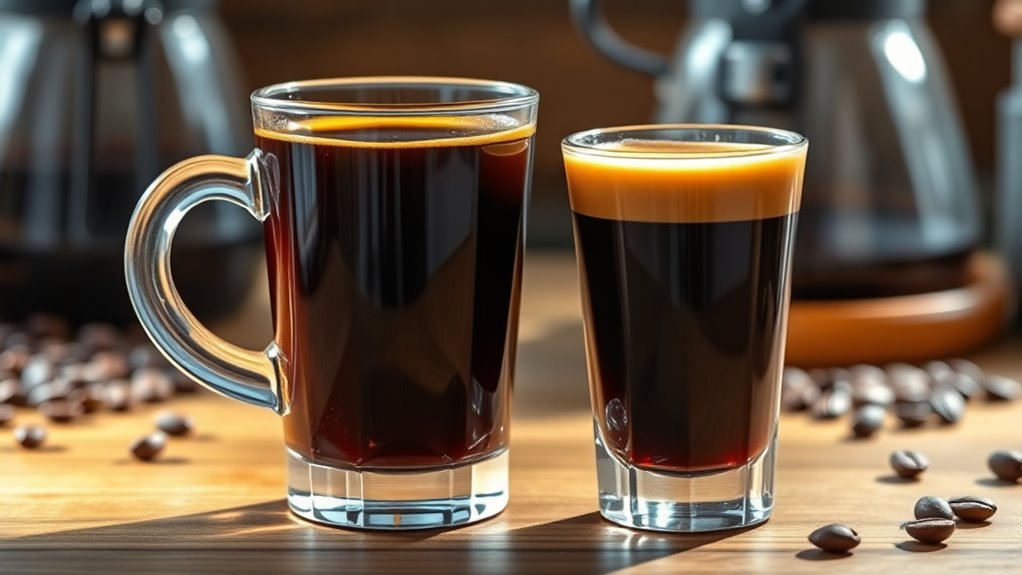
While both cold brew and espresso start with coffee grounds and water, they differ drastically in preparation and flavor. You make cold brew by steeping coarsely ground coffee in cold water for 12 to 24 hours, creating a smooth, low-acidity concentrate.
In contrast, espresso is brewed by forcing hot water under high pressure through extra-finely ground coffee in about 25 to 30 seconds. This yields a small, intense shot with a rich, bold flavor and a characteristic layer of crema.
Cold brew’s mellow, slightly sweet profile often carries chocolate undertones. Espresso delivers a more concentrated, robust taste.
Both methods demand precise grind sizes—coarse for cold brew and extra-fine for espresso—to guarantee proper extraction and achieve their distinctive flavors and textures.
Despite its smaller serving size, espresso typically contains a higher caffeine concentration than cold brew.
How Grind Size and Brew Time Affect Caffeine Levels
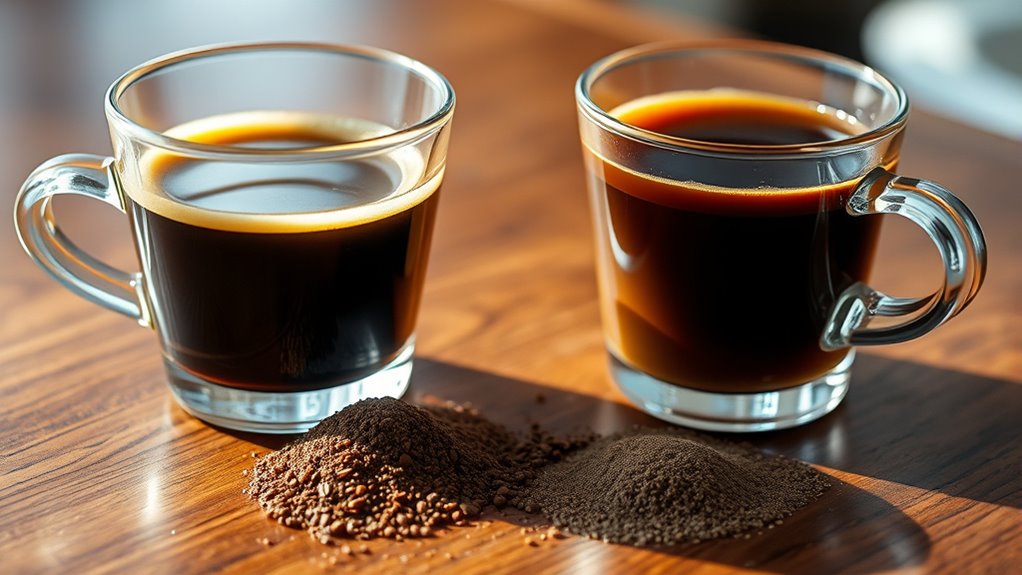
Because grind size and brew time directly influence how much caffeine ends up in your cup, understanding their roles is essential when comparing cold brew and espresso.
Espresso uses a fine grind and a short brew time, about 27 seconds. This boosts caffeine extraction despite limited contact.
Cold brew relies on a coarse grind and long steeping, usually 16–24 hours. This allows caffeine to be extracted slowly but thoroughly.
Consider these key points:
- Fine grind in espresso increases caffeine extraction quickly.
- Coarse grind in cold brew slows extraction but long steeping compensates.
- Too fine a grind in cold brew risks bitterness and over-extraction.
- Too coarse a grind in espresso leads to weak flavor and less caffeine.
Mastering grind size and brew time helps you balance flavor and caffeine in your brew. It’s all about finding the right combo that suits your taste and caffeine needs. Additionally, factors like water temperature and pressure during extraction also play crucial roles in how caffeine and flavors are extracted in espresso.
Caffeine Content: Cold Brew vs. Espresso
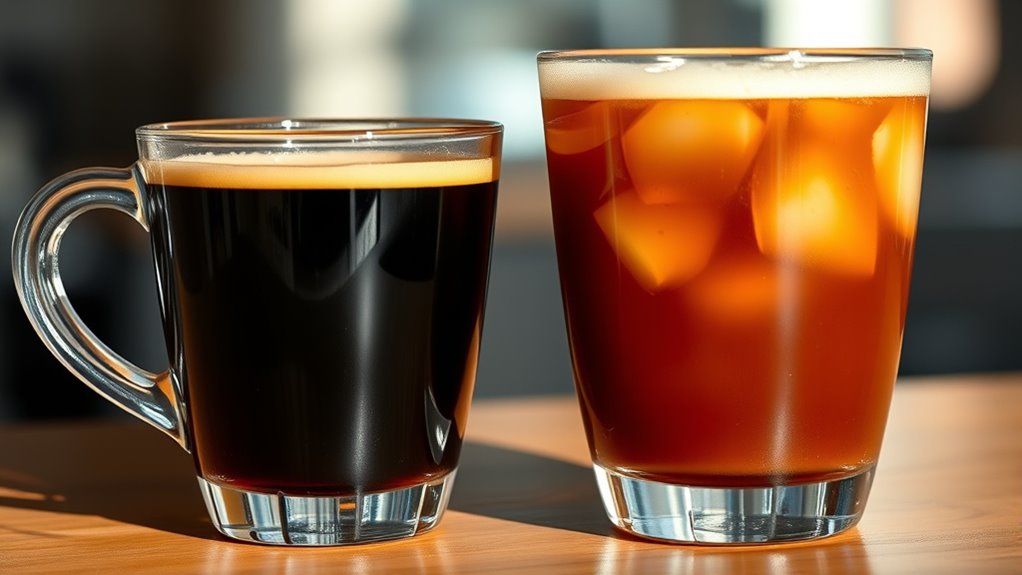
You’ll notice that espresso packs more caffeine per ounce. But cold brew’s larger serving size often delivers a bigger overall caffeine punch.
That longer steeping time of cold brew pulls out more caffeine, which balances out its lower concentration.
Knowing these things helps you figure out which brew fits your caffeine needs best.
Extraction time and method significantly influence the caffeine content, with espresso’s shorter extraction time leading to a more concentrated shot.
Caffeine Concentration Differences
Even though cold brew delivers a higher total caffeine amount per serving, espresso packs more caffeine into each ounce due to its concentrated extraction process. When you sip espresso, you’re getting about 63 mg of caffeine in just 1 oz, making it extremely potent per volume.
Cold brew, on the other hand, offers 150-300 mg in a much larger 16 oz serving, so its caffeine concentration is lower per ounce.
This difference comes from how caffeine is extracted. Espresso’s quick, intense brewing pulls out caffeine rapidly, while cold brew’s slow steeping extracts caffeine more gradually.
- Espresso contains roughly 63 mg caffeine per ounce
- Cold brew ranges 9-19 mg caffeine per ounce
- Espresso is ideal for a quick, intense caffeine hit
- Cold brew suits those who prefer a milder, longer-lasting boost
The espresso dose and grind size play a critical role in determining the strength and flavor concentration of an espresso shot.
Serving Size Impact
While espresso delivers a high caffeine concentration in a small volume, the serving size plays a crucial role in comparing its overall caffeine content with cold brew.
A single 1 oz shot of espresso contains about 63 mg of caffeine, making it potent per ounce.
However, cold brew is typically served in larger portions, often 10 to 12 oz, resulting in a much higher total caffeine intake, usually between 200 to 300 mg per serving.
Even though espresso has more caffeine per ounce, the larger serving size of cold brew means you’ll generally consume more caffeine overall when drinking it.
Additionally, the caffeine concentration in espresso is approximately 2.1 mg/mL, which is significantly higher than that of drip coffee, highlighting espresso’s potency despite smaller serving sizes.
Extraction Time Effects
Understanding how caffeine content varies between cold brew and espresso requires examining their extraction times. Cold brew steeping lasts 16-24 hours, allowing a thorough caffeine release. Espresso brews in just 25-30 seconds under high pressure. This difference really shapes caffeine concentration and total content.
Consider these points:
Cold brew’s long steeping extracts more caffeine overall but results in lower concentration per ounce because of dilution. Espresso delivers a highly concentrated caffeine dose (64-75 mg) in a small 1-2 oz shot. Cold brew servings often contain 200-300 mg of caffeine depending on brew strength.
Extraction time affects caffeine delivery: cold brew offers a larger total dose, while espresso provides a quick, intense hit. You’ll notice extraction time plays a big role in the caffeine experience between these two coffee styles. Additionally, espresso extraction ratios, typically ranging from 1:1 to 1:2, influence the concentration and flavor profile of the shot.
Brewing Methods for Cold Brew and Espresso: Strength & Flavor
Because cold brew and espresso rely on vastly different brewing methods, their strength and flavor profiles vary considerably.
When you make cold brew, you steep coarsely ground coffee in cold water for 16-24 hours. This slow extraction yields a smooth, less acidic drink with a lower concentration, thanks to the 1:10 coffee-to-water ratio.
In contrast, espresso uses extra-fine grounds brewed under high pressure with hot water at around 201°F in just 25-30 seconds. This rapid, intense process extracts a thick, concentrated coffee with a rich crema and a 1:2 coffee-to-water ratio.
The grind size and brewing conditions directly influence bitterness, acidity, and strength. This makes espresso bold and intense, while cold brew offers a mellow, sweet flavor with a gentler caffeine kick. Precise control of grind size is essential for balancing extraction time and flavor in espresso brewing.
Flavor, Convenience, and Cost Differences
The distinct brewing methods behind cold brew and espresso not only shape their strength and flavor but also influence their convenience and cost. You’ll notice espresso delivers a rich, bold taste with caramelized notes and a thick crema, brewed in about 27 seconds. Cold brew, on the other hand, offers a smooth, slightly sweet flavor with chocolate undertones but takes 16-24 hours to steep.
Espresso’s bold, caramelized flavor contrasts with cold brew’s smooth, sweet chocolate notes steeped over hours.
When it comes to cost and convenience, consider this: espresso requires specialized equipment, making it pricier upfront. Cold brew is more budget-friendly at home and stores up to a week.
Espresso serves concentrated, intense shots; cold brew can be diluted or enjoyed over ice.
Cold brew concentrate gives you versatile options by mixing it with milk or water. These differences help you choose what fits your taste and lifestyle. So, whether you want something quick and bold or smooth and easy to sip throughout the day, there’s a brew for you. Regular maintenance, including descaling your espresso machine, is essential to ensure consistent flavor and machine longevity.
Choosing Coffee Beans for Cold Brew and Espresso
When you’re picking beans for espresso, go for dark roasts like Italian or Dark Roast Espresso. These bring out those bold, smoky flavors that really stand up to the high-pressure brewing process.
Now, if you’re making cold brew, you’ll want to choose medium to dark roast beans with a coarse grind. This combo helps boost smoothness and natural sweetness without any bitterness.
Knowing how different roast levels change the flavor makes it way easier to find the perfect beans for each brewing method.
Best Beans For Espresso
Although choosing the right beans can feel overwhelming, focusing on roast level and flavor profile simplifies the process for both espresso and cold brew.
When it comes to espresso, you want beans roasted darker to Italian or Dark Roast levels. These develop rich, smoky flavors and balanced bitterness that suit high-pressure extraction.
Freshness and grind size also play vital roles in maximizing flavor. Here’s what to consider for espresso beans:
- Italian Roast, Café Espresso, and Dark Roast are ideal choices.
- Look for beans with bold, deep, and smoky flavor profiles.
- Ensure beans are freshly roasted and ground fine for espresso machines.
- Avoid lighter roasts that won’t hold up under espresso’s intense brewing pressure.
Choosing beans this way guarantees a rich, full-bodied espresso shot every time. It really makes all the difference in your cup. Using a burr grinder to achieve consistent, fine grounds just before brewing helps preserve oils and enhances espresso quality.
Ideal Cold Brew Beans
Since cold brew relies on a slow, low-temperature extraction, you’ll want to choose medium to dark roast beans that bring out smooth, naturally sweet flavors without bitterness.
Opt for high-quality Arabica beans with chocolate and nutty notes to enhance flavor clarity and balance.
A coarse grind is essential to avoid over-extraction and harshness during the long steeping process.
Avoid lighter roasts or overly fine grinds, which can introduce unwanted sourness or bitterness.
In contrast, espresso demands darker roasts like Italian or Espresso Dark Roast, emphasizing smoky, caramelized flavors suited for quick, high-pressure brewing.
By selecting the right beans and grind size for cold brew, you guarantee a rich, mellow cup with smooth sweetness.
It’s perfect for those seeking an invigorating, less acidic coffee experience.
Using a built-in conical burr grinder ensures consistent grind size for optimal extraction and flavor in espresso preparation.
Roast Levels Impact
Choosing the right roast level markedly shapes the flavor and strength of both cold brew and espresso. When selecting beans, you want to evaluate how roast impacts taste and caffeine.
For cold brew, medium to dark roasts bring out smoothness and natural sweetness, while dark roasts highlight bold, smoky notes perfect for espresso.
Light roasts, with their higher acidity and delicate flavors, aren’t ideal for cold brew but can offer nuanced espresso profiles.
Robusta beans add caffeine and bitterness, common in espresso blends but rare in cold brew.
Medium roasts balance sweetness and smoothness for cold brew.
Dark roasts emphasize intensity and smokiness in espresso.
Light roasts retain acidity but suit espresso better than cold brew.
Robusta beans boost caffeine and bitterness, mainly in espresso blends.
Choosing Between Cold Brew and Espresso
When you decide between cold brew and espresso, understanding their caffeine profiles is key. Cold brew usually delivers more total caffeine per serving, around 200 to 330 mg in a 12-ounce cup. This is compared to a single espresso shot’s 64 to 75 mg.
Cold brew packs 200-330 mg caffeine per 12 oz, much more than espresso’s 64-75 mg per shot.
Espresso offers a quick, intense hit of caffeine concentrated in just an ounce or two. It’s ideal when you need an immediate boost.
Cold brew, however, provides a smoother, gentler caffeine release over a longer period, thanks to its extended steeping process and larger serving size.
Your choice really depends on whether you want a rapid, concentrated jolt or a sustained, milder caffeine intake. Think about how much caffeine you prefer at once and how you like to pace your energy throughout the day.
Frequently Asked Questions
Can Cold Brew Cause More Jitters Than Espresso?
Yes, cold brew can cause more jitters than espresso because it typically contains more caffeine per serving. If you drink larger amounts, you’re likely to feel stronger stimulant effects and increased nervousness or restlessness.
It all comes down to the caffeine content. Cold brew is usually brewed longer and with more coffee grounds, so it packs a bigger punch. So, if you’re sensitive to caffeine, you might want to keep an eye on how much cold brew you’re drinking.
How Does Milk Affect Caffeine Absorption in Cold Brew and Espresso?
Milk slows caffeine absorption in cold brew and espresso by diluting stomach acids and binding caffeine molecules.
Are There Health Benefits Unique to Cold Brew Coffee?
You’ll find cold brew offers unique benefits like higher antioxidants and lower acidity, which reduce stomach irritation and inflammation. These qualities may improve cognitive function and lower type 2 diabetes risk.
Does Espresso Lose Caffeine Content if Stored After Brewing?
You might expect espresso to lose caffeine after sitting, but it doesn’t. Unlike its fragile flavors, caffeine remains stable if stored cool and airtight.
How Does Altitude Impact Caffeine Extraction in Cold Brew vs. Espresso?
At higher altitudes, you’ll find espresso extraction weakens due to lower pressure and boiling points. This happens because the water boils at a lower temperature, which affects how well the coffee compounds get pulled out.
On the other hand, cold brew stays steadier. Its slow steeping process offsets altitude effects, so caffeine extraction remains more consistent in cold brew than espresso.
Basically, cold brew doesn’t rely on pressure or temperature the same way espresso does, making it a more reliable choice when you’re brewing up high.
Conclusion
If you think cold brew or espresso is just coffee, think again. They’re caffeine powerhouses with totally different punches. Cold brew sneaks in a slow, smooth caffeine kick, while espresso blasts you with intense, concentrated energy.
Choosing between them isn’t just about strength. It’s about flavor, convenience, and your mood. So, next time you crave a coffee jolt, remember you’re not just picking a drink. You’re picking your own bold adventure.

Pingback: What Is Espresso Roast – Explained
Pingback: Is Turkish Coffee Stronger Than Espresso – Answered