You can use regular coffee in an espresso machine, but you’ll need to grind it very fine to get a strong, well-extracted shot. Regular beans are usually lighter roasted and coarser ground, so adjusting grind size, tamp pressure, and brew time is key to avoid weak, watery espresso.
Darker roasts with consistent fine grinds perform best, but with some tweaks, regular beans can produce smooth, balanced espresso. Keep exploring to reveal more tips and tricks.
Can You Use Regular Coffee Beans in an Espresso Machine?
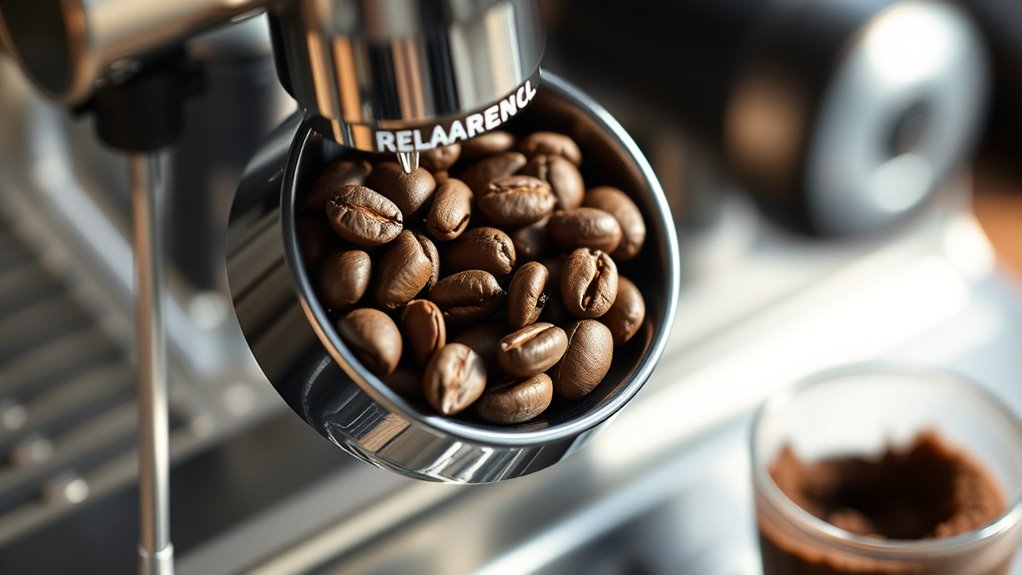
While you can use regular coffee beans in an espresso machine, you’ll need to grind them very finely, much finer than the typical drip coffee grind, to get a proper extraction.
Pre-ground drip coffee is usually too coarse and leads to weak, under-extracted shots. If your grind is too coarse, your espresso will taste watery and sour.
Grinding regular beans to the right fineness is essential for decent espresso results. Though beans labeled for drip coffee can work, they might lack the richer flavor profile of espresso-specific beans.
To optimize extraction, you should also tamp evenly and adjust your brew time accordingly.
With these adjustments, you can get a satisfying espresso even without dedicated espresso beans. Just keep in mind that the flavor nuances may vary a bit.
Additionally, factors like grind size influence and extraction consistency play a crucial role in achieving balanced espresso flavor.
What’s the Difference Between Regular and Espresso Coffee Beans?
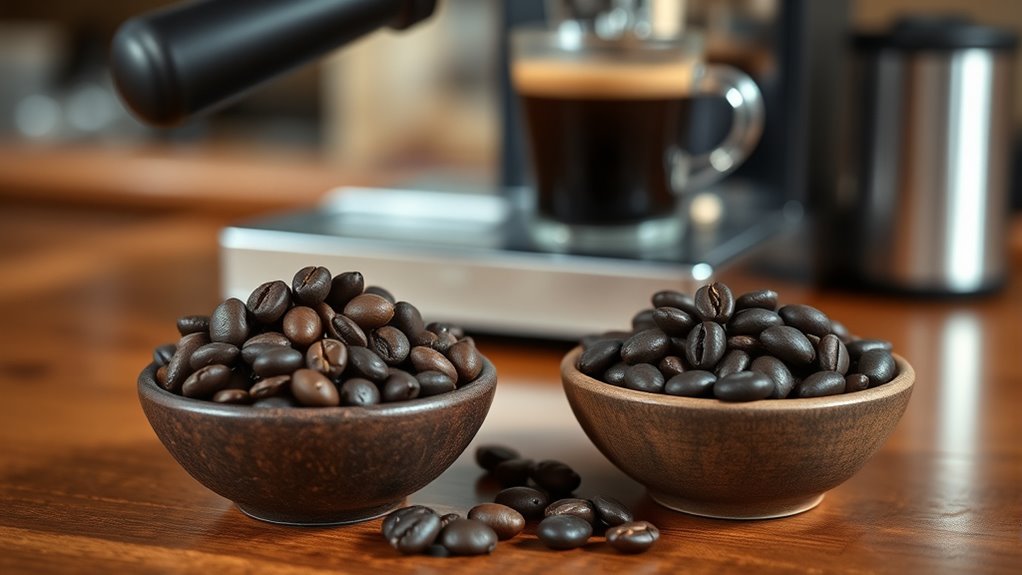
Understanding how to prepare regular coffee beans for espresso naturally leads to the question of what sets espresso beans apart from regular ones. The truth is, there’s no inherent difference in the beans themselves.
There’s no inherent difference between espresso beans and regular coffee beans themselves.
The main distinctions lie in the roast level and grind size.
Espresso beans are usually roasted darker to develop bold flavors and ground much finer to handle the high-pressure extraction process in espresso machines.
Regular coffee beans, often roasted lighter and ground coarser for drip brewing, can still be used for espresso if you adjust the grind size properly.
So, whether a bean is labeled “espresso” or “regular” doesn’t define its suitability.
It’s really how you roast and grind it that matters.
For best results, controlling the extraction time ensures a balanced, concentrated flavor when brewing espresso.
How Does Grind Size Affect Espresso With Regular Beans?
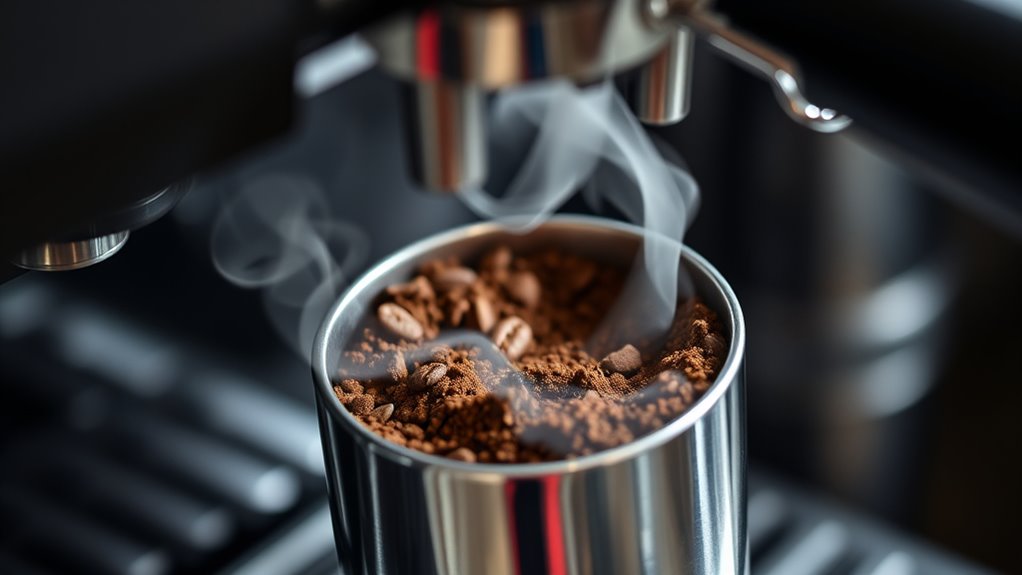
You want to use a fine grind when brewing espresso with regular beans. This helps prevent under-extraction, which can make your shot taste sour.
If the grounds are too coarse, the water flows through too quickly, and you won’t get those rich flavors.
Also, be careful about grind consistency. Uneven grind sizes can cause channeling, where water finds the easiest path and extracts unevenly.
That means some parts of your espresso taste different from others.
Adjusting grind size in small increments helps maintain consistent particle size for optimal extraction and flavor balance.
Importance Of Fine Grind
Because grind size directly impacts extraction, using a fine grind is vital when brewing espresso with regular coffee beans. A fine grind increases the surface area, allowing hot water under pressure to extract rich flavors evenly and produce the signature crema.
If your grind is too coarse, you’ll end up with weak, sour, and watery shots due to under-extraction.
Here’s why fine grinding matters:
- Maximizes flavor extraction by increasing surface contact with water.
- Ensures consistent water flow through coffee grounds for balanced shots.
- Produces crema by allowing proper pressure buildup and even saturation.
Using a burr grinder helps you achieve this uniform fine grind, which is essential for turning regular beans into a satisfying espresso. It really makes all the difference! Adjusting grind size within the ideal range of 200-400 microns is crucial to maintain balanced extraction and flavor clarity.
Effects Of Coarse Grounds
Although it might seem convenient, using coarse grounds in your espresso machine can drastically undermine the quality of your shot. Coarse grounds allow water to rush through too quickly, leading to under-extraction. This results in weak, watery espresso with a sour or flat taste that lacks the rich complexity you’re aiming for.
Additionally, the larger particle size often produces little to no crema, leaving your shot with a thin, inconsistent foam layer. Coarse grounds can also cause channeling, where water finds uneven paths through the coffee.
Plus, they may clog the portafilter, increasing the need for frequent cleaning.
If you want authentic espresso, choosing the right grind size is critical. Coarse grounds simply don’t extract the flavors properly and end up compromising your entire brewing process.
For optimal espresso, it is essential to master hot water temperature and vigorous stirring to achieve a rich, thick crema formation.
Grind Consistency And Extraction
Coarse grounds might seem like a simple mistake, but the grind size and consistency play an even bigger role in shaping your espresso’s flavor and texture. When you use regular beans, dialing in the perfect grind guarantees balanced extraction and rich crema. Here’s why it matters:
- Proper Resistance: A fine, uniform grind creates the right resistance for water, allowing full flavor extraction.
- Avoid Channeling: Uneven grounds cause channeling. Water flows through weak spots, producing flat, inconsistent espresso.
- Prevent Over-Extraction: Too fine a grind clogs the portafilter, causing bitter flavors and risking machine damage.
Getting your grind right really makes a difference, so it’s worth taking the time to find that perfect balance. Additionally, brewing temperature and grind size can influence the amount of coffee oils extracted, which subtly affects flavor and calorie content.
What Happens When You Brew Regular Coffee Grounds as Espresso?
When you brew regular coffee grounds in an espresso machine, you’ll likely end up with a weak, watery shot that misses the rich intensity you expect from espresso. Regular grounds tend to be coarser and uneven, which disrupts pressure buildup and leads to under-extraction.
This causes the shot to lack the characteristic crema or results in a thin, inconsistent layer on top.
You’ll notice the flavor skews sour, overly acidic, or flat because the machine can’t properly extract the coffee’s oils and compounds in the short, high-pressure process espresso requires.
Plus, using the wrong grounds can clog the portafilter, which might damage your machine or cause pressure problems.
Achieving a quality espresso shot depends heavily on using a fine grind size to ensure proper extraction and crema formation.
How Can You Adjust Your Espresso Machine for Regular Coffee Beans?
Since regular coffee beans are typically ground coarser than espresso beans, you’ll need to tweak your espresso machine’s settings to get the best possible extraction. Coarser grounds can cause under-extraction or clogging if you don’t adjust properly.
Regular coffee grounds require espresso machine tweaks to avoid under-extraction and ensure smooth brewing.
So, focus on these key changes:
First, adjust the grind size to be coarser and reduce tamping pressure to let water flow more freely. This helps prevent channeling and bitterness.
Next, shorten the brew time or pull multiple shorter shots to avoid over-extraction and achieve a balanced flavor.
If your machine allows, try lowering the pressure settings and slightly increasing the coffee dose. This can help compensate for the coarser grind and keep the flavor intensity just right.
These adjustments will help your espresso machine handle regular coffee beans effectively, making sure you get a smoother extraction every time.
Also, maintaining consistent timing during extraction is essential to ensure reproducible flavor and quality when using regular coffee beans.
Tips to Improve Espresso Flavor Using Regular Coffee Beans
Although regular coffee beans aren’t traditionally designed for espresso machines, you can still enhance your espresso’s flavor by fine-tuning your approach. Start by using a burr grinder for a consistent, fine grind and adjust tamping pressure to guarantee even compression.
Pre-wetting grounds helps extraction, and experimenting with longer extraction times or multiple pulls can deepen the flavor. Blending regular beans with darker roasts also boosts richness and crema.
| Tip | Benefit |
|---|---|
| Burr grinder fine grind | Better extraction consistency |
| Adjust tamping pressure | Promotes even water flow |
| Pre-wet coffee grounds | Improves flavor extraction |
| Blend with darker roasts | Enhances richness and crema |
Additionally, brewing with a 15:1 water-to-coffee ratio can help achieve a stronger, more balanced espresso flavor.
Give these tips a try to get the most satisfying espresso from regular beans. You might be surprised how much of a difference a few adjustments can make!
Why Espresso Beans Make a Better Shot
You’ll notice espresso beans are roasted darker, which really brings out more intense flavors. This darker roast is perfect for the high-pressure brewing method used in espresso machines.
Plus, the fine grind size helps extract all those delicious flavors quickly during the short shot.
Because of this precise combination, you get that signature crema on top and a smooth, balanced taste that regular coffee just can’t match. It’s what makes espresso shots so special and satisfying.
However, unlike traditional espresso, white espresso uses lightly roasted beans that yield a milder, nutty flavor with higher caffeine content.
Roast Level Importance
When you choose espresso beans, you’re selecting coffee that’s been roasted darker to bring out flavors that thrive under high-pressure brewing. This roast level is vital because it shapes the taste and quality of your shot.
Darker roasts reduce acidity and create a richer, more balanced flavor that extracts quickly without sour notes. Plus, the roasting process develops oils on the bean’s surface that help form the signature thick, velvety crema.
Here’s why roast level matters:
- Flavor Balance: Darker roasts offer a smooth, less acidic profile ideal for espresso’s intense extraction.
- Crema Formation: Surface oils produced in dark roasts contribute to crema’s texture and appearance.
- Extraction Efficiency: Roast level guarantees flavor compounds extract fully and quickly under pressure.
Choosing the right roast really elevates your espresso experience every time.
Grind Size Precision
Beyond selecting the right roast, the grind size plays a major role in crafting a quality espresso shot. Espresso beans are ground extremely fine to maximize surface area. This ensures water extracts rich flavors under high pressure.
If your grind isn’t precise and uniform, you risk channeling. That causes uneven extraction and a weak, sour taste. Using coarser grounds, like those for drip coffee, won’t build enough pressure and will under-extract your shot.
| Grind Size | Extraction Effect | Equipment Needed |
|---|---|---|
| Fine (Espresso) | Balanced, rich crema | Burr grinder |
| Medium-Coarse | Under-extracted, sour | Blade grinder |
| Inconsistent | Channeling, uneven shot | Poor grinder choice |
Choosing the right grind size is essential for that perfect espresso pressure and flavor. It really makes all the difference.
Flavor Profile Balance
Although any coffee bean can technically be used in an espresso machine, espresso-specific beans deliver a far superior flavor profile that’s tailored for the intense extraction process. These beans are roasted darker to enhance richness and balance. This allows you to enjoy a shot that’s both bold and smooth.
When you use espresso beans, you get a balanced flavor that withstands high-pressure extraction, preserving bitterness and sweetness. You also get the ideal extraction of oils and soluble compounds through a fine grind, resulting in a harmonious taste.
Plus, there’s consistent complexity that avoids sour or flat notes common with regular beans.
Choosing espresso beans ensures your shot remains full-bodied and well-rounded. It gives you a better, more satisfying espresso experience every time.
Using Espresso Machines to Brew Larger Coffee Servings With Regular Beans
Since many espresso machines, especially superautomatic models, let you adjust coffee grounds and water amounts, you can easily brew larger servings using regular beans. To achieve this, you might run multiple extractions or dilute a concentrated shot with hot water, creating a coffee similar to a standard mug.
Many espresso machines allow adjustments to brew larger servings by multiple shots or diluting with hot water.
Adjusting the grind size to be coarser and tweaking tamping pressure helps prevent over-extraction and machine clogging while increasing volume.
Experimenting with extraction time further refines flavor balance in bigger servings.
Some baristas combine several shots or add hot water directly to expand volume without sacrificing taste.
Frequently Asked Questions
Can I Use Decaf Regular Coffee in an Espresso Machine?
Yes, you can use decaf regular coffee in your espresso machine. Just make sure it’s ground finely for espresso.
While the flavor and crema might be a bit different, you’ll still get a rich, satisfying shot with proper extraction. It’s really about how you prepare it. So, don’t hesitate to give it a try!
How Does Water Temperature Affect Espresso With Regular Coffee?
Water’s warmth whispers flavor secrets. If it’s too hot, your espresso bites bitterly. Too cool, it sighs weakly.
With regular coffee, you’ll want to fine-tune the temperature to coax out balanced, vibrant shots every time. It’s all about finding that sweet spot where the flavors come alive just right.
Is Espresso Machine Maintenance Different When Using Regular Coffee?
Yes, you’ll need to clean your espresso machine more often when using regular coffee. The coarser grounds leave more residue, so frequent descaling, group head cleaning, and filter maintenance become essential.
This helps keep your machine running smoothly. It’s a bit more work, but totally worth it to avoid clogs and maintain great taste. Just think of it as part of the routine to get the best out of your coffee.
Can I Mix Regular and Espresso Beans for Brewing?
Imagine blending rough sand with fine sugar. Mixing regular and espresso beans disrupts extraction. You’ll get uneven flavors and clogged filters, so stick to one type for a smooth, rich shot every time.
It’s all about keeping things consistent. When you mix beans, the grind size and roast levels don’t match up, which throws off the whole brewing process. Trust me, your taste buds will thank you for keeping it simple!
Does Using Regular Coffee Affect the Lifespan of My Espresso Machine?
Yes, using regular coffee can shorten your espresso machine’s lifespan by causing clogs and uneven pressure. You’ll need to clean more often, and wear on seals and filters increases, raising maintenance costs over time.
It’s kind of like using the wrong fuel in a car—it might run, but it won’t run smoothly or last as long. So, sticking to coffee meant for espresso machines is usually a better bet.
Conclusion
So, can you use regular coffee beans in your espresso machine? Absolutely, but it’s not always ideal. Regular beans and espresso beans differ in roast and grind, which impacts flavor and extraction.
By adjusting grind size and machine settings, you can get a decent shot. But espresso beans are engineered for that rich, bold taste.
Why settle for less when you can fine-tune your brew for the perfect espresso experience?