Espresso beans aren’t a special variety but any coffee bean roasted and blended for espresso’s rich, bold flavor. You’ll find espresso roasts often darker with oily surfaces, enhancing crema and body. But roast levels can vary to suit your taste.
Grinding finer increases extraction pressure, creating that signature intense shot. Blending beans from different regions balances acidity and sweetness, perfecting the flavor. It’s all about finding the right combo for you.
Understanding roast, blend, and brewing techniques will help you master espresso’s complexity and depth. Once you get these down, making a great espresso becomes much easier and more enjoyable.
What Are Espresso Beans? Debunking the Myth
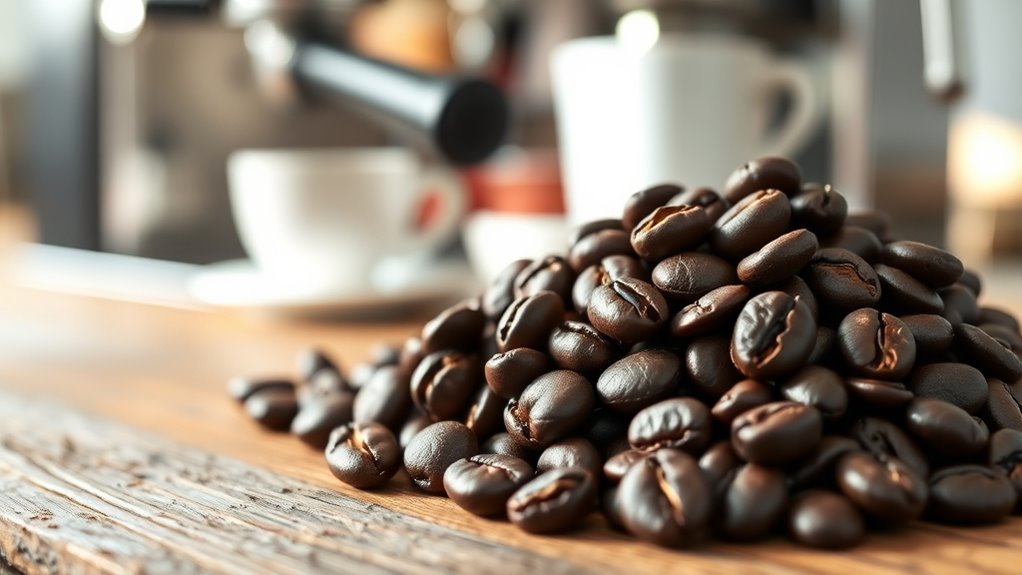
Although many believe espresso beans are a specific type of coffee bean, the truth is that any coffee bean can be used to make espresso. The term “espresso beans” actually refers to the roasting and blending process rather than a distinct bean variety.
Espresso beans aren’t a unique variety but any coffee bean roasted and blended for espresso brewing.
Typically, beans labeled as espresso undergo a darker roast to bring out bold, rich flavors that withstand the intense pressure of espresso brewing.
You should know that all coffee beans come from the same species; there’s no unique “espresso” coffee plant. The key to great espresso lies in how the beans are roasted, blended, and brewed, not in choosing a separate category of beans.
Understanding this helps you focus on quality and technique rather than misconceptions. Proper preparation, including grind size and tamping, is essential for achieving the best espresso flavor and extraction.
How Espresso Beans Differ From Regular Coffee Beans
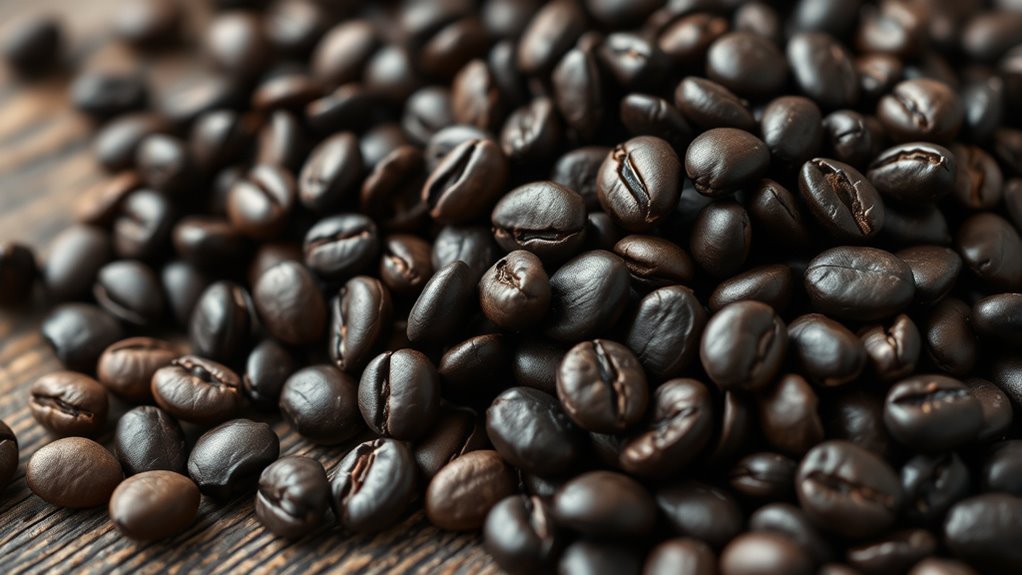
You’ll notice that espresso beans are roasted darker than regular coffee beans, which boosts their oil content and gives them a bolder flavor.
When it comes to grinding, espresso beans are ground finer to help extract those rich flavors under high pressure.
Unlike some espresso-based drinks that use flavoring agents instead of real espresso, true espresso beans contribute to the authentic bold coffee flavor found in traditional espresso martinis.
Roasting Level Differences
When you compare espresso beans to regular coffee beans, the most noticeable difference lies in their roasting levels. Espresso beans undergo a longer roasting process at higher temperatures, resulting in dark to extra-dark roasts with deep, oily surfaces. This dark roasting is essential because it enhances oil extraction, which creates the rich crema and bold flavor you expect from espresso.
In contrast, regular coffee beans are often roasted lighter, preserving a brighter, more acidic flavor with less surface oil. The dark roast of espresso beans emphasizes bitterness and body, traits that are subdued in lighter roasts.
Understanding these roasting distinctions helps you appreciate why espresso delivers its signature intensity and mouthfeel, setting it apart from your typical brewed coffee.
It’s pretty interesting how roasting can change the whole coffee experience, isn’t it? Additionally, the development of oils during roasting significantly influences the espresso’s crema and flavor profile.
Grind Size Importance
The dark, oily surface of espresso beans sets the stage, but the grind size plays a major role in revealing their full potential. You need to grind espresso beans very finely, typically between 0.2 to 0.3 millimeters, to optimize pressure and extraction during brewing. This fine grind increases the surface area, allowing you to extract flavors and oils quickly within 20-30 seconds.
Unlike regular coffee beans, which are ground coarser depending on the brewing method, espresso demands precision. Using a grind that’s too coarse leads to under-extraction and weak flavor, while too fine a grind causes over-extraction and bitterness. Maintaining a consistent, uniform particle size is essential to prevent channeling and ensure even extraction for richer flavor.
Oil Content Impact
How exactly do espresso beans differ from regular coffee beans in their oily composition? Espresso beans contain a higher concentration of natural oils, which gives them a glossy, oily surface you can often see. These oils play a vital role during brewing by emulsifying under the high pressure of an espresso machine, creating that signature thick, creamy crema on top.
In contrast, regular coffee beans typically have lower oil content, resulting in little to no crema. This higher oil level in espresso beans doesn’t just affect appearance; it enhances the body, flavor complexity, and mouthfeel of the coffee.
Plus, these oils respond better to the intense extraction process, ensuring espresso’s rich, full-bodied profile that you won’t get from standard brewed coffee. It’s pretty cool how much difference those oils make!
Additionally, the higher oil content contributes to a higher caffeine concentration in a double shot of espresso compared to brewed coffee.
How Roasting Levels Shape Espresso Bean Flavor
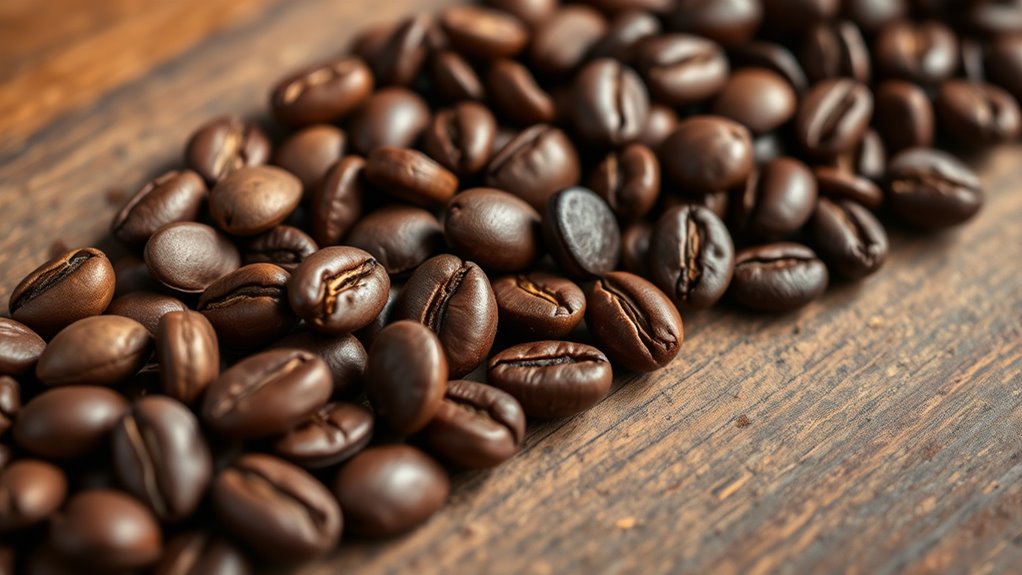
Because roasting levels considerably alter the chemical composition of espresso beans, you’ll notice distinct flavor profiles depending on how darkly they’re roasted. Light roasts preserve the beans’ origin characteristics, offering brighter, more acidic, and fruity flavors without oil on the surface.
Medium roasts develop some surface oils and caramelized sugars, creating a balanced cup with both complexity and subtle sweetness.
When beans reach darker roasts, such as French or espresso roast, oils migrate to the surface, and sugars deeply caramelize. This produces robust, full-bodied flavors with increased bitterness and smoothness.
This progression shapes the espresso’s body, intensity, and mouthfeel, letting you tailor your shot’s flavor by selecting the roast level that best suits your taste preferences.
Understanding these nuances helps you appreciate how roasting transforms espresso beans into a diverse sensory experience. The use of fresh espresso is crucial in espresso-based drinks like the Espresso Martini to preserve essential oils and crema that enhance flavor and texture.
How Blending Creates Balanced Espresso Shots
When you blend espresso beans, you’re mixing together unique flavors from different regions—think Latin American chocolate, African citrus, and Asian earthiness. This combo helps you create a shot that’s complex and well-balanced.
You tweak the proportions carefully to get the right balance between the espresso’s body and acidity. That way, you get richness without the brightness being too strong.
It’s all about finding that perfect harmony, which results in a versatile espresso that works consistently no matter how you brew it.
Precise blending results in a sweet, syrupy, well-rounded espresso with no single flavor dominating, where the components complement each other to enhance overall complexity and enjoyment of the cup’s flavor harmony.
Regional Flavor Contributions
Why do espresso blends from different regions taste so distinct yet perfectly balanced? It’s because each region contributes unique flavor notes that, when combined, create harmony.
Latin American beans add chocolate and nutty sweetness, giving your espresso a richer body.
African beans bring bright citrus and berry flavors, boosting complexity and acidity.
Asian beans introduce earthy and spicy tones, adding depth and a smoky character.
By blending these regional components, roasters craft espresso shots that balance sweetness, acidity, and body precisely.
Understanding the specific origins in your blend helps you appreciate how each region’s profile influences the overall taste. This way, you get consistent, unique espresso experiences every time.
That regional interplay is key to the nuanced flavor you enjoy in a well-crafted espresso.
Selecting beans processed with Swiss Water decaffeination can also influence the flavor profile by ensuring minimal caffeine residuals while preserving bean quality.
Balancing Body And Acidity
The interplay of regional flavors sets the foundation for a well-rounded espresso, but mastering the balance between body and acidity truly defines the shot’s character.
By blending Latin American beans, which bring sweetness and nutty undertones, with African beans known for their vibrant citrus acidity, you create a nuanced, harmonious espresso.
This blending technique helps you avoid overly sharp acidity or excessive heaviness, delivering a smoother experience.
As you experiment with different ratios, you tailor the flavor profile to your preference, achieving the ideal equilibrium between richness and brightness.
Understanding how each origin’s characteristics influence the final shot allows you to craft espresso blends that showcase complexity without compromising balance.
This way, every sip is both full-bodied and lively.
Additionally, the roast level and bean variety also play a role in shaping the caffeine content and flavor complexity of your espresso blend.
Why Espresso Beans Are Ground Finer Than Regular Coffee
Because espresso brewing relies on high pressure and a short extraction time, you’ll find that espresso beans are ground much finer than regular coffee. This fine grind increases the coffee’s surface area, allowing water to extract flavors efficiently within 20-30 seconds.
Espresso beans are ground finely to maximize surface area for efficient flavor extraction in just 20-30 seconds.
The finer particles create essential resistance, enabling the necessary pressure buildup for proper espresso extraction.
If the grind were coarser, water would flow too quickly, causing under-extraction and producing weak, sour coffee. Grinding finely also ensures the concentrated shot’s intensity and complexity.
By mastering this grind size, you control how flavors and solubles dissolve rapidly under pressure, resulting in a balanced, rich espresso with the ideal strength and body.
This precision is crucial to achieving the distinctive qualities that separate espresso from other brewing methods.
Adjusting grind size in small increments is essential to maintain consistent extraction quality and optimal flavor balance.
The Role of Natural Oils in Espresso and Crema
You’ll notice that espresso beans have a higher concentration of natural oils, and these oils are key to creating that rich, creamy layer on top—the crema.
During extraction, the oils emulsify, which adds to both the texture and the complex flavor of the espresso.
When you understand how the oil content affects crema formation, it really helps you appreciate the full sensory experience of a quality shot.
Oil Content Importance
How do natural oils in espresso beans influence the quality of your shot? These oils are essential for flavor intensity, aroma, and the rich mouthfeel you expect from espresso. During brewing, oils emulsify, enhancing extraction and contributing to crema’s creamy texture.
Without sufficient oils, your espresso lacks depth and viscosity.
| Aspect | Impact of Natural Oils |
|---|---|
| Flavor Intensity | Enhances concentrated, full-bodied taste |
| Aroma | Provides a rich, inviting coffee scent |
| Crema | Supports the formation of a creamy layer |
| Mouthfeel | Adds viscosity and smooth texture |
| Extraction Efficiency | Improves solubility and flavor extraction |
In short, oil content directly affects how robust and satisfying your espresso shot will be. So, next time you pull a shot, remember those natural oils play a big role in what you taste and enjoy.
Crema Formation Process
What exactly causes that thick, velvety layer of crema to form atop your espresso shot? It’s the natural oils in espresso beans that emulsify under high pressure during brewing. These oils, especially abundant in dark roasts with oily surfaces, break into tiny bubbles, creating the dense, rich crema you see.
The oil content doesn’t just influence appearance; it enhances crema’s stability, aroma, and mouthfeel, making your espresso more flavorful and satisfying. Without these natural oils, the crema would dissipate quickly, lacking depth and persistence.
Best Brewing Methods for Espresso Beans
Although espresso beans can be brewed using various methods, the best results come from high-pressure techniques like espresso machines that operate around 9 bars of pressure. This pressure extracts concentrated flavors efficiently in 20-30 seconds using a fine grind.
Here are the top brewing methods for espresso beans:
- Espresso Machines – Deliver consistent 9-bar pressure; ideal for crema and flavor.
- Moka Pots – Use steam pressure to brew strong, espresso-like coffee.
- AeroPress – Allows manual pressure with fine grounds, producing rich shots.
- Avoid Cold Brew and Drip – These need coarser grinds and longer extraction, which isn’t great for espresso beans.
Using freshly ground beans and consistent tamping in machines guarantees maximum flavor extraction. It really makes all the difference in your cup.
Using Regular Coffee Beans to Make Espresso: What to Know
While espresso machines and specific brewing methods optimize the flavor of espresso beans, you might wonder if regular coffee beans can serve as a substitute. You can grind regular beans finely enough for espresso, but expect a less intense flavor.
Light or medium roasts often produce sour or underwhelming shots due to their higher acidity.
Also, regular beans typically have less oil content, which means your espresso might have less crema and a thinner body. The success of using regular beans depends heavily on their roast level, blend, and freshness.
Experimenting can yield acceptable results, but keep in mind that dedicated espresso beans are specifically optimized for high-pressure extraction and consistent flavor.
How Roast and Blend Affect Espresso’s Flavor and Strength
Because the roast level and blend of your coffee beans profoundly influence the espresso’s flavor and strength, understanding their roles is essential for crafting the perfect shot. Here’s how they affect your espresso:
Darker roasts develop more oils and intense flavors from longer, hotter roasting. This process enhances richness and body, giving your espresso a bold character.
Blends combine beans from various regions, which balances acidity, sweetness, and mouthfeel. This creates a nice harmony in the cup.
High-pressure espresso extraction highlights roast and blend traits. Dark, oily beans tend to yield a fuller, creamier shot that’s really satisfying.
Lighter roasts emphasize acidity and brightness. They might produce less traditional espresso profiles but work great for specialty brews.
Common Myths About Espresso Beans: Explained
Understanding how roast and blend shape your espresso’s flavor naturally leads to addressing common misconceptions about what espresso beans really are. You should know there’s no specific “espresso bean.” Any coffee bean can be used depending on roast and blend.
The term often refers to the roasting style and brewing intent, not the bean itself. Dark roasts are typical but not exclusive to espresso. Labels like “espresso roast” highlight flavor profiles, not bean origin.
| Myth | Reality | Why It Matters |
|---|---|---|
| Espresso beans = special bean | Any bean works | Focus on roast/blend, not bean type |
| Espresso means dark roast | Roasts vary | Quality depends on technique |
| Espresso roast = best for espresso | Marketing term | Choose based on flavor preference |
Frequently Asked Questions
How Should Espresso Beans Be Stored to Maintain Freshness?
You should store espresso beans in an airtight, opaque container. Keep it in a cool, dark place like a pantry.
Avoid heat, moisture, and light to preserve freshness. And try to grind your beans just before brewing for the best flavor. It really makes a difference!
Can Espresso Beans Be Used for Cold Brew Coffee?
Yes, you can use espresso beans for cold brew. You’ll get a bolder, richer flavor because they are darker roasted and have more oils.
Just make sure to grind them coarsely. This helps with ideal extraction and a balanced taste.
Give it a try and see how the strong, smooth flavor suits your cold brew!
What Equipment Is Best for Grinding Espresso Beans at Home?
You should use a conical burr grinder with adjustable settings for grinding espresso beans at home. It guarantees a consistent, fine grind and preserves flavor by generating less heat. Plus, it lets you grind just before brewing for peak freshness.
This type of grinder is perfect if you want to get the most out of your beans. Trust me, the difference in taste is worth it!
How Long Do Espresso Beans Stay Fresh After Roasting?
Espresso beans stay fresh for about 2 to 4 weeks after roasting if you store them airtight, away from light, heat, and moisture.
Grinding just before brewing helps preserve their oils and aroma for the best flavor.
It really makes a difference in how your espresso tastes. Just keep those beans sealed tight and try to use them up within that window.
Are There Specific Espresso Beans Recommended for Beginners?
Think of choosing espresso beans like picking training wheels for biking. You want medium or dark roasts. They’re forgiving and richer, making your early espresso shots smoother and more enjoyable.
This way, you won’t struggle with sourness or weak crema. It just makes the whole learning process easier and more fun.
Conclusion
Think of espresso beans as a finely tuned orchestra, each note—roast, blend, grind—playing its essential part. You don’t just toss any instrument in; you select, refine, and balance to craft harmony. Just like a maestro guides the symphony, you control the variables to reveal espresso’s bold, rich flavor.
Understanding these nuances lets you brew with confidence, turning simple beans into a powerful, precise shot of liquid art.