Cold brew doesn’t contain espresso because it’s made by steeping coarsely ground coffee in cold water for many hours. Espresso, on the other hand, requires finely ground coffee brewed under high pressure and heat in seconds. The different grind sizes and brewing methods make them incompatible.
Cold brew can’t be produced with an espresso machine. Each offers distinct flavors and caffeine profiles, and blending them can create a unique coffee experience. Exploring their differences reveals why both have their own place in coffee culture.
What Is Cold Brew Coffee?
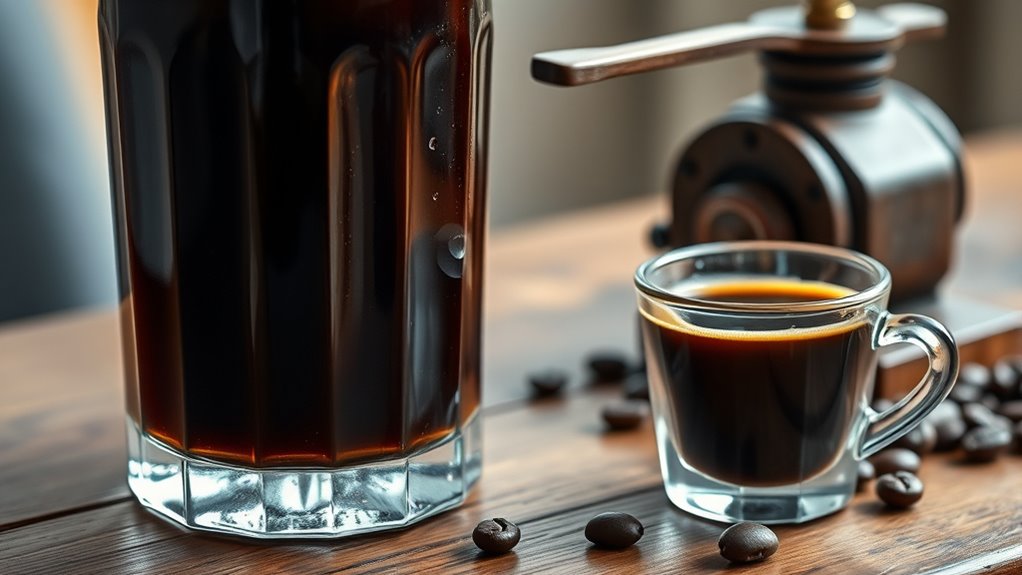
Although cold brew coffee shares the word “brew” with other coffee methods, it’s made by steeping coarsely ground coffee in cold or room temperature water for 6 to 20 hours.
You use a high coffee-to-water ratio to extract flavors slowly, which results in a smooth, less acidic, and slightly sweeter concentrate.
This concentrate is typically diluted with water or milk before drinking, allowing you to adjust strength and flavor.
You’ll often find cold brew served over ice, making it especially invigorating.
Additionally, you can store the concentrate in your refrigerator for up to a week without significant flavor degradation.
The extended steeping time and cold water extraction distinguish cold brew from other methods, producing a mellow profile rather than the intense, quick extraction seen in espresso.
Unlike espresso, cold brew does not involve pre-infusion timing or precise pressure control, which are crucial for flavor balance in espresso extraction.
What Is Espresso?
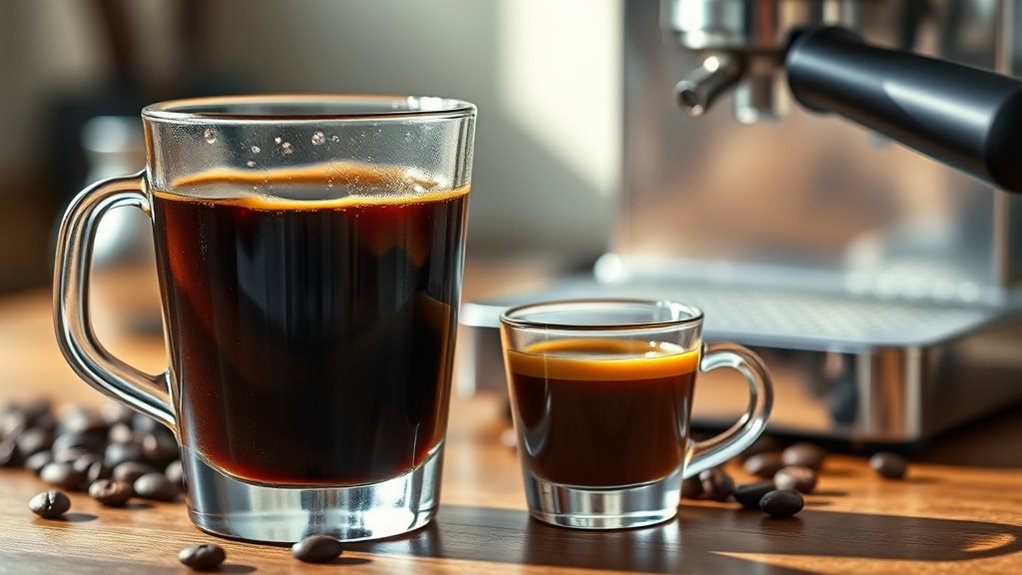
You brew espresso by forcing hot water—around 201°F—through finely ground coffee under high pressure for about 25 to 30 seconds. This process pulls out a concentrated shot that’s packed with bold, rich flavor. On top of that, you get a creamy layer called crema, which adds to the experience. Achieving the perfect espresso requires precise control of pressure and extraction time to balance flavor and texture.
Espresso Brewing Method
When you brew espresso, you force hot water heated to about 201°F through finely ground coffee at high pressure for roughly 25 to 30 seconds. This rapid extraction yields a concentrated shot with a rich crema layer on top, typically served in 1-2 oz portions. The grind size is extra-fine, almost powdery, which is critical to achieving the correct extraction in such a short time frame.
Espresso machines originated from Italy’s technological advances in the late 19th century. They really revolutionized coffee brewing and how we enjoy coffee today. Below is a breakdown of key espresso brewing parameters:
| Parameter | Description | Typical Range |
|---|---|---|
| Water Temperature | Hot water for extraction | ~201°F (94°C) |
| Pressure | Applied to force extraction | ~9 bars |
| Grind Size | Coffee particle fineness | Extra-fine, powdery |
| Brew Time | Duration of extraction | 25-30 seconds |
Consistent pressure and temperature control during extraction is essential to produce the rich flavors and signature crema that define a quality espresso shot.
Espresso Flavor Profile
Understanding the espresso brewing method lays the foundation for appreciating its unique flavor profile. When hot water is forced under high pressure through finely ground coffee, it extracts intense flavors quickly, producing a concentrated 1-ounce shot.
You’ll notice espresso’s rich, bold taste, marked by slight bitterness balanced with caramelized and chocolate undertones. This rapid extraction, completed in 25-30 seconds, creates a dense, crema-topped beverage that’s both full-bodied and complex.
Containing around 63-75 mg of caffeine, espresso delivers a potent kick. Its flavor intensity makes it the cornerstone for many coffee drinks like lattes and cappuccinos, where its robust character shines through. Achieving this quality requires precise control over variables such as grind size and extraction time to balance flavor and crema.
Differences in Caffeine and Flavor Between Cold Brew and Espresso
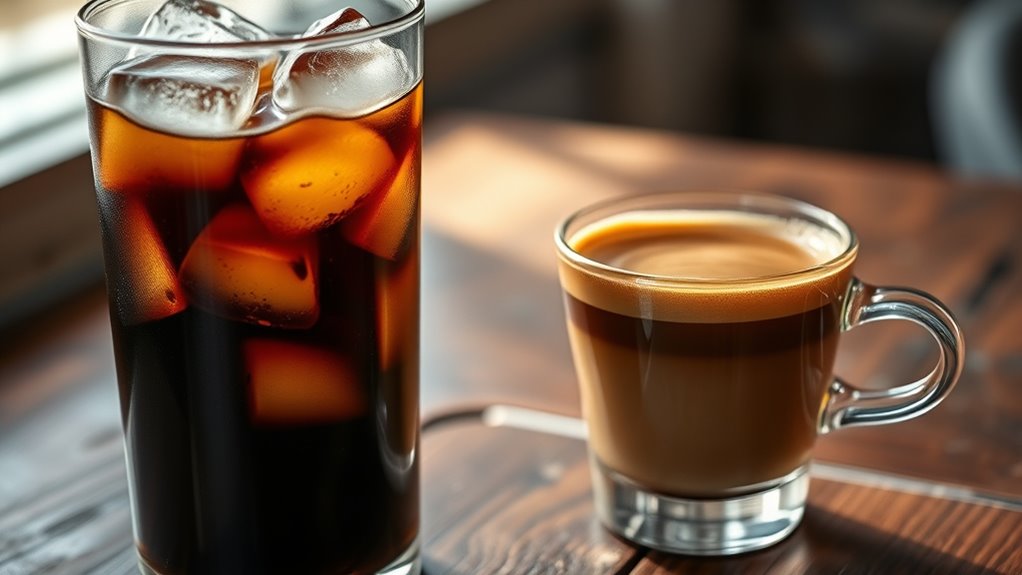
Although both cold brew and espresso deliver caffeine, they differ markedly in concentration, total content, and flavor profile. You’ll notice these key distinctions:
- Caffeine Content: Cold brew offers 200-330 mg per serving due to its long steeping, while a single espresso shot contains about 64 mg. Despite espresso’s higher caffeine concentration per ounce, cold brew provides more caffeine overall.
- Extraction Time: Cold brew’s 16-24 hour extraction releases caffeine gradually, contrasting espresso’s rapid 25-30 second brew that yields a concentrated but smaller caffeine load.
- Flavor Profile: Espresso’s bold, intense notes of caramel and dark chocolate contrast with cold brew’s smoother, sweeter, and less acidic taste. It’s characterized by mellowness and floral nuances.
Understanding these differences helps you select your preferred coffee based on caffeine needs and flavor preferences. Additionally, the coffee-to-water ratio and steeping time critically influence the caffeine concentration in cold brew preparations.
Why Cold Brew Isn’t Made With Espresso
You won’t find espresso in cold brew because the brewing processes are actually quite different. Cold brew is all about steeping coarsely ground coffee in cold water over many hours.
On the other hand, espresso uses finely ground coffee that’s extracted really quickly under high pressure.
Since these methods are so distinct, they need different grind sizes and extraction times. That’s why cold brew just doesn’t work with espresso brewing.
They’re made for different styles of coffee altogether!
Additionally, espresso’s calorie content remains very low due to the minimal extraction of oils and proteins in its quick brewing process, unlike cold brew which may have different nutrient profiles due to its longer steeping time and extraction method, as explained in calorie content and composition.
Brewing Process Differences
Because cold brew and espresso rely on fundamentally different extraction methods, cold brew isn’t made using espresso techniques or equipment. You need to understand these key brewing process differences:
1. Extraction Time: Cold brew steeps coarsely ground coffee in cold water for 16-24 hours, enabling slow, gradual extraction.
Espresso forces hot water through finely ground coffee in about 27 seconds, extracting rapidly under pressure.
2. Grind Size: Cold brew uses a coarse grind, similar to sea salt, to prevent over-extraction during long steeping.
Espresso demands a very fine, powdery grind to create resistance and enable pressure extraction.
3. Temperature and Pressure: Cold brew relies on room temperature or cold water with no pressure.
Espresso uses high pressure and heat to extract oils and flavors quickly.
These differences make cold brew impossible to produce using espresso equipment or methods. Additionally, espresso requires precise control of grind size and tamp pressure to optimize flavor and extraction within a short time frame.
Espresso Versus Cold Brew
When comparing espresso and cold brew, their fundamentally different brewing techniques prevent you from making cold brew with an espresso machine. Cold brew uses coarsely ground coffee steeped in cold water for 16-24 hours. This extracts flavor slowly without heat or pressure.
In contrast, espresso employs an extra-fine grind brewed under high pressure with hot water in about 27 seconds. This process yields a concentrated shot.
| Aspect | Espresso | Cold Brew |
|---|---|---|
| Grind Size | Extra-fine | Coarse |
| Brewing Time | ~27 seconds | 16-24 hours |
| Extraction | Hot water + high pressure | Cold water + long steeping |
Because of these differences, you just can’t replicate cold brew using espresso machines or methods. They’re really two different worlds when it comes to coffee brewing. Additionally, espresso requires high-pressure extraction that cold brew methods cannot provide.
How to Combine Cold Brew and Espresso
Although cold brew and espresso come from different brewing methods, combining them creates a balanced, flavorful drink that brings out the best of both. You can mix a shot of espresso with cold brew to boost intensity and add espresso’s bold notes while keeping cold brew’s smoothness.
To combine effectively, try these steps:
- Use cold brew as the base, pouring 4-6 parts into a glass.
- Add one shot of freshly brewed espresso on top for layered flavor complexity.
- Adjust the espresso-to-cold brew ratio to get the balance you like between brightness and smoothness.
This way, you’ll cut down on acidity and bitterness compared to hot espresso drinks. It’s a smooth, energizing coffee experience that really highlights both brewing styles. Using espresso powder instead of brewed espresso can further enhance the flavor complexity when adding bold coffee notes.
Which Should You Choose: Cold Brew or Espresso?
Combining cold brew and espresso showcases the unique strengths of each brewing method, but deciding whether to choose one over the other depends on your specific preferences and needs. If you want a quick, intense caffeine hit with bold flavors, espresso is your go-to.
For a smoother, sweeter taste and longer caffeine release, cold brew works better. Consider the following comparison:
| Attribute | Cold Brew |
|---|---|
| Brewing Time | 16-24 hours steeping |
| Grind Size | Coarse |
| Caffeine Content | 200-330 mg per serving |
| Flavor Profile | Smooth, sweet |
| Serving Size | Larger, slower caffeine release |
| Attribute | Espresso |
| Brewing Time | 25-30 seconds |
| Grind Size | Extra-fine |
| Caffeine Content | 64-75 mg per shot |
| Flavor Profile | Bold, intensely rich |
| Serving Size | Small, concentrated boost |
Espresso’s rapid extraction under high pressure produces a thick texture and a distinctive golden crema that enhances its rich flavor profile.
Frequently Asked Questions
Can Cold Brew Be Made With Espresso Beans?
Yes, you can make cold brew with espresso beans. Using medium to dark roasted espresso beans enhances richness and complexity. This produces a bold, smooth flavor profile without excessive bitterness.
That’s because of their longer roasting process. It really brings out the deeper notes in the coffee. So if you like a strong, flavorful cold brew, espresso beans are a great choice.
Does Cold Brew Coffee Spoil Faster Than Espresso?
Yes, cold brew spoils faster than espresso because its higher water content and longer steeping foster microbial growth.
You should refrigerate it and consume within 5-7 days. Espresso, on the other hand, stays fresh only 1-2 days. So, it’s best to enjoy espresso quickly after making it.
How Does Water Temperature Affect Cold Brew Extraction?
You might be surprised: colder water slows extraction, producing smoother, less acidic cold brew.
If you raise the temperature, extraction speeds up but bitterness and acidity increase. So, temperature controls flavor balance precisely.
It’s pretty cool how just a change in water temperature can shift the taste so much!
Can You Use Espresso Grounds for Cold Brew?
You can use espresso grounds for cold brew, but you’ll risk over-extraction, bitterness, and cloudiness.
It’s better to opt for a coarser grind to guarantee balanced extraction, smoother flavor, and proper brewing time in your cold brew process.
This way, you get a tastier cup without the harshness. So, while espresso grounds can work, they’re not the ideal choice.
Are There Health Benefits Unique to Cold Brew or Espresso?
You might be surprised: cold brew’s lower acidity benefits your stomach and metabolism. Espresso’s quick extraction preserves anti-inflammatory polyphenols.
Each offers unique antioxidants, so your choice depends on which health perks you want to prioritize. It really comes down to what works best for you and your body.
Conclusion
Now that you know cold brew isn’t just chilled espresso but a distinct brewing method, you can make a more informed choice. Cold brew offers a smoother, less acidic experience, while espresso delivers a bold, concentrated punch. Think of them as two sides of the coffee spectrum, each with its own unique chemistry and flavor profile.
Whether you pick cold brew or espresso, you’re brewing brilliance tailored to your taste and caffeine needs.