You’ll get less total caffeine from a single shot of espresso than from an 8-ounce cup of drip coffee, even though espresso packs more caffeine per ounce. This happens because drip coffee’s larger volume outweighs its lower concentration.
Factors like grind size and extraction time also influence caffeine content in espresso. How quickly you drink it impacts absorption and effects.
Understanding these nuances can give you a clearer picture of your caffeine intake and its impact.
What Makes Espresso Different From Drip Coffee
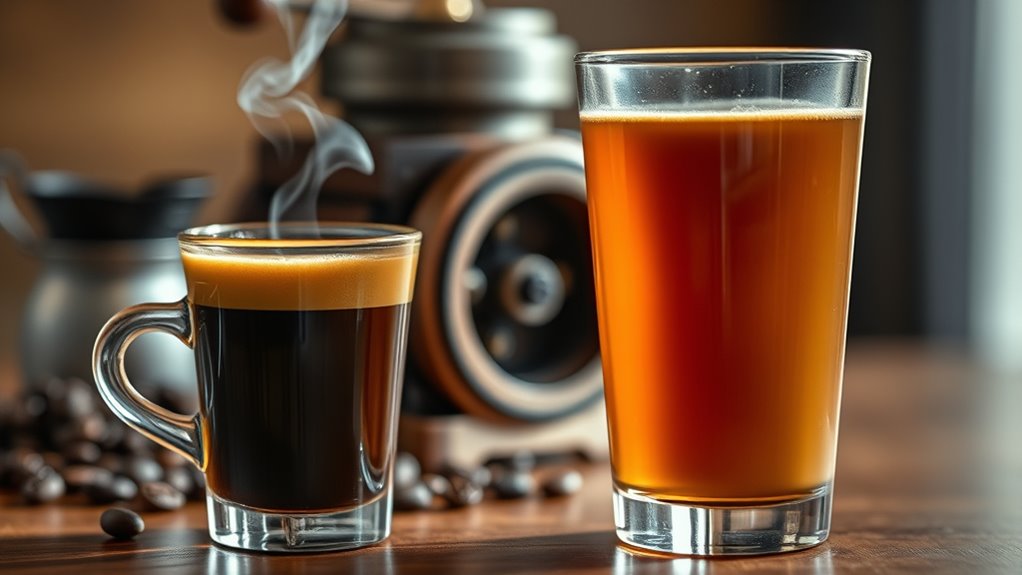
Although both espresso and drip coffee start with coffee grounds and hot water, their brewing methods create distinct differences in flavor, concentration, and texture.
Espresso forces hot water through finely-ground coffee at high pressure, extracting a concentrated shot with a rich crema in just 25-30 seconds.
Espresso extracts a rich, concentrated shot with creamy crema in under 30 seconds using high-pressure brewing.
In contrast, drip coffee relies on gravity to slowly filter hot water through coarser grounds over several minutes, producing a lighter-bodied, larger-volume cup.
Because espresso uses more coffee grounds relative to its volume, it delivers a higher concentration of flavors within a smaller serving.
The pressure-driven extraction in espresso enhances oils and solubles differently than the gravity filtration in drip, resulting in a thicker texture and more intense taste.
This methodological contrast fundamentally shapes the sensory experience each brewing style offers.
For the best espresso extraction, proper preparation such as using the correct grind size and tamping is essential for a rich and balanced shot.
Comparing Caffeine Content Per Ounce in Espresso and Drip Coffee
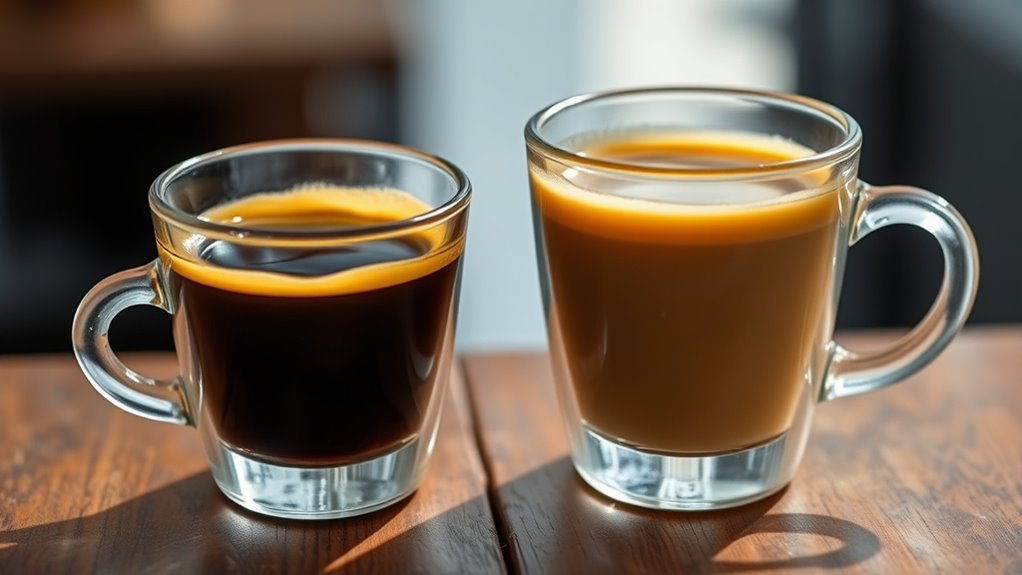
When you look at caffeine content ounce for ounce, espresso packs a bigger punch than drip coffee—usually around 40-80 mg compared to 10-15 mg per ounce.
But here’s the thing: espresso shots are much smaller in size. So, even though it’s more concentrated, the total caffeine you get often ends up being less than a full cup of drip coffee.
It’s all about balancing volume and concentration. That’s why your caffeine buzz can feel pretty different depending on whether you’re sipping espresso or enjoying a mug of drip.
A standard 1 oz shot of espresso typically contains about 63 mg of caffeine, while an 8 oz cup of brewed coffee has roughly 95 mg, highlighting the difference in total caffeine intake from each beverage caffeine content comparison.
Caffeine Concentration Comparison
How does the caffeine concentration in espresso compare to drip coffee? Espresso contains about 40 mg of caffeine per ounce, making it considerably more concentrated than drip coffee, which has roughly 10 mg per ounce. This difference comes from espresso’s brewing method, which uses high pressure and finely ground beans to extract more caffeine in a smaller volume.
While a single shot of espresso (1 to 2 oz) delivers 60 to 80 mg of caffeine, an 8 oz cup of drip coffee provides 95 to 120 mg.
So, per ounce, espresso packs a stronger caffeine punch, but that doesn’t directly translate to total caffeine intake.
The key takeaway is that espresso’s caffeine concentration is higher because of its extraction process, but serving size really plays a big role in how much caffeine you actually consume.
The caffeine concentration in espresso is approximately 2.1 mg/mL, much higher than the 0.4 mg/mL typically found in drip coffee.
Serving Size Impact
Understanding caffeine concentration in espresso versus drip coffee sets the stage for examining how serving size influences total caffeine intake. Espresso packs about 60-80 mg of caffeine per 1-ounce shot, making it highly concentrated compared to drip coffee’s 8-15 mg per ounce.
However, because drip coffee is typically consumed in larger volumes, around 8 ounces, you’ll usually intake more total caffeine from drip coffee than from a single espresso shot. This means that while espresso delivers a stronger caffeine punch ounce for ounce, the serving size really impacts your overall caffeine consumption.
When you choose between these two, considering both concentration and volume helps you better manage your caffeine intake based on your preferences and tolerance. Additionally, espresso generally has a caffeine concentration of around 40 mg per ounce, which is significantly higher than brewed coffee’s concentration.
Volume Versus Strength
Although espresso delivers markedly more caffeine per ounce than drip coffee, your total caffeine intake depends largely on the volume you consume.
Espresso packs roughly 60-80 mg of caffeine per ounce, making it highly concentrated, while drip coffee contains about 8-15 mg per ounce.
However, since espresso servings are much smaller, total caffeine can vary considerably.
Consider this:
- A 1-ounce shot of espresso yields 60-80 mg caffeine.
- An 8-ounce cup of drip coffee provides 64-120 mg caffeine.
- Despite espresso’s strength, its smaller volume often results in less caffeine than a standard mug of drip coffee.
Extraction time and parameters like grind size also influence the caffeine concentration in your espresso shot.
How Serving Size Affects Total Caffeine Intake
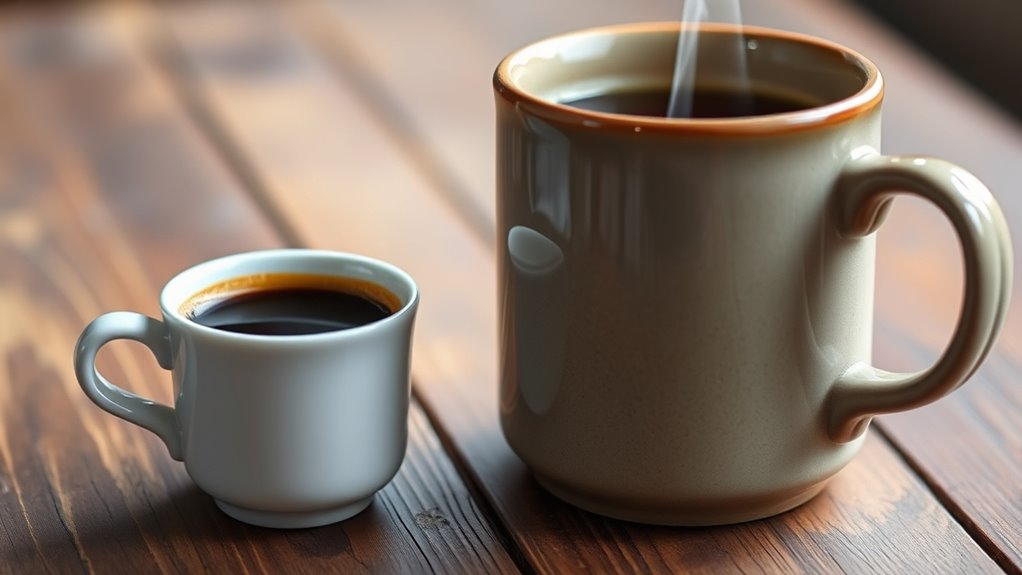
Since caffeine content varies with beverage volume, you should consider serving size carefully when comparing espresso and coffee.
While a single 1 oz espresso shot contains about 60-70 mg of caffeine, an 8 oz cup of drip coffee typically holds 95-120 mg. This means that despite espresso’s higher concentration per ounce, its smaller volume results in less total caffeine per serving.
However, if you drink multiple espresso shots, caffeine intake can quickly surpass that of a standard coffee cup.
Ultimately, total caffeine consumption depends more on how much you drink than on caffeine concentration alone. So, when evaluating your caffeine intake, focus on the actual serving size and number of servings rather than just comparing espresso and coffee by volume or strength.
Proper extraction time of 25-30 seconds ensures balanced flavor and optimal caffeine release in espresso.
How Drinking Speed Influences Caffeine Absorption
When you drink espresso quickly, caffeine gets into your bloodstream faster. This causes a sharper spike in alertness and hits your central nervous system more strongly.
On the other hand, if you sip your coffee slowly, the caffeine is absorbed more gradually. That means the effects come on steadier and last longer.
For optimal flavor and caffeine extraction, using hot water just below boiling (185°F/85°C) when preparing espresso is essential.
Rapid Consumption Effects
Because espresso is consumed rapidly in small, concentrated servings, it causes a swift spike in blood caffeine levels compared to sipping drip coffee slowly. When you drink espresso quickly, caffeine enters your bloodstream faster, intensifying its immediate effects.
This rapid consumption impacts you in several ways: You experience a quicker onset of caffeine’s stimulating effects due to faster absorption. The concentrated caffeine dose can lead to more pronounced side effects, like jitters or increased heart rate, especially if you’re sensitive.
Despite espresso’s potentially lower total caffeine content, the speed of intake amplifies its acute physiological impact compared to slower consumption of drip coffee. Understanding this helps you manage how quickly you consume espresso to control caffeine’s intensity without altering total intake. Eating espresso beans results in even faster and more intense caffeine absorption through the mouth and digestive tract.
Central Nervous Impact
The speed at which you consume espresso directly affects how quickly caffeine reaches your central nervous system. When you drink espresso rapidly, the concentrated caffeine floods your system faster than sipping drip coffee slowly. This rapid delivery triggers a sharper, more immediate alertness, as caffeine’s stimulating effects on your brain intensify quickly.
However, this swift intake also raises the risk of side effects like jitteriness or increased heart rate due to the sudden caffeine spike. Conversely, sipping coffee gradually allows caffeine to enter your bloodstream more steadily. This promotes a prolonged, consistent sense of wakefulness without abrupt peaks.
Understanding how your drinking pace influences caffeine absorption helps you manage both the intensity and duration of its effects on your central nervous system more effectively. It’s pretty helpful to know, especially if you want to avoid those unwanted jitters but still stay alert. The brewing method, such as using a French press versus an espresso machine, affects the coffee’s texture and strength, which can also influence caffeine impact.
Absorption Rate Differences
Although espresso and drip coffee contain similar amounts of caffeine per serving, how quickly you drink them considerably alters caffeine absorption rates. When you consume espresso rapidly, the concentrated caffeine enters your bloodstream swiftly, causing a rapid spike in blood caffeine levels.
In contrast, sipping drip coffee slowly moderates this process, allowing gradual absorption. Specifically:
- Rapid espresso consumption accelerates caffeine crossing the gastrointestinal lining.
- This fast absorption intensifies caffeine’s effects on your central nervous system.
- Slow sipping of drip coffee prolongs caffeine’s stimulating impact by spreading absorption over time.
Understanding these dynamics helps you manage caffeine’s effects more precisely. Your drinking speed directly influences not only how much caffeine you absorb but also how quickly and intensely it affects you. Additionally, factors such as extraction variables can influence the caffeine concentration in espresso, thereby affecting absorption rates.
Does Roast Level Impact Caffeine Content?
While roast level influences the physical characteristics of coffee beans, it has minimal effect on their caffeine content. Darker roasts are less dense due to longer roasting, which slightly reduces caffeine per bean.
However, light roasts retain more caffeine because they’re denser and undergo less caffeine loss.
Caffeine is relatively stable at typical roasting temperatures, so the difference in caffeine between dark and light roasts is pretty minimal. Studies confirm that when measured by weight or volume, roast level doesn’t considerably alter caffeine content.
Ultimately, the amount of coffee you use matters far more than roast level. So, don’t rely on roast degree to control caffeine intake. Focus instead on how much coffee you brew and consume.
Espresso Shots vs. Drip Coffee: Which Has More Caffeine?
When comparing caffeine content, you’ll find that a single 1-ounce shot of espresso packs about 60-70 mg of caffeine.
An 8-ounce cup of drip coffee contains between 95-120 mg.
Although espresso has a higher caffeine concentration per ounce, the total caffeine in drip coffee is greater because you’re drinking more of it.
To break it down clearly:
- Espresso delivers roughly 60-70 mg of caffeine per ounce.
- Drip coffee contains only 8-15 mg per ounce but is served in larger quantities.
- One standard drip coffee cup generally surpasses the caffeine content of a single espresso shot.
So, if you want a quick caffeine punch, espresso’s your go-to.
But if you’re sipping on a bigger cup, drip coffee will likely give you more caffeine overall.
Frequently Asked Questions
Can Espresso Be Decaffeinated Like Regular Coffee?
Yes, you can decaffeinate espresso like regular coffee. For instance, using the Swiss Water Process removes most caffeine while preserving flavor. This lets you enjoy a rich, aromatic shot with only 2-5 mg caffeine per serving.
Does Adding Milk Affect Caffeine Levels in Espresso?
Adding milk doesn’t change the caffeine content in your espresso; it only dilutes the volume, lowering caffeine concentration per ounce.
The total caffeine you consume stays the same, no matter how much milk you add. So, if you like your espresso with a splash of milk, go ahead—it won’t affect the caffeine kick you get.
How Does Espresso Caffeine Affect Sleep Compared to Drip Coffee?
Espresso’s caffeine hits your system like a lightning bolt, causing faster sleep disruption than drip coffee. Its concentrated dose absorbs quickly, making you alert sooner.
On the other hand, drip coffee’s caffeine trickles in more slowly and steadily, so it doesn’t wake you up as abruptly.
Basically, espresso gives you that quick jolt, while drip coffee offers a more gradual caffeine boost. That difference can really affect how soon you feel the caffeine and how it impacts your sleep.
Are Espresso-Based Drinks Healthier Than Drip Coffee?
Espresso-based drinks aren’t inherently healthier than drip coffee; you’ll find similar antioxidants and nutrients. Your health impact depends more on additives like sugar or milk than the coffee type itself. So, it’s really about choosing your ingredients wisely.
At the end of the day, whether you go for espresso or drip, what you add to it matters most. Keep an eye on those extras, and you’ll be good to go!
Does Espresso Caffeine Impact Anxiety Differently Than Drip Coffee?
You might experience anxiety more intensely with espresso, as its caffeine concentration is about twice that of drip coffee per ounce. This causes quicker absorption and sharper spikes in alertness.
That can trigger jitteriness or nervousness faster. So, if you’re sensitive to caffeine, espresso might hit you harder than drip coffee.
Conclusion
You might think espresso always packs more caffeine, and ounce for ounce, it does. But a typical drip coffee serving often delivers more overall caffeine because it comes in a larger volume.
Espresso’s concentrated shot hits faster, but your total caffeine intake depends on how much and how quickly you drink. Roast levels add subtle differences, but serving size and consumption speed ultimately shape your caffeine experience.
So, it’s not just what you drink, but how you drink it.