You’ll start feeling espresso’s effects within 5 to 10 minutes as caffeine quickly enters your bloodstream, boosting alertness and focus. The peak impact hits around 45 to 60 minutes, giving you maximum mental clarity. Effects generally last 3 to 6 hours, depending on your metabolism.
To avoid sleep disruption, it’s best to stop drinking espresso at least six hours before bedtime. There’s more to learn about optimizing timing and managing side effects for the best experience.
When Does Espresso Start Working?
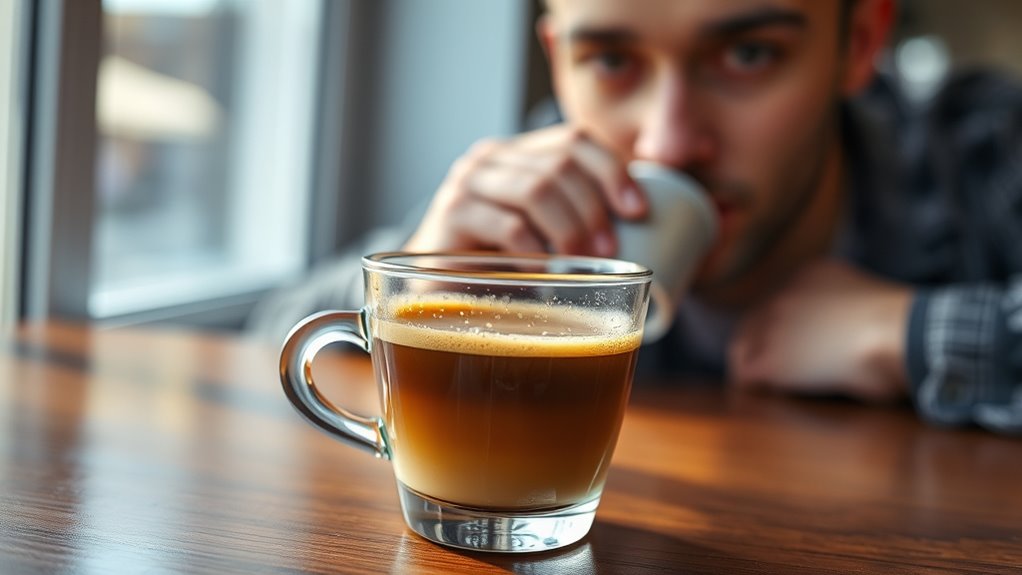
Although everyone’s metabolism varies, you’ll typically start feeling espresso’s effects within 5 to 10 minutes after drinking it. That quick onset happens because espresso is a concentrated liquid with a higher caffeine content per ounce than regular coffee.
Once you drink it, caffeine rapidly absorbs through your stomach and small intestine, entering your bloodstream fast.
If you have espresso on an empty stomach, you might notice the effects even sooner. This rapid absorption means you don’t have to wait long to experience increased alertness and mental clarity, though these peak benefits come a bit later.
The stimulating effects of espresso typically fade within 3 to 4 hours, though caffeine can remain in your system for 8 to 10 hours due to individual metabolism factors.
When Does Espresso Reach Its Peak Effects?
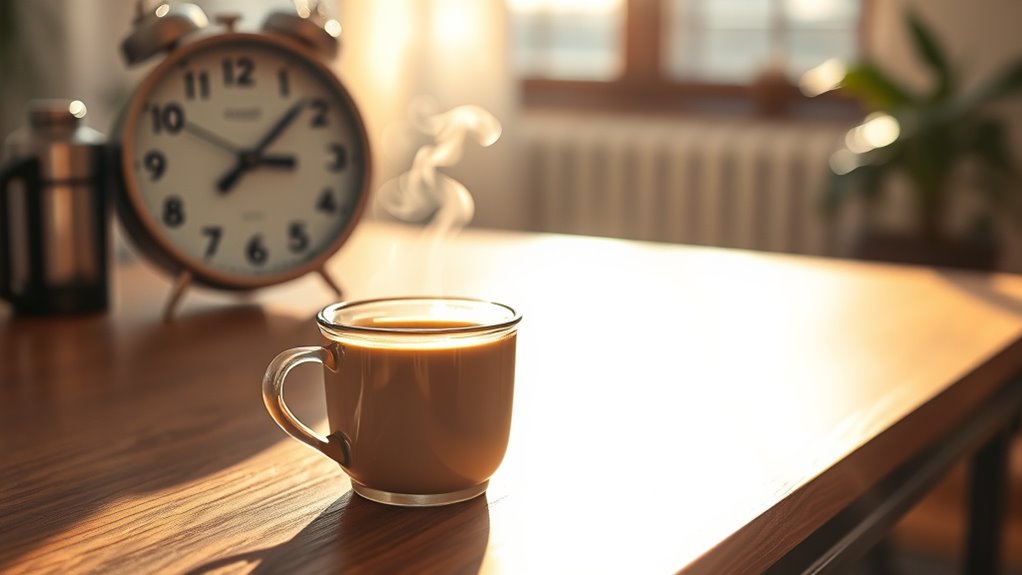
Once you’ve felt that initial buzz from your espresso, the full effects typically reach their peak within 45 to 60 minutes. During this window, you’ll experience the strongest alertness and mental clarity, thanks to espresso’s rapid caffeine absorption. This quick onset is why espresso stands out compared to other coffee types.
Your metabolism plays a role in the exact timing, so it might vary slightly from person to person. But generally, 45 to 60 minutes is the sweet spot.
Knowing this can help you time your espresso intake to maximize focus, whether it’s for work, study, or any demanding task. The flavor and strength of your espresso can also be influenced by extraction time, which plays a crucial role in the overall experience.
How Long Do Espresso’s Caffeine Effects Last?
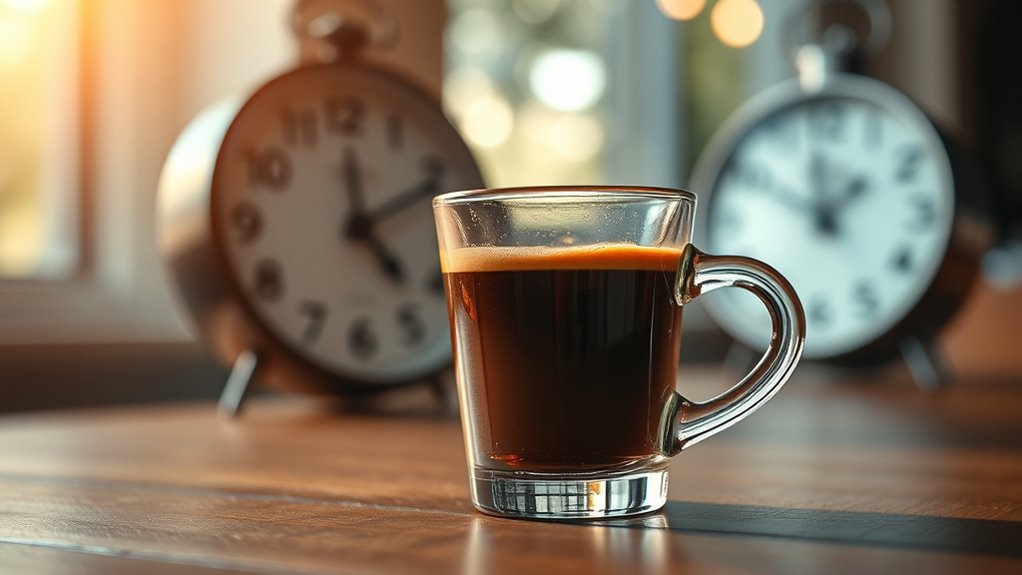
While espresso’s caffeine kicks in quickly, its effects don’t just stop after that initial burst. You’ll notice caffeine starting to influence your alertness and focus within about 15 minutes.
Espresso’s caffeine sparks alertness quickly, boosting focus within about 15 minutes for a smooth, energizing start.
But the real peak hits around 45 to 60 minutes after your shot.
From there, the stimulating effects can last anywhere from 3 to 6 hours, depending on your body’s metabolism, weight, and caffeine tolerance. Everyone processes caffeine differently.
So, while you might feel energized for a solid few hours, someone else might notice the buzz fading sooner or lasting longer.
Understanding this variability helps you plan your espresso intake better. That way, you get the boost you need without unexpected crashes or prolonged jitters.
The average single shot of espresso contains about 63 mg of caffeine, which contributes to how quickly and strongly you feel its effects.
When Should You Stop Espresso for Better Sleep?
If you want to protect your sleep quality, it’s best to stop drinking espresso at least six hours before bedtime. Since caffeine peaks in your blood within 30 to 60 minutes and its effects can last 4 to 6 hours, having espresso too close to bedtime can mess with your ability to fall asleep.
Generally, avoiding espresso after noon or early afternoon works well for most people. But everyone’s different, so your sensitivity to caffeine mightn’t be the same. Pay attention to how your body reacts.
If you notice difficulty falling asleep or restless nights, try pushing your last espresso earlier in the day.
By timing your espresso consumption wisely, you’ll minimize caffeine’s interference and promote more restorative sleep.
Keep an eye on how you respond personally—that way, you can figure out the best cutoff time for better rest.
Remember that espresso provides a quick, concentrated caffeine boost, which can impact sleep more intensely than other coffee types.
Is Espresso a Good Pre-Workout Drink?
If you’re looking for a quick boost before your workout, espresso can be a great choice. Its caffeine can really sharpen your focus and help improve your endurance—especially if you time it right.
Try drinking it about 30 to 60 minutes before you exercise to catch those peak effects. That way, you can get the most out of your workout.
Just remember to keep an eye on your own tolerance, so you don’t end up feeling jittery while training.
Adjusting the espresso dose can also influence the strength and timing of its effects, helping you tailor your pre-workout boost.
Espresso And Athletic Performance
Because espresso delivers caffeine rapidly, it’s an excellent choice if you want a quick boost before your workout. Its caffeine peaks in 45 to 60 minutes, enhancing alertness, reducing how hard exercise feels, and improving endurance.
Drinking espresso 30 to 60 minutes before training helps maximize focus and performance. Compared to slower sources, espresso’s fast absorption makes it a smart pre-workout option. Many prefer a Venti iced espresso with extra shots to maintain caffeine levels and flavor during longer sessions.
| Benefit | Time to Peak Effect | Impact on Performance |
|---|---|---|
| Increased Alertness | 45–60 minutes | Better concentration |
| Reduced Exertion | 45–60 minutes | Feels easier to exercise |
| Improved Endurance | 45–60 minutes | Longer workout capacity |
Timing Espresso Pre-Workout
While many pre-workout options take longer to kick in, espresso delivers caffeine rapidly, making it a top choice when you need a quick energy boost. Typically, espresso starts affecting your body within 5 to 15 minutes, with peak effects around 45 to 60 minutes.
Drinking a shot about 30 minutes before exercise allows you to maximize alertness and focus during your workout.
With roughly 63 mg of caffeine per shot, espresso can enhance your physical performance without lingering too long, as its effects last about 3 to 6 hours.
However, your individual caffeine sensitivity and tolerance play a big role. So, it’s best to personalize how much and when you drink espresso to get the most effective pre-workout stimulation.
The high caffeine concentration in espresso contributes to its rapid absorption and intense stimulant effect.
Can You Make Espresso’s Effects Wear Off Faster?
You can’t really speed up how your body breaks down caffeine because it mostly comes down to your genetics and how your liver works.
Drinking water or having something to eat might help ease some of the side effects, but they won’t actually make the espresso wear off any faster.
Caffeine from espresso typically peaks in your bloodstream within 30–60 minutes, which is when you feel the strongest effects.
Caffeine Metabolism Limits
Even though you might wish for a quick fix, there’s no way to speed up how your body processes caffeine after drinking espresso. Your liver metabolizes caffeine at a pace mostly set by your genetics, with an average half-life between 3 to 7 hours. This means the caffeine level in your system halves only over several hours.
Drinking water, eating food, or exercising won’t accelerate this breakdown, even if they help you feel better temporarily.
Factors like age, liver health, pregnancy, or certain medications can slow caffeine metabolism, making the effects last longer. Ultimately, your body follows its own clock to clear caffeine.
Mitigating Side Effects
Since your body processes caffeine at its own steady pace, there’s no trick to making espresso’s effects vanish faster. Your best bet is to stay hydrated, eat well, and engage in light exercise to ease side effects like jitteriness. However, these won’t speed up caffeine metabolism.
The only reliable way to reduce caffeine’s impact is time. Usually, it takes 4-5 hours for half of it to clear. Avoiding late-day espresso helps prevent sleep issues.
| Action | Effect |
|---|---|
| Drink water | Reduces dehydration |
| Eat balanced meals | Stabilizes blood sugar |
| Light physical activity | Eases jitteriness |
| Avoid more caffeine | Prevents prolonging effects |
| Wait patiently | Allows natural caffeine clearance |
Patience and moderation are your best tools.
How to Manage Espresso’s Side Effects
Although espresso can provide a quick boost of energy, managing its side effects requires some mindful habits. First, avoid drinking espresso on an empty stomach to prevent jitters or nausea from rapid caffeine absorption. Always sip water alongside your espresso to stay hydrated and reduce headaches or dizziness.
Keep your intake moderate. One shot is usually enough to avoid overstimulation and anxiety. Also, steer clear of espresso at least six hours before bedtime to minimize sleep disruptions.
If you feel jittery or nervous after your shot, try a short walk or some light physical activity. It helps calm your nerves and balance your energy. By following these simple strategies, you can enjoy espresso’s perks without unwanted side effects. Additionally, understanding how brew time and pressure affect acidity can help tailor your espresso experience to reduce potential stomach discomfort.
Frequently Asked Questions
How Does Espresso Caffeine Content Compare to Other Coffee Types?
Espresso packs more caffeine per ounce than regular coffee, but since it’s served in smaller shots, its total caffeine is usually less than an 8-ounce drip brew.
You’ll feel its effects faster and more intensely. It’s kind of like a quick jolt compared to sipping on a larger cup. So, even though it’s stronger by volume, the overall caffeine might be less depending on how much you drink.
Can Espresso Consumption Affect Hydration Levels?
Espresso’s diuretic effect can sneakily sap your hydration, especially if you’re caffeine-sensitive. So, don’t let your thirst vanish. Always pair that bold shot with water to keep your body balanced and energized.
Is Espresso Safe During Pregnancy?
Espresso isn’t entirely safe during pregnancy if you exceed 200 mg of caffeine daily. You should limit your intake carefully.
It’s a good idea to chat with your healthcare provider to make sure you’re protecting your baby’s development. That way, you can avoid any potential risks.
Does Espresso Impact Anxiety or Stress Levels?
Espresso can boost anxiety because caffeine spikes adrenaline within 15 minutes, increasing heart rate and jitters.
If you’re sensitive or prone to stress, you’ll want to limit intake to avoid worsening those feelings.
It’s a good idea to pay attention to how your body reacts and adjust accordingly.
How Does Espresso Interact With Common Medications?
Espresso can interact with your medications by affecting liver enzymes, raising blood pressure, or amplifying stimulant side effects. You should watch caffeine intake closely, especially if you’re on blood pressure, sedative, or ADHD medications.
It’s a good idea to chat with your doctor about how much espresso is safe for you. Everyone’s different, and what works for one person might not be the same for another. Staying informed helps you avoid any unwanted effects.
Conclusion
So, how long does espresso take to kick in? Usually just minutes, with peak effects hitting around 30 minutes. It keeps you alert for a few hours.
But remember, timing is everything, especially if you want a good night’s sleep. Think of espresso as a quick spark, not a long-lasting flame.
Use it wisely, manage side effects, and enjoy that energizing boost without the crash. Your body will thank you!