To brew espresso, start with fresh, high-quality beans and a flat burr grinder set finely. Grind just before brewing, dose 16-19g, and evenly distribute the grounds in a preheated portafilter. Tamp with consistent, even pressure.
Then, lock it in your machine and extract at 9 bars for 25-30 seconds. Watch for a steady, caramel-colored flow and adjust grind or timing as needed. It might take a few tries to get it just right.
Mastering these basics sets a strong foundation for crafting flawless shots. Keep practicing, and you’ll be pulling great espresso in no time!
Pick the Best Espresso Gear and Fresh Beans
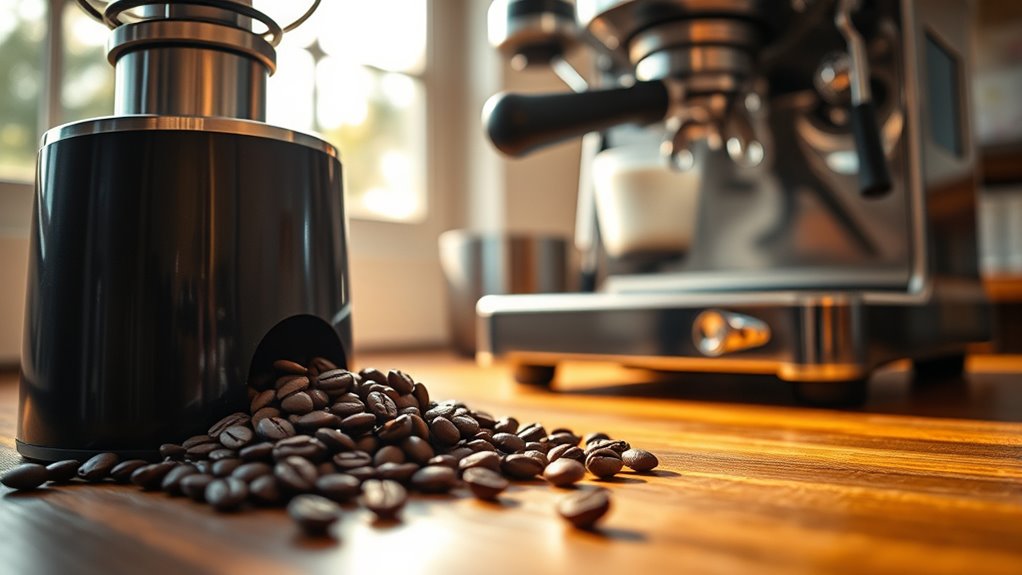
Where should you begin when aiming for the perfect espresso? Start by selecting a grinder with flat burrs at least 55mm in size. Ideally, go for a digital stepless model for precise, consistent calibration. This guarantees uniform particle size, which is critical for extraction.
Use freshly roasted coffee beans, preferably between 7 to 30 days from the roast date. Grind them just before brewing to retain aroma and CO2 freshness. Choosing high-quality espresso-specific blends really makes a difference. For example, Social Coffee’s People’s Liberation Blend is known for its balanced, forgiving flavor.
Invest in a reliable, pump-driven espresso machine that maintains at least 9 bars of pressure. This is crucial for ideal extraction.
And don’t forget to use filtered or spring water—it helps avoid mineral buildup and enhances flavor clarity. These steps set the foundation for excellent espresso. Proper machine maintenance, including descaling, is vital for quality and longevity.
Clean and Preheat Your Machine and Tools
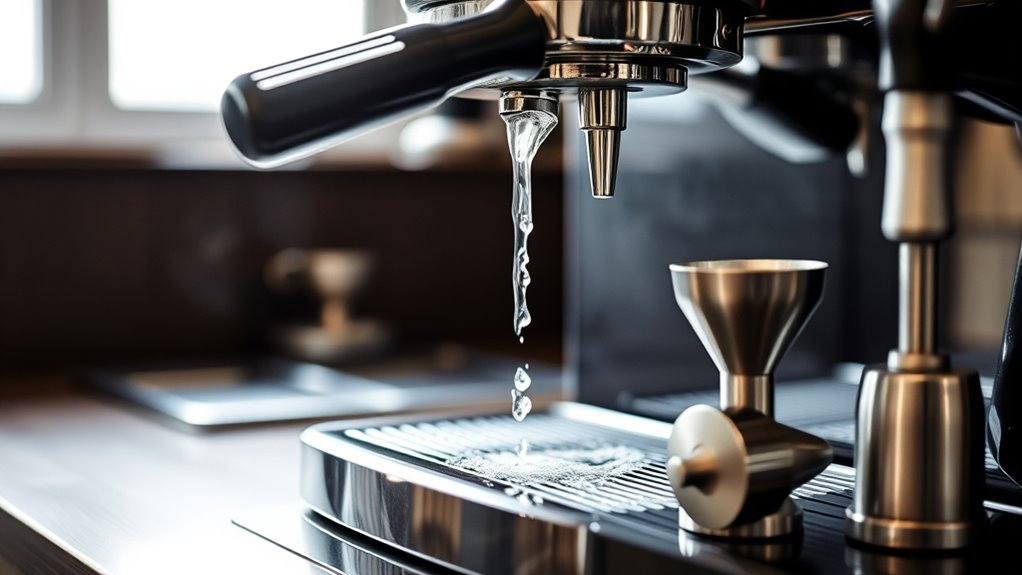
You want to keep your machine and tools spotless because old coffee oils can mess with the flavor and flow. It’s a simple step but makes a big difference.
Also, preheating the group head, portafilter, and cups helps stabilize the temperature. This way, your espresso keeps that beautiful crema on top.
Doing these little things ensures you get a consistent extraction and a balanced, high-quality shot every time.
Regular cleaning prevents the buildup of coffee oils and mineral deposits, which ensures hygiene and prevents clogs.
Equipment Cleanliness Importance
Although it’s tempting to rush straight to brewing, maintaining cleanliness and properly preheating your espresso machine and tools are essential steps that directly impact the quality of your shot.
You should regularly clean the group head, dispersion screen, and portafilter to prevent oil buildup and guarantee ideal water flow. Rinse the portafilter and basket thoroughly before each use to remove residual coffee oils and debris.
Use a brush or cloth to clear coffee grounds and oils from the shower screen and gasket, preserving hygiene and machine performance. Running blank shots and rinsing with hot water preheats the machine and cups, stabilizing temperature.
Consistent cleaning and preheating prevent channeling, uneven extraction, and flavor contamination. This way, your espresso tastes balanced and fresh every time.
Taking these little extra steps really pays off in the cup! Regular maintenance, including descaling procedures, ensures your machine operates at peak performance and preserves coffee quality.
Preheating Techniques Benefits
Since temperature consistency plays a critical role in espresso quality, preheating your machine and tools becomes an indispensable step. Start by rinsing the group head and portafilter with hot water to remove residual oils and stabilize temperature.
Next, run blank shots without coffee to warm internal components and the dispersion screen, ensuring even water flow.
Don’t forget to warm your porcelain cups and portafilter beforehand. This prevents heat loss and preserves the espresso’s flavor and temperature. Proper preheating minimizes shot variability caused by temperature fluctuations, delivering consistent extraction and rich crema.
For an even better espresso base, use freshly brewed espresso with full crema to achieve stable foam and flavor integration.
Grind Fresh Espresso to the Right Consistency
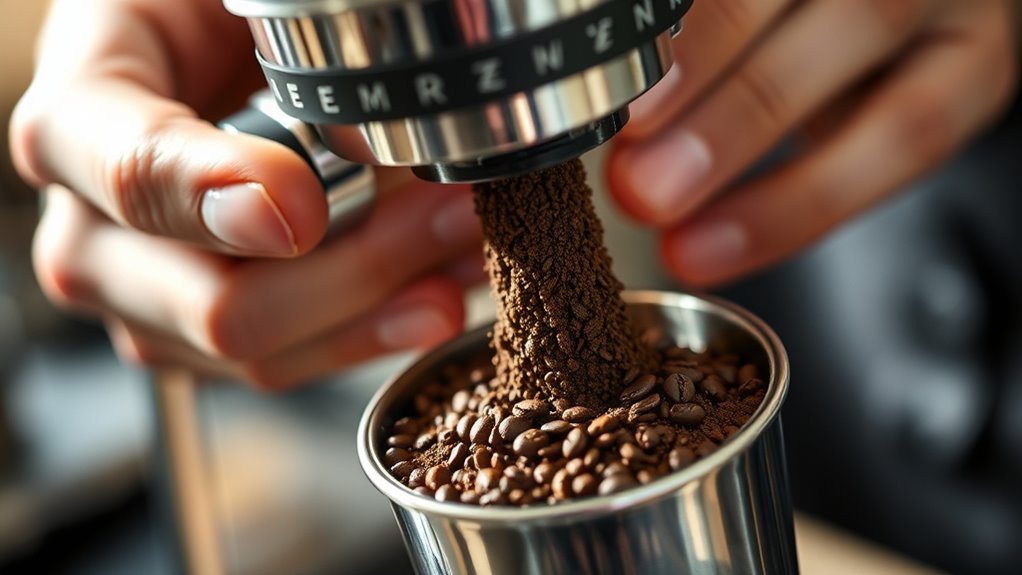
When aiming for the perfect espresso shot, grinding fresh coffee just before brewing is essential to preserve its aroma and CO2 levels. These factors really impact the flavor and how well the coffee extracts.
Use a burr grinder set to a very fine consistency, something like confectioners’ sugar, to make sure the particle size is uniform. Avoid pre-ground or stale beans because they can mess with the extraction and taste.
Grind fresh beans finely with a burr grinder for uniformity; avoid pre-ground or stale coffee for best flavor.
Adjust your grind size based on how long the shot takes. Ideally, a 30-40 gram extraction should take about 25-30 seconds. If the shot pulls too quickly, grind finer. If it’s too slow, grind coarser.
Keep dialing in your grinder by tasting and watching the flow to maintain the right consistency and flavor. Doing this will help you get balanced, rich espresso every time.
Remember that grind size directly affects the extraction time and flavor balance, so even slight adjustments can dramatically improve your espresso quality.
Measure and Dose Espresso Grounds Accurately
To achieve a consistent and flavorful espresso, you need to measure and dose your coffee grounds with precision. Accurate dosing ensures the right extraction and taste balance every time. Here’s how to do it:
Use a precise scale to weigh 16-19 grams of coffee grounds for a double shot. You can adjust slightly based on your machine’s basket and shot volume.
Dose the coffee immediately before brewing to maintain freshness and preserve aromatic oils.
Place the grounds into the portafilter, aiming for even distribution to avoid clumping.
Quickly level the coffee bed before tamping to ensure uniform water flow during extraction.
Remember that proper dosing is essential to prevent channeling and achieve balanced extraction.
Evenly Distribute and Level Your Coffee Grounds
After dosing, you’ll want to evenly distribute your coffee grounds. You can use a tool like a Weiss Distribution Device, or if you don’t have one, just use your finger to break up any clumps and prevent air pockets.
Next, gently tap the portafilter on a tamping mat to level the coffee bed. This helps create a flat, uniform surface.
Getting this right is key because it ensures consistent water flow and even extraction when you brew.
Proper distribution and leveling are essential to prevent uneven extraction and improve espresso quality.
Grind Distribution Techniques
Although dosing coffee grounds is crucial, evenly distributing and leveling them before tamping is just as important for a consistent espresso extraction. Proper grind distribution prevents channeling and ensures uniform water flow through the coffee bed.
Here are some practical steps to help you out:
- Use a distribution tool or gently tap the portafilter handle on a tamp mat to break up clumps and spread the grounds evenly.
- Employ the Weiss Distribution Device (WDT) to fluff the coffee and remove air pockets, which promotes an even bed.
- Lightly tap the portafilter at the 12 o’clock position after dosing to help level the coffee surface.
- Visually inspect the coffee bed and make small adjustments if needed to guarantee an even, flat surface before tamping.
Mastering these techniques will help you pull a balanced and flavorful espresso shot every time. It’s all about the little details that make a big difference! Consistent timing and adjustments to grind size work hand in hand with proper distribution to ensure optimal extraction time and flavor balance.
Importance Of Leveling
Why does leveling your coffee grounds matter so much when brewing espresso? Leveling guarantees an even coffee bed, preventing channeling by promoting uniform water flow during extraction. When you distribute grounds evenly and create a flat surface, you set the stage for consistent tamping and balanced extraction.
Tools like the Weiss Distribution Device help break up clumps and fluff the grounds, enhancing this effect. If the coffee bed is uneven, water can bypass sections or flow irregularly, causing under- or over-extraction that ruins your shot.
By properly leveling your grounds, you reduce variability between pulls, ensuring your espresso tastes consistent every time. This step might seem small, but it’s essential for achieving the quality and reliability you expect from your espresso. Proper leveling also helps maintain the ideal extraction time of around 25 seconds, which is crucial for optimal flavor and caffeine content.
Tamp the Coffee With Consistent, Level Pressure
When tamping your coffee grounds, applying about 30 pounds of even, consistent pressure is key to getting a uniform puck density. This helps the water flow evenly through the coffee during extraction.
Here’s how to do it right:
- Position the tamper directly above the coffee bed and press straight down to avoid tilting.
- Apply firm, steady pressure until the surface feels level and smooth, without any ridges or indentations.
- Slightly rotate the tamper at the end of the press to polish and compress the puck evenly.
- Keep your tamping pressure consistent for every shot to promote uniform extraction and better flavor.
Getting this technique down means you’ll have a stable puck that prevents channeling and boosts your espresso quality. It’s a small step that makes a big difference! Proper tamping also influences caffeine extraction efficiency, impacting the strength and taste of your espresso.
Lock Portafilter and Start Espresso Extraction
Once you’ve tamped your coffee grounds evenly, carefully lock the portafilter into the espresso machine’s group head. Make sure it seats securely without over-tightening.
Confirm the portafilter aligns properly to avoid uneven pressure or leaks during extraction.
Promptly start the shot after locking the portafilter to maintain ideal coffee temperature and prevent over-extraction.
Use your machine’s designated button or lever to initiate the extraction cycle.
Aim for a total shot time between 25 and 30 seconds.
As the espresso flows, look for a steady, golden stream emerging from the spout. This visual cue indicates a balanced extraction.
If the flow is too fast or slow, you’ll need to adjust grind size or tamp pressure next time.
But for now, focus on locking and starting precisely to set a solid foundation for your espresso shot.
Monitor Extraction and Adjust Grind or Timing
As you monitor the espresso extraction, pay close attention to the flow and timing to guarantee quality. A steady, syrupy stream signals proper extraction, while twirling streams may indicate channeling. Use a timer to keep your shot within 25-30 seconds.
- Observe the espresso flow for consistency and color changes like blonding or dark thinning.
- Adjust grind size finer to slow down the flow or coarser to speed it up.
- Retest extraction time after each adjustment to hit the ideal window.
- Taste regularly to confirm that flavor balance improves with your changes.
Keep an eye on those little details—they really make a difference. If something feels off, don’t hesitate to tweak your grind or timing until it tastes just right. It’s all about finding that perfect balance.
Evaluate Your Espresso and Troubleshoot Issues
Although mastering the extraction process is essential, evaluating your espresso critically guarantees consistent quality and helps you identify issues early.
Watch the espresso stream for a steady, syrupy flow with a rich caramel color. This signals proper extraction.
Check for signs of channeling like uneven or twirling streams. These usually mean uneven tamping or distribution.
Also, assess the crema. Thick, golden crema suggests good extraction, while blond or patchy crema points to under-extraction.
Taste your shot carefully. Sour notes reveal under-extraction and an overly fine grind. Bitterness often means over-extraction or too long a brew time.
Use these visual and sensory cues along with shot timing to troubleshoot. Then adjust your grind, tamp, or brew time.
This way, every shot meets your quality standards.
Frequently Asked Questions
What Is the Ideal Water Temperature for Brewing Espresso?
You should use water between 194°F and 205°F for brewing espresso. Dark roasts need slightly cooler temperatures, around 188°F to 194°F, to avoid bitterness.
Precise temperature regulation guarantees balanced, flavorful extraction every time. It really makes a difference in the taste you get from your cup. So, keeping an eye on the water temp is definitely worth it.
How Does Water Quality Affect Espresso Taste?
You might think water quality doesn’t matter, but it directly shapes espresso taste. Using balanced minerals prevents bitterness or dullness, ensuring your shot extracts vibrant flavors. It also protects your machine from scale buildup and preserves its longevity.
Can I Use Pre-Ground Coffee for Espresso?
Yes, you can use pre-ground coffee for espresso, but make sure to grind it very finely and measure it precisely. Freshly grinding your beans usually gives you a better flavor and crema.
How Often Should I Descale My Espresso Machine?
You should descale your espresso machine every 1 to 3 months, depending on your water hardness and usage.
Keep an eye out for signs like slower flow or a change in taste. These can be clues that it’s time to descale.
And remember, always follow the manufacturer’s descaling instructions for the best results. It really makes a difference!
What Are Common Signs of Over-Extracted Espresso?
Notice a bitter, harsh taste or a slow, thin espresso flow? Those are clear signs you’ve over-extracted your shot.
You’ll also see a dull crema and experience a dry, astringent finish. It’ll lack balance and sweetness, making the whole sip feel off.
Conclusion
Now that you know how to pick fresh beans, grind with precision, tamp evenly, and monitor your extraction, you’re ready to craft the perfect espresso. Stay consistent, adjust as needed, taste critically, and troubleshoot thoughtfully.
By mastering each step from preparation to evaluation, you’ll elevate your espresso-making skills and enjoy a rich, balanced shot every time. Keep practicing, keep refining, and savor the art of espresso brewing like a true barista.