You get about 63 mg of caffeine in a standard 1 oz shot of espresso. Though, it can range from 47 to 65 mg depending on bean type, roast, and brewing method. A double shot roughly doubles this amount to 126 mg.
Factors like grind size and extraction time also influence caffeine levels. If you want to understand how different espresso types, roast levels, and your daily limits affect caffeine intake, there’s more detailed info ahead.
Caffeine Content in a Single Shot of Espresso
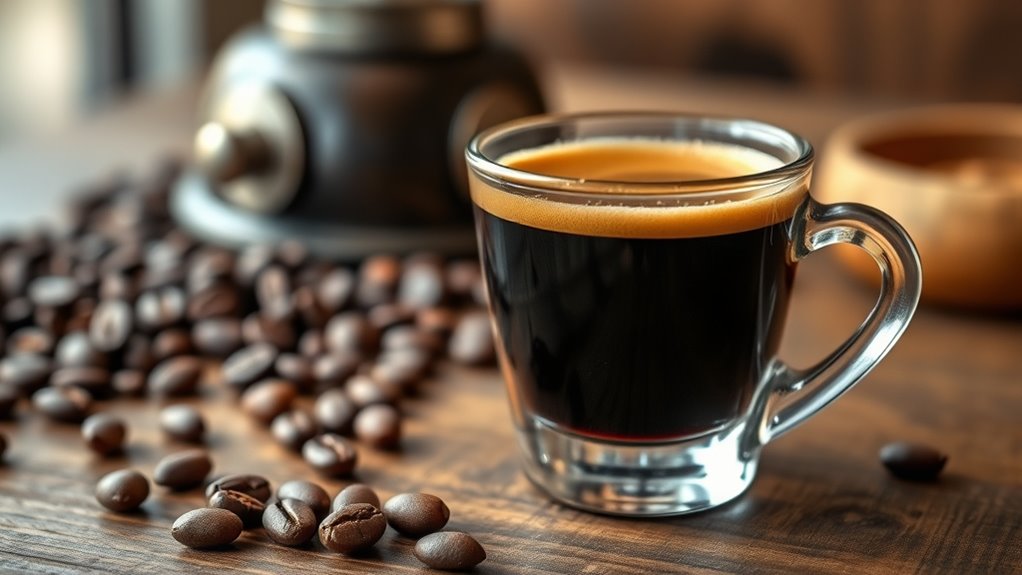
Although espresso shots vary, a standard single shot (about 1 oz or 30 mL) typically contains around 63 mg of caffeine. This amount can range from 47 to 65 mg depending on factors like the coffee dose and the bean type used.
You’ll find that a typical single shot uses 7 to 9 grams of coffee, which influences caffeine concentration.
Arabica beans generally contain less caffeine compared to Robusta, so the choice between these beans affects the final caffeine content.
Additionally, lighter roasts tend to retain slightly more caffeine than darker roasts because roasting reduces caffeine levels slightly.
Keep in mind, differences in brewing techniques and bean sources lead to variations in caffeine content across cafes. So, the 63 mg figure serves as a reliable average rather than an absolute value.
Consistent shot timing of 25–30 seconds is important as it influences extraction efficiency and the caffeine yield in each shot.
Factors Affecting Espresso Caffeine Levels
When you brew espresso, several factors directly influence its caffeine content, making each shot unique. The amount of coffee grounds, bean type, roast level, grind size, and brewing parameters all play vital roles. For example, using Robusta beans considerably raises caffeine compared to Arabica.
Similarly, lighter roasts retain more caffeine than darker ones. Finer grinds and longer extraction times also increase caffeine yield by enhancing extraction efficiency. Maintaining consistent extraction timing ensures optimal caffeine extraction and flavor balance.
| Factor | Impact on Caffeine Content |
|---|---|
| Coffee Amount | More grams (7-9g single, 14-18g double) increase caffeine |
| Bean Type | Robusta beans have higher caffeine than Arabica |
| Roast Level | Lighter roasts retain slightly more caffeine |
| Grind & Extraction | Finer grind and optimized brewing extract more caffeine |
Estimating Your Espresso Caffeine Intake
Since caffeine content varies by factors like bean type and brewing method, estimating your espresso caffeine intake requires a practical approach. Each shot typically contains about 63 mg of caffeine, though this can range from 47 to 65 mg depending on variables like grind size and extraction time.
To estimate your intake, multiply the number of shots by roughly 63 mg per shot. For example, a double shot, about 2 oz, generally contains around 126 mg of caffeine.
Keep in mind that factors such as coffee dose and brewing technique can cause fluctuations, so exact amounts may differ. Always verify the shot count in your espresso-based drink, especially larger servings, to accurately gauge your total caffeine consumption and manage your intake effectively. Additionally, the grind size plays a crucial role in extraction time, which can influence the caffeine content in your espresso.
Comparing Caffeine in Single, Double, and Triple Shots
A single shot of espresso has about 63 mg of caffeine, which gives you a solid starting point.
Now, if you go for a double shot, you’re basically doubling that amount—so around 126 mg.
And if you really want to ramp it up, a triple shot packs close to 189 mg of caffeine.
Just remember, these numbers are estimates assuming each shot uses the same amount of coffee.
But things like the type of bean and how it’s brewed can cause those amounts to shift a bit.
The caffeine content varies based on bean type, roast level, and extraction time, influencing the final strength of your espresso.
Single Shot Caffeine
Many coffee lovers rely on the caffeine content of espresso shots to gauge their intake. A single shot of espresso, typically 1 oz, contains about 63 mg of caffeine, but this amount can vary. Factors like coffee dose, bean variety, and brewing method influence the exact content, which ranges from 47 mg to 65 mg.
Understanding this helps you control your caffeine consumption effectively.
Here’s what you should know about single shot caffeine content:
- Standard single shot contains roughly 63 mg of caffeine
- Caffeine can vary based on bean type and preparation
- Brewing technique impacts caffeine extraction
- Double and triple shots multiply caffeine proportionally
- Single shots offer a concentrated caffeine boost in a small volume
This knowledge empowers you to make informed coffee choices. The coffee grounds quantity used and the extraction time are key factors that influence how much caffeine ends up in your espresso shot.
Double Shot Comparison
Two shots of espresso deliver roughly double the caffeine content of a single shot, with about 126 mg compared to 63 mg. This linear increase continues with each additional shot, making it easy to estimate your caffeine intake based on the number of shots you consume.
While brewing variations can slightly alter caffeine levels, the standard per shot remains consistent. Here’s a clear comparison:
| Number of Shots | Approximate Caffeine (mg) |
|---|---|
| Single Shot | 63 |
| Double Shot | 126 |
| Triple Shot | 189 |
Because espresso is brewed under high pressure using finely ground coffee, it has a higher caffeine concentration per ounce than drip coffee, resulting in a potent caffeine dose even in small volumes.
Triple Shot Estimates
Although caffeine content can vary depending on factors like bean type and brewing method, you can generally expect a triple shot of espresso to contain about 189 mg of caffeine. This means it has roughly three times the caffeine of a single shot and about 63 mg more than a double shot.
Understanding these differences can help you manage your caffeine intake efficiently.
- Single shot: ~63 mg caffeine
- Double shot: ~126 mg caffeine
- Triple shot: ~189 mg caffeine
- Caffeine range for triple shot: 180–200 mg
- Variability depends on dose, bean, and brewing method
Knowing these estimates lets you make informed choices about your espresso strength. It’s pretty handy when you want to keep track of how much caffeine you’re getting without overdoing it.
A doppio espresso, or double shot, typically contains 120-185 mg of caffeine, making it a potent source for those seeking a stronger coffee experience.
How Espresso Types Affect Caffeine Content
When you explore different espresso types like ristretto and lungo, you’ll notice that their caffeine content varies primarily due to brewing factors rather than just water volume. Ristretto uses less water, yielding a concentrated but slightly lower total caffeine shot. Lungo, brewed with more water, often has more caffeine overall but is less concentrated per ounce.
Decaffeinated espresso still contains trace caffeine regardless of type.
| Espresso Type | Caffeine Content (mg per 1 oz shot) |
|---|---|
| Ristretto | 55–65 |
| Standard | 63–70 |
| Lungo | 70–80 |
| Decaf | ~1 |
Brewing time and coffee grounds amount influence caffeine more than water volume alone, so variations mostly impact flavor and concentration, not total caffeine. Extraction under high pressure also enhances espresso’s aroma and richness, affecting the overall flavor experience.
Comparing Espresso Caffeine With Brewed Coffee
While espresso delivers a higher caffeine concentration per ounce, brewed coffee usually contains more total caffeine because of its larger serving size.
Espresso has more caffeine per ounce, but brewed coffee often packs a bigger total caffeine punch.
A single shot of espresso has about 63 mg of caffeine, while an 8 oz brewed coffee offers roughly 95 mg.
If you go for a double shot (2 oz), you get approximately 126 mg, which is slightly more than a 12 oz brewed coffee’s 120 mg.
Here’s what you should know:
- Espresso contains about 40 mg caffeine per ounce.
- Brewed coffee has roughly 10 mg caffeine per ounce.
- Total caffeine depends on serving size more than concentration.
- A single espresso shot has less caffeine than a typical brewed coffee.
- Double espresso shots can surpass brewed coffee caffeine levels.
Knowing these differences helps you pick your ideal caffeine boost. Additionally, the type of coffee bean used can significantly influence the caffeine content in your espresso.
How Roast Level and Bean Type Influence Espresso Caffeine
Because espresso’s caffeine content depends on more than just serving size, understanding how roast level and bean type affect it can help you tailor your coffee to your needs.
Lighter roasts tend to contain slightly more caffeine by weight than darker roasts since they lose less caffeine during roasting and maintain higher bean density.
Arabica beans generally have about half the caffeine content of Robusta beans, meaning espresso made from Robusta will deliver considerably more caffeine.
Although caffeine content per bean remains fairly stable during roasting, darker roasts’ reduced density can lower caffeine extraction per scoop.
Ultimately, your choice between lighter or darker roasts and Arabica or Robusta beans influences the caffeine level in your espresso, allowing you to adjust strength and effect precisely.
It’s pretty handy when you want your coffee just the way you like it.
Additionally, factors like bean origin and processing also play a significant role in determining the caffeine concentration in your espresso.
Is Decaf Espresso Completely Caffeine-Free?
Choosing your roast level and bean type affects how much caffeine ends up in your espresso, but if you’re looking to avoid caffeine altogether, decaf espresso might seem like the answer. However, decaf espresso isn’t completely caffeine-free. The decaffeination process removes about 97% or more of caffeine, yet small amounts remain.
Typically, a 1 oz shot of decaf espresso contains around 1 mg of caffeine, but this can vary. So, it’s not totally caffeine-free, but it’s pretty close.
Consider these points about decaf espresso caffeine content:
- Residual caffeine ranges from 1 mg up to 7 mg per shot
- Decaffeination methods affect caffeine removal efficiency
- Bean type influences leftover caffeine
- Brewing technique can slightly alter caffeine levels
- Decaf espresso provides minimal caffeine compared to regular espresso
Safe Daily Limits for Espresso Caffeine Consumption
You can safely have up to 400 mg of caffeine each day, which usually works out to about 6 or 7 shots of espresso for most adults.
If you’re pregnant, though, it’s a good idea to keep your intake below 200 mg to lower any risks.
Remember, everyone’s sensitivity to caffeine is different, so you might need to have fewer shots to stay within safe limits.
It’s always best to listen to your body and adjust accordingly.
Recommended Daily Caffeine Intake
Although espresso delivers a concentrated caffeine boost, staying within recommended daily limits is essential for your health. The FDA suggests up to 400 mg of caffeine daily for most adults, which is about 6-7 espresso shots. However, sensitive individuals may experience side effects with 200-300 mg.
To manage your intake effectively, limit espresso shots to avoid exceeding 400 mg caffeine daily. Watch for symptoms like jitteriness, insomnia, or rapid heartbeat. Remember, caffeine from other sources adds to your total daily intake.
Track your consumption to stay within safe limits. And don’t forget to adjust your intake based on your personal sensitivity to caffeine. It’s all about finding what works best for you!
Pregnancy and Caffeine Limits
When expecting, it’s essential to limit your caffeine intake to no more than 200 mg per day, as recommended by the FDA. This helps minimize risks to your developing baby.
A standard double shot of espresso contains about 126 mg of caffeine, which uses up a significant portion of this safe limit.
Consuming more than one double shot daily could increase risks such as miscarriage, preterm birth, or low birth weight.
To enjoy espresso flavors without excess caffeine, consider decaffeinated options. These have roughly 1 mg of caffeine per shot.
Remember to track your total daily caffeine from all sources, including espresso, tea, and chocolate.
Staying within the recommended safe limit promotes a healthy pregnancy. It’s all about keeping an eye on what you consume throughout the day.
Individual Sensitivity Considerations
Since caffeine affects everyone differently, understanding your individual sensitivity is essential when determining safe daily limits for espresso consumption.
While the FDA considers up to 400 mg of caffeine daily safe for most adults (about 6-7 espresso shots), your tolerance might be lower. Factors like genetics, body weight, medications, and health conditions influence how you metabolize caffeine.
Pregnant women, for example, should limit intake to 200 mg daily. To stay within safe limits, monitor your body’s reactions closely.
Consider these points:
- Start with small amounts to gauge tolerance
- Watch for jitters, insomnia, or increased heart rate
- Adjust intake based on personal response
- Account for medications or health issues
- Follow pregnancy-specific guidelines if applicable
This approach guarantees espresso caffeine consumption aligns with your unique sensitivity.
Frequently Asked Questions
How Does Espresso Caffeine Affect Sleep Quality?
Espresso caffeine disrupts your sleep by blocking adenosine receptors, delaying sleep onset, and reducing deep sleep. If you consume it within six hours of bedtime, you’ll likely experience lighter, less restorative sleep and difficulty falling asleep.
Can Caffeine in Espresso Cause Anxiety or Jitters?
When it comes to caffeine in espresso, it can definitely make you jump out of your skin if you’re sensitive. The quick caffeine spike often triggers anxiety or jitters, especially if you drink multiple shots quickly.
Does Espresso Caffeine Impact Hydration Levels?
Espresso caffeine doesn’t considerably impact your hydration levels when consumed moderately. Its mild diuretic effect is offset by the fluid content, so you won’t experience noticeable dehydration from typical espresso intake.
In other words, enjoying your espresso won’t leave you thirsty or dehydrated. Just keep it to a moderate amount, and you’re good to go!
How Quickly Does Espresso Caffeine Metabolize in the Body?
You metabolize espresso caffeine in about 4 to 6 hours, with half eliminated in 3 to 5 hours. This varies by your age, liver function, genetics, and lifestyle factors like smoking or medication use.
Are There Health Benefits to Moderate Espresso Caffeine Consumption?
Yes, moderate espresso caffeine consumption can boost your cognitive function, improve alertness, and reduce risks of diseases like type 2 diabetes. It also provides antioxidants that support heart health and enhances mood and physical performance.
Drinking espresso in moderation is a great way to stay sharp and feel more energized throughout the day. Plus, those antioxidants do a lot of good for your heart. So, it’s not just about the buzz—it’s about overall well-being too.
Conclusion
You should know that a single shot of espresso typically contains about 63 mg of caffeine. But factors like shot size, bean type, and roast level can change that amount.
You need to consider how single, double, or triple shots impact your intake. It’s also helpful to compare espresso with brewed coffee for a clear picture.
Remember, while decaf espresso isn’t caffeine-free, staying within safe daily limits ensures you enjoy espresso without health risks.