Decaf espresso is made by removing most caffeine from coffee beans before roasting. This is usually done using water-based methods like Swiss Water or CO₂ extraction to keep the flavor intact.
It has a lot less caffeine than regular espresso, about 3 to 15 mg per shot. But it still gives you that rich, smooth taste with nutty or chocolate notes.
Decaf is better for your health since it has fewer caffeine effects, though it might affect digestion and iron absorption a bit. Next, you’ll find out how to pick quality beans and brew it perfectly.
What Is Decaf Espresso and How Is It Made?
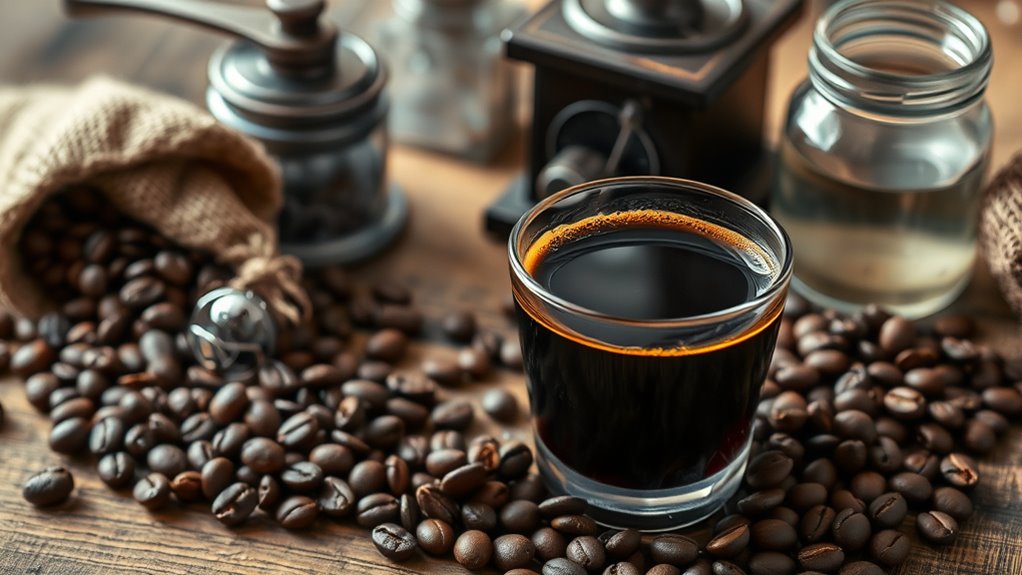
While decaf espresso contains considerably less caffeine than regular espresso, it still delivers a rich, full-bodied flavor because the beans undergo a careful decaffeination process before roasting.
Decaf espresso offers rich, full-bodied flavor thanks to meticulous decaffeination before roasting.
You start with coffee beans that have their caffeine removed through methods like water extraction, chemical solvents, or carbon dioxide.
Water-based processes such as the Swiss Water or Mountain Water Process avoid chemicals and better preserve the beans’ original taste and aroma.
Decaffeination always happens before roasting, ensuring the beans are caffeine-reduced prior to grinding and brewing.
The process targets efficient caffeine removal while maintaining essential oils and flavor compounds.
This way, you can enjoy an espresso that’s low in caffeine yet rich in complexity and depth, matching much of the sensory profile of regular espresso.
To achieve the best flavor balance, it is important to maintain proper extraction timing during brewing, which for espresso generally falls between 25-30 seconds.
How Much Caffeine Is in Decaf Espresso?
Decaf espresso offers a particularly lower caffeine content than regular espresso, making it a suitable choice if you’re looking to reduce your intake without sacrificing flavor. While it’s not completely caffeine-free, the amount is considerably less. Here’s what you should know:
A 1-ounce decaf shot contains about 3 to 15 milligrams of caffeine. Regular espresso has roughly 63 milligrams per shot, so decaf has over 80% less caffeine.
A one-third decaf shot typically has 1 to 5 milligrams of caffeine.
Consuming three decaf shots can add up to 45 milligrams, still much lower than a single regular shot.
Caffeine levels vary depending on the bean type and decaffeination method used.
This variability means you can enjoy decaf espresso with a relatively low caffeine impact.
The Swiss Water process is one decaffeination method known for removing up to 99.9% of caffeine, resulting in very low residual caffeine levels.
How Do Decaf Espresso Beans Look?
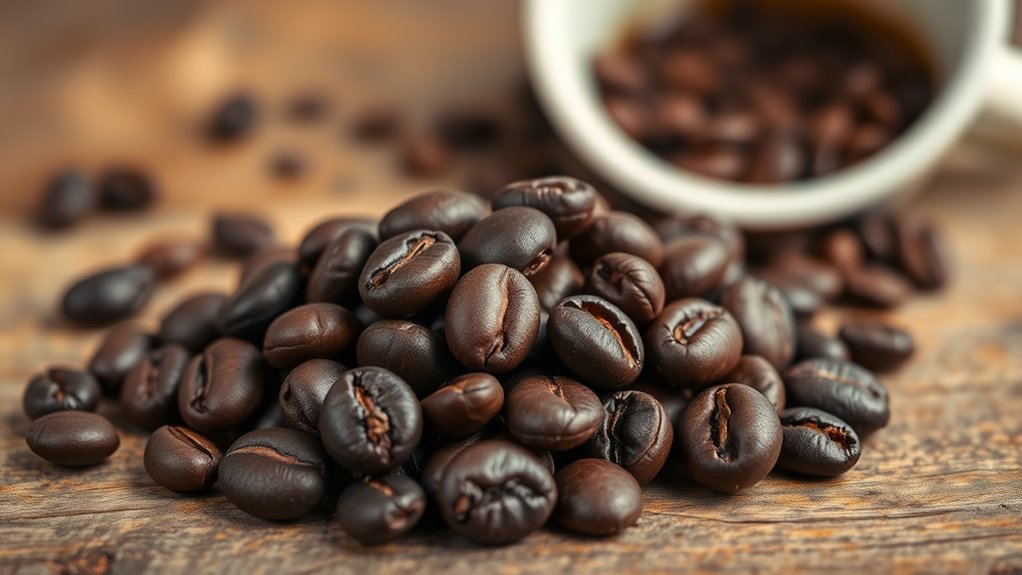
Although you might expect a noticeable difference, decaffeinated espresso beans closely resemble regular ones in size, shape, and color. Typically, they’re dark brown and shiny from roasting, with variations depending on roast level. Medium roasts appear lighter, while dark roasts look more oily and glossy.
The decaffeination process doesn’t substantially alter the beans’ natural structure, so you won’t spot major visual changes. However, decaf beans often have a slightly duller surface, especially if solvent-based methods are used, due to the removal of caffeine and oils.
The roasting and extraction processes that influence espresso’s flavor profile also affect decaf beans, which may result in a milder taste compared to regular espresso, similar to the difference between espresso powder and instant espresso.
How Does Decaf Espresso Taste Compared to Regular Espresso?
Even though it lacks caffeine, espresso made from decaf beans delivers a flavor profile that’s especially milder and less vibrant than its regular counterpart. You’ll notice reduced brightness and muted acidity, which results in a smoother overall experience. The decaffeination process can slightly dull complexity, but high-quality decafs still retain much of their original character.
Here’s what to expect when you taste decaf espresso compared to regular espresso:
- Nutty, chocolate, or caramel notes with a smoother profile
- Dark roasts show smoky, bittersweet flavors
- Lighter roasts may present floral or citrus hints
- Slightly less complex and vibrant due to decaffeination
- Water-based decaffeination methods preserve more flavor nuances
Understanding these differences helps you appreciate decaf espresso’s unique taste without caffeine’s buzz. So, if you’re looking for a gentler espresso experience, decaf can be a great choice. For a cocktail alternative that blends espresso’s flavor without caffeine, consider using decaf in an Espresso Martini.
What Roast Levels Work Best for Decaf Espresso?
When choosing the right roast for espresso without caffeine, you’ll find that medium and dark roasts deliver the richest, most complex flavors while reducing acidity. Dark roasts bring bold, smoky notes with caramelized sweetness, enhancing decaf’s flavor depth. Lighter roasts, like blonde or medium-light, preserve brighter, floral, or citrus tones but are less typical for espresso.
Darker roasts also extract more efficiently, yielding a fuller body. Balancing richness and smoothness, medium to dark roasts are your best bet for decaf espresso. Proper roast profile adjustments enhance flavor for high-pressure extraction, which is essential for quality espresso.
| Roast Level | Flavor Profile | Extraction Efficiency |
|---|---|---|
| Blonde | Bright, floral, citrus | Lower |
| Medium-Light | Mild acidity, subtle fruit | Moderate |
| Medium | Balanced, smooth | Good |
| Medium-Dark | Rich, caramelized | High |
| Dark | Bold, smoky, sweet | Very High |
How to Brew the Perfect Decaf Espresso Shot
How do you achieve the perfect decaf espresso shot? Precision in every step is key to liberating rich flavor and crema. Start by grinding your decaf beans ultra-fine, around 200-300 microns, to extract within 20-30 seconds.
Precision at every step unlocks rich flavor and crema in your perfect decaf shot.
Keep water temperature steady between 195°F and 205°F (90°C to 96°C) for ideal solubility. Evenly distribute and tamp your grounds with 20-30 pounds of pressure to avoid channeling and guarantee uniform extraction.
Use a calibrated espresso machine to pull about 30 grams of espresso within the perfect time frame.
Finally, always use fresh, filtered water and freshly ground beans to maximize clarity and crema quality. Focus on these steps to brew decaf espresso that rivals any regular shot.
- Ultra-fine grind size (200-300 microns)
- Water temperature 195°F–205°F (90°C–96°C)
- Even tamping with 20-30 pounds of pressure
- Pull 30 grams espresso in 20-30 seconds
- Use fresh, filtered water and freshly ground beans
Measuring your espresso yield by weight rather than volume ensures consistency and accuracy in every shot.
Health Benefits of Drinking Decaf Espresso
Although decaf espresso contains considerably less caffeine than its regular counterpart, it still offers meaningful health benefits that might surprise you. Drinking one cup daily can lower your risk of developing type 2 diabetes by 6 to 9%, thanks to compounds beyond caffeine.
Its minimal caffeine content (3 to 15 mg per shot) reduces sleep disturbances and jitters, making it ideal if you’re caffeine-sensitive.
Decaf espresso also promotes bladder comfort by minimizing urinary urgency, unlike regular coffee. Additionally, it provides antioxidant benefits similar to caffeinated coffee, which may help reduce inflammation and oxidative stress.
Because it contains fewer stimulating compounds, decaf espresso is less likely to raise blood pressure or cortisol levels.
Moreover, decaf espresso retains many of the antioxidants and phytonutrients found in regular espresso, supporting overall health without the added caffeine effects.
Side Effects to Know About Decaf Espresso
When you drink decaf espresso, it’s good to know it can interfere with iron absorption.
Also, if you’re not used to caffeine, it might cause temporary spikes in blood pressure.
On top of that, its acidity could upset your digestion, sometimes triggering acid reflux or heartburn.
Knowing about these effects can help you manage any potential health risks more easily.
Additionally, choosing decaf coffee options with lower acidity can reduce digestive discomfort.
Health Risks Overview
What should you watch out for when drinking decaf espresso? While it reduces caffeine, it still poses some health risks you need to factor in.
It can inhibit nonheme iron absorption by 60 to 90 percent, so try to avoid drinking it with iron-rich meals. If you rarely consume caffeine, expect a temporary rise in systolic blood pressure. Don’t worry though, your body usually builds up tolerance over time.
Decaf espresso may slightly elevate cortisol levels, which could affect your stress hormone balance. Also, the acidity and oils in it can trigger acid reflux or heartburn if you’re sensitive.
On top of that, regular consumption might stain your teeth because of tannins and pigments—not the caffeine.
Being aware of these points helps you enjoy decaf espresso safely and minimize any adverse effects on your health. Additionally, using freshly roasted beans can enhance flavor and reduce unwanted bitterness in your decaf espresso.
Impact On Digestion
Since decaf espresso still contains acids and oils, it can stimulate gastric acid production. This might cause acid reflux or indigestion, especially if you have a sensitive stomach.
The acids and oils also act as mild laxatives, which could lead to gastrointestinal discomfort or diarrhea.
Also, tannins and polyphenols in decaf espresso may inhibit nonheme iron absorption. So, if you drink it often, it might affect your iron levels over time.
Some people notice increased cortisol levels after drinking decaf espresso, and that can influence stress-related digestion.
Finally, trace chemicals from certain decaffeination processes might cause mild digestive irritation for some folks.
It’s good to be aware of these effects so you can understand how decaf espresso might impact your digestive system. This is especially true if you’re prone to sensitivity or digestive issues.
Additionally, just as espresso hair color features a deep, medium-dark brunette tone with rich complexity, the composition of decaf espresso maintains nuanced chemical properties that contribute to its digestive effects.
Which Are the Best Decaf Espresso Beans and Brands?
When you’re picking out the best decaf espresso beans, it’s a good idea to pay attention to how they’re decaffeinated and what kind of flavor profile you like.
For example, brands like Colipse and Lavazza use methods like Swiss Water® and CO₂ processes. These techniques help keep the rich, natural flavors intact without using any chemicals.
Knowing these details makes it easier to choose quality beans that will give you a satisfying espresso experience every time.
Top Decaf Espresso Beans
Although decaf espresso lacks caffeine, it doesn’t compromise on flavor or quality, especially when you choose top-tier beans. You can enjoy a rich and balanced espresso experience with these top decaf options:
- Colipse Decaf Espresso: Swiss Water Process decaffeination with berry, caramel, and chocolate notes.
- Lavazza Decaf Espresso: 100% Arabica from South America and Africa, decaffeinated using carbon dioxide to maintain flavor.
- Starbucks Decaf Espresso: Dark roast, solvent-decaffeinated 100% Arabica beans, offering a rich caramelized profile.
- Illy Decaf Espresso: Premium Arabica beans, proprietary water process, smooth and balanced with caramel and chocolate hints.
- Nescafe Decaf Espresso: Instant Arabica-based coffee with robust flavor and velvety crema, widely available.
Choosing any of these guarantees a quality decaf espresso without sacrificing taste.
Choosing Quality Brands
Choosing the right decaf espresso brand can really impact your coffee experience because not all decaffeination methods or bean qualities are the same. Top brands like Colipse, Lavazza, and Illy use water-processed methods such as Swiss Water or CO₂, which do a better job preserving the beans’ original flavor.
When you’re picking your beans, look for 100% Arabica sourced from reputable regions like South America or Ethiopia. It’s also a good idea to check for chemical-free decaffeination labels to ensure a cleaner taste.
Premium brands often roast fresh or even roast-to-order, which helps keep the flavor and aroma just right. Prices can vary quite a bit, from $15.99 to $32 per package, but investing in quality brands like Illy or Starbucks usually means you get superior taste and consistency.
How to Choose the Best Decaf Espresso Beans
How do you guarantee your decaf espresso delivers rich flavor without unwanted chemical aftertastes? Start by selecting beans processed with water-based methods like Swiss Water or CO₂. These help avoid chemical residues and keep the natural taste intact.
Opt for medium to dark roasts, such as French or espresso roast. These roasts give you a bold flavor that holds up well in espresso shots.
And when it comes to the bean type, prioritize Arabica for smoother, sweeter notes compared to Robusta.
Always check the roast date and try to use your beans within 1-2 weeks for the best freshness.
Finally, take a moment to read customer reviews and product descriptions carefully. This way, you can confirm the decaffeination method and get a sense of the flavor quality.
- Choose water-based decaffeination methods
- Select medium to dark roast levels
- Prefer Arabica over Robusta beans
- Verify freshness via roast date
- Consult reviews for authenticity and taste
Frequently Asked Questions
Can Decaf Espresso Be Used in Coffee-Based Cocktails?
Yes, you can use decaf espresso in coffee-based cocktails. It preserves rich flavor, crema, and aroma while minimizing caffeine. This lets you enjoy complex coffee notes without the stimulation.
It’s perfect for evening drinks or caffeine-sensitive guests. So go ahead and mix up your favorite coffee cocktails anytime!
How Long Does Decaf Espresso Stay Fresh After Brewing?
You’ve got about 10-15 minutes before your decaf espresso turns into a sad, flavorless puddle.
If you store it airtight, it can last up to 30 minutes. You can also refrigerate it for 1-2 hours. Just keep in mind, reheating it ruins the taste completely.
Is Decaf Espresso Suitable for Cold Brew Preparation?
Yes, you can use decaf espresso for cold brew. Its fine grind and rich flavor create a smooth, concentrated drink.
You might need to adjust steeping time or water ratio for ideal extraction and taste balance. It’s all about finding what works best for your palate.
Can Decaf Espresso Be Combined With Regular Espresso Shots?
Yes, you can combine decaf espresso with regular shots without sacrificing flavor. This lets you customize your caffeine intake while still enjoying rich, balanced drinks like lattes or cappuccinos.
It’s a great way to reduce your caffeine by up to 50% seamlessly. Plus, it doesn’t change the taste much, so you get the best of both worlds.
What Are Common Misconceptions About Decaf Espresso?
You might think decaf espresso lacks flavor, contains no caffeine, or uses inferior beans. But it actually offers rich taste and has trace amounts of caffeine.
Plus, it often comes from high-quality, carefully processed Arabica beans. So, don’t count it out just because it’s decaf!
Conclusion
If you think decaf espresso means sacrificing flavor or ritual, think again. By choosing the right roast and beans, you get nearly the same rich taste without the caffeine kick. It’s perfect for any time of day.
It’s fascinating how decaf’s careful processing preserves complexity while cutting caffeine. So, whether for health or preference, decaf espresso offers a smart, satisfying choice that aligns with your lifestyle. Coincidentally, it proves less can truly be more.

Pingback: Is Decaf Espresso A Thing – Answered
Pingback: What Is Decaf Espresso Roast – Explained