When choosing an espresso machine, focus on boiler type and material. Opt for dual boilers with brass or copper for thermal stability. Look for precise temperature control like PID systems to guarantee consistent flavor.
Consider your skill level with machine types from manual to superautomatic. Don’t overlook water reservoir size and a good steam wand for frothing. Regular maintenance matters for longevity and taste.
Keep these in mind, and you’ll be set to discover how each feature shapes your perfect cup.
Types of Home Espresso Machines
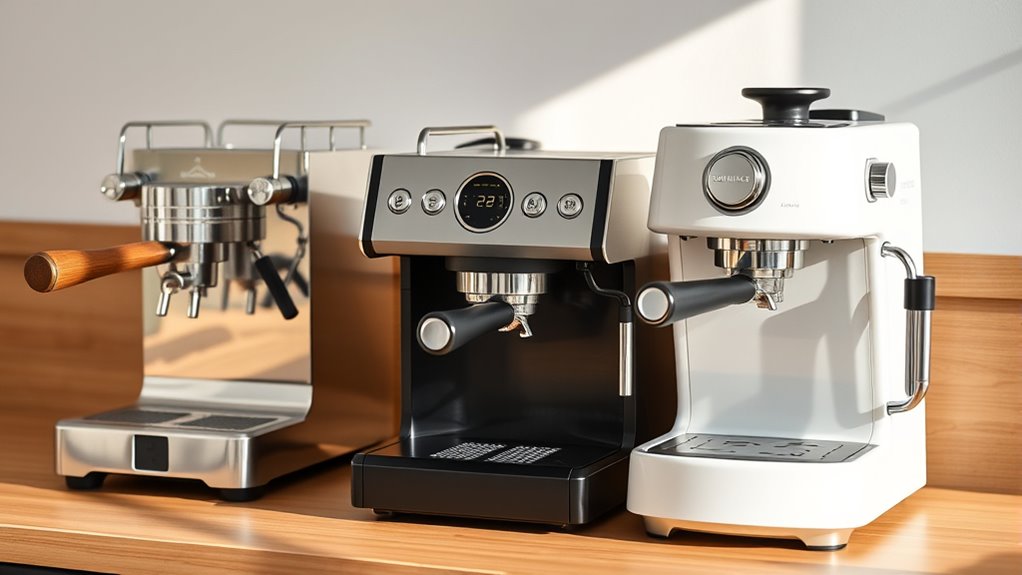
When choosing an espresso machine for your home, understanding the different types available can help you find one that matches your skill level and brewing preferences.
Semi-automatic machines give you control over grinding, tamping, and extraction, balancing ease and hands-on brewing.
If you want convenience, superautomatic machines handle every step for you, delivering coffee quickly without any manual effort.
Capsule machines offer simplicity. Just pop in a pod, but they limit customization and tend to generate more waste.
For those passionate about mastering espresso, manual lever machines provide full control over pressure and extraction but demand skill and effort.
Selecting the right machine can also influence the caffeine extraction process, affecting the strength and flavor of your espresso.
Choosing the Right Boiler for Your Espresso Machine
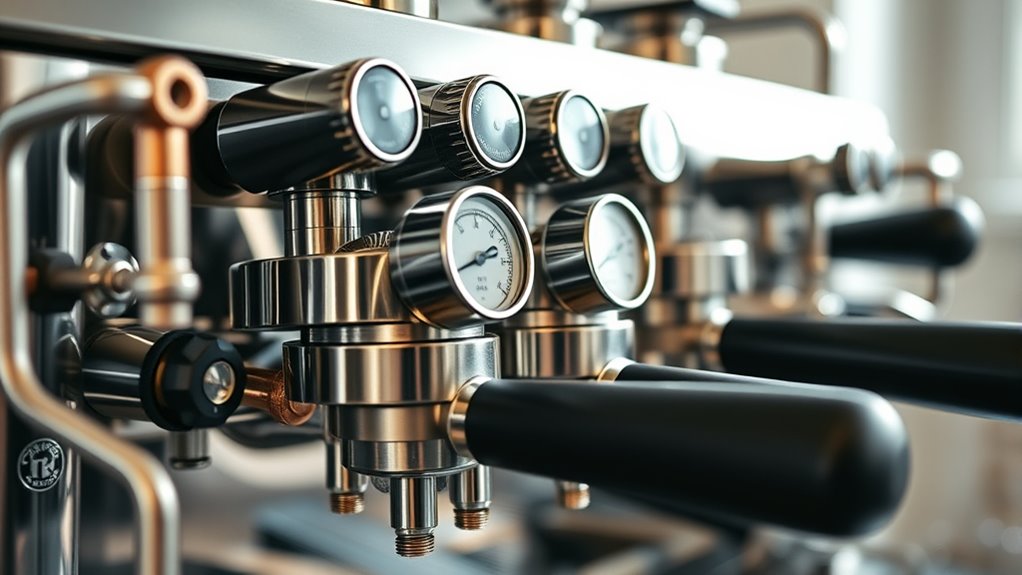
How do you guarantee your espresso machine delivers consistent temperature and ideal performance? Choosing the right boiler is key. Boilers affect durability, heat retention, and how smoothly your machine operates.
Ensuring consistent temperature and peak performance starts with selecting the right boiler for your espresso machine.
Consider these points:
1. Material Matters
Stainless steel boilers offer durability and excellent heat retention. Copper and brass components boost thermal stability. Avoid aluminum boilers unless they’re stainless steel-lined to prevent corrosion.
2. Boiler Types
Single boilers are affordable and compact but need time between brewing and steaming. Dual boilers let you brew and steam simultaneously with independent temperature control. They’re perfect for busy users.
3. Heat Exchanger Boilers
These allow simultaneous brewing and steaming but can fluctuate in temperature under heavy use.
Picking the right boiler ensures your espresso machine performs precisely and consistently. It matches your brewing demands perfectly. Additionally, maintaining consistent water temperature is essential to extract the optimal caffeine content and flavor from your espresso shots.
Temperature Control and Materials in Espresso Machines
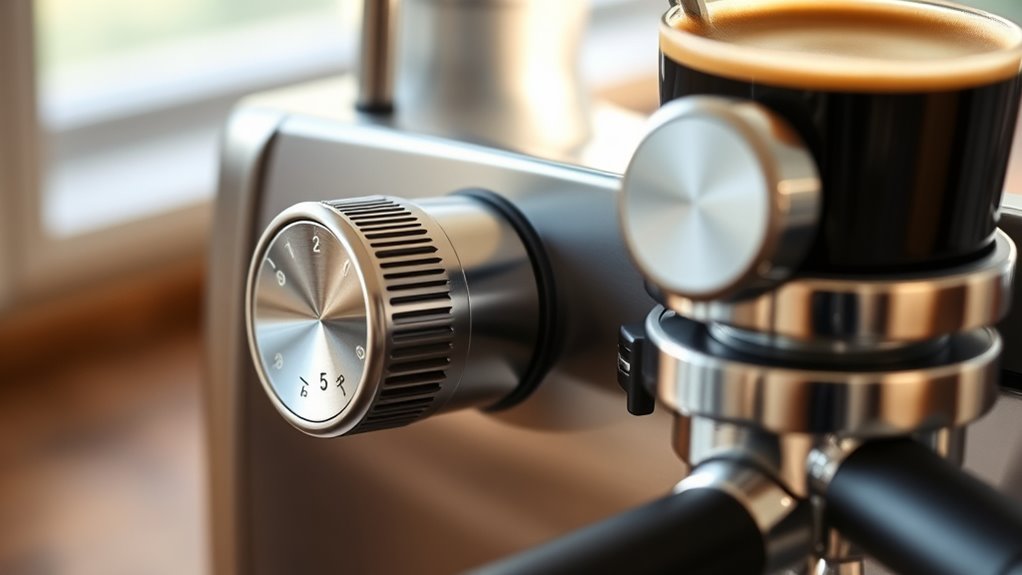
You’ll want an espresso machine with precise temperature control, like a PID system, to keep your brew between 90-96°C for the best extraction.
This way, you’re making sure your coffee gets just the right amount of heat every time.
Now, the materials inside the machine matter a lot too. Brass, copper, or properly lined stainless steel all help keep things stable and durable.
Choosing the right combo means you get consistent flavor and a machine that lasts shot after shot.
Proper pressure and extraction at around 9 bars pressure are also essential to achieve authentic espresso with balanced aroma and crema quality.
PID Temperature Control
Because maintaining a stable water temperature is essential for extracting the best flavors from your coffee, espresso machines with PID controllers offer unmatched precision by regulating temperature within fractions of a degree Celsius. This fine control guarantees every shot pulls consistently, highlighting your beans’ unique characteristics.
With a PID system, you can adjust brewing temperatures to tailor flavor profiles precisely. You’ll also rely on consistent shot quality by minimizing temperature fluctuations.
Plus, it’s easy to monitor and modify settings via digital displays or controls.
Though machines with PID technology often carry a higher upfront cost, they pay off by delivering exceptional reliability and flavor control. Investing in a PID-equipped espresso machine means you’re serious about crafting the perfect cup every time.
Maintaining water temperature between 195°F and 205°F is crucial to optimize extraction and prevent bitterness or sourness, making PID control invaluable for stable temperature maintenance.
Boiler Materials Impact
Although many espresso machines look similar on the outside, the choice of boiler materials inside plays a crucial role in temperature control and overall performance. You’ll want a machine with a stainless steel boiler. Its durability and corrosion resistance directly support consistent temperature control, ensuring your espresso tastes just right every time.
Machines like Rocket Espresso use copper and brass components, which excel at retaining heat and maintaining stable brewing temperatures. Avoid machines with aluminum boilers unless they’re stainless steel-lined, as aluminum corrodes easily.
Also, steer clear of cheaper models that rely on plastic or silicone parts internally. These materials can compromise heat retention and stability.
Ultimately, the boiler material you choose impacts your machine’s ability to deliver precise, stable temperatures. That’s key for extracting the perfect shot.
Maintaining a stable temperature within the boiler is essential to producing a shot with the perfect crema and balanced flavor extraction.
Thermal Stability Factors
Understanding the impact of boiler materials on espresso machines naturally leads to exploring thermal stability, where both temperature control and material choices work hand in hand. You want a machine that maintains consistent temperatures, ideally between 90–96°C, to extract balanced flavors every time.
This precision is often achieved with PID controllers.
Focus on these thermal stability factors:
- Temperature Control: Look for PID systems that minimize fluctuations, preventing under- or over-extraction.
- Internal Materials: Brass and copper excel in heat retention, while aluminum boilers must be stainless steel-lined to avoid corrosion.
- External Construction: High-grade stainless steel enhances durability and helps maintain steady internal temperatures over time.
Choosing machines with these features ensures each shot is rich, balanced, and flavorful. That’s key to a great espresso experience. Maintaining temperature stability within about ±1°F is crucial for consistent flavor and extraction balance.
Maintaining Your Espresso Machine and Resale Tips
When you maintain your espresso machine regularly, you not’t only guarantee consistent performance but also protect your investment’s long-term value. Descale it with recommended solutions, and clean brew groups, steam wands, and drip trays to prevent buildup and keep things running smoothly.
Keep detailed maintenance records and use original parts for any repairs. This kind of care preserves functionality and boosts resale value, especially for brands like La Marzocco and Gaggia that attract discerning buyers.
| Maintenance Task | Benefit |
|---|---|
| Regular Descaling | Extends lifespan, ensures stability |
| Cleaning Components | Prevents mold, mineral buildup |
| Detailed Records | Enhances resale appeal |
| Use Original Parts | Maintains performance, value |
Stick to these practices, and your espresso machine will serve you well and sell well when the time comes. Additionally, combining daily quick care with deep cleaning routines supports consistent espresso quality and machine health over time.
Water, Reservoir, and Steaming Features Explained
Taking care of your espresso machine’s internal components is only part of the equation. Paying attention to water quality, reservoir capacity, and steaming features directly impacts both taste and convenience. Here’s what you need to know:
- Reservoir Size: Choose a machine with a large water tank (around 98 oz or more) if you brew frequently. This way, you won’t need to refill often. Most machines rely on internal tanks since plumbing options are rare.
- Water Quality: Consider using an external filtration system to improve mineral balance. This enhances flavor and helps prolong your machine’s lifespan.
- Steaming Features: Look for a dedicated steam wand with a simple one-hole nozzle and strong steam pressure. This is especially important in higher-end models for precise, consistent milk frothing.
Additionally, knowing how to extract a perfect doppio espresso can help you maximize the flavor and caffeine content of your coffee experience.
These factors guarantee every cup tastes exceptional and your routine stays seamless.
How to Select the Best Espresso Machine for Your Needs
Although the espresso machine market offers countless options, selecting the best one for your needs demands clear priorities. First, set your budget while considering long-term durability and repair support. Higher-quality machines often save money over time.
Decide if you want manual control, automation, or a hybrid based on your skill and how hands-on you want to be. Match features like pressure stability, PID temperature control, and boiler type to your espresso quality and volume goals.
Don’t forget practical factors: size, water reservoir capacity, and installation space matter. Choose machines with robust internal materials like brass and copper to guarantee heat stability and longevity.
Finally, verify essential features such as pressure relief valves and water filtration to protect your investment and enhance your coffee experience. Taking these steps will help you find the perfect espresso machine for your needs. Regular maintenance practices like descaling and backflushing are crucial to keep your machine performing at its best.
Frequently Asked Questions
Can I Use Pre-Ground Coffee With an Espresso Machine?
Yes, you can use pre-ground coffee with an espresso machine, but you’ll sacrifice freshness and flavor.
For the best espresso, grind beans finely just before brewing. This way, you control the extraction and get richer, more aromatic shots every time. It really makes a difference in taste.
How Loud Are Espresso Machines During Operation?
Espresso machines typically operate around 60 to 75 decibels. That’s about the same noise level as a normal conversation.
You’ll notice quieter models with rotary vane pumps produce less noise. On the other hand, vibratory pump machines can be louder, especially during steaming or frothing. It really depends on the type of pump they use.
Are Espresso Machines Energy Efficient?
Yes, many espresso machines are energy efficient. You’ll want to look for models with auto-off features, standby modes, or thermoblock heating. These options help save power by not running the machine unnecessarily.
ENERGY STAR certification is another great indicator of an energy-efficient machine. Plus, quick heat times mean you spend less energy waiting for your perfect shot. So, you get to enjoy your espresso without wasting electricity.
Do Espresso Machines Require Special Electrical Outlets?
Yes, some espresso machines require special electrical outlets, especially high-wattage or commercial models. You’ll need to check the manufacturer’s specs to guarantee your outlet supports the machine’s voltage and amperage. This helps you avoid safety hazards or damage.
It’s always better to be safe than sorry when it comes to electrical requirements. If you’re unsure, consulting an electrician can save you headaches down the line.
What Accessories Are Essential for Beginners?
You’ll need a burr grinder for consistent grounds, a flat-bottom tamper to evenly compress coffee, an espresso scale for precise dosing, a milk pitcher for frothing, and cleaning supplies to keep your machine performing at its best.
These tools might sound like a lot at first, but they really make a difference in your coffee game. Once you have them, brewing great espresso gets way easier and more fun.
Conclusion
Choosing the perfect espresso machine might feel like steering through a labyrinth, but with the right insights, you’ll find your way to a companion that elevates your daily ritual.
Remember, it’s not just about the machine’s specs, but the harmony it creates with your lifestyle and taste.
Embrace the journey, knowing that a well-chosen espresso maker is less an appliance and more a trusted partner in crafting moments of warmth and satisfaction.