You’ll find a standard latte has one shot of espresso, about 1 ounce brewed from roughly 18 grams of coffee. This is blended with steamed milk at a 2:1 ratio to balance flavor smoothly.
Smaller lattes usually stick to one shot, while larger ones may have two for richness without overwhelming the milk. You can always customize shots for a stronger taste or caffeine kick.
Keep exploring, and you’ll discover how size, milk, and shot choice all impact your perfect latte.
How Much Espresso Is in a Standard Latte?
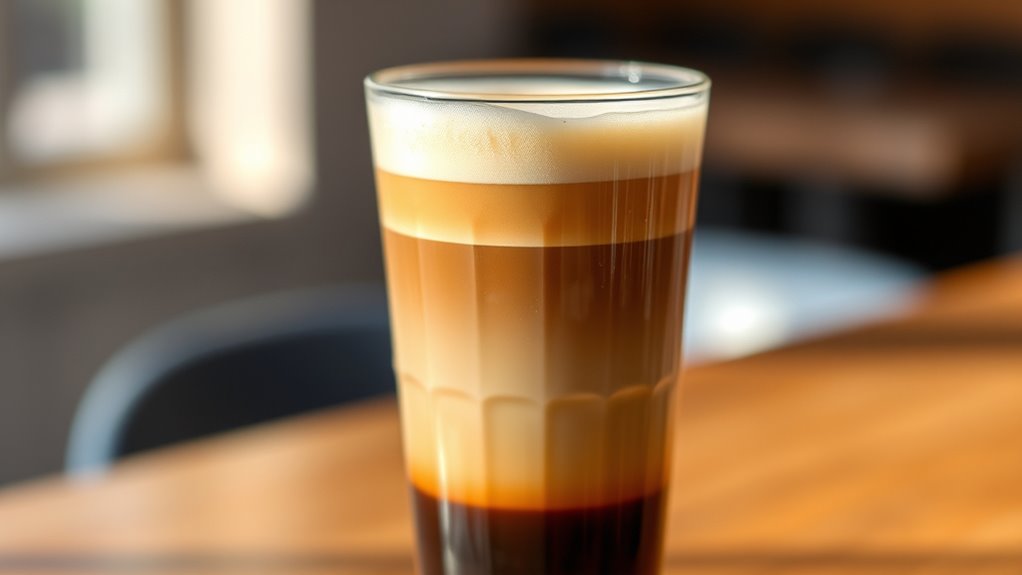
While the amount of espresso in a latte can vary, a standard small latte usually contains a single shot, about 1 ounce or 30 milliliters.
A standard small latte typically features a single espresso shot, approximately 1 ounce or 30 milliliters.
When you order a small latte, expect roughly 18 grams of coffee grounds to be used to pull this shot.
This single shot blends with steamed milk, typically following a 1:3 to 1:3.5 espresso-to-milk ratio, which gives the latte its signature smooth, creamy texture.
Although larger lattes often come with two shots, the standard small latte sticks to one, ensuring balance without overwhelming the milk.
You can always customize your espresso shot count, but if you want the classic latte experience, a single, well-pulled shot is the way to go.
The quality of this shot depends on precise grind size and pressure to achieve optimal flavor and crema.
How Latte Size Affects Espresso Shots
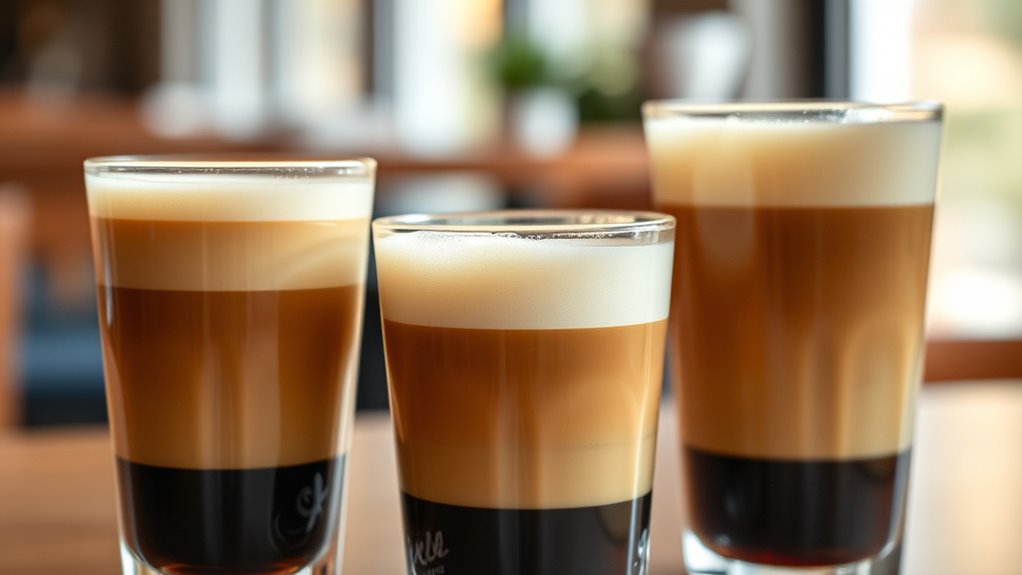
Understanding the espresso content in your latte also means considering the size you order. The size directly influences how many espresso shots you get and the espresso-to-milk ratio.
Here’s what to keep in mind: Smaller lattes (8-12 oz) generally come with a single espresso shot, offering a stronger espresso concentration per ounce.
Standard lattes (10-15 oz) usually have about 18 grams of espresso, which can be one or two shots depending on the exact size.
Larger lattes (15-20 oz) commonly include two espresso shots to keep the flavor balanced despite the increased milk volume.
If you want a stronger kick, especially in bigger sizes, you can always request extra shots.
Size really matters when it comes to espresso strength in your latte. The quality of espresso in each shot depends largely on proper grind size and tamping pressure to achieve optimal extraction.
How Milk Helps Balance Your Latte’s Espresso Flavor
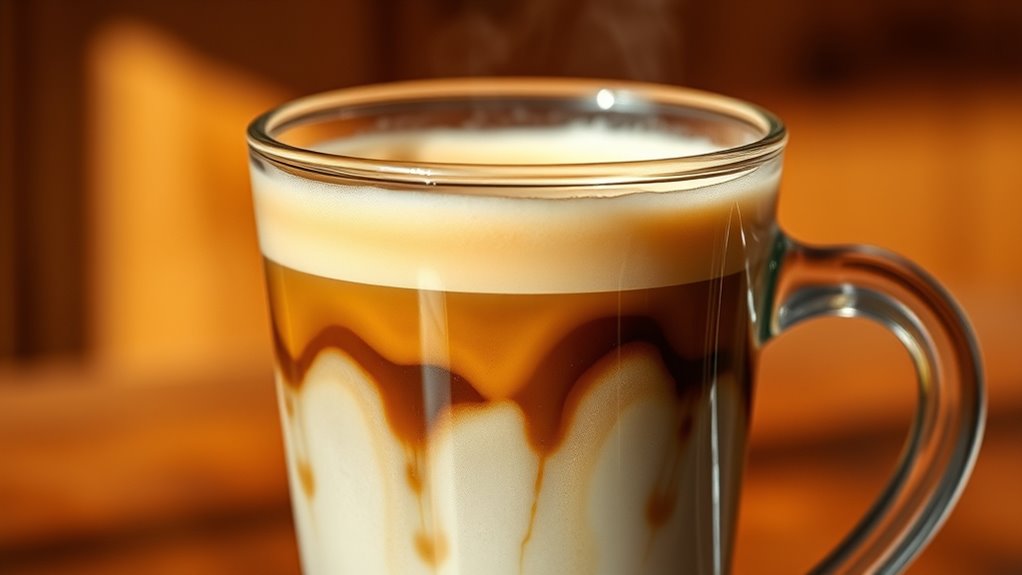
Because milk softens espresso’s boldness, it plays a critical role in creating a balanced latte flavor. When you add milk, especially steamed milk with microfoam, it mellows the espresso’s sharpness and bitterness. The typical 3:1 milk-to-espresso ratio dilutes intensity while warm milk releases natural sweetness, making your latte smooth and harmonious.
If you opt for flavored or alternative milks, expect subtle shifts in richness or softness. It’s pretty cool how just a splash of milk can change the whole vibe of your latte.
It’s important to note that while Keurig machines can make bold espresso-style coffee, they lack the high-pressure extraction needed for authentic espresso, which can slightly affect the strength and flavor balance in your latte.
Here’s how milk influences your latte:
| Aspect | Effect on Latte Flavor |
|---|---|
| Milk-to-Espresso Ratio | Dilutes bitterness and sharpness |
| Microfoam Texture | Adds velvety smoothness |
| Warm Milk Sweetness | Balances espresso’s robustness |
| Flavored Milks | Alters richness or subtlety |
| Alternative Milks | Modifies overall flavor profile |
Milk isn’t just filler; it’s your latte’s flavor balancer. It’s what makes your coffee experience smooth and enjoyable every time.
How Espresso Amount Influences Caffeine Levels in a Latte
Since espresso is the core of your latte, the amount you use directly controls its caffeine kick. A single shot typically delivers 30-50 mg of caffeine, but this can fluctuate based on bean type and brewing technique.
When you add more shots, you increase caffeine almost proportionally. Here’s how espresso affects your latte’s caffeine level:
- One shot packs about 30-50 mg of caffeine.
- Two shots double that, giving you roughly 60-100 mg.
- Factors like extraction time and roast strength further tweak the caffeine content.
Additionally, the type of coffee bean used, such as Robusta versus Arabica, can significantly alter the caffeine concentration in each shot.
How Espresso Shots Vary in Different Latte Styles
While many lattes stick to a single or double shot of espresso, different latte styles mix things up by adjusting the number and type of shots. For example, a flat white typically uses a double shot or ristretto shots, which pack a more concentrated flavor than a standard single shot.
On the other hand, a lungo latte extends the espresso with more water, creating a larger but milder coffee base.
Specialty shops might offer stronger options, like triple or even quadruple shots, especially in larger sizes.
These variations impact both intensity and caffeine content, so you can choose a latte that fits your taste and energy needs precisely.
Understanding these differences helps you pick the perfect espresso strength for your preferred latte style.
For the best flavor and crema, it is recommended to use fresh, roasted beans within 5-30 days when preparing espresso shots.
How to Customize Espresso Shots for Your Latte
You can totally customize your latte by choosing how many espresso shots you want. Whether you’re into a single shot or prefer doubling up to get that extra caffeine kick, it’s all up to you.
Now, when you add more espresso, don’t forget about the milk ratio. Keeping the balance right is super important to make sure your latte stays smooth and creamy, even with a stronger espresso flavor.
Using an espresso machine with precise measurement capabilities can help you maintain consistent flavor and shot strength when customizing your latte.
Adjusting Shot Quantity
Although lattes typically come with a single or double shot of espresso, you can easily customize the number of shots to suit your taste and caffeine needs. Whether you want a mild flavor or a stronger kick, adjusting shot quantity is straightforward.
When ordering or making your latte, just specify how many shots you want. Each shot adds about 30 ml of espresso and 30-50 mg of caffeine. Keep in mind, more shots mean a bolder taste and higher caffeine content.
Here are three key tips:
- Start with a single shot for a smooth, balanced latte.
- Opt for a double shot if you want a richer, more intense flavor.
- Request ristretto or long shots to tweak concentration without changing quantity.
Adjusting shots lets you tailor your latte perfectly every time. Using a standard brew ratio helps maintain consistent flavor and extraction quality when customizing your espresso shots.
Balancing Milk Ratio
Adjusting the number of espresso shots changes more than just flavor and caffeine. It also affects the milk ratio in your latte. When you add more shots, you need to balance the milk to keep the drink smooth and enjoyable.
Typically, lattes use 1-2 shots with milk-to-espresso ratios between 1:3 and 1:4. You can customize this to match your taste or caffeine needs. Using a brew calculator helps with precision.
| Shots | Milk Ratio | Approx. Caffeine (mg) |
|---|---|---|
| 1 | 4:1 | 30-50 |
| 2 | 3:1 | 60-100 |
| 3 | 2.5:1 | 90-150 |
| 4 | 2:1 | 120-200 |
Just remember to adjust the milk volume accordingly for balanced flavor. Freshly brewed espresso is essential to maintain the rich flavor and crema that define a quality latte, similar to how it’s crucial for an Espresso Martini.
Frequently Asked Questions
What Type of Espresso Beans Are Best for Lattes?
You want medium to dark roast espresso beans for lattes, as they balance the milk’s creaminess with bold flavor.
Try single-origin beans like Ethiopian Yirgacheffe or Colombian Supremo for bright, nuanced notes that really enhance your latte. These flavors can add a nice twist to the usual taste you expect. Give them a shot!
How Does Water Temperature Affect Espresso Extraction?
You want balanced espresso: too hot, and bitterness dominates; too cool, and sourness creeps in. Water temperature controls flavor extraction, aroma, and crema.
Can Decaf Espresso Be Used in Lattes?
Yes, you can use decaf espresso in lattes. It gives you that rich, familiar flavor and creamy texture but with much less caffeine.
This way, you get to enjoy your favorite drink anytime without the jitters or sleep disruption. Pretty great, right?
What Equipment Is Needed to Pull Perfect Espresso Shots?
You need more than just a grinder; a high-quality espresso machine with a good portafilter, a precise burr grinder, a level tamper, and a calibrated scale are essential to pull perfect espresso shots consistently every time.
Having the right gear makes a huge difference. It’s not just about having any machine or grinder, but the quality and precision of each tool matter. This way, you can nail those shots every single time without fail.
How Long Should You Steam Milk for a Latte?
You should steam milk for about 20-30 seconds, aiming for 145°F to 150°F. Keep the steam wand just below the surface to create fine microfoam.
Then, let it rest briefly for a smooth, glossy texture. It’s all about getting that perfect balance to make your latte taste amazing.
Conclusion
Now that you know the exact espresso amount in a latte, you might wonder what happens if you tweak those shots. Whether you prefer a single, double, or something bolder, each change transforms your latte’s flavor and caffeine kick.
Ready to experiment and find your perfect balance? Don’t underestimate the power of that little espresso shot. It’s the secret ingredient that makes your latte uniquely yours.
Keep exploring; your ideal cup is just a shot away.