You’ll find that espresso delivers a small, intense shot with a thick, syrupy texture and rich crema. It offers a quick, powerful caffeine boost.
An Americano starts with the same espresso but dilutes it with hot water. This creates a larger, milder drink with a smoother mouthfeel and less bitterness.
Both contain similar caffeine per shot, but their flavor and serving styles differ. Keep going to explore how brewing methods and pour techniques shape their unique profiles.
Espresso Vs Americano: Key Differences Explained
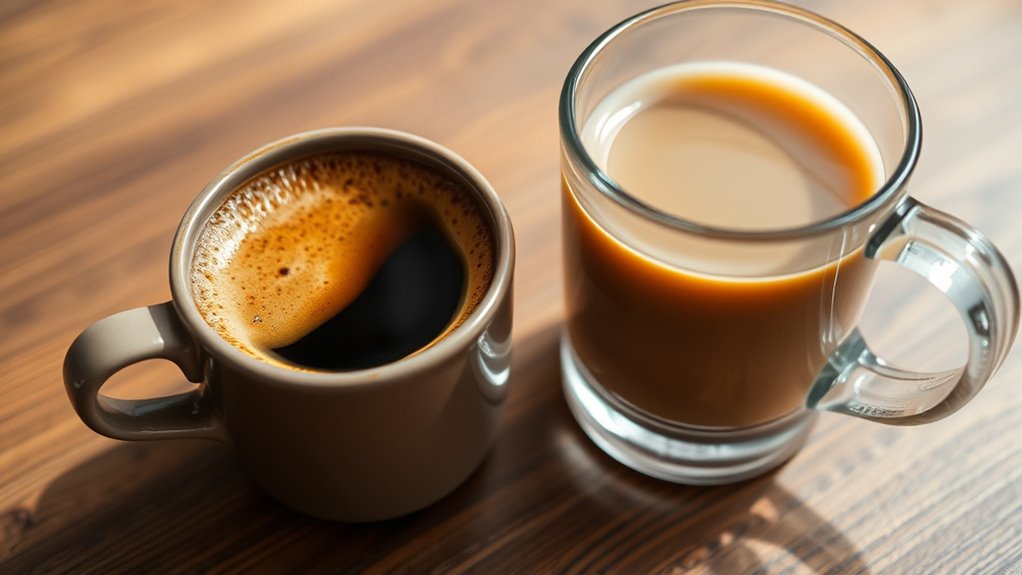
Although both espresso and Americano start with the same concentrated shot, their key differences lie in volume and intensity. You’ll find espresso is a small, 30-60ml brew, intensely concentrated, topped with a thick crema that adds richness and texture.
Espresso is a small, intense 30-60ml shot, rich with a thick, textured crema.
In contrast, an Americano dilutes this shot with hot water, expanding the volume to 150-300ml, resulting in a milder, smoother drink. The espresso-to-water ratio in an Americano varies from 1:2 to 1:10, which directly influences its strength and flavor.
Despite the difference in size, if you use the same number of espresso shots, both drinks can have similar caffeine content.
Also, note that Americano is made by adding water after the espresso, which helps preserve distinct flavor layers. This is different from other variations where water comes first.
The high-pressure extraction process used in espresso brewing enhances its aroma and richness, which remains noticeable even after dilution in an Americano.
What Is Espresso And How Is It Made
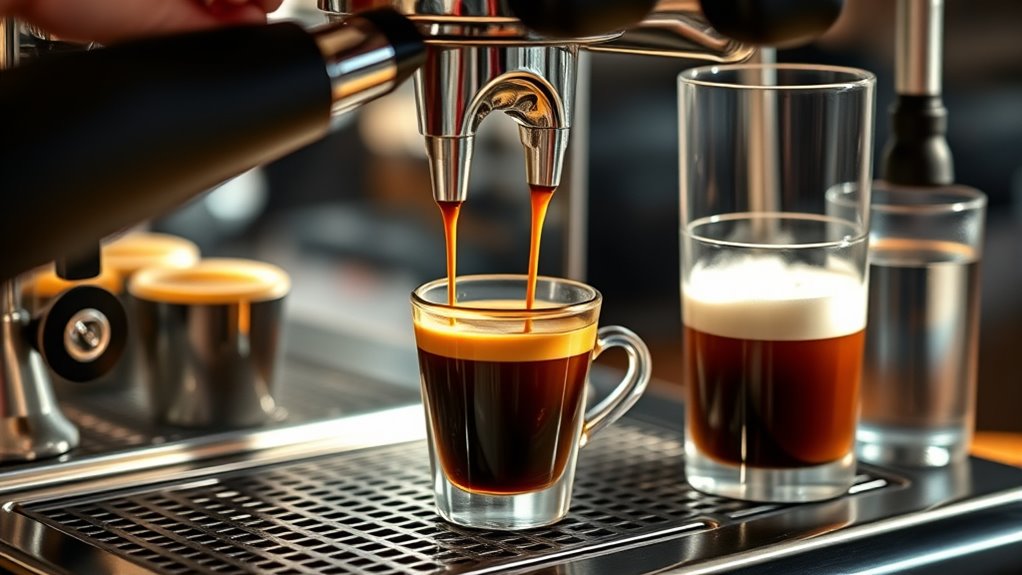
You’re about to learn that espresso is basically a concentrated coffee. It’s made by forcing hot water through finely ground beans, and the key is to do this at high pressure and in under 30 seconds.
This quick process pulls out rich oils and flavors from the coffee.
Because of that, you end up with a syrupy texture and a creamy layer on top called crema.
Once you understand how it’s made and what it’s made of, it’s easy to see why espresso has such an intense, full-bodied taste.
Mastering the process requires attention to extraction time and grind size to achieve the perfect balance of flavor.
Espresso Definition Explained
How does espresso achieve its bold and intense flavor? By forcing hot water at about 9 bars of pressure through finely ground coffee, you extract a concentrated shot in just 25–30 seconds.
Using 18–20 grams of coffee, this method dissolves oils, sugars, and acids rapidly, creating a complex, balanced profile.
You’ll notice a thick crema on top, a velvety layer filled with tiny air bubbles that trap rich aroma and flavor.
The espresso is served around 65°C, an ideal temperature that keeps its clarity and intensity intact.
This precise balance of pressure, temperature (90–96°C), grind size, and contact time defines espresso, making it a unique coffee experience distinct from other brewing styles.
Consistent shot timing of 25-30 seconds from pump activation is crucial to achieving optimal flavor and crema development.
Brewing Process Overview
Where does espresso’s signature intensity come from? It comes from forcing nearly boiling water at 9 bars of pressure through finely ground coffee in just 25 to 30 seconds.
You’ll typically use 18 to 20 grams of coffee to produce about 25 to 30 milliliters of concentrated liquid.
This rapid extraction dissolves oils, sugars, and acids quickly, resulting in that rich, syrupy texture topped with a thick crema.
To get the best flavor, the water temperature should be between 90 and 96°C, with the espresso served around 65°C.
Achieving this precise brewing demands specialized espresso machines or alternatives like Moka pots and AeroPress, which mimic pressure-based extraction.
Every part of this process guarantees the bold, intense character that defines true espresso.
Regular cleaning and maintenance of espresso machines are essential to preserve flavor quality and machine performance, as detailed in the cleaning routine.
Composition And Texture
Although espresso’s brewing process is brief, it creates a complex composition and texture that set it apart from other coffee styles. When you pull an espresso shot, near-boiling water is forced at 9 bars of pressure through finely ground coffee. This extracts oils, sugars, and acids.
This process produces a rich, syrupy texture with a thick, golden crema on top. The crema, made of air bubbles and emulsified oils, enhances aroma and flavor.
Here’s what you experience in each shot:
- A dense, dark body at the bottom that grounds the flavor.
- A lighter, velvety heart in the middle adding balance.
- A creamy, aromatic crema crowning the espresso with richness.
This layered composition and texture define espresso’s unique intensity and mouthfeel. It’s what makes every sip so memorable. Proper control of pressure, temperature, and grind size is essential to achieve this balance and enrich the flavor profile.
What Makes Americano Different From Espresso?
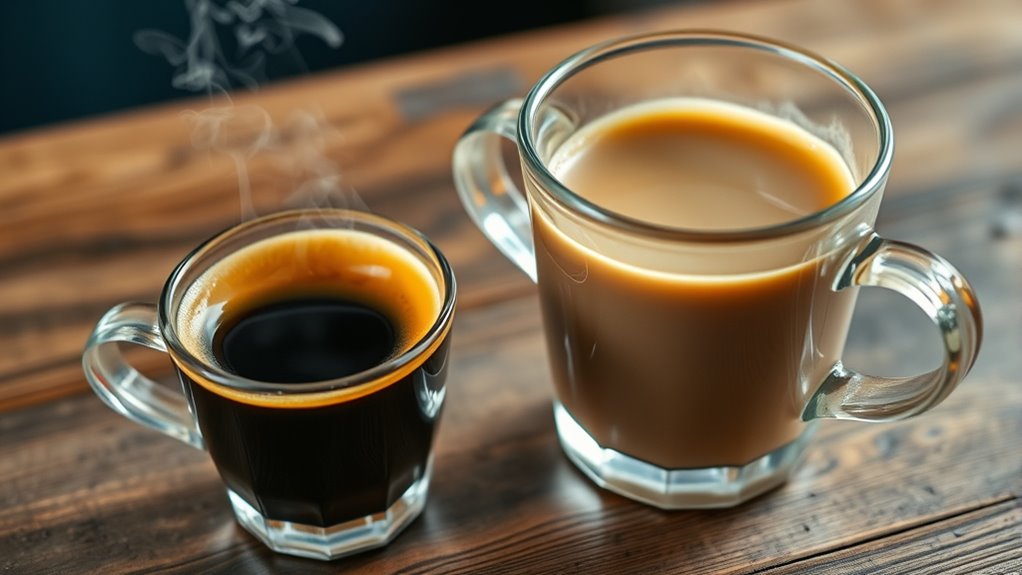
You’ll notice that an Americano is different from espresso mainly in how it’s made. Basically, hot water is added to espresso to create a bigger, milder drink.
This changes the flavor and texture, making the Americano smoother and less intense than the rich, concentrated espresso.
Also, the serving size and strength are quite different. So, depending on what you’re in the mood for, you’ll get a unique coffee experience with each one.
Despite the dilution, both drinks remain low in calories, with espresso providing only about 1 to 3 calories per shot due to its natural oils and proteins.
Composition And Preparation
Because espresso is brewed by forcing hot water through finely ground coffee at high pressure, it produces a concentrated, intense shot with a rich crema and syrupy texture.
When you prepare an Americano, you start with one or two espresso shots and then add hot water, diluting the intensity and creating a larger, lighter cup. This simple composition shift changes everything.
Here’s what sets them apart:
- Espresso is brewed directly under about 9 bars of pressure, extracting a 30-60ml concentrated shot.
- Americano involves adding hot water at a ratio from 1:2 to 1:5, altering volume and concentration.
- The water addition in an Americano preserves espresso’s essence but softens its strength and texture.
Understanding this helps you appreciate how preparation shapes your coffee experience.
Flavor And Texture
The way espresso and Americano are prepared directly influences their distinct flavor and texture profiles. Espresso offers a thick, syrupy texture with a rich, concentrated bitterness and a velvety crema atop. In contrast, Americano is diluted with hot water, resulting in a lighter, smoother mouthfeel and milder flavor without crema.
Temperature differences also affect their sensory experience. Espresso is served around 65°C, which helps preserve its viscosity. Americano, on the other hand, is hotter, around 75-80°C, which enhances its lighter feel.
Espresso contains a higher concentration of caffeine per milliliter compared to other coffee preparations, contributing to its intense flavor and stimulating effects.
| Attribute | Espresso | Americano |
|---|---|---|
| Texture | Thick, syrupy, velvety crema | Lighter, smoother, no crema |
| Flavor | Intense, full-bodied, bitter | Milder, softer, less bitter |
| Serving Temp | ~65°C | ~75-80°C |
Serving Size And Strength
Although both espresso and Americano start with the same concentrated coffee base, their serving sizes and perceived strengths set them apart. When you choose between these two, consider how size and flavor intensity impact your experience.
Espresso serves a small, intense 30-60 ml shot, delivering a powerful coffee punch in a compact form.
Americano expands to 150-300 ml by adding hot water, offering a longer, lighter sip without losing caffeine content.
The key difference lies in concentration: espresso’s boldness contrasts with Americano’s mellow, diluted profile, making it gentler on your palate.
Understanding these distinctions helps you pick the perfect brew for your mood. Whether you want a sharp, quick caffeine hit or a smooth, extended coffee moment, knowing the difference makes all the difference.
Due to its small volume and extraction process, espresso provides a much higher caffeine concentration per ounce compared to larger coffee drinks like Americano.
How Water Changes The Taste And Feel Of Your Coffee
How exactly does water transform the taste and texture of your coffee? Adding hot water to espresso dilutes its concentrated flavors, softening the intensity and lowering the total dissolved solids (TDS) from about 8-12% to roughly 1.2-1.5%. This change lightens the mouthfeel from thick and syrupy to clean and smooth.
Water also reduces bitterness and acidity, making the coffee easier to sip. How you add water, whether pouring it over espresso or vice versa, can alter the crema and aromatic profile, subtly shifting your sensory experience. Measuring espresso yield by weight rather than volume ensures you maintain the intended flavor balance even when diluting for an Americano.
| Aspect | Espresso | Americano |
|---|---|---|
| Flavor Intensity | Strong, concentrated | Milder, diluted |
| Mouthfeel | Thick, syrupy | Light, clean |
| Bitterness | Pronounced | Softer |
| Acidity | Noticeable | Reduced |
Comparing Flavor, Bitterness, And Caffeine In Espresso And Americano
When you compare espresso and Americano, you’ll notice that espresso delivers a concentrated, intense flavor with a thick, syrupy texture.
On the other hand, Americano offers a milder, more diluted taste with a lighter mouthfeel. This contrast affects bitterness and caffeine perception as well. Here’s what you’ll experience:
Espresso’s rapid extraction intensifies bitterness, giving you bold, sharp notes that linger.
Americano’s dilution softens bitterness, creating a smoother, gentler profile. It’s perfect if you’re sensitive to strong coffee.
Despite the taste differences, both contain similar caffeine levels per shot.
So, you get the same energy boost whether you prefer a punchy espresso or a subtler Americano.
Understanding these distinctions helps you choose the right coffee for your mood and tolerance. For the best results, make sure your machine is properly preheated and your coffee grounds are correctly tamped to ensure optimal extraction.
How Pour Order Affects Americano Crema And Flavor
The way you combine espresso and water directly shapes the Americano’s crema and flavor experience. When you pour hot water onto espresso, the crema tends to flatten quickly, losing its aromatic lift and visual appeal. This method produces a more mellow, uniform flavor but at the cost of crema stability.
Conversely, adding espresso over hot water, as seen in a Long Black, helps preserve the crema’s texture and enhances the aroma, giving a richer sensory experience.
Pour order also affects how the flavors unfold. Starting with water emphasizes smoothness, while starting with espresso highlights crema and aroma.
Understanding this allows you to tailor your Americano’s balance between crema presence and flavor intensity. That way, each cup matches your preferred sensory profile precisely.
Which To Choose: Espresso Or Americano For Your Taste And Occasion
Although both espresso and Americano share a common origin, your choice depends largely on how you want to experience your coffee’s strength, volume, and flavor profile.
If you crave a powerful, syrupy shot that delivers a swift caffeine kick, espresso is your go-to.
Conversely, if you prefer a gentler, more voluminous drink for relaxed sipping, Americano suits you better.
Consider these points to decide:
- Need a rapid, intense coffee hit? Choose espresso for its concentrated strength and speed.
- Want a mellow, longer-lasting drink? Americano offers smoothness with a larger cup to savor.
- Planning a social or leisurely moment? Americano’s lighter profile lets you enjoy your coffee over time, while espresso sharpens focus in brief bursts.
Match your choice to your mood and occasion for the perfect coffee experience.
Making Americano At Home Without An Espresso Machine
If you don’t own an espresso machine, you can still craft a rich Americano by brewing a strong coffee concentrate using tools like a French press, AeroPress, or pour-over.
Start with 18-20 grams of finely ground coffee to brew about 60-70 mL of concentrated coffee, mimicking a double espresso shot.
Heat water to 75-80°C and pour it gently over the concentrate at a 1:3 or 1:4 ratio, adjusting to your preferred strength. Use a narrow-spout kettle to control the pour.
This helps approximate the crema effect, though true crema is hard to replicate without an espresso machine.
Aim for a total volume of 150-200 mL for a smooth, milder Americano that balances intensity and dilution effectively.
It’s a simple way to enjoy a great cup without fancy equipment.
Frequently Asked Questions
Can I Use Different Coffee Beans for Espresso and Americano?
Yes, you can use different coffee beans for espresso and Americano. Just remember, darker roasts suit espresso’s intensity, while medium roasts keep Americano balanced after dilution.
Freshness and grind size also impact flavor profoundly. So, choosing the right beans and preparing them well really makes a difference. It’s all about what tastes best to you!
How Does Milk Addition Affect Espresso and Americano Flavors?
Adding milk to espresso or Americano is like softening a bold brushstroke. It mellows espresso’s intensity and smooths out the bitterness. At the same time, it dilutes Americano’s lightness.
This creates creamy, balanced flavors with enhanced sweetness. Sometimes, it brings out a muted brightness depending on the milk temperature. So, the milk really changes how you experience these coffee drinks.
What Is the Best Water Temperature for Brewing Espresso?
You want to brew espresso with water between 90°C and 96°C. Staying in this range extracts balanced flavors, avoiding sourness or bitterness.
Most machines settle around 93°C to 96°C for ideal, consistent results. This temperature range helps you get the best taste from your coffee without any harsh notes. So, aim for that sweet spot when brewing your espresso.
Are There Health Benefits Unique to Espresso or Americano?
You’ll find espresso offers unique health benefits thanks to its higher antioxidant concentration. This boost helps cognitive function and reduces inflammation more effectively than an Americano.
That’s because an Americano is diluted and consequently has fewer protective compounds per serving. So, if you’re looking for a stronger health kick from your coffee, espresso might be the way to go.
How Long Can You Store an Americano Before It Tastes Stale?
You can store an Americano for about 10-15 minutes before it starts tasting stale. After that, the flavor begins to change.
Conclusion
Choosing between espresso and Americano is like picking between a bold, intense flame and a warm, glowing ember. Espresso hits you with concentrated strength and rich crema, while Americano offers a smoother, milder sip by blending espresso with water.
Understanding their differences helps you tailor your coffee experience to your mood or occasion. Whether you want a quick jolt or a leisurely drink, you’re equipped to savor the perfect cup every time.