Crema is the rich, golden foam that forms on top of your espresso when hot water, under high pressure, emulsifies coffee oils and gases into tiny bubbles. It signals freshness and a well-executed extraction. The thickness and color reveal key brewing details.
While a good crema often means quality, it’s not a foolproof indicator of taste. Keep exploring, and you’ll uncover how factors like bean type, roast, and technique shape this signature espresso feature.
What Is Crema and How Does It Form in Espresso?
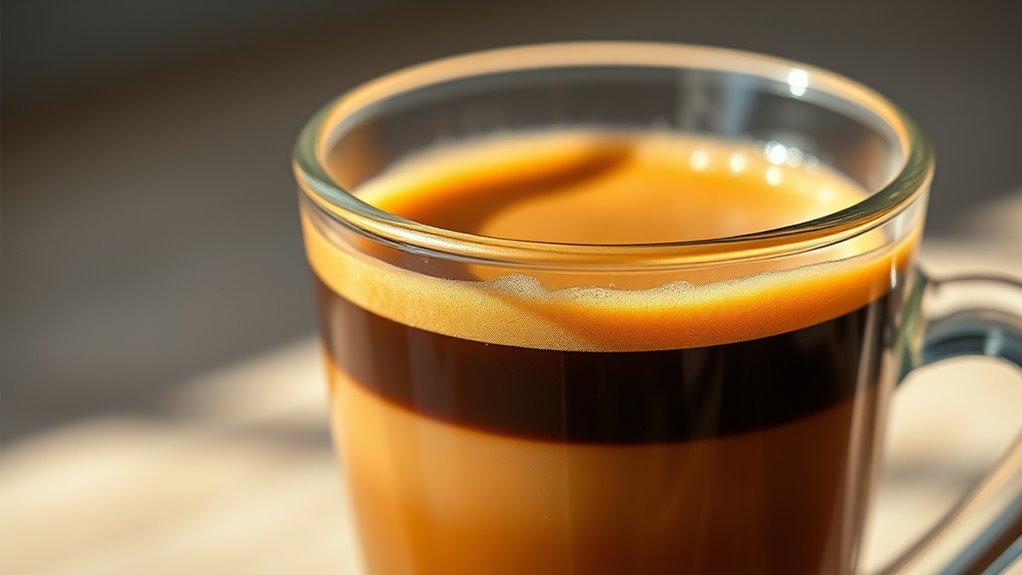
Ever wondered what gives espresso its signature golden layer on top? That layer is called crema. It’s a stable foam formed during extraction when high pressure forces dissolved gases and oils to emulsify and rise as tiny bubbles.
Crema is the golden foam atop espresso, created by high pressure emulsifying gases and oils into tiny bubbles.
Freshly roasted coffee beans trap carbon dioxide, which escapes when hot water under roughly 9 bars of pressure interacts with the grounds. This release, combined with coffee oils and proteins, creates crema’s distinctive texture and color.
The result isn’t just visual flair—it signals a well-executed extraction and fresh coffee.
Crema forms because of precise brewing conditions like pressure, temperature (190-196°F), and grind size, which influence its stability.
Understanding crema’s formation helps you appreciate the science behind your perfect espresso shot. Consistent extraction timing and proper machine pressure are key factors in developing rich crema and balanced flavor.
Key Factors Affecting Espresso Crema Quality and Appearance
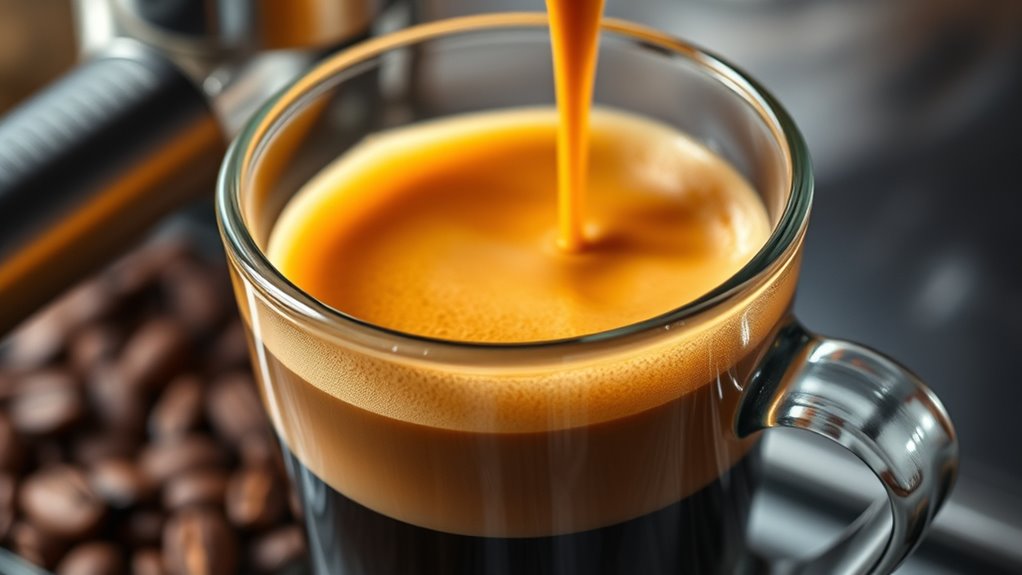
Although crema might seem like a simple layer atop your espresso, its quality and appearance depend on several critical factors you control. To craft the perfect crema, focus on these essentials:
- Bean Freshness and Extraction: Fresh coffee beans produce thicker, more persistent crema. Make sure you dial in the proper grind size and tamping pressure to guarantee even extraction. This keeps crema’s texture and color consistent.
- Brewing Temperature and Pressure: Keep the water temperature between 190-196°F and pressure around 9 bars. If you stray from these, it can destabilize the crema and affect how it forms and feels.
- Extraction Balance: Avoid over-extraction because it darkens and makes the crema bitter. Under-extraction, on the other hand, results in pale, thin crema. Balanced extraction is key as it preserves the emulsified oils and proteins that give crema its nice foam and color.
Additionally, maintaining proper water quality and mineral content helps stabilize crema by supporting optimal extraction conditions.
Mastering these factors lets you achieve crema that’s visually stunning and rich in flavor. It’s all about paying attention to the little details that really make a difference.
How Roast and Bean Type Influence Espresso Crema
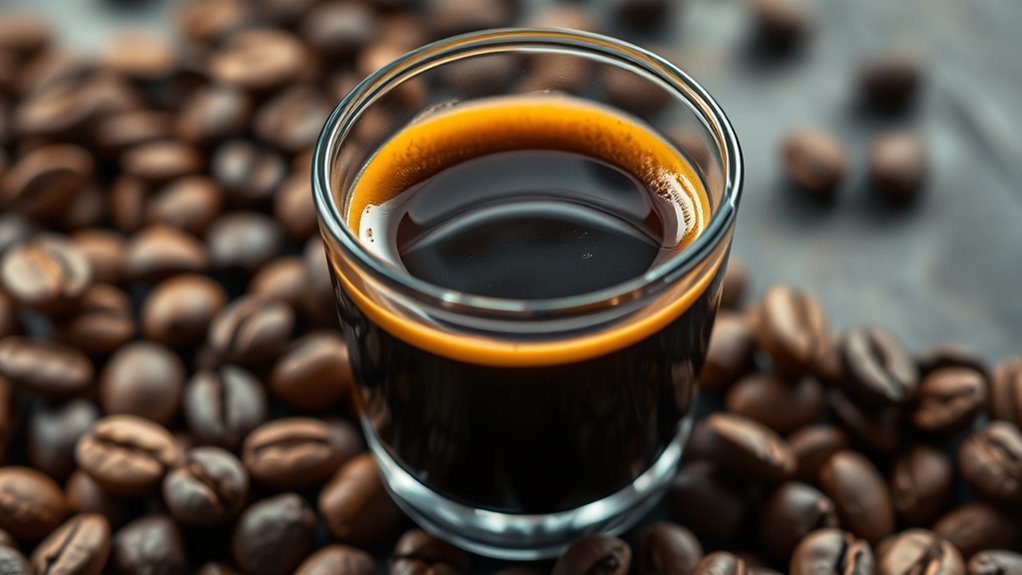
You’ll notice that the roast level really shapes your espresso’s crema. Darker roasts tend to deliver richer, thicker crema because they’ve a higher oil content.
On the other hand, lighter roasts produce a thinner, more delicate layer.
Then, there’s the type of bean, which also plays a big role. Robusta beans create more crema and give you a bolder flavor profile, while Arabica beans offer a subtler, more aromatic finish.
Knowing these differences helps you tailor your espresso’s crema just the way you like it. Additionally, grind size significantly impacts crema stability and color, with finer grounds producing denser crema and coarser grounds leading to weaker layers.
Roast Level Effects
When you choose your espresso beans’ roast level and type, you directly influence the crema’s texture, color, and stability. Roast level plays a crucial role in how well oils and gases emulsify during extraction, affecting crema quality.
Here’s how roast impacts crema:
- Dark Roasts: They release more oils and create higher surface tension, resulting in thicker, more persistent crema that clings beautifully atop your espresso.
- Light Roasts: Retain more CO₂ and oils inside the bean, which leads to a lighter, less stable crema that dissipates quickly.
- Emulsification: Darker roasts enhance the integration of oils and gas, improving crema formation and giving your espresso a richer mouthfeel.
Understanding these effects helps you select the perfect roast level to craft espresso with crema that excites both the eye and palate. It’s all about finding what works best for your taste and style. The Mastrena espresso machine used by Starbucks is designed to ensure ideal extraction time and balanced taste, which contributes significantly to consistent crema quality.
Bean Type Impact
Since both roast level and bean type play essential roles in espresso crema, understanding their interplay can elevate your brewing skills.
Dark roasted beans, rich in oils and CO₂, create a thicker, more persistent crema. Lighter roasts yield thinner, more delicate crema because they’ve lower oil content.
Robusta beans naturally produce more crema than Arabica since they contain higher caffeine and oil levels. This boosts the crema’s density and longevity.
You’ll also notice that beans from regions like Colombia or Mexico affect crema color and stability, thanks to their unique profiles.
Additionally, natural processing methods often result in a more complex, aromatic crema compared to washed beans.
Using beans with higher oil content also helps develop thick crema and a silky mouthfeel, enhancing the espresso experience.
How Espresso Crema Reflects Freshness and Extraction
You can tell a lot about your espresso’s freshness just by looking at its crema. The thicker and more stable the crema is, the fresher the beans probably are.
Crema also gives you clues about how well you’ve managed extraction factors like pressure and temperature. If the espresso is under- or over-extracted, you’ll notice it in the crema’s color and texture.
Properly timed extraction within 25-30 seconds is key to achieving a balanced taste and rich crema formation.
Indicators Of Coffee Freshness
Although crema might seem like just a decorative layer atop your espresso, it actually serves as a crucial indicator of coffee freshness and extraction quality. By observing crema, you can gauge how fresh your coffee is and how well it was extracted.
Here are three key indicators to watch for:
- Thickness and Persistence: Freshly roasted beans release more carbon dioxide, creating a thicker, longer-lasting crema.
- Bubble Uniformity: Small, uniform bubbles reveal well-preserved CO₂ levels, signaling recent roasting and peak freshness.
- Color and Stability: Bright, pale crema often points to under-extraction or aging beans, while thin or quickly fading crema suggests stale or improperly stored coffee.
Paying attention to these factors helps you ensure your espresso is both fresh and expertly brewed. It’s a simple way to enjoy better coffee every time. Additionally, the roast profile of the beans plays a significant role in crema formation, with darker roasts typically producing a richer and more stable crema.
Visual Signs Of Extraction
Crema does more than signal freshness. It visually reveals how well your espresso was extracted. When you see a thick, caramel-colored crema, that’s a strong sign your espresso is both fresh and properly extracted.
If the crema appears uneven or patchy, it usually means the extraction was inconsistent. This could be due to channeling. Dark spots or bubbles embedded in the crema often indicate over-extraction or that the coffee’s lost freshness.
On the other hand, a pale or very thin crema typically points to under-extraction or stale beans. You can also assess extraction quality by observing the crema’s pattern and stability. Uniform bubbles or “tiger stripes” suggest a balanced extraction.
Paying attention to these visual cues helps you gauge and perfect your espresso brewing. It’s a simple way to improve your coffee without complicated tools. Just keep an eye on that crema!
For the best crema, ensure you use freshly ground coffee with a fine grind size to achieve balanced extraction and flavor.
Crema Quality And Variables
When coffee beans are fresh and properly handled, they release higher levels of CO₂ that contribute to a thicker, more stable crema atop your espresso. This crema is a direct reflection of freshness and extraction precision.
To optimize crema quality, focus on these key variables:
- Grind Size and Extraction: Adjusting grind size affects how evenly water extracts oils and gases, influencing crema texture and color.
- Water Temperature and Pressure: Precise control ensures proper release of oils, proteins, and dissolved gases, stabilizing the crema.
- Bean Roast and Freshness: Fresher beans yield more robust crema. Darker roasts produce thicker crema but can risk bitterness if over-extracted.
Additionally, lighter roasts like white espresso produce a lighter, less intense crema that reflects their unique flavor profile and chemical composition.
What Customers Think About Espresso Crema and Their Expectations
If you’re drawn to espresso by its rich crema, you’re not alone. Many customers see a thick, lasting crema as a hallmark of quality and strength. You might expect that a darker, more abundant crema signals a richer, more aromatic coffee experience.
For some, the visual appeal of crema holds as much importance as its flavor impact. It really shapes their overall enjoyment. However, it’s important to recognize that while crema often suggests freshness and proper extraction, it doesn’t guarantee superior taste.
As you develop your palate, you’ll notice that educated coffee enthusiasts prioritize the espresso’s flavor and aroma over crema alone. Understanding this helps you appreciate crema as one crucial element in the complex art of espresso, rather than the sole indicator of excellence. Achieving a rich crema also depends on factors such as proper puck preparation and precise pressure during extraction.
Why Crema Doesn’t Guarantee Espresso Quality
It’s easy to assume that a rich, thick crema guarantees premium espresso, but that’s not always the case. You can’t judge quality by crema alone because crema can appear on poorly extracted or low-quality espresso. So, just seeing it doesn’t guarantee great flavor.
Also, a thick crema might come from over-pressurized brewing or even additives rather than high-quality beans. And if you notice dark, oily crema, that often means the beans were over-roasted or the espresso was over-extracted, which usually leads to bitterness.
Even fresh beans can produce weak crema, while stale beans might still form crema that doesn’t really show freshness or quality. To truly judge espresso, you need to focus on taste and aroma, not just the look of the crema.
Think of crema as a hint, not a promise, of a great shot.
How Stirring or Skimming Crema Changes Espresso Flavor
Because crema holds trapped gases and oils, stirring it into your espresso releases a spectrum of flavors you might otherwise miss. When you stir, you redistribute these elements, enhancing sweetness and balancing bitterness. This action also changes the temperature and texture, revealing nuanced notes like chocolate or fruit.
By mixing crema thoroughly, you create a harmonious blend that highlights layered flavors, making each sip more complex and satisfying. On the other hand, skimming crema can reduce bitterness and smooth the overall taste, revealing subtler undertones beneath the surface.
Whether you stir or skim, these simple techniques let you tailor espresso flavor exactly to your liking. It’s a great way to transform a standard shot into a personalized experience rich with depth and character.
How to Adjust Brewing Variables to Improve Espresso Crema
When you fine-tune your grind size and brewing parameters, you directly influence the crema’s texture and richness. To improve crema, focus on these key adjustments:
- Grind size and tamping: Adjust your grind slightly coarser or finer to balance extraction and maintain an even flow. Make sure your tamping pressure is consistent and distribute the coffee evenly. This helps keep the crema stable and smooth.
- Pressure and water temperature: Try experimenting with pressure around 9 bars and tweak the water temperature between 190-196°F. These changes impact how oils are extracted and affect the crema’s color and body.
- Brew time and dose consistency: Aim for a 25-30 second extraction, and keep your coffee dose steady every time. This avoids under- or over-extraction and helps preserve the crema’s rich appearance and flavor.
Visual Signs in Espresso Crema That Indicate Extraction Issues
Fine-tuning your brewing variables shapes the crema’s quality, but spotting visual cues on the espresso surface reveals how well your adjustments worked. Dark spots or blotches often signal over-extraction or uneven brewing, causing bitterness.
Observing crema’s surface offers clear insights into your espresso’s extraction quality and brewing precision.
If the crema is pale or light beige, you’re likely under-extracting, resulting in sour or thin flavors.
Thin, wispy crema that fades quickly hints at improper grind size, low pressure, or stale beans. Large bubbles or foam pockets suggest excessive freshness or turbulent extraction, disrupting crema texture.
Uneven or spray-like crema distribution points to uneven tamping or channeling during extraction.
Frequently Asked Questions
Can Crema Be Preserved in Iced Espresso Drinks?
Of course, you can preserve crema in iced espresso if you enjoy a disappearing act.
Pour hot espresso over ice quickly, use chilled cups, or try cold brew to keep that golden layer intact longer.
Does Crema Affect the Caffeine Content of Espresso?
Crema doesn’t affect your espresso’s caffeine content. It’s mainly emulsified oils and gases, so the caffeine depends on your coffee dose and extraction.
Thick or thin crema won’t change how much caffeine you actually get. So, don’t worry about the crema when you’re thinking about caffeine. It’s all about the coffee itself and how it’s brewed.
How Long Does Espresso Crema Typically Last After Brewing?
You might be surprised, but espresso crema usually lasts just 1 to 3 minutes after brewing. To savor that rich, golden layer, you’ve got to serve it immediately. Fresh coffee and perfect technique keep it vibrant longer.
Can Non-Coffee Additives Influence Crema Formation?
Non-coffee additives generally don’t influence crema formation during extraction. But if you add oils or fats early, they can break it down.
Adding milk or syrup afterward changes crema’s texture and appearance, not its creation. So, it’s more about what happens after the crema forms rather than before.
Is Crema Present in Espresso Made With Alternative Brewing Methods?
Crema in espresso made with alternative methods is like a rare comet, fleeting and faint. You usually won’t see it unless pressure and emulsification come into play. That’s what makes true crema a unique signature of traditional espresso extraction.
Conclusion
Now that you know crema’s role and what shapes it, remember, don’t judge an espresso by its crema alone. While a rich, golden crema hints at freshness and good extraction, it’s just one piece of the puzzle.
Adjust your grind, dose, and pressure to find the perfect balance. After all, “all that glitters is not gold.” But with attention and care, your espresso can shine inside and out, delivering the flavor you crave.

Pingback: What Does A Good Espresso Shot Look Like – Visual Guide
Pingback: What Is Lavazza Espresso K Cup – Explained