Your coffee’s flavor depends heavily on water temperature and brew time. Using water between 195–205°F guarantees balanced extraction of oils, acids, and aromatics. Too low, and your cup tastes sour and weak; too high, and bitterness and harsh notes take over.
Brew time must align with temperature and grind size to avoid under- or over-extraction. Mastering this balance lets you reveal your coffee’s full potential. Explore how to fine-tune these variables for your perfect brew.
How Water Temperature Affects Coffee Extraction Chemistry and Flavor
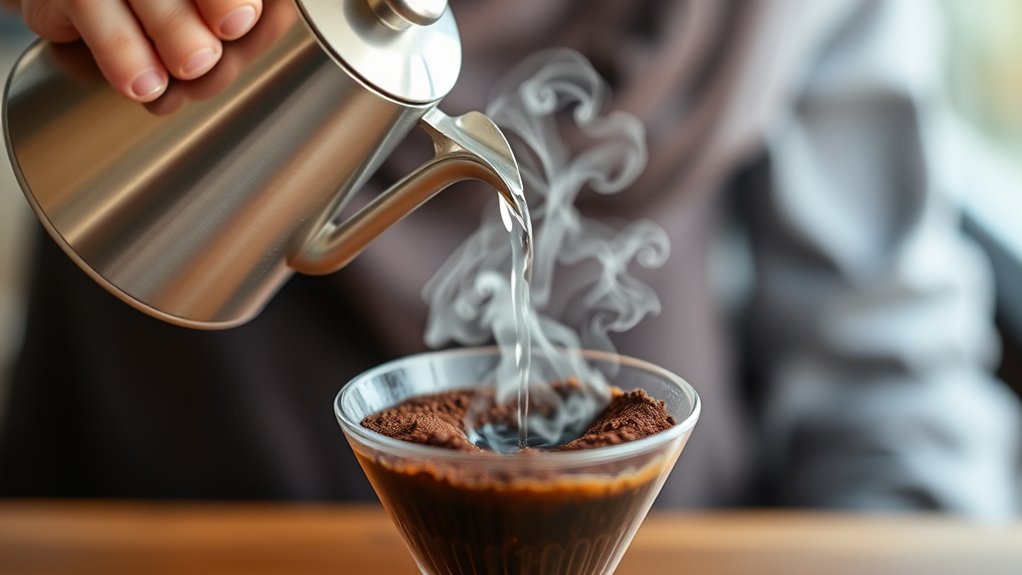
Although it might seem simple, controlling water temperature plays a crucial role in how your coffee’s flavors develop during brewing. Water temperature directly influences extraction chemistry by determining which soluble compounds dissolve and when.
Hotter water accelerates the release of oils, acids, and caffeine, pushing extraction past certain chemical thresholds. This speeds up the brewing process but risks over-extraction, which can introduce bitterness.
Hot water speeds extraction, enhancing flavor release but can lead to bitterness if overdone.
Conversely, cooler water slows extraction, leading to under-extraction and resulting in sour, flat flavors. By precisely managing water temperature, you guide the balance of sugars, acids, and lipids that define flavor and aroma.
Understanding this lets you avoid common pitfalls and guarantees your coffee achieves its ideal flavor profile. It really helps maximize the potential of every brew. Maintaining water temperature within the ideal range of 90–96°C ensures a balanced extraction and optimal flavor development.
What Happens When Your Brew Temperature Is Too Low?
If your brew temperature drops below 195°F, you’ll start to notice sour, underdeveloped flavors that just don’t have much depth.
The coffee’s body and sweetness will feel weaker because the key compounds aren’t fully extracted.
And here’s the thing—brewing longer won’t really fix it. The incomplete extraction caused by too low a temperature can’t be solved just by letting it brew more.
Maintaining consistent brew temperature is critical, which is why machines with PID controllers help ensure optimal extraction.
Sour And Underdeveloped Flavors
When your brew temperature drops below 195°F, you end up with sour and underdeveloped flavors because the extraction of sugars and acids remains incomplete. Cooler water slows chemical reactions, causing under-extraction that leaves behind bright acids while failing to dissolve the full range of flavor compounds.
This imbalance results in a thin, overly acidic cup lacking sweetness and body.
Plus, low temperatures hinder the release of aromatic oils, so your coffee won’t deliver the vibrant aroma it should. The combination of incomplete extraction and insufficient heat produces sour, flat, and dull profiles, stripping your brew of complexity.
To avoid these underdeveloped flavors, maintain an ideal brew temperature that fully activates the extraction process and unleashes the coffee’s rich, balanced character. It really makes all the difference in your cup!
Additionally, water temperature affects pressure by altering extraction speed, as hotter water reduces resistance while cooler water increases it, impacting the overall brew dynamics and flavor balance through pressure control.
Weak Body And Sweetness
Keeping your brew temperature too low, especially below 195°F, weakens your coffee’s body and diminishes its natural sweetness. At these temperatures, under-extraction happens because the solubility of essential oils and sugars decreases. This limits the compounds that contribute to richness and flavor complexity.
You’ll notice your coffee tastes flat and dull, lacking the depth that proper extraction delivers. While extending brew time can somewhat make up for low water temperature, it often leads to uneven extraction and introduces off-flavors.
To get the most sweetness and body, keep your water temperature within the ideal 195–205°F range. This makes sure you efficiently extract oils and sugars, boosting the coffee’s overall flavor profile.
Precision in temperature control directly impacts how vibrant and satisfying your cup will be. Additionally, using a grinder with consistent particle size can prevent uneven extraction and enhance flavor clarity, which is especially important at lower brew temperatures to avoid bitterness or sourness caused by grind inconsistencies in coffee extraction.
Incomplete Extraction Effects
Although it might seem like a minor detail, brewing your coffee at too low a temperature considerably slows extraction, leaving you with a sour, flat cup that lacks sweetness. Low temperature reduces the solubility of key compounds, like oils, sugars, and aromatic compounds, so they don’t dissolve properly.
This under-extraction leads to a flavor profile dominated by sharp acidity and sour taste, with little body or complexity. You’ll notice an underdeveloped aroma and a weak finish that feels thin and unsatisfying.
Trying to extend brew time can’t fully fix this imbalance because the essential compounds need sufficient heat to extract fully. To achieve a balanced, flavorful cup, maintaining the right brew temperature is vital.
It guarantees proper extraction, maximizes solubility, and captures the coffee’s full aromatic and taste potential. So, don’t overlook your water temperature—it really makes all the difference in your cup. Additionally, water temperature below 93°C is a common cause of under-extraction leading to sour espresso flavors.
How Too-High Brew Temperature Spoils Coffee Flavor
When you brew coffee above 205°F, you’re risking the extraction of bitter compounds that can really overpower your cup.
Too much heat speeds up the release of harsh tannins and burnt oils, which end up masking the coffee’s delicate aromatics.
So, instead of enjoying those subtle flavors, you get a duller, less complex taste.
Plus, it steals away the sweetness and brightness you’re hoping to savor.
Maintaining an ideal water temperature between 195°F and 205°F is crucial for optimal extraction and preserving the coffee’s natural flavor balance.
Bitter Flavor Development
If you brew coffee with water hotter than 205°F, you risk extracting too many bitter compounds that ruin its flavor. This over-extraction happens because hot water at excessive temperatures dissolves not only desirable oils but also polyphenols and other harsh compounds.
These contribute to bitterness and an unpleasant astringency.
When brewing with overly hot water, extraction accelerates beyond the ideal mid-phase, pulling out these undesirable elements that overwhelm your cup’s balance. The result is a bitter, harsh flavor that masks the coffee’s delicate notes.
To avoid this bitterness, you should maintain your brew temperature between 195°F and 205°F. Doing so preserves the coffee’s nuanced flavor profile, preventing bitterness and ensuring a smoother, more enjoyable brew every time you make coffee.
Accelerated Compound Extraction
Because brewing coffee with water hotter than 205°F speeds up extraction, you risk pulling oils, acids, and tannins too quickly. This can spoil the flavor balance. Excessive heat makes bitter compounds dissolve more easily, causing over-extraction that drowns out the coffee’s good flavors with harsh, burnt notes.
When your brewing temperature goes above the perfect 195–205°F range, it shortens the time flavors have to develop. That means the nuanced taste profiles don’t get a chance to come through.
This quick extraction pushes bitter elements into your cup before the subtler flavors fully form, leaving you with an unbalanced, overly intense brew.
To avoid this, keep your water temperature in check. Maintaining it in the ideal range helps you get a smooth extraction that brings out complexity without making the coffee too bitter.
Loss Of Aromatics
Although you might aim for a hotter brew to extract more flavor, pushing temperatures above 205°F causes volatile aromatic compounds to evaporate too quickly, stripping your coffee of its delicate scent. This rapid evaporation diminishes the aromatic integrity, leading to a flat, dull aroma profile.
High temperatures don’t just accelerate evaporation; they break down delicate aromatic molecules that give coffee its complexity and freshness. As a result, you lose subtle aromatic nuances that make each cup unique.
Overheating can also introduce burnt or smoky notes, overshadowing the delicate aromatics you want to preserve.
How To Choose The Ideal Brewing Temperature Range
When you choose the ideal brewing temperature range, you reveal the full potential of your coffee’s flavor. Aim for water temperature between 195°F and 205°F. This optimal range guarantees proper extraction, balancing oils, acids, and aromatic compounds.
If the temperature is too low, under-extraction leads to sour, weak coffee. Too high, and over-extraction causes bitterness and harshness.
Master temperature control by using precise tools like electric kettles with adjustable settings or thermometers to maintain consistency.
Different brewing methods may demand slight tweaks, but staying within this range is key for unlocking your coffee’s distinct flavor profile.
How Roast Level Changes Your Best Brewing Temperature
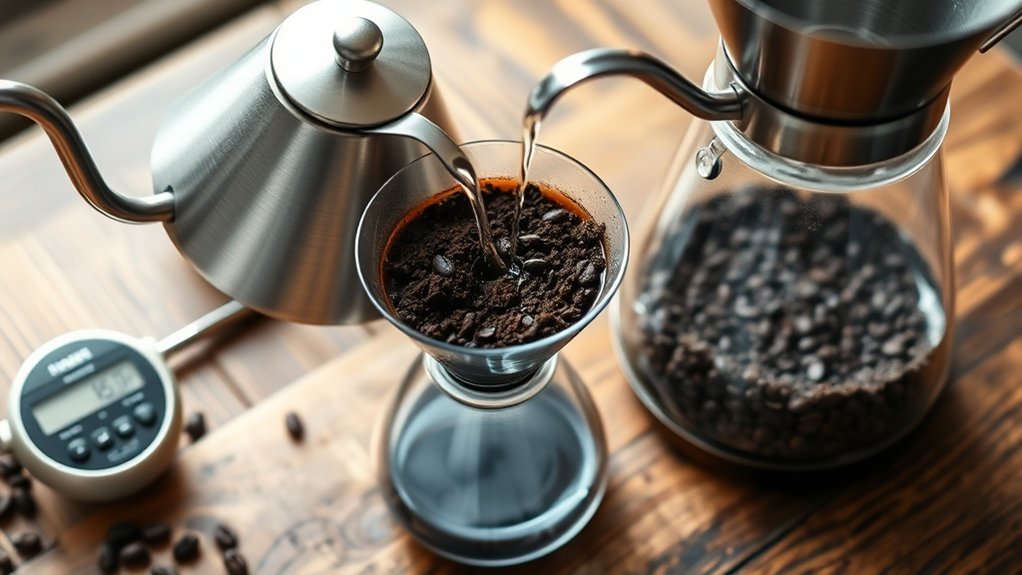
You’ll want to tweak your brewing temperature depending on the roast level to really bring out the best flavors. For light roasts, go for hotter water—somewhere around 200 to 205°F. This helps pull out those bright, complex notes.
On the other hand, dark roasts do better with slightly cooler water, around 195 to 200°F, which keeps bitterness at bay.
Knowing this temperature guide makes it easier to fine-tune your extraction. That way, you can balance acidity, sweetness, and body in your cup just the way you like it.
Roast Level Temperature Guide
Because different roast levels alter the coffee bean’s cellular structure, you need to adjust your brewing temperature accordingly to get the best flavor. Light roasts require hotter water (200–205°F) to extract their dense, acidic flavor compounds fully. Dark roasts, being more porous, need slightly cooler temperatures (195–200°F) to avoid over-extraction and preserve chocolatey, caramel notes.
This temperature guide guarantees you achieve ideal extraction and flavor balance based on your roast level.
| Roast Level | Ideal Brewing Temperature (°F) |
|---|---|
| Light Roasts | 200–205 |
| Medium Roasts | 195–200 |
| Dark Roasts | 195–200 |
| Extraction Focus | Flavor compounds & balance |
Adjusting temperature with roast level enhances your coffee’s flavor profile every time. It’s a simple tweak that makes a noticeable difference. Give it a try and taste the difference yourself!
Adjusting Temperature For Roasts
Since roast level directly affects the coffee bean’s structure, you need to adjust your brewing temperature to reveal the best flavors. Light roasts have denser beans, so using higher water temperatures around 200–205°F helps you achieve proper extraction, revealing delicate acids and fruity notes.
In contrast, dark roasts are more porous and extract quickly. That’s why a slightly lower brewing temperature of 195–200°F is ideal to avoid bitterness.
By tailoring your water temperature to the roast level, you guarantee balanced extraction that highlights clarity and sweetness.
This adjustment is essential for optimizing flavor and achieving harmony in your cup, whether you’re brewing light roasts or dark roasts. Understanding this relationship lets you control extraction and craft a perfectly balanced coffee every time.
How Brew Time Changes Coffee Flavor And Strength
Although water temperature plays a crucial role, brew time directly influences the coffee’s flavor and strength by controlling how much of the coffee’s compounds are extracted.
When you extend brew duration, you increase extraction, pulling more dissolved solids into your cup. This boosts flavor strength, creating a richer, more concentrated profile but risks over-extraction, introducing bitterness and tannins.
On the flip side, a shorter brew time may cause under-extraction, resulting in a lighter, sour, and less full-bodied coffee. Managing brew time precisely helps you balance extraction, avoiding these extremes regardless of temperature.
Since brew time and temperature interact, longer durations can amplify both sweetness and bitterness, shaping the overall flavor profile.
Ultimately, mastering brew time lets you tailor strength and taste to your preference with consistency and control.
How Grind Size Affects Brew Temperature And Extraction Time
When you adjust your grind size, you directly influence the ideal brew temperature and extraction time needed for the best flavor. Fine grounds require a lower brew temperature and shorter extraction time to avoid over-extraction, which can cause bitterness.
Conversely, coarser grounds demand a higher brew temperature and longer extraction time to achieve full flavor extraction. If your grind size and brew temperature don’t align, you risk uneven extraction, leading to flat or sour flavors.
Balancing Brew Temperature And Time For Perfect Coffee
Matching your brew temperature and time is key to unlocking your coffee’s full potential. Water temperature between 195°F and 205°F ensures ideal extraction speed and flavor balance.
Adjusting brew time helps you avoid under-extraction or over-extraction, especially when paired with grind size. For example, finer grinds need precise temperature control during shorter brew times to prevent bitterness. Different brewing techniques demand balance to highlight desired flavor profiles.
| Brew Time | Temperature Range | Grind Size | Impact |
|---|---|---|---|
| Short (1-2 mins) | 195°F – 205°F | Fine | Prevents over-extraction |
| Medium (3-4 mins) | 195°F – 205°F | Medium | Balanced extraction |
| Long (8+ mins) | Below 195°F | Coarse | Compensates extraction |
| Variable | Ideal temperature | Adjust accordingly | Enhances flavor balance |
Balancing these variables ensures your coffee’s flavor shines through every cup.
Practical Tips To Adjust Brew Temperature And Time For Different Brewing Methods
To get the best results from your brewing method, you’ll need to fine-tune both temperature and brew time carefully. Adjust water temperature between 195°F and 205°F based on your brewing method and coffee roast.
For light roasts, use higher temperatures (200–205°F) to bring out brighter, complex flavors.
Darker roasts benefit from lower temperatures (195–198°F) to avoid over-extraction and bitterness. When you lower the temperature, extend brew time to balance extraction and flavor.
Quick brewing methods like espresso require higher temperatures combined with shorter brew times to prevent under-extraction.
Tools And Techniques To Measure And Control Brewing Temperature
Although dialing in your brew temperature can seem tricky, using the right tools makes it much easier to maintain precision. Start with a digital thermometer or an infrared laser thermometer to get accurate, real-time readings of your water’s temperature.
An electric gooseneck kettle with adjustable temperature control lets you set and maintain a consistent brewing temperature effortlessly.
Don’t forget to preheat equipment. Pour hot water through your brew gear to stabilize temperature and reduce heat loss during extraction.
Measuring slurry temperature during brewing also helps you confirm that water stays within the ideal range, optimizing flavor.
Frequently Asked Questions
Can Water Temperature Affect Coffee Aroma During Storage?
Yes, water temperature definitely affects coffee aroma during storage. When you brew at ideal temperatures, you extract delicate aromatic compounds that stay vibrant longer.
If the water’s too hot, you risk over-extracting oils and acids, which can create a pungent aroma that fades quickly.
So, by controlling your brew temperature carefully, you help preserve those desirable aromas.
This makes your coffee smell fresh and inviting even after it’s been stored.
Does Altitude Influence Optimal Brew Temperature?
Yes, altitude definitely influences the ideal brew temperature. Since water boils at lower temperatures up high, you’ll need to adjust your brewing approach.
You might use hotter water or extend your brew time to extract flavors properly.
To keep your coffee consistent, preheat your gear and use a precise thermometer. This way, you can avoid under-extraction or bitterness caused by temperature fluctuations at higher elevations.
How Does Water Mineral Content Impact Brew Temperature Effectiveness?
You’ll find that water mineral content directly affects how effective your brew temperature is. Hard water with high minerals extracts flavors more efficiently at ideal temperatures but risks equipment buildup.
With soft water, you might need to increase the temperature slightly to dissolve coffee solubles properly.
Can Preheating Coffee Cups Alter Perceived Flavor From Temperature?
Yes, preheating your coffee cups can definitely alter the perceived flavor. When you pour coffee into a warm cup, it stays hotter longer, preserving its aroma and subtle flavor notes. This prevents rapid cooling, which can dull acidity and complexity.
By maintaining the ideal drinking temperature, you’ll enjoy a more vibrant, balanced taste. Each sip will reflect the brewer’s intended flavor profile more accurately and consistently.
It’s a simple step that can make a noticeable difference in your coffee experience.
Is There a Best Water Temperature for Cold Brew Coffee?
Think of cold brew like a slow dance. There’s no rush, just patience. You’ll find the best water temperature between 35°F and 50°F (1.5°C to 10°C).
This cool range lets flavors develop smoothly without bitterness. If you go colder or steep too briefly, your brew risks tasting weak.
So, stick to that temperature window and let time work its magic.
You’ll end up with a rich, mellow cup you’ll love.
Conclusion
Mastering the marriage of water temperature and brew time transforms your coffee experience. By balancing boiling basics with brew nuances, you reveal lush layers of flavor and avoid bitter blunders.
Remember, roasting ranges and grind grades guide your golden gauge for great extraction. With thoughtful tweaks and timely tools, you’ll consistently craft enthralling cups.
So, seize control, savor science, and stir up spectacular sips every single time!

Pingback: Understanding Specialty Coffee Grading (SCA Cupping Scores Explained) – iPourCoffee