You can make rich, Italian-style espresso-like coffee with a moka pot by using fresh, medium-fine grounds and cold water filled just to the safety valve. Assemble your pot carefully and avoid tamping the coffee. Brew over medium-low heat until you hear a gentle gurgle.
Stir in a little homemade cremina, a sweet, creamy touch that really elevates the flavor. Master these steps and your moka pot will deliver authentic, flavorful coffee every time.
There’s even more to explore on perfecting this ritual. Keep experimenting and enjoy the process!
Equipment and Ingredients for Moka Pot Coffee
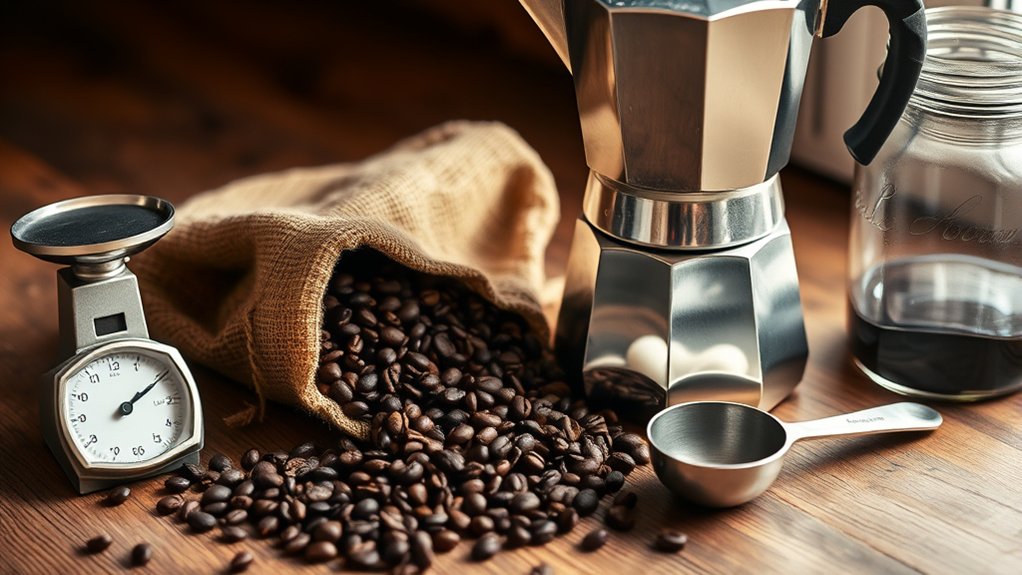
When you’re ready to brew authentic Italian-style espresso-like coffee at home, starting with the right equipment and ingredients is essential. A 3-cup Bialetti Moka Pot is your perfect coffee maker for portability and small batches.
Use fresh, medium-fine ground coffee, ideally from trusted brands like Lavazza, to get rich flavors and ensure proper extraction.
Fill the bottom chamber with cold water up to the internal max line. Just be careful not to overfill or block the safety valve.
Keep your equipment clean by regularly checking the gasket and safety valve to maintain safety and performance.
For a touch of sweetness, you can add sugar directly to your cup or mix it with hot espresso during brewing. This way, you can customize your coffee experience your way.
Choosing the right grind size is crucial, as a medium-fine grind helps achieve balanced extraction and optimal flavor for Moka pot coffee.
Preparing Your Moka Pot for Brewing
First, take your Moka pot apart into its three main pieces: the bottom chamber, the filter basket, and the top chamber.
Next, fill the bottom chamber with cold water, but only up to the safety valve.
Then, add medium-fine coffee grounds to the filter basket—no need to press them down.
Finally, screw the pot back together tightly, and you’re all set to place it on the stove for brewing.
Keep in mind that the size and capacity of the filter basket can significantly affect the strength and flavor of your coffee, so choosing the right basket size is important for optimal brewing.
Moka Pot Disassembly
Before brewing your rich Italian-style coffee, you’ll want to carefully disassemble your Moka pot into its three main parts: the bottom chamber, the filter basket, and the top chamber. Properly disassembling moka pots helps maintain their longevity and guarantees a clean, flavorful brew every time.
Here’s how to get started:
- Rinse each part thoroughly with hot water to remove residual coffee oils. Avoid using soap to preserve the natural patina.
- Inspect the rubber gasket and safety valve for wear or blockage. Clean or replace them as needed.
- Make sure the filter basket is clear of old grounds and properly seated before reassembling.
Once clean and checked, securely screw the top chamber back onto the bottom. This will help prevent leaks during brewing. Keep in mind that consistent pressure control, although typically associated with espresso machines, is also important for achieving optimal extraction in stovetop methods like the moka pot through proper assembly and maintenance of the components to ensure steady extraction dynamics.
Filling Water And Grounds
Although it might seem simple, filling your moka pot with the right amount of water and coffee grounds is essential for achieving that authentic Italian espresso-like flavor.
Start by pouring cold water into the bottom chamber, filling it just up to the internal safety valve or maximum fill line to guarantee proper pressure buildup.
Next, place the filter basket on top and fill it with medium-fine coffee grounds. Don’t press or tamp them down.
Gently level the grounds with your finger or a flat tool, leaving a small gap at the top to prevent overflow during brewing.
Finally, assemble the moka pot tightly to create a perfect seal so no water or steam escapes. This ensures a rich, balanced brew every time.
Using the correct grind size is key to avoiding under-extraction and sour flavors.
Brewing Coffee With a Moka Pot
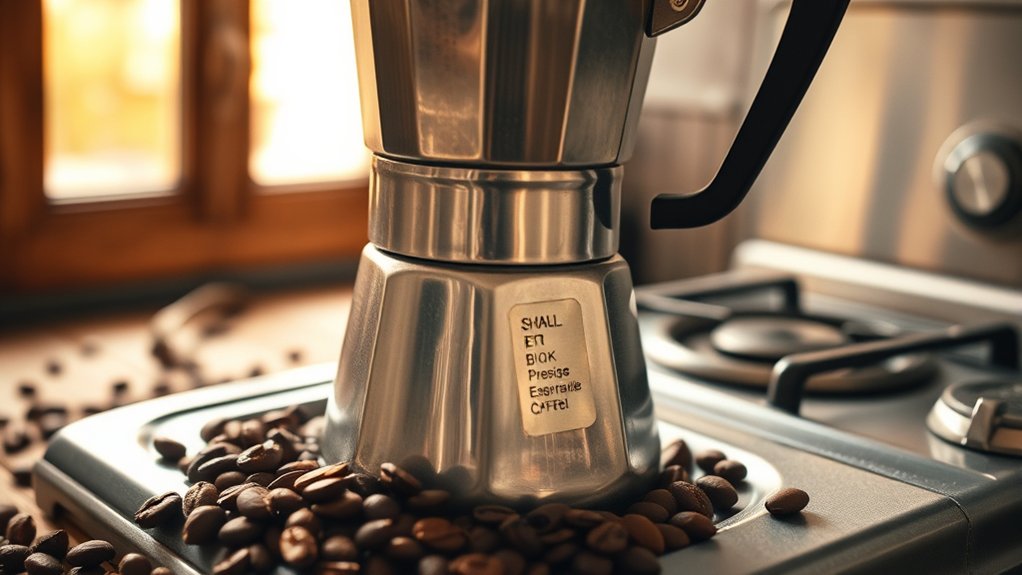
When you fill the bottom chamber of your Moka pot with cold water up to the safety valve, you’re setting the stage for a rich, espresso-like brew. The brewing process is simple yet precise. Insert the filter basket filled with medium-fine coffee grounds without tamping, then tightly assemble the pot.
Place it over medium-low heat, and listen for the gurgling sound signaling water’s journey through the grounds into the upper chamber. To avoid bitterness, remove the Moka pot as soon as sputtering begins.
Finally, gently swirl or stir the coffee to blend flavors evenly.
Here’s how to master the brewing process:
- Use freshly ground coffee and avoid tamping.
- Heat over medium-low heat for controlled extraction.
- Remove promptly to prevent over-extraction.
Adjusting the coffee dose in the basket can help control extraction time and flavor balance, even when brewing with a Moka pot.
Making and Using Cremina for Creamy Espresso
After brewing your espresso-like coffee with the Moka pot, you can elevate its texture and flavor by making cremina. It’s a simple sugar and espresso mixture that adds a creamy, caramel-hued layer to your cup.
Start by filling a coffee cup with 3-4 teaspoons of sugar, then pour in 2-3 teaspoons of hot espresso from your espresso maker. Stir quickly until the sugar dissolves completely.
Begin with 3-4 teaspoons of sugar, add 2-3 teaspoons hot espresso, and stir swiftly until dissolved.
Next, return the Moka pot to heat and let the brewing finish. This allows the espresso to blend with the cremina mixture.
Stir the combined liquid until it turns a light caramel color, which means the cremina has formed.
Finally, add a teaspoon of this cremina to your cup and stir well. This technique creates a rich, creamy espresso-like experience right at home.
Give it a try—you’ll love how smooth and flavorful it makes your coffee. For the best results, ensure your coffee is brewed at the ideal water temperature between 195°F and 205°F to avoid under-extraction and watery flavor.
Brewing Tips and Common Moka Pot Mistakes to Avoid
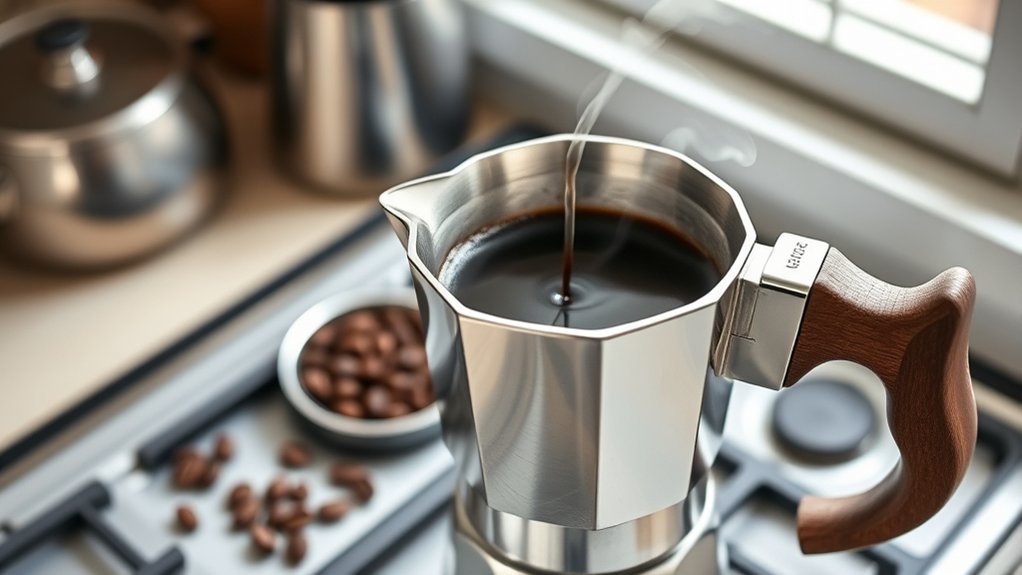
To master your moka pot, you’ll want to fine-tune both the heat and the grind size. Using medium-low heat is key because it guarantees a slow, steady extraction. This way, you avoid burning your coffee, which can really ruin the flavor.
Now, when it comes to the grounds, choosing medium-fine is the way to go. It helps prevent clogging and keeps those bitter flavors at bay.
Getting these little details right really makes all the difference. That’s how you brew rich, smooth coffee every single time.
Heat Control Importance
How you control the heat under your moka pot makes all the difference in crafting a smooth, flavorful espresso-like coffee at home. Make sure to start with hot water in the bottom chamber so the brewing begins gently.
Using medium-low heat allows the water to percolate slowly, extracting rich flavors without bitterness.
Avoid high heat, which causes rapid pressure buildup, sputtering, and a burnt taste. Remove your moka pot from heat as soon as you hear gurgling to preserve delicate oils and ensure balance.
Follow these tips to master heat control:
- Use medium-low heat for steady, even extraction.
- Start with hot water to speed brewing and reduce heat exposure time.
- Remove from heat at first sputter to prevent bitterness.
Coffee Grind Techniques
When you choose the right grind size and handle your coffee grounds carefully, you set the foundation for a rich, balanced brew from your moka pot. Opt for a medium-fine coffee grind, resembling table salt, to allow water to flow smoothly without clogging the filter.
Avoid tamping or pressing down the grounds; instead, fill the filter loosely to the rim to guarantee even extraction and prevent bitterness.
Be mindful not to over-tighten your moka pot during assembly, as this can cause leaks and disrupt your brewing method.
Maintaining consistent medium-low heat complements your grind choice, controlling extraction speed and preserving the coffee’s natural flavors.
Mastering these coffee grind techniques helps you avoid common moka pot mistakes and enjoy an authentic Italian-style espresso-like coffee at home. It’s all about the little details that make your coffee experience truly rewarding.
Cleaning and Maintaining Your Moka Pot
Although your moka pot delivers rich, espresso-like coffee every morning, its performance depends heavily on how well you clean and maintain it. Proper cleaning preserves the moka pot’s unique flavor and extends its life. Here’s how to keep your moka pot in top shape:
Rinse all parts with hot water after each use. Skip soap to protect the patina and coffee taste.
Periodically disassemble and wash every component with neutral, fragrance-free dish soap for a deeper clean. Check the rubber gasket and safety valve regularly. Replace the gasket every 1-2 years to ensure a perfect seal and safe brewing.
Don’t forget to descale monthly with lemon water or citric acid to prevent mineral buildup. Always dry parts thoroughly before reassembling. Never use a dishwasher.
Troubleshooting Common Moka Pot Issues
If your moka pot starts sputtering, splashing, or producing bitter coffee, these signs usually point to issues with heat, grind size, or assembly.
Sputtering often means the heat is too high or the coffee grounds are packed too tightly, causing uneven pressure buildup.
A bitter or burnt taste can come from using cold water, overheating the pot, or grinding coffee too fine, which leads to over-extraction.
Make sure to check that the safety valve isn’t clogged. Blocked valves trap excessive pressure and can cause leaks or hazards.
Also, verify the filter and gasket are properly assembled because clogs or misalignment disrupt water flow. This often results in weak or uneven brews.
Regularly clean and inspect these parts to maintain the right pressure and keep your moka pot brewing smoothly every time.
Frequently Asked Questions
Can I Use Flavored Coffee Beans in a Moka Pot?
Yes, you can use flavored coffee beans in a Moka Pot. Just be ready for stronger aromas and oils that might overpower the brewing balance. Your coffee could taste richer but less pure.
Also, residues from flavorings like vanilla or hazelnut may build up inside. To keep your Moka Pot in good shape and enjoy the best flavor, choose high-quality flavored beans.
Make sure to clean your pot thoroughly after each use to avoid unwanted carryover.
How Does Water Quality Affect Moka Pot Coffee Taste?
Water quality dramatically shapes your moka pot coffee’s taste. If you use hard water with lots of minerals, it can cause buildup and create off-flavors, dulling your brew’s brightness.
Tap water with chlorine or impurities might add unwanted tastes and aromas.
To get the richest, cleanest cup, stick with soft or filtered water. It helps preserve the delicate oils and aromatics that make moka coffee truly delicious and authentic.
Trust me, it makes a noticeable difference!
Is It Possible to Make Iced Moka Pot Coffee?
Yes, you can definitely make iced moka pot coffee! Brew a strong shot, then let it cool slightly before pouring over ice to keep it flavorful without watering it down.
For extra punch, try a double shot or refrigerate the coffee first.
Don’t forget, adding milk or your favorite flavorings afterward can make your iced coffee even more delicious and revitalizing.
Give it a try and enjoy a chilled, bold coffee treat at home!
Can I Use a Moka Pot on an Induction Cooktop?
You can use a moka pot on an induction cooktop, but it depends on the pot’s material. If it’s stainless steel, you’re good to go since it’s magnetic and heats efficiently.
For traditional aluminum pots, try a magnet test. If the magnet sticks, it works. If not, you’ll need an induction disc adapter to bridge the gap.
Always check your moka pot’s specs to make sure it’s induction-compatible before brewing. It’s a simple step that can save you some hassle later.
What Are the Best Coffee Brands for Moka Pot Brewing?
You’ll want to pick brands like Lavazza, Illy, or Kimbo for moka pot brewing. Lavazza’s Qualità Oro and Crema e Gusto deliver rich, balanced flavors perfect for stovetop espresso.
Illy and Kimbo offer finely ground, high-quality blends that extract beautifully.
For the best taste, grab whole beans and grind them fresh. Avoid oily or flavored coffees because they can clog your moka pot and ruin the brew.
It’s definitely worth taking the extra step to get the freshest grind possible.
Conclusion
Now that you’ve mastered your moka pot, every cup you brew can taste like a tiny Italian café right in your kitchen. With just the right grind, water, and a little patience, you’re creating liquid gold that rivals the richest espresso.
Keep practicing and avoid common pitfalls. Make sure you maintain your pot well. Your mornings will never be the same.
Trust me, once you start, you’ll never want to settle for anything less than this bold, velvety perfection.