You should start with a brewing method that balances simplicity, flavor clarity, and practicality. The French press offers an easy process with rich, full-bodied coffee and minimal gear.
Pour-over lets you control extraction for bright, nuanced flavors but requires more skill. AeroPress combines ease, portability, and smooth results, making it beginner-friendly.
Automatic drip machines suit those needing convenience for larger volumes. Choosing the right method depends on your routine and goals. Exploring each option reveals how to perfect your coffee craft.
How to Pick Your First Coffee Brewing Method
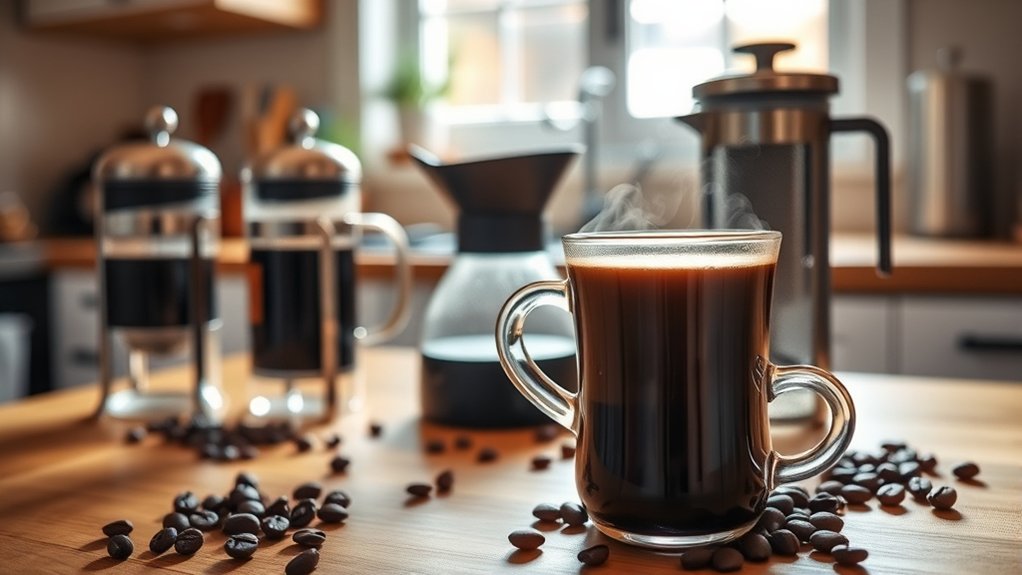
When choosing your first coffee brewing method, prioritize simplicity, flavor profile, and practicality. Start with a pour-over or French press, as both emphasize flavor clarity and are straightforward.
Choose your first coffee method by focusing on simplicity, flavor clarity, and practicality—try pour-over or French press.
The pour-over highlights bright, nuanced notes, while the French press yields a richer, full-bodied cup.
Think about manual brewing if you want more control. Methods like AeroPress offer quick, portable options but do require some technique.
A drip coffee maker is great if you need convenience and want to make larger batches.
Also, consider your daily routine, budget, and kitchen space to find the best fit.
Ground coffee compatibility matters too; some methods need specific grinds to get the best extraction.
A well-curated starter kit usually includes essential tools that help you learn and stay consistent.
Additionally, understanding grind size and consistency can significantly improve your brewing results.
This way, you’ll make sure your brewing method matches your taste preferences and practical needs.
Comparing Popular Coffee Brewing Methods for Beginners
You’ll want to think about each brewing method by considering how it brings out different flavors, how easy it’s to use, and what kind of equipment you need.
For example, pour-over really shines when it comes to highlighting subtle, nuanced flavors because you have precise control over the process. On the other hand, the French press gives you a rich, full-bodied cup and doesn’t require much gear at all.
Then there are automatic drip machines and the AeroPress, which are great if you want something quick and consistent. They strike a nice balance between convenience and quality extraction, making them perfect for beginners who want good coffee without too much fuss.
Water temperature is a key factor that influences flavor by affecting the extraction of different compounds, so understanding optimal brew temperatures can help you get the best taste from any method.
Flavor Profiles Explained
Although each brewing method extracts coffee flavors differently, understanding their distinct profiles helps you choose the right technique for your taste preferences. The extraction process influences flavor profiles by controlling taste, body, sediment, and oils present in your cup.
For example, pour-over highlights bright, nuanced flavors with clarity and minimal sediment. It’s ideal for light roast levels.
French press delivers a full-bodied, rich coffee with bold taste and noticeable oils and sediment.
AeroPress offers a smooth, slightly concentrated profile, balancing espresso-like intensity with cleanliness.
Experience vibrant, crisp notes with pour-over’s precise extraction. Savor the thick, bold mouthfeel of French press’s rich oils. Enjoy AeroPress’s versatile balance of strength and smoothness.
Each brewing method imparts unique nuances reflecting the roast level and extraction technique. Additionally, choosing the right basket size can significantly impact the flavor balance and strength in espresso brewing.
Ease Of Use
Since ease of use plays a critical role in selecting a brewing method, beginners often gravitate toward options that require minimal equipment and straightforward procedures. The French press stands out as an easy-to-use brewing device, allowing you to brew rich coffee by steeping coffee grounds and pressing the plunger without complex steps.
Automatic drip coffee makers offer unmatched convenience, automating the brew method to make coffee at home with minimal effort, especially for larger quantities.
While the pour-over method provides precise control over extraction, it demands technique and practice, which may challenge beginners.
The AeroPress balances ease and quality, delivering consistent results with a quick, straightforward process.
Starting with a French press or AeroPress helps you master fundamental brewing skills before exploring more intricate methods.
Choosing the right grinder with appropriate grind size consistency can further enhance your brewing experience and flavor outcomes.
Equipment Requirements
Five popular brewing methods each have distinct equipment requirements that influence their suitability for beginners. The French press demands coarse grind size and simple equipment, offering an accessible entry point.
Pour-over brewing devices need a cone dripper, paper filter, and precise water temperature control, which requires a moderate learning curve.
Moka pots use basic metal equipment with a straightforward brewing process.
Automatic drip coffee makers simplify preparation methods with built-in filters and programmable settings.
The AeroPress combines portability and versatility, utilizing a paper filter and easy assembly.
Consider these emotional benefits when choosing:
- The satisfaction of mastering your coffee grinder’s grind size
- The confidence gained by controlling water temperature precisely
- The joy of a streamlined brewing process with minimal equipment
Your choice of equipment shapes your brewing experience and success. So, think about what feels right for you and enjoy the journey!
Keep in mind that water temperature plays a crucial role in flavor extraction and can greatly affect the taste of your coffee.
French Press Coffee Brewing Method: Simple and Flavorful
How does the French Press deliver such a rich and aromatic cup of coffee? This brewing method uses coarse grounds, typically about 42 grams for an 8-cup brew, combined with hot water just below boiling (around 175°F).
Through immersion brewing, the coffee steeps for approximately four minutes, allowing full extraction of oils and particles that contribute to a full-bodied coffee and complex flavor profile.
Immersion brewing for about four minutes extracts rich oils and flavors, creating a full-bodied, complex coffee experience.
After steeping, you slowly press the plunger down to separate the grounds from the liquid, ensuring clarity without sacrificing richness. The French Press is straightforward, requires minimal equipment, and lets you control steeping time and strength precisely.
Cleanup is simple: remove grounds and rinse the carafe and plunger. This makes the method both efficient and flavorful, especially if you’re just getting started.
Controlling the coffee dose is also crucial in brewing to achieve a balanced and consistent flavor profile.
Pour-Over Coffee Brewing Method: Clear and Nuanced Flavors
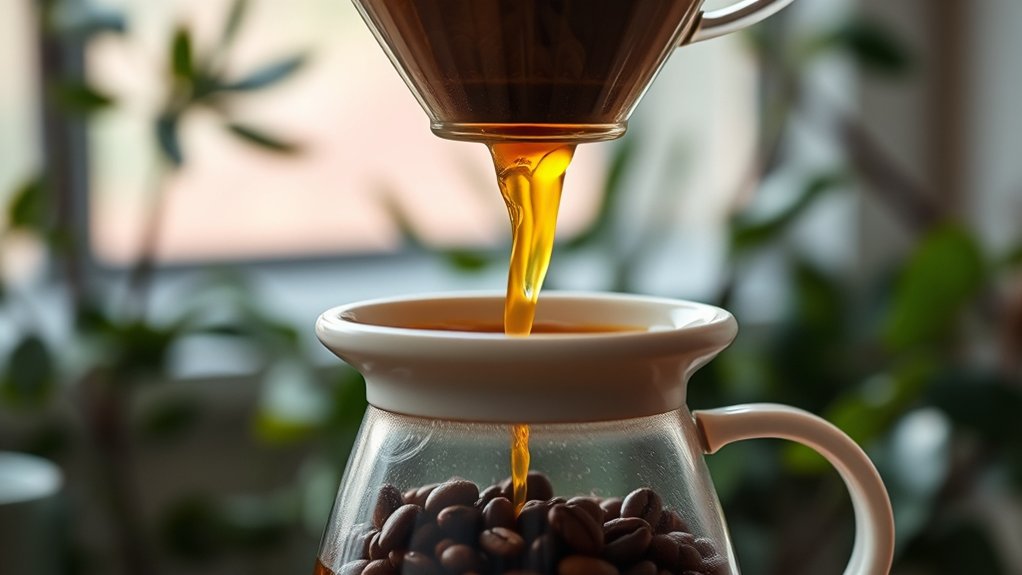
While the French Press delivers a rich, full-bodied cup through immersion, the pour-over method offers a distinct experience by employing a controlled, filter-based extraction.
In pour-over brewing, you use a medium grind and pour hot water over coffee grounds in a cone-shaped filter basket, precisely controlling water temperature and pour technique. This meticulous brewing process highlights bright notes and yields a clean cup, emphasizing clarity and nuanced flavor profiles.
Using tools like a gooseneck kettle and digital scale helps guarantee consistency and precision. Savor the clarity as distinct flavors emerge with each pour. You’ll also experience the meditative rhythm of controlled water flow.
Revel in the bright, delicate aroma that awakens your senses. Mastering pour-over means mastering precision to access your coffee’s full potential.
AeroPress Coffee Brewing Method: Versatile and Experimental
Because it completes the brewing process in just 2-3 minutes, the AeroPress offers unmatched versatility and efficiency for coffee enthusiasts. This brewing method uses full immersion of coffee grounds, combining rapid brewing with precise control over time and pressure.
The AeroPress employs a paper microfilter, delivering a clean cup free of oils and sediment while preserving a full-bodied flavor profile.
Its design encourages you to experiment with grind size, water temperature, and brew ratios. This lets you make styles from espresso-like shots to lighter American coffee.
The versatility of the AeroPress makes it ideal for beginners and seasoned users alike who want consistent, rich coffee quickly.
Plus, it’s portable and durable, adapting well to different environments without sacrificing quality. This solidifies its position as a technically superior and highly flexible brewing method.
Drip Coffee Makers: Convenience and Consistency at Home
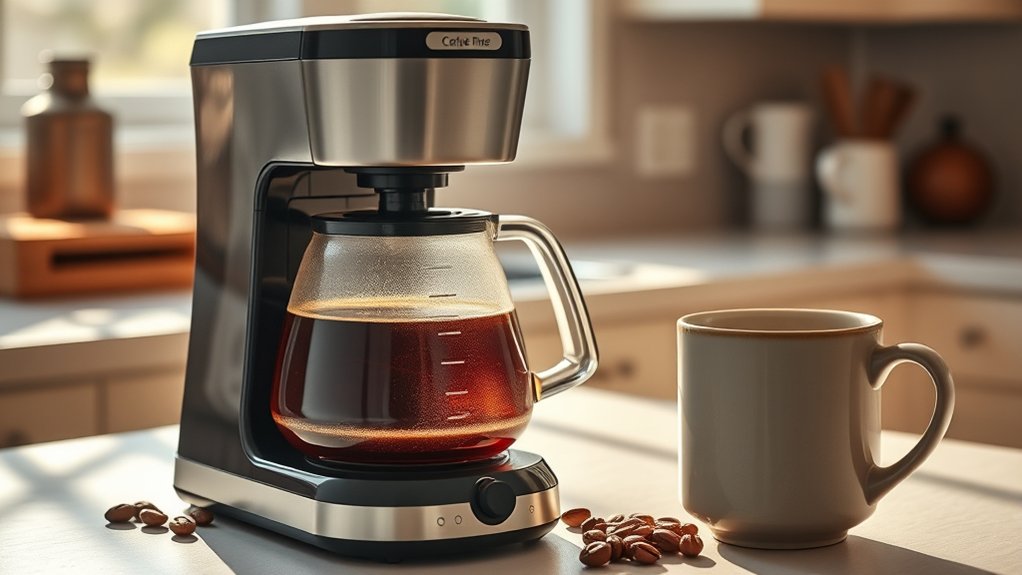
You can brew large batches quickly with a drip coffee maker, which makes it perfect for serving multiple people.
Plus, it’s super easy to use—just add water and coffee grounds, and you’re good to go. Because of this simplicity, you’ll get consistent results every time you use it at home.
Large Batch Brewing
When brewing large quantities of coffee, drip coffee makers offer unmatched convenience and consistency. They’re perfect for busy households or offices. These machines use an automatic pour-over method, which precisely controls water flow over medium grind coffee grounds held in a filter.
This process extracts balanced flavors while removing oils and sediment for a clean cup. Brewing a large batch usually takes about eight minutes, delivering smooth, consistent results every time.
To keep things running smoothly, make sure to clean and descale regularly. That way, you avoid buildup that can change the taste or affect how the machine works.
- Enjoy freshly brewed coffee ready when you need it
- Serve multiple guests without sacrificing flavor quality
- Rely on consistent extraction for every large batch brewed
Simple Operation
Drip coffee makers combine automated precision with straightforward use, making them ideal for home brewing. Their simple operation involves adding coffee grounds and water, then pressing a button to start automatic brewing. This hands-off process requires minimal effort, allowing you to focus on other tasks during the quick preparation time of about eight minutes.
Drip coffee makers maintain an ideal brewing temperature of around 200°F, ensuring consistent extraction when you use a medium grind size. They’re easy to use, delivering reliable flavor with every pot.
To preserve performance and taste quality, regular cleaning and maintenance are essential, including descaling to prevent mineral buildup.
Moka Pot Coffee Brewing Method: Strong Italian-Style Coffee
How does the Moka pot deliver such a robust, espresso-like coffee with just steam pressure? The Moka pot uses steam pressure to push hot water from its bottom chamber through finely ground coffee in the middle section.
Steam pressure forces hot water through finely ground coffee, creating a rich, espresso-like brew in the Moka pot.
It’s usually made of aluminum or stainless steel and relies on the right water level, just below the safety valve, to keep proper pressure.
You stop brewing at the first bubbling sound to avoid over-extraction. This way, you get a thick, aromatic brew with a strong flavor and a slight bitterness.
To get the best from your Moka pot brewing method, use medium-fine grounds but don’t pack them too tightly. This helps maintain consistent pressure.
Also, keep an eye on the water level to protect the safety valve and ensure safety.
And don’t forget to clean your pot regularly. This prevents sediment buildup and keeps your coffee tasting strong and fresh.
Should You Upgrade to an Espresso Machine?
Why consider upgrading to an espresso machine? If you want to regularly make concentrated espresso shots and specialty drinks at home, an espresso machine is a great upgrade. But if you’re just starting out, it’s better to master simpler brewing methods like the French press first.
Espresso machines need some refined coffee skills and a consistent technique to get great results. You’ll also want quality equipment, especially a burr grinder, to pull balanced, flavorful shots.
Keep in mind, they take more maintenance and space compared to manual methods.
High-end machines can cost $500 or more, but they save you time and deliver café-quality drinks. So, think about whether you’re ready to invest in both skill development and equipment before moving on from easier methods like the French press.
Upgrading makes sense once your home brewing routine grows beyond basic extraction and you want more precision and efficiency.
Frequently Asked Questions
How Do Water Temperature and Quality Affect Brewing Outcomes?
Water temperature directly controls extraction. If it’s too hot, you’ll get bitter flavors from over-extraction.
Too cold, and your coffee will taste weak and sour due to under-extraction.
You need water between 195°F and 205°F for balanced flavor.
Water quality also matters. Impurities and mineral imbalances can dull or distort taste.
Using filtered or mineral-balanced water guarantees you extract the coffee’s full flavor potential consistently.
What Is the Best Grind Size for Each Brewing Method?
If you think any grind will do, prepare for a flavor disaster. You’ll want a coarse grind like sea salt for French press and cold brew to avoid sludge.
Medium grind, resembling sand, suits drip and pour-over for balanced extraction.
For espresso and AeroPress, use a fine grind like table salt to generate pressure and richness.
Turkish coffee demands an extra-fine, powder-like grind for rapid extraction.
Match grind size precisely to your brewing method for the best taste.
How Does Coffee Bean Freshness Impact Flavor?
Coffee bean freshness directly influences flavor intensity and complexity. When you use beans roasted within two weeks, you preserve volatile compounds responsible for aroma and brightness.
As beans age, oxidation degrades these compounds, leading to flat, dull taste profiles.
Grinding fresh beans right before brewing maximizes flavor retention and prevents aroma loss.
To achieve the best brew quality, always prioritize freshly roasted, properly stored beans. Then, grind them immediately before extraction.
It really makes a noticeable difference!
Can I Reuse Coffee Grounds Safely?
Reusing coffee grounds is like trying to squeeze juice from a dried lemon. It won’t deliver the full flavor you want. You can reuse grounds, but they’ll produce a weaker, more bitter brew because fewer soluble compounds are left.
Plus, leftover grounds risk mold or bacteria unless you dry and store them airtight quickly. For the best taste and safety, it’s really better to use fresh grounds every time.
Just go ahead and discard them after brewing.
How Should I Store My Coffee Beans for Maximum Freshness?
You should store your coffee beans in an airtight container to minimize oxygen exposure, which degrades freshness. Keep the container in a cool, dark, and dry place, like a pantry or cupboard. Avoid heat and moisture as much as possible.
Don’t refrigerate or freeze beans for daily use because temperature fluctuations cause condensation.
Use the beans within two to four weeks of roasting for the best flavor. Also, grind them just before brewing to preserve those volatile oils and the ideal taste.
Conclusion
Choosing your coffee craft calls for careful consideration. Start simple with a French Press for full-bodied flavor or a Pour-Over to precisely perceive nuanced notes.
If versatility tempts you, try the AeroPress. For seamless sips, drip coffee makers deliver dependable consistency. Moka Pots master strong, espresso-like brews.
As you sharpen skills, see if an espresso machine suits your sophisticated standards. Selecting smartly sets you on a satisfying, successful coffee brewing journey.

Pingback: Coffee Bean Processing Methods Explained (Washed, Natural, Honey) – iPourCoffee