Cold brew steeps coarse coffee in cold water for 12-24 hours. It gives you a smooth, low-acid drink with higher caffeine that’s gentler on your stomach.
Iced coffee brews hot with medium grounds, then cools over ice. This method delivers bright, aromatic flavors with more acidity.
Both require the right grind and beans to avoid bitterness. If you want to master these invigorating brews and choose the best beans for your taste, keep exploring the details ahead.
Brewing Cold Brew and Iced Coffee: The Basics
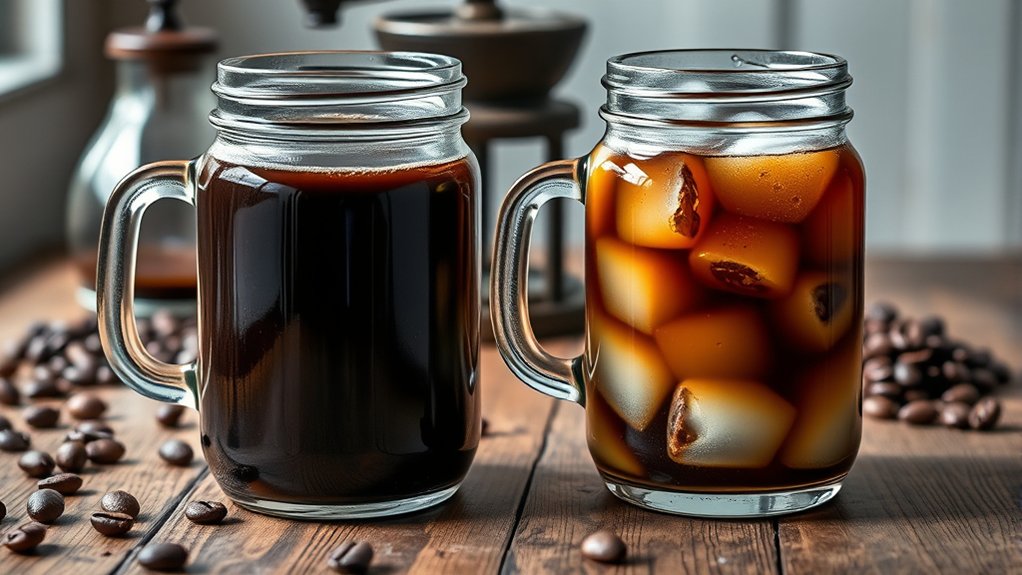
Although both cold brew and iced coffee offer invigorating ways to enjoy your caffeine fix, they start with very different brewing methods. For cold brew, you steep coarsely ground coffee grounds in cold water for 12 to 24 hours. This slow extraction without heat preserves sweetness and reduces bitterness, resulting in a smooth, low-acid flavor.
Cold brew’s slow, cold steeping preserves sweetness and smoothness, offering a low-acid, less bitter coffee experience.
You use a very coarse grind to avoid over-extraction and muddiness.
On the other hand, iced coffee begins with hot brewing methods like drip or pour-over, using standard or medium grounds. The hot water quickly extracts bright, complex flavors before the coffee is cooled rapidly and poured over ice.
Cold brew often produces a concentrate you dilute before drinking, while iced coffee is usually brewed stronger and served immediately. This highlights the distinct flavor profiles each brewing method creates.
Controlling the grind size is essential to avoid under-extraction or over-extraction in both methods, affecting the final taste and strength.
What Cold Brew and Iced Coffee Taste Like
Now that you know how cold brew and iced coffee are made, it’s time to explore how their brewing methods shape their unique taste profiles.
The cold brew taste is naturally smooth with low acidity, thanks to its extended cold steeping process. You’ll notice subtle chocolate or caramel flavor notes that make it rich and full-bodied without sharpness.
In contrast, iced coffee preserves the bright flavors of hot brewed coffee, offering a lighter, more invigorating coffee profile. Its brewing process extracts a more complex, aromatic character, often accompanied by a slight bitterness and higher acidity.
Because iced coffee uses hot water within a specific temperature range during extraction, it achieves a balanced flavor profile with controlled acidity and bitterness.
Comparing Caffeine Levels in Cold Brew and Iced Coffee

You’ll notice cold brew packs more caffeine per serving than iced coffee because of its concentrated steeping process.
But here’s the thing—if you dilute your cold brew or add espresso shots to your iced coffee, the caffeine kick can change quite a bit.
Knowing these little differences makes it easier to pick the right coffee boost to power your day.
Additionally, the grind size and consistency of your coffee grounds, especially when using an espresso grinder, can significantly influence the extraction and caffeine content.
Caffeine Content Comparison
When you compare caffeine levels, cold brew packs a much stronger punch than iced coffee. It typically delivers 150-200 mg per 8-ounce serving, while iced coffee usually contains about 80-120 mg.
This difference in caffeine content comes from cold brew’s unique brewing process, which uses a higher coffee-to-water ratio and longer steeping time. That means it extracts more caffeine per ounce than traditional brewed coffee.
Cold brew concentrate, which is often diluted before serving, lets you customize your caffeine intake. But generally, it results in a higher caffeine level than iced coffee.
On the other hand, iced coffee’s caffeine content depends on brewing strength and dilution with ice or milk. This caffeine comparison helps you choose between a bold, sustained energy boost from cold brew or a milder lift from iced coffee.
Extraction dynamics and pressure play a critical role in determining the caffeine levels and overall flavor profile in coffee brewing, with consistent extraction pressure ensuring balanced results.
Concentrate Versus Regular Brew
Although both cold brew and iced coffee offer invigorating ways to enjoy your caffeine fix, their brewing methods create distinct differences in concentration and strength. Cold brew concentrate is brewed using a higher coffee-to-water ratio, resulting in a much stronger, more potent caffeine content than regular brew iced coffee, which is typically brewed hot.
Because cold brew concentrate is so intense, it usually requires dilution before drinking, which directly affects its final caffeine strength. In contrast, iced coffee’s caffeine content depends largely on the hot brewing process and how much ice or water is added afterward. The choice of brewing equipment, including factors like brew capacity and temperature control, can also influence the flavor and caffeine extraction in both methods.
Impact On Energy Levels
Because cold brew typically packs 150-200 mg of caffeine per 8-ounce serving, it delivers a stronger and more sustained energy boost compared to iced coffee, which usually contains 80-120 mg per cup. The brewing method plays a pivotal role here. Cold brew’s concentrated nature means even when diluted, its caffeine content stays higher.
This means your energy levels stay elevated longer with cold brew. Iced coffee’s caffeine content varies more with brew strength and added shots, making its energy boost less predictable. Check out the comparison below:
| Drink | Caffeine Content (mg/8 oz) | Energy Boost Duration |
|---|---|---|
| Cold Brew | 150-200 | Longer, sustained |
| Iced Coffee | 80-120 | Shorter, variable |
| Espresso | 63 (per shot) | Quick, intense |
Adjust your brew strength for the perfect energy boost! For consistent caffeine extraction and flavor, precise dose and yield measurement is essential.
How to Make Cold Brew at Home Step-by-Step
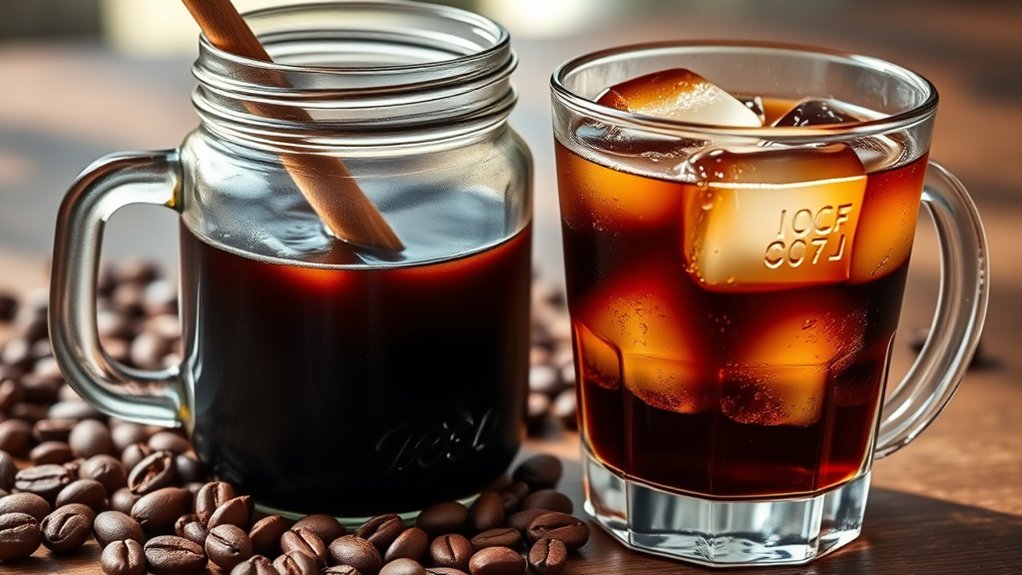
If you want to enjoy smooth, richly flavored cold brew coffee at home, start by grinding your coffee beans to a coarse texture, similar to sea salt.
Combine this coarse grind with cold, filtered water in a jar or cold brew maker, using about a 1:4 to 1:5 ratio to create a concentrate.
Let the mixture steep in your refrigerator for 12 to 24 hours, allowing the flavors to develop gently without heat.
After steeping, strain the coffee through a fine mesh or coffee filter to remove the grounds, ensuring a silky smooth concentrate.
Finally, dilute your cold brew concentrate with water or milk to your preferred strength before serving it over ice.
This method really brings out the unique, mellow flavors of cold brew perfectly.
Give it a try—you’ll love how easy it is!
Easy Ways to Brew Iced Coffee You’ll Love
Cold brew offers a slow, smooth way to enjoy coffee. But when you want a quick, invigorating iced coffee, brewing hot coffee and chilling it fast is your best bet.
Start by brewing a double-strength batch using your favorite coffee beans and coffee maker to avoid dilution from melting ice.
Pour the hot coffee directly over a glass filled with ice for a quick chill. Or, let it cool slightly for a smoother taste.
Adjust your coffee to water ratio and customize with milk or syrups after.
Try these easy tips:
- Use one part hot coffee to two parts ice for balanced strength.
- Pour hot coffee over ice in a shaker for rapid chill.
- Choose a brewing method like drip or pour-over for fresh flavor.
Which Coffee Is Easier on Your Stomach and Health
When you’re mindful of your stomach’s sensitivity, choosing the right coffee can make a big difference. Cold brew, brewed with cold water, extracts fewer acidic compounds from the coffee grounds, making it naturally lower in acidity. This gentler profile means cold brew is easier on your stomach, reducing the chances of acid reflux or gastrointestinal discomfort.
On the other hand, iced coffee is hot brewed and then cooled, so it retains more acidity. That extra acidity can irritate sensitive stomachs.
Both can support your health if you skip added sugars and heavy creams, but cold brew’s smoother, less acidic nature often makes it the better choice for those with acid sensitivity.
Picking the Right Coffee for Your Daily Routine
Although both cold brew and iced coffee offer invigorating ways to enjoy your daily caffeine, choosing the right beans can really elevate your experience.
For cold brew, go for specialty-grade beans that have natural sweetness and a robust flavor. Think Costa Rica Aurora or Brazil Single Origin—they bring out that smooth, full-bodied profile cold brew is known for.
Iced coffee, on the other hand, shines with bright, aromatic beans like Ethiopian Fancy or Kenya Auction Lot. Their complex notes cut through ice dilution perfectly, giving you a refreshing cup every time.
Just remember to use a coarse grind, similar to sea salt, for both brewing methods to avoid bitterness.
- Pick beans based on the flavor you want: sweet and mellow for cold brew, bright and aromatic for iced coffee
- Choose a medium to dark roast for cold brew’s richness, and lighter roasts for iced coffee’s brightness
- Use specialty-grade beans to get the most flavor and value in every cup
Frequently Asked Questions
Can I Use the Same Coffee Beans for Both Cold Brew and Iced Coffee?
Yes, you can definitely use the same coffee beans for both cold brew and iced coffee. Just keep in mind that beans with natural sweetness and rich notes work great for cold brew, while brighter, aromatic beans shine in iced coffee.
Grinding your beans fresh before brewing will boost flavor no matter which method you choose.
How Long Can I Store Cold Brew in the Refrigerator?
Imagine your cold brew as a delicate treasure. You can store it in the fridge for up to 10 to 14 days. But don’t get too comfortable; after a week, its flavor starts to fade like a sunset.
Keep it sealed tight to lock in freshness. And never leave it out too long. If it’s been around a while, trust your senses—smell and taste before sipping.
Does Adding Milk Affect the Flavor Differently in Cold Brew vs. Iced Coffee?
Yes, adding milk changes the flavor in both drinks, but in different ways. When you add milk to cold brew, it smooths out bitterness and brings out a natural sweetness. This creates a creamy, velvety texture.
With iced coffee, milk highlights bright, caramel notes, making the flavor more vibrant. Just be careful adding milk slowly to iced coffee to avoid curdling, especially if the coffee is still warm. It’s a little trick to keep in mind!
Can I Carbonate Cold Brew or Iced Coffee for a Fizzy Drink?
Yes, you can definitely carbonate cold brew or iced coffee for a fizzy, invigorating twist. Cold brew works best because its smooth, low-acid profile holds carbonation without turning bitter.
Just make sure your coffee is cold and freshly brewed before carbonating it using a soda siphon or keg system.
Chill it well to avoid excess foam or pressure. Serve over ice, and enjoy a sparkling coffee experience that’s both vibrant and satisfying. It’s a fun way to switch up how you enjoy your coffee!
What Equipment Is Best for Brewing Cold Brew at Home?
You’ll want a French press or a dedicated cold brew pitcher like the Takeya for easy immersion brewing at home. Mason jars with tight lids work great if you’re on a budget or brewing small batches.
Just use a coarse grind to avoid clogging and over-extraction.
Remember to clean your equipment thoroughly after each use to keep flavors fresh and avoid any lingering oils spoiling your next batch. It really makes a difference in taste!
Plus, keeping things clean means your cold brew will always be delicious.
Conclusion
Whether you’re chasing that smooth, mellow cold brew or the brisk, invigorating iced coffee, both offer a delightful twist on your daily cup. Each has its own rhythm and charm, gently guiding your energy and mood.
By understanding their subtle dance from flavor to caffeine kick, you’re better equipped to choose the brew that suits your pace and palate.
So, embrace the ritual, savor the moment, and let your perfect cup quietly brighten your day.