You’ll find that coffee origins profoundly shape your cup’s flavor and quality. Ethiopian beans, grown at high altitude with heirloom varietals, offer complex, fruity, and floral notes.
Colombian coffee delivers bright acidity and caramel sweetness from volcanic soils. Brazil’s large, smooth beans yield nutty, chocolatey tones with a creamy body.
Indonesian coffees, processed wet-hulled, bring bold, earthy, and spicy profiles. Understanding these factors lets you select beans that match your taste preferences and brewing style. Explore how processing and terroir refine these differences.
Why Coffee Bean Origins Matter for Flavor and Quality
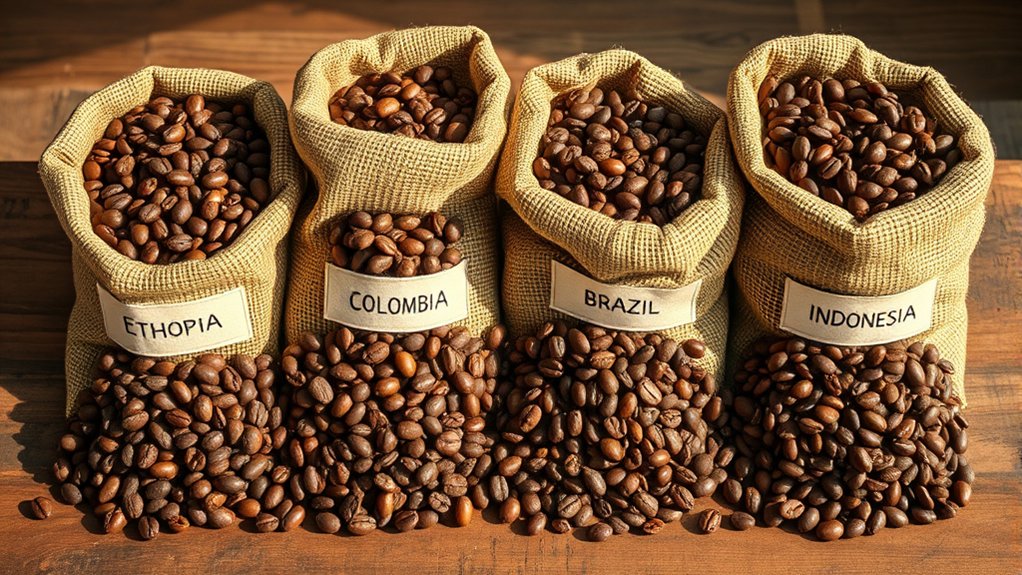
Because the origin of coffee beans directly affects their flavor and quality, understanding where your coffee comes from is essential. The origin determines the regional climate, soil composition, and altitude, all of which collectively influence the bean’s unique flavor profile.
Also, processing methods like natural or washed, which are specific to certain origins, further refine these flavor characteristics. When you choose single-origin coffee, you get a transparent traceability system that highlights distinct regional nuances. This makes it easier to appreciate subtle variations with precision.
This combination of environmental conditions and processing techniques at the origin level shapes not only flavor but also the overall quality of your coffee. Beans from high-altitude regions often have higher acidity, which contributes to their distinctive bright and sour flavor notes.
Arabica vs. Robusta: Coffee Bean Types Explained
You’ll find that Arabica beans tend to have more nuanced, sweeter flavors and generally contain less caffeine. They do best at higher altitudes where it’s cooler.
On the other hand, Robusta beans pack a stronger, more bitter punch and have higher caffeine levels. These beans are tough and can grow well at lower elevations.
Knowing these genetic and environmental differences helps explain why each type of bean gives your coffee its unique taste and strength. Additionally, selecting the right grind size for your brewing method is crucial to unlocking the full flavor potential of these beans.
Arabica Bean Characteristics
When exploring coffee bean varieties, understanding Arabica beans is essential due to their dominance in global production and distinctive qualities. Arabica accounts for 60-70% of coffee worldwide, thriving primarily at high elevations between 600 and 2,000 meters in subtropical regions like Ethiopia and Latin America.
These conditions foster a complex flavor profile characterized by delicate floral notes and nuanced fruit and sweetness, contributing to its smooth, refined taste.
You’ll notice Arabica beans have higher acidity and a more intricate aroma compared to other types. However, Arabica plants demand precise cultivation practices to combat their susceptibility to pests and diseases.
Plus, these beans contain less caffeine, making them a preferred choice for specialty coffee enthusiasts seeking quality and subtlety in each cup. Brewing Arabica coffee with a medium-fine grind size enhances its delicate flavors and balanced extraction.
Robusta Bean Features
Although Robusta beans share the coffee spotlight with Arabica, they offer distinctly different qualities that influence flavor, cultivation, and caffeine content. Robusta thrives at low altitude ranges of 200-800 meters, showcasing resilience against pests and harsh weather. This makes it easier to grow in challenging environments.
You’ll notice Robusta’s earthy flavor, often accompanied by woody, nutty, and spicy notes. This really sets it apart from Arabica’s smoother profile.
Its caffeine content is roughly twice that of Arabica, which gives it a more bitter, robust taste and a stronger stimulating effect.
While Robusta is commonly linked to mass-produced coffee, it has unique characteristics that make it valuable. Especially in espresso blends, it enhances body and crema.
Understanding these features helps you appreciate Robusta’s distinct role in coffee production. Additionally, the brewing method, such as using a metal filter in siphon coffee, can influence the extraction of oils and solubles, enhancing the richness of robust coffee flavors.
Flavor And Caffeine Differences
Robusta’s higher caffeine content and distinct flavor profile set the stage for a clear comparison with Arabica beans. Robusta contains roughly 2.2-2.7% caffeine content, nearly double Arabica’s 1.2-1.5%. This directly influences its stronger bitterness and thicker crema in espresso.
Arabica’s flavor profile is more delicate, featuring nuanced fruit, floral, and sweet notes. These characteristics are shaped by cultivation at higher elevations (600-2000 meters).
In contrast, Robusta’s earthy, harsher taste reflects its adaptability to lower altitudes and resilience against pests.
Understanding these differences deepens your appreciation of coffee origins. Arabica dominates specialty markets while Robusta contributes to blends requiring robustness and intensity.
When selecting coffee, consider how caffeine content and flavor profile impact your desired sensory experience. Additionally, factors like grind size and extraction time can significantly affect the flavor and strength of your brewed coffee.
How Altitude and Terroir Shape Coffee Taste
Because altitude and terroir directly influence coffee bean development, they play an essential role in shaping the final taste you experience.
At high elevations, coffee cherries mature slowly, resulting in denser beans with brighter acidity and intricate flavor profiles.
Terroir includes soil composition, climate, and sunlight exposure, which further nuances these flavors. This creates distinct sensory characteristics across regions.
Consider these factors:
- Altitude affects bean density and acidity, with high elevations producing more complex flavors.
- Soil composition influences nutrient uptake, impacting sweetness and body.
- Climate and sunlight exposure drive the maturation rate and flavor intensity.
- Low-altitude regions yield smoother, less acidic profiles due to faster ripening.
Understanding altitude and terroir helps you appreciate why Ethiopian and Colombian coffees differ from Brazilian beans in flavor complexity.
It’s pretty fascinating how much the environment shapes what ends up in your cup!
Adjusting the coffee-to-water ratio during brewing can further highlight or balance these inherent flavor differences.
How Coffee Processing Methods Affect Flavor
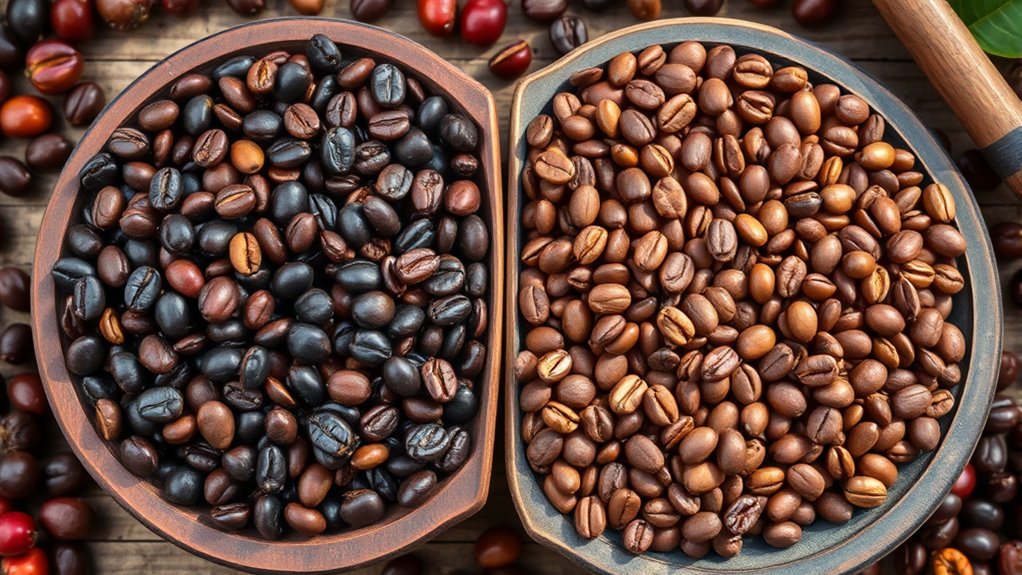
You’ll notice that natural and washed processing create distinctly different flavor profiles. Natural methods tend to bring out fruity, full-bodied notes.
While washed techniques highlight cleaner, floral, and citrus characteristics.
Then there are regional practices, like Indonesia’s wet-hulled method, which add another layer of complexity by introducing earthy, low-acid elements.
Getting a handle on these variations really helps you appreciate how processing shapes the coffee’s sweetness, acidity, and body.
Water temperature during extraction also plays a crucial role in balancing these flavor characteristics, as different compounds dissolve at varying rates depending on the brew temperature.
Natural Versus Washed
Although coffee’s origin plays a crucial role in its flavor, the processing method considerably shapes its final profile. Natural processing dries the cherries whole, intensifying fruity notes and imparting a sweet, wine-like character.
In contrast, washed processing removes the fruit before drying, resulting in a cleaner, brighter flavor profile with pronounced floral and citrus qualities.
Understanding these methods helps you appreciate how they influence texture, aroma, and acidity.
Key distinctions include:
- Natural processing enhances body and fermentation notes
- Washed processing emphasizes clarity and brightness
- Natural coffees often showcase berry and tropical fruit notes
- Washed coffees highlight citrus and floral flavors
Choosing between natural and washed processing markedly affects the coffee’s sensory experience. It’s all about what flavor journey you want to take!
Regional Processing Techniques
The processing method you choose shapes more than just flavor. It reflects the regional practices that have evolved to suit local climates and traditions.
Natural processing, common in Ethiopia and Brazil, dries cherries whole. This enhances fruity sweetness and wine-like notes.
Washed processing, favored in Colombia, removes the fruit before drying. This produces cleaner, brighter flavors with floral and citrus highlights.
Honey processing is a hybrid method that leaves some mucilage intact. It balances sweetness and body while retaining clarity.
Indonesia’s distinctive wet-hulled method removes outer layers early and partially dries the beans. This results in earthy, low-acid profiles with a syrupy texture.
Each processing method markedly impacts the coffee’s acidity, body, and complexity.
What Makes Ethiopian Coffee Origins Unique?
When exploring coffee origins, Ethiopian beans stand out because of their unmatched diversity and cultural importance. Ethiopian coffee grows at high altitudes, producing heirloom varietals that have complex and distinctive profiles. You’ll often notice floral notes along with citrus, berry, and wine-like flavors.
These flavors are shaped significantly by different processing methods. Natural (dry) and washed (wet) techniques really influence the final cup’s character. Natural processing tends to bring out fruity tastes, while washed methods emphasize cleaner flavors. Understanding these factors helps you truly appreciate the unique complexity that Ethiopian coffee offers.
Ethiopia is known as the birthplace of coffee, with deep cultural traditions tied to it. The heirloom Arabica varietals are cultivated at high elevations, which adds to their special qualities.
There are also distinct flavor regions like Yirgacheffe, Sidamo, Harrar, and Guji, each offering something different.
Plus, the varied processing methods play a big role in shaping flavor profiles and aroma. All these elements combined make Ethiopian coffee origins truly unique and worth exploring.
Why Colombian Coffee Bean Origins Offer Smooth Balance
You’ll notice that Colombian coffee’s smooth balance comes from the unique flavor profiles found in different regions, like Nariño and Huila. These places are high up, and that altitude helps produce dense beans with a bright acidity and complex flavors.
Plus, the careful processing methods they use make sure these great qualities are kept and even brought out more.
Regional Flavor Profiles
Although coffee origins vary widely, Colombian beans consistently deliver a smooth balance that sets them apart. When you explore regional flavor profiles, Colombian coffee showcases medium body and bright acidity with caramel and citrus notes. This contrasts nicely with the floral complexity often found in Ethiopian Yirgacheffe.
The high-altitude regions like Nariño and Huila produce denser beans that develop nuanced, clean tastes.
Colombian processing methods, especially washed (wet) processing, emphasize clarity and brightness. This enhances the crisp and fresh character of the coffee.
The country’s volcanic soil and consistent climate optimize the sweetness and acidity balance.
Key factors defining Colombian coffee’s regional flavor profiles include:
- High-altitude regions fostering bean density
- Washed processing enhancing brightness
- Volcanic soil contributing to flavor harmony
- Distinct microclimates refining smoothness and complexity
Altitude’s Impact on Taste
The unique flavor profiles found across Colombian coffee regions owe much to the altitude at which the beans are cultivated. High-altitude growing conditions between 1,200 and 2,000 meters slow cherry maturation, creating denser beans with complex acids and nuanced tastes.
This altitude really brings out the coffee’s natural acidity, giving it a bright, balanced flavor profile. You’ll notice caramel and fruity notes shining through. It all comes together in a smooth, well-rounded cup where brightness, sweetness, and body harmonize perfectly.
| Altitude Range (m) | Bean Density | Flavor Characteristics |
|---|---|---|
| 1,200 – 1,400 | Medium | Mild acidity, subtle sweetness |
| 1,400 – 1,600 | Dense | Balanced acidity, fruity notes |
| 1,600 – 2,000 | Very dense | Bright acidity, complex tastes |
Processing Methods Effects
Because Colombian coffee undergoes mainly washed processing, you get a clean and bright cup marked by crisp acidity and subtle floral notes. This washed method removes most fruit residues, creating a smooth flavor profile.
High-altitude regions like Huila and Nariño produce denser beans, which enhances balance and complexity.
Proper fermentation and thorough washing during processing are vital to developing the coffee’s distinctive brightness and nuanced taste.
Key factors influencing Colombian coffee’s smooth balance include:
- Washed processing that guarantees clarity and cleanliness
- Precise fermentation controlling acidity and flavor development
- High-altitude cultivation yielding denser beans with enhanced complexity
- Rigorous washing removing impurities to maintain a clean and bright cup
Together, these elements create the consistent, mellow, and well-balanced profile Colombian coffee is known for.
Brazil Coffee Origins: Largest Producer and Flavor Profile
When you explore the origins of coffee, you’ll find Brazil dominates global production, contributing about 35% of the world’s supply. Brazilian coffee is renowned for its smooth, nutty, and chocolatey flavor profile. You’ll appreciate its medium body and low acidity, which make it a popular choice for espresso blends.
The Minas Gerais region cultivates high-quality Arabica beans, benefiting from Brazil’s prevalent natural processing methods that enhance sweetness and create a creamy texture. Understanding these characteristics helps you evaluate Brazilian coffee’s distinctiveness and versatility.
| Attribute | Description |
|---|---|
| Production Share | ~35% of global coffee |
| Flavor Profile | Nutty, chocolatey, smooth |
| Body | Medium |
| Acidity | Low |
| Processing Method | Natural processing enhances sweetness |
What Indonesian Coffee Origins Bring to the Flavor Table
Brazilian coffee offers a smooth, nutty experience with low acidity, but Indonesian origins bring a distinctly different flavor profile that coffee enthusiasts often seek out. Indonesian coffees stand out due to their earthy flavors and bold intensity, largely influenced by the wet-hulled processing unique to Sumatra.
This method imparts syrupy body, smoky notes, and vibrant spicy profiles uncommon elsewhere.
You’ll also find Java beans that deliver rich, balanced flavors with subtle chocolate and spice undertones. The diverse processing and growing conditions at low to mid-altitudes shape these signature characteristics.
Key attributes of Indonesian coffees include:
- Earthy flavors with a full-bodied mouthfeel
- Wet-hulled processing enhancing complexity
- Distinct smoky notes from Sumatra origins
- Spicy profiles that add depth and warmth
How Single-Origin Coffees Highlight Regional Differences
Although coffee beans may come from the same species, single-origin coffees reveal how specific environmental factors like soil composition, altitude, and climate shape distinct regional flavor profiles.
When you explore Ethiopian coffee, you’ll notice floral and fruity notes, driven by heirloom varietals cultivated at high altitudes.
Colombian single-origin coffees present a balanced profile, combining caramel sweetness with bright acidity. This is also influenced by elevation.
In contrast, Indonesian single-origin coffees, such as those from Sumatra, showcase earthy, herbal flavors resulting from unique wet-hulled processing methods.
By tasting single-origin coffees, you can clearly discern these regional differences and appreciate how terroir and processing methods work together to create diverse flavor profiles.
This precision shows why single-origin coffees are invaluable for understanding the nuanced complexity within global coffee origins.
Why Responsible Sourcing Improves Coffee Quality
Because responsible sourcing prioritizes ethical practices and sustainability, it directly enhances coffee quality by supporting farmers and their communities. When you choose responsibly sourced coffee, you benefit from improved traceability, allowing precise verification of origin and processing. This guarantees consistent quality.
Responsible sourcing ensures ethical practices and traceability, directly boosting coffee quality while supporting farmers and their communities.
Ethical practices like fair wages and eco-friendly farming foster healthier crops. Plus, sustainability commitments encourage cultivating specialty varieties that elevate flavor complexity. It all adds up to better coffee you can really enjoy.
Moreover, responsible sourcing builds long-term partnerships, enabling farmers to adopt advanced techniques that boost coffee standards.
Key benefits include:
- Enhanced traceability for rigorous quality control
- Adoption of environmentally sustainable farming methods
- Promotion of heirloom and specialty coffee varieties
- Strengthened farmer relationships driving continuous quality improvements
This approach results in superior, ethically produced coffee you can trust.
Tips for Choosing the Best Coffee Beans by Origin
When selecting coffee beans, understanding how origin influences flavor can really help you make a better choice. Each coffee-growing region brings its own unique flavor profile, shaped by factors like altitude, climate, and soil.
Take Ethiopian beans, for example. They often have complex, fruity notes thanks to natural processing. On the other hand, washed processing tends to produce floral, cleaner flavors.
Colombian beans are known for their smooth, balanced profiles with caramel sweetness and bright acidity. Brazilian coffee usually has nutty, chocolatey qualities, low acidity, and a creamy body.
Indonesian beans, especially from Sumatra, offer earthy, full-bodied, herbal flavors with syrupy, smoky undertones.
It’s also good to pay attention to the coffee bean’s processing method. Natural processing tends to bring out more fruitiness, while washed processing gives you clarity and brightness.
Frequently Asked Questions
How Do Coffee Bean Origins Impact Caffeine Content?
Coffee bean origins impact caffeine content mainly through the species grown, Arabica or Robusta. You’ll find Arabica beans generally have lower caffeine, about 1.2% to 1.5%, no matter where they come from.
Robusta beans, on the other hand, contain roughly twice the caffeine.
So, when you’re choosing coffee, it’s good to consider both the species and its origin. Some regions grow more Robusta, which means higher caffeine levels.
It’s pretty interesting how the place and type of bean can change your coffee experience!
What Is the History of Coffee Cultivation in These Countries?
Imagine coffee as a global tapestry woven over centuries. You’ll find its roots in Ethiopia, the seedbed of wild coffee plants.
Colombia’s highlands transformed coffee into an economic powerhouse by the 19th century.
Brazil’s vast plantations propelled it to world leadership, while Indonesia’s Dutch-introduced beans created unique regional profiles.
Each country’s cultivation history reflects a blend of indigenous growth, colonial influence, and evolving trade networks.
All of these factors shaped the coffee you brew today. It’s pretty amazing when you think about how much history is in every cup!
How Does Climate Change Affect Coffee Farming in These Regions?
You’ll find that climate change disrupts coffee farming by increasing temperatures and causing erratic weather, which stresses plants and reduces yields.
High-altitude varietals you rely on risk losing their unique flavors as temperatures rise.
You’ll also face more pests like coffee rust, which thrive in warmer climates.
To cope, you’ll need to adopt shade-grown methods and switch to resilient coffee strains to maintain productivity and quality under these harsher conditions.
Are There Specific Brewing Methods Best Suited for Each Origin?
Don’t just brew all coffee the same way; each origin demands precision. You’ll want Ethiopian beans with pour-over or Chemex to highlight their delicate floral notes.
Colombian coffees shine through drip methods that preserve acidity.
Brazilian beans gain richness via espresso or French press, enhancing chocolatey depth.
For Indonesian coffee, especially Sumatra, immersion methods like French press or cold brew bring out earthy, herbal complexity.
Tailor your technique to reveal each origin’s full potential.
How Do Local Cultures Influence Coffee Traditions in These Countries?
You’ll see local cultures shape coffee traditions through rituals, social roles, and preparation techniques. In Ethiopia, coffee ceremonies emphasize communal connection and respect.
Colombia’s hospitality encourages sharing coffee during conversations. Brazil’s casual “cafezinho” reflects relaxed social bonding, while Indonesia’s wet-hulling method suits local tastes for earthy flavors.
These cultural influences dictate not only how coffee’s brewed but also how it fosters identity and community in each region. It’s pretty cool how something as simple as coffee can bring people together in so many different ways.
Conclusion
You’ll appreciate coffee more when you understand its origins, recognize Arabica and Robusta distinctions, and consider altitude and terroir impacts. You’ll savor unique Ethiopian floral notes, Indonesian earthy undertones, and Colombian brightness.
You’ll value how processing methods shape flavor and how single-origin beans highlight regional nuances. You’ll choose responsibly sourced beans that guarantee quality and sustainability.
Embrace these insights, refine your palate, and elevate every cup you brew.