You get caffeine-free coffee through two top chemical-free methods: the Swiss Water Process and the CO2 Method. Swiss Water soaks beans in hot water with green coffee extract, filtering out 99.9% of caffeine while preserving flavor gently.
The CO2 Method uses supercritical carbon dioxide under high pressure to selectively remove caffeine, maintaining vibrant aromas and flavors. Both prioritize safety, sustainability, and quality.
Keep exploring to understand their flavor impact, roasting differences, and environmental benefits.
How Decaf Coffee Is Made
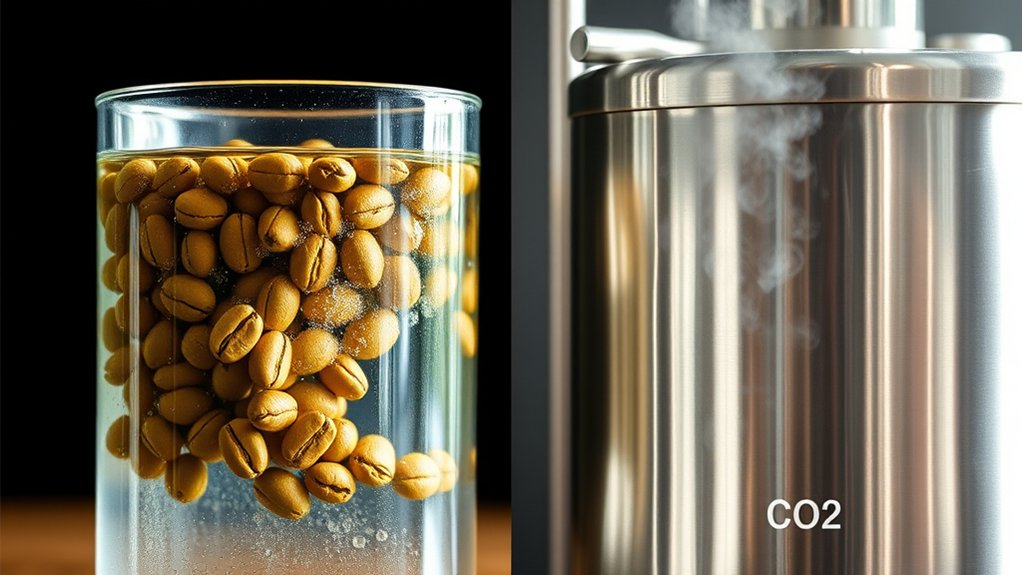
How exactly is caffeine removed from coffee beans without compromising their flavor? Decaffeination achieves this through methods like the Swiss Water process and carbon dioxide extraction.
In the Swiss Water process, green coffee beans soak in hot water, which dissolves caffeine and flavor compounds. This solution passes through activated charcoal filters that selectively remove caffeine. Then, the beans reabsorb the flavor-rich water, preserving taste. It’s a clever way to keep the flavor intact.
Alternatively, the CO2 method soaks green coffee beans before pumping pressurized liquid carbon dioxide through them. The CO2 binds specifically to caffeine molecules, extracting them while leaving flavor compounds intact.
Both techniques focus on removing caffeine from green coffee beans, ensuring minimal flavor loss. You can rely on these methods to produce high-quality decaf coffee without using chemical solvents. It’s pretty impressive how they keep the coffee tasting great!
Additionally, precise control in processes like decaffeination is similar to the meticulous heat and pressure management used in siphon coffee brewing, which also aims to optimize flavor extraction.
Why Swiss Water and CO2 Decaf Are Eco-Friendly Choices
You’ll appreciate that both Swiss Water and CO2 decaffeination avoid harsh chemical solvents, which makes them safer for the environment.
The Swiss Water method is pretty clever—it recycles and filters water to keep waste to a minimum.
On the other hand, the CO2 process uses a natural solvent that’s recyclable.
Both methods also require specialized equipment and processes that ensure high-quality decaf coffee without compromising flavor or safety, similar to considerations in commercial vs home espresso machines maintenance and operation.
Chemical-Free Decaffeination Benefits
Because Swiss Water and CO2 decaffeination methods rely solely on natural agents like water and carbon dioxide, they eliminate the use of chemical solvents entirely. This chemical-free decaffeination guarantees no residual chemicals remain in the coffee, preserving its natural flavor and aroma.
The Swiss Water process uses only water and charcoal filters, avoiding any synthetic compounds. Meanwhile, the CO2 method employs supercritical carbon dioxide, a natural solvent that extracts caffeine efficiently without chemical contamination.
By choosing these methods, you substantially reduce environmental impact. They prevent harmful chemical discharge and promote safer waste management.
Both Swiss Water and CO2 methods show that decaffeination can be effective and eco-friendly, aligning with sustainable consumption without compromising coffee quality. Regular cleaning and maintenance of coffee equipment further ensures the purest flavor experience.
Sustainable Water And CO2 Use
Although decaffeination often raises environmental concerns, the Swiss Water and CO2 methods show sustainable practices through efficient resource use. Both avoid toxic solvents, using only water or reusable CO2. This helps reduce chemical pollution and water waste.
Swiss Water recycles natural mountain water using carbon filters, which conserves resources. The CO2 method uses supercritical carbon dioxide, a reusable, eco-friendly solvent that keeps environmental impact low. These approaches support more eco-conscious coffee production.
| Method | Solvent Used | Environmental Benefit |
|---|---|---|
| Swiss Water | Water | Recycles water, reduces waste |
| CO2 Method | Supercritical CO2 | Reusable, non-toxic solvent |
| Both | No toxic chemicals | Prevent chemical runoff |
| Swiss Water | Natural mountain water | Conserves natural resources |
| CO2 Method | CO2 reuse | Minimizes environmental footprint |
Why the Swiss Water Process Stands Out
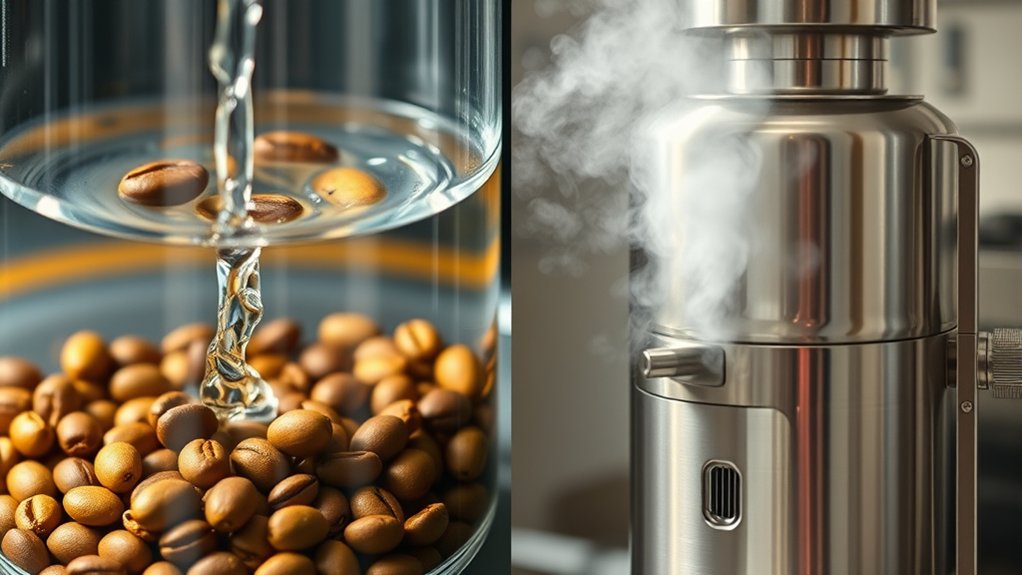
You’ll appreciate that the Swiss Water Process removes caffeine without using any chemicals. It relies solely on water and charcoal filters.
This method is great because it preserves the coffee’s original flavor by soaking the beans repeatedly in flavor-rich water. That way, the quality stays intact.
When you understand these techniques, it’s easy to see why Swiss Water decaf is popular with people who want both purity and great taste.
Additionally, maintaining the proper coffee-to-water ratio during the decaffeination soaking helps preserve the beans’ flavor profile and prevents over-extraction.
Chemical-Free Decaffeination Benefits
What makes the Swiss Water Process stand out in decaffeination is its complete avoidance of chemical solvents. This chemical-free method uses only water and activated charcoal filters to remove 99.9% of caffeine, ensuring no residual solvents remain in the beans.
It’s certified organic and meets strict standards that really appeal to health-conscious consumers.
The Swiss Water Process not only guarantees purity but also supports environmental sustainability by eliminating harmful chemicals. It maintains organic integrity while effectively achieving decaffeination without compromising safety.
Plus, it helps preserve flavor better than chemical alternatives.
As a result, beans processed this way consistently score above 80 on flavor rating scales. So, by choosing the Swiss Water Process, you’re prioritizing a cleaner, safer, and more authentic decaf coffee experience based on chemical-free principles.
Additionally, maintaining the optimal water temperature during brewing is essential to preserving the delicate flavors that the Swiss Water Process helps retain.
Flavor Preservation Techniques
Because it relies solely on water and charcoal filters, the Swiss Water Process excels at preserving the coffee’s original flavor profile. This method uses Green Coffee Extract to target caffeine removal without stripping away essential flavor compounds. Compared to other decaffeination methods, it maintains more delicate and nuanced coffee flavor, resulting in a cleaner, smoother cup.
You’ll notice higher flavor preservation scores, often above 80 out of 100, reflecting its effectiveness.
| Decaffeination Method | Flavor Preservation Score | Key Technique |
|---|---|---|
| Swiss Water Process | 80+ | Water + Charcoal filtration |
| CO2 Method | 75 | Supercritical CO2 extraction |
| Chemical Solvent | 65 | Solvent-based extraction |
This objective data highlights why the Swiss Water Process stands out in flavor preservation. Its ability to maintain flavor is similar to how manual brewing methods allow greater control over extraction variables, optimizing flavor balance and complexity.
How the Swiss Water Decaf Process Preserves Flavor
Although many decaffeination methods rely on chemical solvents, the Swiss Water process preserves the coffee’s original flavor by using only water and activated charcoal filters. This water decaffeination technique removes caffeine while maintaining essential flavor compounds. It ensures effective caffeine removal without compromising taste.
The beans soak in a proprietary green coffee extract, which allows caffeine molecules to diffuse out selectively. Reusing this flavored water in successive cycles enhances caffeine removal up to 99%, while preventing loss of volatile flavor compounds.
Because the decaf process avoids chemical solvents, it eliminates the risk of residual chemical flavors. This results in a cleaner, more natural-tasting coffee. Maintaining optimal water temperature control during the process is crucial to preserving the delicate flavor profile of the beans.
How the CO2 Decaf Process Works
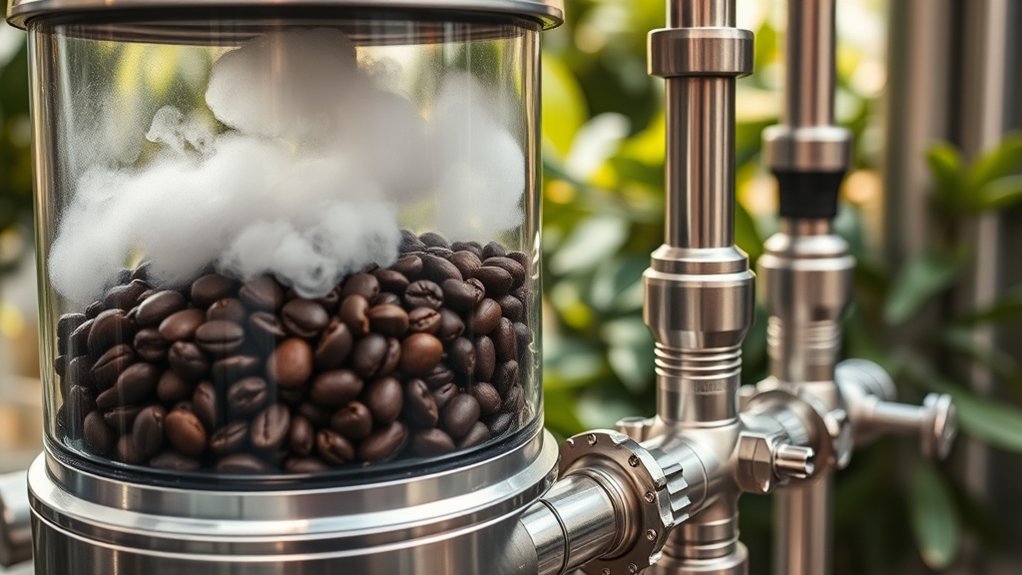
You’ll find that the CO2 decaf process uses supercritical carbon dioxide to selectively extract caffeine. What’s great about this method is that it preserves the coffee’s flavor better than many chemical methods out there.
Not only does this technique keep the bean’s original profile intact, but it also has environmental perks. Since it uses minimal chemicals and the CO2 can be recycled, it’s a greener option overall.
When you understand how this process balances getting caffeine out efficiently while staying sustainable, it’s easy to see why many producers prefer it.
CO2 Extraction Mechanics
How does the CO2 decaffeination process selectively remove caffeine while preserving coffee’s flavor? You use supercritical carbon dioxide, a state where CO2 acts as both a gas and liquid under high pressure and temperature.
First, green beans soak in water to open their pores. Then, pressurized CO2 passes through, binding only to caffeine molecules. The caffeine-rich CO2 moves to a separate chamber, where depressurization releases the caffeine for removal.
The CO2 is then recompressed and recycled, minimizing flavor loss.
| Step | Description |
|---|---|
| Soaking | Beans swell to open pores |
| High-pressure CO2 | Selective caffeine extraction |
| Depressurization | Caffeine released and trapped |
| CO2 Recycling | CO2 recompressed, flavor preserved |
Flavor Preservation Benefits
Why does the CO2 decaffeination process excel at preserving coffee’s flavor? The CO2 method uses supercritical carbon dioxide, which selectively binds to caffeine molecules, removing over 99% of caffeine while sparing delicate flavor compounds.
Its dual gas-liquid nature allows deep penetration of beans, targeting caffeine without extracting significant flavor or aromatic oils.
This precision in the decaffeination process maintains the coffee’s original flavor profile more effectively than the Swiss Water process, which relies on water extraction and can cause slight flavor dilution.
Plus, the CO2 method operates at relatively low temperatures, preserving volatile flavor compounds sensitive to heat.
Environmental Impact Considerations
What sets the CO2 decaffeination process apart environmentally is its use of supercritical carbon dioxide in a closed-loop system. This system recycles the gas to minimize waste, which is pretty smart. It helps reduce the environmental impact by cutting down waste and boosting resource efficiency.
Unlike chemical solvents, CO2 is a natural, recyclable gas that doesn’t leave harmful residues behind. That makes this method way more eco-friendly.
Plus, the CO2 process uses far less water than water-based alternatives like the Swiss Water method. So, it really cuts down on water usage substantially.
By reusing CO2 across multiple decaffeination cycles, it lowers resource consumption even more. If you care about minimizing environmental impact, this process offers a sustainable balance of efficiency and eco-consciousness.
And the best part? It doesn’t compromise on decaffeination quality.
Flavor Comparison: Swiss Water vs CO2 Decaf
When comparing Swiss Water and CO2 decaf methods, you’ll notice distinct differences in flavor preservation. The Swiss Water Process uses a gentle, water-based approach that avoids chemicals, preserving delicate and complex flavor profiles. This results in decaf coffee with a softer, mellower taste that remains true to the original bean, especially in light and medium roasts.
In contrast, the CO2 method selectively extracts caffeine while maintaining volatile aromatic compounds, promoting brighter, more vibrant flavors. This approach enhances aromatic preservation and produces a cup with pronounced clarity and liveliness.
Depending on your preference, the Swiss Water Process offers a natural, nuanced flavor profile, while the CO2 method provides a more vivid and dynamic decaf coffee experience. Both excel in preserving distinct aspects of the coffee’s essence.
Taste and Aroma: Swiss Water vs CO2
Beyond flavor preservation, the way each decaffeination method impacts taste and aroma reveals key distinctions.
With Swiss Water, you’ll notice a cleaner taste profile that preserves delicate, nuanced flavors and a softer, lighter aroma. This results from its chemical-free decaffeination process.
Though, the aroma can be less vibrant than in non-decaf coffee.
In contrast, the CO2 method excels at maintaining the coffee’s original aroma by selectively extracting caffeine while retaining volatile aromatic compounds. This precision leads to a richer, more complex aroma and a full-bodied flavor profile.
Both Swiss Water and CO2 decaffeination aim to preserve flavor and aroma. But if aroma intensity and authenticity matter most to you, the CO2 process typically offers a more robust sensory experience.
Roasting Swiss Water vs CO2 Decaf Beans
Although both Swiss Water and CO2 decaffeination methods affect the bean’s structure, you’ll find that Swiss Water decaf beans generally roast lighter and require shorter times due to their softer composition. The decaffeination process alters the bean structure, influencing heat absorption and development during roasting.
Swiss Water decaf beans demand careful handling to prevent uneven roasting, as their softer texture reacts quickly to heat.
In contrast, CO2 decaf beans tolerate longer, darker roasting, which helps enhance their preserved delicate flavor profile. This roasting flexibility comes from the CO2 method maintaining a firmer bean structure.
Understanding these differences allows you to optimize roasting parameters and ensure each decaf type achieves its best flavor profile.
Both methods yield quality roasts, but their distinct bean structures mean you’ll need to use unique roasting approaches for each. It’s all about knowing how the beans respond to heat so you can bring out the best in every batch.
How to Choose Between Swiss Water and CO2 Decaf
How do you decide between Swiss Water and CO2 decaf methods? Consider your priorities in decaffeination.
Swiss Water relies solely on water and charcoal filters, removing 99.9% of caffeine without chemicals. This makes it ideal if you want a chemical-free, organic option.
It’s gentle and preserves much of the coffee’s original flavor, though it tends to produce lighter roasts.
The CO2 method uses supercritical carbon dioxide under pressure, efficiently extracting caffeine while maintaining delicate flavors. It’s versatile across roast levels but doesn’t carry the same organic certification as Swiss Water.
If you value a fully chemical-free process and organic certification, Swiss Water suits you best. But if you prioritize efficiency and flavor preservation across various roasts, CO2 decaffeination might be a better fit.
Both offer high-quality decaf with distinct advantages.
Buying and Storing Swiss Water and CO2 Decaf
When buying Swiss Water or CO2 decaf coffee, you should look for clear labeling that specifies the decaffeination process to guarantee a chemical-free product. Focus on decaf beans processed via the Swiss Water process or CO2 method to verify quality and purity.
Check the roast date to confirm freshness, as recently roasted beans deliver better flavor.
For storage, keep your decaf beans in an airtight container placed in a cool, dark environment to minimize staling. Avoid areas with strong odors since beans absorb external smells that can compromise taste.
Grind the beans just before brewing to preserve aroma and flavor integrity.
Following these steps will help you maintain the best freshness and quality of Swiss Water and CO2 decaf coffee over time. It’s really worth the effort to enjoy a great cup every time.
Frequently Asked Questions
Are There Any Health Benefits Unique to Swiss Water or CO2 Decaf?
You’ll find unique health benefits in both methods. Swiss Water preserves more antioxidants due to its gentle, water-based process, enhancing your intake of beneficial compounds.
Meanwhile, CO2 decaf retains higher levels of polyphenols and volatile flavors, which support anti-inflammatory effects. Choosing between them depends on whether you prioritize antioxidant preservation or specific polyphenol content.
But both offer cleaner decaf options free from chemical residues, which is great for those sensitive to solvents.
How Do Swiss Water and CO2 Decaf Coffees Differ in Price?
In the age of musketeers, you’d notice Swiss Water decaf costs more than CO2 decaf. That’s because Swiss Water uses a longer, labor-intensive, chemical-free process, making it pricier.
You’ll pay a premium for its environmental benefits and organic options.
CO2 decaf, by contrast, is less expensive due to efficient scaling and fewer steps. So, if budget matters, CO2 decaf suits you better, while Swiss Water commands a higher price.
Can Swiss Water or CO2 Decaf Methods Be Used on All Coffee Varieties?
You can use the Swiss Water process on all coffee varieties since it relies purely on water and filtration, making it universally applicable.
The CO2 method is adaptable to most beans but might need adjustments for robusta or beans with varying sizes and densities.
While both methods suit many Arabica beans, especially specialty and organic types, Swiss Water offers a gentler, chemical-free approach that better preserves delicate coffee characteristics across varieties.
What Certifications Ensure Swiss Water and CO2 Decaf Quality Standards?
If you think “Swiss Water” sounds like a spa treatment, you’re halfway there. To be sure your decaf’s clean and legit, look for certifications like the Swiss Water Quality Guarantee and USDA Organic seal.
These badges prove they’ve passed rigorous third-party audits, ensuring chemical-free, sustainable processing.
How Long Does Decaf Coffee Last Compared to Regular Coffee?
Decaf coffee lasts about the same as regular coffee when stored properly. You’ll find whole beans stay fresh for 1 to 3 months in a cool, airtight container, while ground coffee lasts 1 to 2 weeks because of air exposure.
Both decaf and regular coffee should be consumed within 2 to 4 weeks for the best flavor. So, you don’t really need to worry about decaf having a shorter shelf life.
Just keep it stored right, and you’re good to go!
Conclusion
When choosing between Swiss Water and CO2 decaf, you’re really weighing flavor preservation against extraction precision. Both methods are eco-friendly and effective. But Swiss Water stands out for maintaining more of the coffee’s original taste, while CO2 offers a targeted, chemical-free removal of caffeine.
Ultimately, it’s not a one-size-fits-all situation. You’ll want to pick the method that best suits your palate and brewing style. After all, you don’t want to throw the baby out with the bathwater.