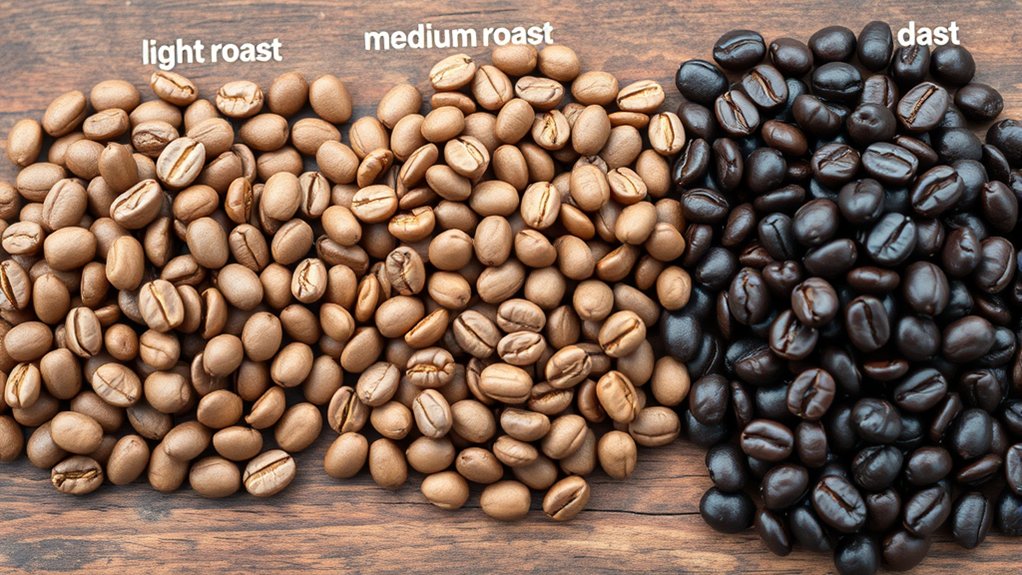
Coffee roast levels shape your brew’s flavor, aroma, and body. Light roasts keep bright acidity and fruity, floral notes with a dry, matte bean surface.
Medium roasts balance sweetness and acidity, showing richer brown beans with slight oiliness. Dark roasts deliver bold, smoky flavors and shiny, oily beans from extended roasting.
Each roast type suits different brewing methods and tastes. Explore how roast temperature, visual cues, and brewing impact your perfect cup.
Why Coffee Roast Levels Matter for Your Brew
Although it might seem like a simple step, choosing the right coffee roast level shapes your entire brew experience. Roast levels play a vital role in defining the flavor profile of your coffee. During the roasting process, chemical changes transform the beans, influencing acidity, body, and aroma.
Lighter roasts tend to preserve origin characteristics, offering bright acidity and vibrant, nuanced flavors. In contrast, darker roasts bring out deeper, roasted, smoky notes, often softening acidity but intensifying bold aromas.
Understanding these differences helps you select a roast that matches your taste preferences, whether you crave a lively, fruity cup or a rich, robust brew. Additionally, factors such as grind size and machine temperature stability can significantly impact how roast levels express their flavors during brewing.
How Roast Temperature Changes Your Coffee’s Taste
When you adjust the roast temperature, you directly influence the chemical reactions inside the coffee bean that shape its flavor.
At lower roasting temperatures, the Maillard reactions progress slowly, preserving the bean’s natural acidity and fruity flavor profiles.
As you increase the temperature past 410°F, you’ll hear the first crack, a key milestone signaling deeper development.
Higher roasting temperatures encourage caramelization and the formation of oils on the bean’s surface.
This leads to richer aromas and darker colors characteristic of a dark roast.
But be careful. Pushing temperatures too high or roasting too long can burn the beans, creating bitter, charred notes that overshadow the coffee’s original character.
Understanding these temperature effects lets you tailor your roast to achieve the exact flavor profile you want.
Adjusting brew water temperature according to roast level is crucial to balance extraction and enhance flavor, as lighter roasts benefit from hotter water while darker roasts require lower temperatures to avoid bitterness and burnt notes in the cup, highlighting the importance of roast-specific temperature control.
Understanding Light Roast Coffee
When you brew light roast coffee, you’ll really notice its bright acidity along with delicate floral, fruity, and citrus notes that come through beautifully.
It’s roasted between 385°F and 410°F, just stopping right after the first crack. This way, it preserves the unique characteristics of the bean’s origin.
Because of this careful roasting, you get to truly taste the coffee’s terroir in every cup.
Maintaining consistent extraction pressure during brewing helps to highlight these subtle flavors without introducing bitterness.
Flavor Profile Highlights
Because light roast coffee preserves the bean’s original characteristics, you’ll notice a bright acidity paired with vibrant fruity, floral, or citrus notes. This distinct flavor profile sets light roasts apart, highlighting the unique regional flavors that come from the coffee’s terroir.
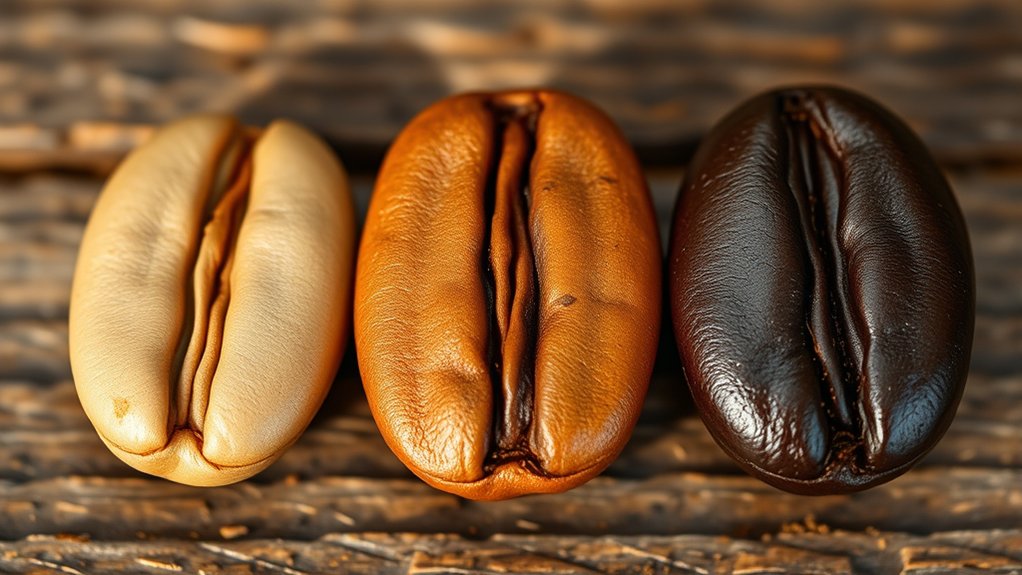
With a light brown color and no oily surface, light roast coffee ends its roast profile shortly after the first crack, keeping those delicate, nuanced tastes intact.
You’ll find the body to be lighter, often with a crisp, tea-like texture that lets the coffee’s natural brightness shine.
When you sip light roast coffee, you experience the essence of the bean’s origin, making each cup a flavorful journey through its specific growing region. It’s like tasting the story behind every bean.
To bring out these bright and complex notes fully, brewing light roast coffee at a slightly higher temperature range around 200–205°F (93–96°C) is recommended.
Roast Temperature Range
Although light roast coffee undergoes a carefully controlled roasting process, it never surpasses an internal temperature of 401°F (205°C). This ensures the beans retain their bright acidity and complex flavors.
The roast temperature typically ranges from 356°F to 401°F (180°C to 205°C), carefully monitored to stop just after the first crack.
At this stage, the beans are light brown, dry, and free of surface oil. This precise internal temperature control is key to flavor preservation, highlighting floral and fruity notes.
When you explore light roasts, keep these points in mind:
- Roast temperature stops shortly after first crack (around 385°F to 410°F)
- Beans remain light brown with no oily surface
- Roasting process emphasizes flavor preservation
- Internal temperature balance retains brightness and acidity
Additionally, pairing light roasts with a higher coffee-to-water ratio can enhance their bright and complex flavor profiles.
Origin Character Preservation
Since light roast coffee undergoes minimal roasting time and temperature, it preserves much of the original flavor profile and unique characteristics of its origin. When you brew a light roast, you’re tasting the true character of the bean, with bright acidity and vibrant, fruity notes shining through.
Roasted just before or at the end of the first crack, light roast beans retain a dry surface and show little to no oil, emphasizing their delicate flavors. This careful preservation lets you explore the terroir, the subtle differences that come from soil, climate, and altitude.
It makes light roast ideal for appreciating the bean’s story.
Plus, because the roasting is gentle, it maintains higher antioxidant levels, adding both flavor complexity and health benefits to your cup. It’s a great way to enjoy coffee that’s not just tasty but also good for you.
The delicate flavors of light roasts are especially highlighted when using brewing methods like siphon coffee, which emphasize clarity and nuanced notes.
Exploring Medium Roast Coffee
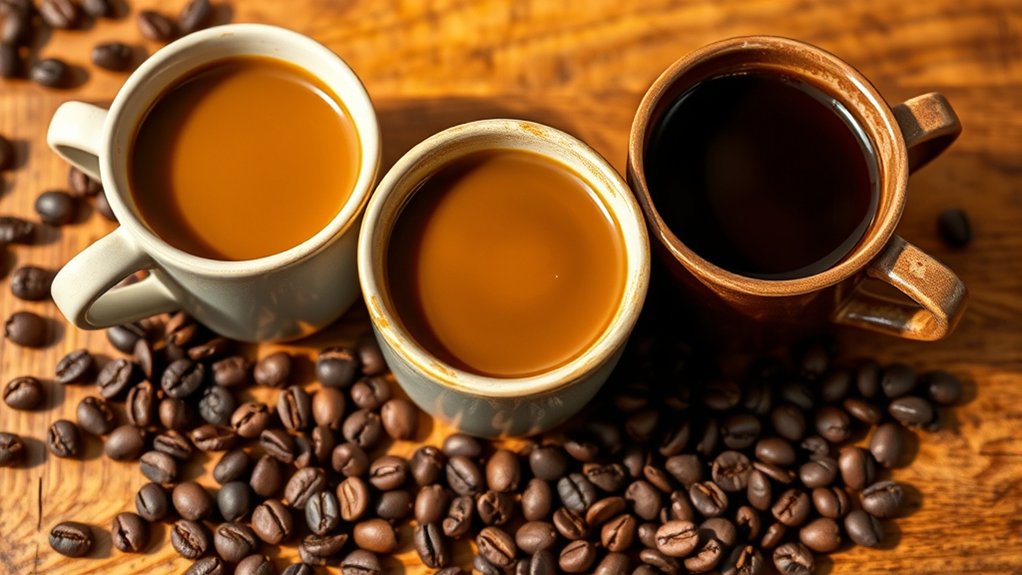
When you savor a medium roast coffee, you’re experiencing a careful balance achieved by roasting beans to an internal temperature between 410 and 430°F, just before the second crack begins. This roasting level releases a flavor profile that’s both rich and approachable, with moderate acidity and a medium body.
You’ll notice a caramel or toasty sweetness that enhances the coffee’s complexity without overpowering its original character. It’s like the beans are showing off their best traits while keeping things smooth and enjoyable.
Here’s what makes medium roast coffee stand out:
- Medium-brown beans with a slight oily sheen, often called “City” or “Breakfast” roast
- Balanced flavor profile that preserves origin traits while adding richness
- Perfect for a wide range of brewing methods, from drip to espresso
- Popular choice in the U.S. for its versatility and smooth taste
Medium roast is kind of the sweet spot for many coffee drinkers. It’s not too light, not too dark—just the right amount of flavor and body to suit almost any preference. For making coffee at home, medium roast beans work exceptionally well with medium-fine ground coffee in a moka pot to achieve a rich, espresso-like brew.
Recognizing Dark Roast Coffee
As you immerse yourself in the world of dark roast coffee, you’ll immediately notice the beans’ deep brown to nearly black color and their shiny, oily surface. This shine is a sign they’ve been roasted to the second crack at temperatures between 435 and 450°F. These roasted beans emit a distinctive smoky aroma, hinting at the bold flavor inside.
Dark roast coffee presents a robust profile, featuring prominent roasted, bitter, and chocolate notes. The original origin flavors take a backseat here.
The shiny oily surface happens because oils migrate during the extended roasting process, giving the beans a slightly oily texture when brewed.
Compared to lighter roasts, dark roast offers a thinner body and lower acidity. This makes it a favorite for those who crave intensity and depth in every cup.
If you like your coffee bold and full of character, dark roast is definitely worth exploring.
Visual and Aromatic Signs to Recognize Roast Levels
Understanding the visual and aromatic cues can greatly enhance your ability to identify different roast levels. By paying attention to the coffee bean’s appearance and aroma, you’ll quickly distinguish between light, medium, and dark roasts.
Here’s what to look for:
Light roasts have a light brown color with a matte, dry surface and a floral or fruity aroma.
Medium roasts show a richer brown appearance, a slight oily sheen, and a stronger, more pronounced aroma.
Dark roasts feature a glossy, oily surface and deep, dark brown to almost black color with smoky or burnt scents.
Listening for the “crack” sounds during roasting, like the first and second crack, helps pinpoint the roast stage precisely. These signs will sharpen your coffee discernment skills instantly.
How Roast Levels Affect Brewing and Flavor
Because roast levels shape both flavor and brewing dynamics, knowing their effects can really change how you prepare your coffee. Light roasts have higher acidity and a bright flavor profile that shines with pour-over methods. These methods highlight the delicate notes you want to taste.
They also need longer extraction times to bring out all those nuanced flavors.
Medium roasts offer a balanced flavor and moderate acidity, which makes them great for drip coffee and AeroPress brewing.
Dark roasts bring bold, smoky flavors with less acidity. They’re perfect for espresso or French press.
Their oily beans extract quickly but can sometimes clog filters, which affects brewing.
Understanding how roast level influences extraction and acidity helps you pick the best brewing method. That way, you can bring out your coffee’s best flavor and make each cup just right for your taste and technique.
Tips for Choosing the Right Coffee Roast
When you choose the right coffee roast, you reveal the full potential of your brew’s flavor and aroma. Your ideal roast level depends on the flavor profile you enjoy and the brewing method you use.
Pick a light roast to savor bright acidity and subtle origin notes. It’s perfect for pour-over or drip methods.
Choose a light roast for bright acidity and delicate flavors, ideal for pour-over or drip coffee.
Medium roast offers a balanced flavor profile with moderate acidity and body. It works great for most brewing styles.
Go for a dark roast if you prefer bold, smoky flavors and a fuller body. This is especially true with espresso or French press.
Feel free to experiment with different roast levels to discover which suits your taste and complements your brewing routine best. You might find a new favorite along the way!
Frequently Asked Questions
How Does Roast Level Impact Coffee Caffeine Content?
Roast level impacts caffeine content only slightly. You’ll find light roasts retain a bit more caffeine than dark roasts, but the difference is minimal, only about 5-10%. If you measure by weight, caffeine stays pretty consistent across roasts.
However, if you measure by volume, dark roasts might seem less caffeinated because they’re less dense.
Ultimately, how you brew your coffee affects caffeine more than roast level does. So, don’t stress too much about the roast when it comes to caffeine. Focus more on your brewing method instead.
Can Roast Levels Affect Coffee’s Shelf Life?
Imagine opening a bag of freshly roasted coffee. The aroma bursts, bright and lively.
Yes, roast levels do affect shelf life.
Light roasts are rich with delicate acids that fade faster. They lose their vibrant notes sooner.
Dark roasts are deeper and more robust. They hold their flavor a bit longer because they contain fewer fragile compounds.
To keep your coffee tasting fresh, store it in airtight, dark containers away from heat and light.
Do Roast Levels Influence the Best Grind Size?
Yes, roast levels do influence the best grind size. When you’re working with lighter roasts, you’ll want a finer grind since the beans are denser and less oily. This helps extract more flavor.
Darker roasts are more brittle and oily, so they need a coarser grind to avoid over-extraction and clogged filters.
Medium roasts fall in between, matching well with a medium grind for balanced flavor and extraction.
Adjusting grind size this way really sharpens your brew. It’s all about finding the right balance for the roast you’re using.
What Equipment Is Ideal for Roasting Coffee at Home?
Imagine the warm aroma of fresh beans filling your kitchen as you roast. For home roasting, you’ll want a dedicated coffee roaster or a stovetop popcorn popper with a stirring mechanism for small batches.
Specialty roasters with temperature controls give you precise results, while a thermometer helps prevent over-roasting.
Don’t forget proper ventilation to clear smoky fumes. This gear lets you craft your perfect roast right at home.
It’s pretty satisfying to go from green beans to a fresh cup in your own kitchen. Plus, you get to experiment and find exactly the flavor you like best.
Are Certain Roast Levels Better for Espresso Versus Drip Coffee?
Yes, you’ll find darker roasts work best for espresso because their bold, smoky flavors stand up to the high pressure and intense extraction. They offer a rich, concentrated taste with lower acidity, perfect for balancing milk or cream.
For drip coffee, lighter or medium roasts shine, highlighting complex aromas and brighter acidity. You can experiment with medium roasts for both, giving you a nice balance if you want versatility.
Conclusion
Now that you know how roast levels shape your coffee’s flavor, from the bright, fruity notes of a light roast to the rich, smoky depth of a dark one, you can savor every sip with intention.
Imagine the warm aroma filling your kitchen. The smooth taste dancing on your tongue. Choosing the right roast transforms your brew into a personal ritual.
It makes each cup a delightful experience tailored just for you. Enjoy your perfect pour!