You can tell if coffee beans are fresh by checking their aroma, appearance, and roast date. Fresh beans have a vibrant, complex smell, a slight oil sheen, and a uniform color. Stale ones, on the other hand, look dull, cracked, and smell musty.
Store beans in airtight, light-proof containers away from heat and moisture. Ideally, use them within 2-4 weeks of roasting to enjoy the best flavor. Freezing sealed portions can help extend their freshness.
Keep your beans properly handled to preserve flavor and longevity. There are plenty of key storage and usage tips that can help you get the most out of your coffee’s quality.
How Can You Tell If Coffee Beans Are Fresh?
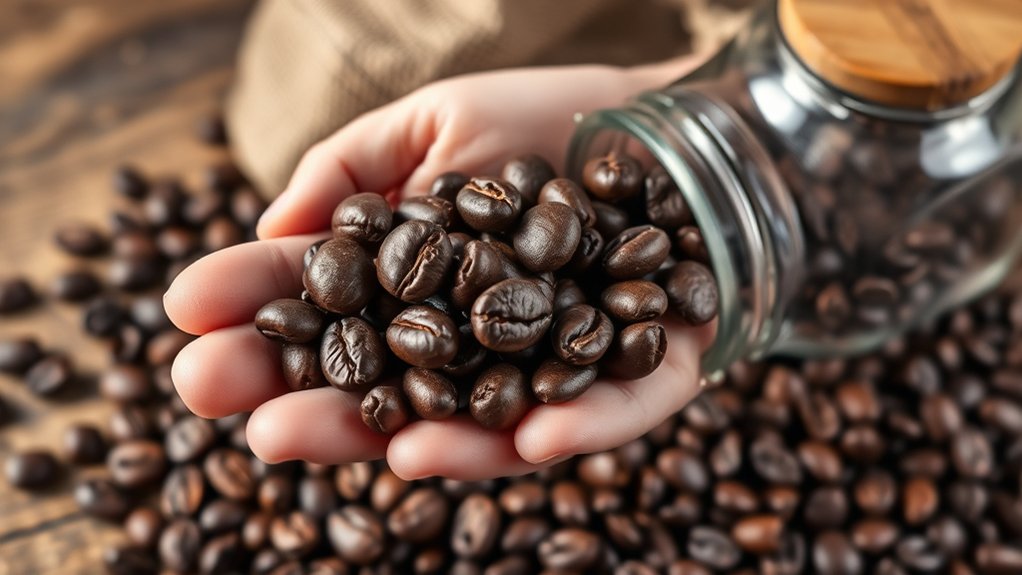
How can you tell if coffee beans are fresh? First, evaluate their aroma and smell. Fresh beans emit a vibrant, complex scent, while stale beans smell flat or dusty.
Next, check the appearance. Fresh beans look healthy, uniform, and free from mold or discoloration. When you touch them, fresh beans have a slight oiliness. This contrasts with the dull, dry texture of stale ones.
After grinding, fresh beans produce a lively bloom with bubbles, which indicates good quality.
Finally, consider the flavor after you brew. Coffee made from fresh beans offers a bright, flavorful profile, but stale beans yield a flat, muted taste.
The grind size and consistency of freshly ground beans also play a crucial role in preserving the flavor clarity and overall quality of your coffee.
Why Does Roast Date Matter for Coffee Freshness?
You should check the roast date because it tells you exactly when the coffee was roasted. This matters a lot since it directly affects the flavor quality.
Coffee tastes best within about 1 to 4 weeks after roasting, depending on how dark or light the roast is. So, knowing the roast date helps you pick beans that are at their freshest.
When you choose beans with a recent roast date, you’re more likely to enjoy the fullest aroma and richest taste. It’s a simple way to make sure your coffee experience is top-notch.
Additionally, using freshly roasted beans and adjusting grind size and extraction time for your espresso machine can optimize flavor extraction.
Impact On Flavor
Because the roast date marks when coffee beans reach peak freshness, it directly influences the flavor profile you experience. The closer you use beans to their roast date, the more vibrant their flavor and aroma remain.
As beans age, oxidative processes degrade essential oils, causing a flat, dull taste. Proper storage slows aging but can’t stop loss of freshness over time. Additionally, using freshly ground beans with the correct grind size can help preserve the desired flavor during brewing.
| Roast Date Proximity | Flavor Profile |
|---|---|
| 0-1 week | Bright, complex |
| 1-4 weeks | Ideal, balanced |
| 4+ weeks | Fading, flat |
| 8+ weeks | Stale, dull |
Tracking the roast date helps you maximize taste by selecting beans at peak freshness. It also lets you adjust storage to preserve flavor longer.
Peak Freshness Window
Although many factors influence coffee quality, the roast date stands out as a key indicator of its peak freshness window. This date marks when beans were freshly roasted and directly correlates to ideal flavor and aroma.
You’ll find light roasts hit their peak freshness sooner, typically within 4 to 10 days.
Dark roasts usually maintain their peak up to about two weeks. Beyond this freshness window, flavor degradation speeds up, which diminishes the coffee’s complexity and aroma.
Storage conditions also play a role, but the roast date remains the most reliable way to assess freshness. Managing brew temperature within the ideal range further preserves these peak flavors during extraction.
Buying Fresh Beans
When selecting coffee beans, paying close attention to the roast date guarantees you’re buying them at their freshest and most flavorful stage. The roast date reveals exactly when the coffee was roasted, allowing you to buy fresh beans and enjoy peak freshness.
Here’s why it matters:
- Best flavor window: Coffee reaches its peak flavor within 1-4 weeks post-roast, varying by roast level.
- Aromatic compounds: These volatile compounds degrade over time, reducing aroma and taste beyond 4-6 weeks.
- Proper storage: Even if you store coffee well, freshness diminishes significantly after several weeks from the roast date.
Choosing beans close to their roast date ensures you extract maximum complexity and balance. Always prefer roasters who print roast dates rather than vague “best by” labels to optimize your brewing experience. For the best taste, consider water quality during brewing, as it significantly affects flavor extraction and overall coffee quality.
What Are Signs Coffee Beans Have Lost Freshness or Gone Stale?
You can tell coffee beans have gone stale when they look dull and dry, missing that shiny, oily surface they usually have. They also tend to lose their strong, pleasant aroma and might start to smell weak or even a bit musty.
When you brew with these beans, the coffee often tastes flat, sour, or bitter instead of rich and flavorful.
Plus, you might notice there’s little bubbling or blooming during extraction, which is a sign the beans aren’t fresh anymore.
Proper storage and timely consumption are crucial since flavor begins to dull after about an hour due to oxidation effects.
Visual And Aroma Changes
Since coffee beans lose their freshness mainly through oxidation, you can tell they’re stale by looking at their visual and aroma changes. Fresh beans usually have a natural oil sheen and vibrant color that really stands out.
As oxidation moves along, you’ll start to notice some visual signs that the beans aren’t fresh anymore. For example, the glossy surface turns dull, and the beans might look dry or even brittle.
You might also see cracks or broken beans, which happen because the structure breaks down when they’re exposed to air for too long.
The smell changes too. Instead of those complex, fruity, or floral notes you love, it shifts to flat, musty, or cardboard-like scents. That means the volatile aromatic compounds have faded away.
Additionally, humidity can cause beans to absorb moisture, leading to uneven grind and flavor degradation over time.
Taste And Brewing Indicators
Although visual and aroma cues provide initial clues, the true test of coffee bean freshness lies in taste and brewing performance. Freshness indicators include a vigorous bloom when hot water hits the grounds, signaling active gas release. Stale beans show minimal or no bloom, reflecting diminished freshness.
When brewed, fresh coffee delivers a complex flavor profile with vibrant aroma and a smooth mouthfeel. In contrast, stale beans produce a flat, sour, or bitter taste, lacking brightness and nuance. The aroma tends to be dull and dusty, while the flavor becomes one-dimensional and flat.
You’ll notice stale coffee leaves a dry, lifeless sensation on your palate, revealing its loss of freshness. Monitoring these taste and brewing indicators guarantees you enjoy coffee at its peak quality. It’s really the best way to know you’re getting the freshest cup every time.
What Are the Best Containers for Keeping Coffee Beans Fresh?
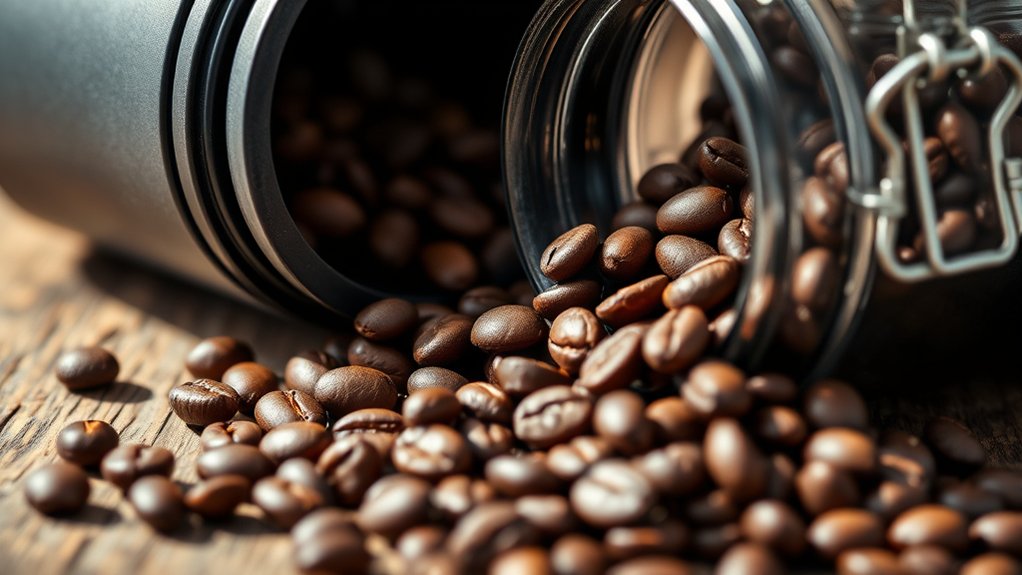
When selecting containers for storing coffee beans, prioritize airtight, light-proof options made from materials like stainless steel, ceramic, or opaque plastic. These help minimize exposure to oxygen and light.
An airtight container with silicone seals or rubber gaskets prevents oxygen and moisture from degrading your beans.
Airtight containers with silicone seals or rubber gaskets protect beans from oxygen and moisture damage.
Consider these key features:
- Vacuum-seal or built-in valve technology actively removes residual oxygen. This greatly extends freshness by slowing oxidation.
- Opaque containers, such as ceramic or stainless steel canisters, block damaging light better than clear glass jars.
- Materials like stainless steel and ceramic provide durable, light-proof storage that maintains consistent internal conditions.
Using containers with these properties ensures ideal storage. This way, your coffee beans’ flavor and aroma last longer by minimizing oxygen and light exposure.
How Long Can You Store Coffee Beans at Room Temperature?
Choosing the right container helps preserve your coffee beans, but understanding how long you can store them at room temperature is just as important.
For maximum freshness, use whole beans within 2 to 4 weeks after the roast date. Unopened bags with one-way valves maintain quality for 4 to 6 weeks, but once opened, the shelf life shortens considerably.
Storing beans in airtight containers at room temperature slows degradation and preserves flavor for about 2 to 3 weeks.
Ground coffee loses freshness faster, lasting only 1 to 2 weeks under similar conditions. Proper storage in cool, dark, airtight containers can extend freshness by a few days, but room temperature storage will inevitably lead to flavor loss over time.
Should You Freeze Coffee Beans?
Freezing coffee beans can extend their freshness for several months if you vacuum-seal them in small portions to prevent moisture and odor absorption. When considering freezing, keep in mind:
- Only freeze beans you won’t use within weeks to maximize flavor preservation during long-term storage.
- Always let frozen beans reach room temperature before opening to avoid condensation and moisture exposure.
- Avoid repeatedly opening and resealing bags, as temperature fluctuations and humidity degrade freshness.
Coffee’s hygroscopic nature means improper freezing without vacuum-sealing can cause staling through moisture absorption.
For daily use, storing beans at room temperature with proper storage conditions better maintains freshness.
Freezing offers a strategic method for preserving flavor over extended periods, but it requires precise handling to prevent moisture-related spoilage and guarantee optimal taste.
How Does Proper Storage Keep Your Coffee Fresh?
Although coffee beans naturally degrade over time, you can greatly slow this process by storing them properly in airtight, light-proof containers. These storage containers limit oxygen exposure, which effectively reduces oxidation, the primary cause of flavor loss.
Keeping your beans in a cool environment, such as a pantry, further minimizes temperature fluctuations that encourage moisture buildup and staling.
Using airtight containers with built-in valves or vacuum-sealing tools helps remove residual oxygen, which enhances flavor preservation.
Furthermore, preventing exposure to direct light and moisture inhibits mold growth and aromatic compound deterioration.
To maintain peak freshness, regularly clean your storage containers to avoid oil buildup and contaminant transfer.
What Are Essential Tips for Using and Storing Opened Coffee Beans?
After securing your coffee beans in an airtight, light-proof container, the way you handle them once opened plays a big role in keeping them fresh. To make sure you preserve their flavor and freshness, here are some essential storage tips to follow.
First, always reseal the original bag tightly by squeezing out the extra air. Or, you can transfer the opened coffee beans into an airtight container. This helps slow down oxidation and keeps your beans tasting great.
Next, store the container in a cool, dark spot. Keep it away from heat sources and avoid places with temperature changes. This will help prevent the flavor from breaking down.
Finally, try to use the beans within 3 to 4 weeks of opening. That way, you get to enjoy their peak flavor. Avoid refrigerating or freezing them unless they’re vacuum-sealed in small portions.
Frequently Asked Questions
Can Different Coffee Bean Varieties Affect Freshness Duration?
Yes, different coffee bean varieties do affect freshness duration. You’ll find Arabica beans generally last longer than Robusta because they’ve lower oil content and density.
Light roasts tend to keep their flavor longer than dark roasts, which degas and stale faster.
Beans like Ethiopian Yirgacheffe, with higher oils, can go rancid quickly if mishandled.
Does Grind Size Impact the Shelf Life of Coffee Beans?
Think of grind size like a clock speeding up time. Grind size doesn’t change your coffee beans’ shelf life directly, but it does affect how fast your coffee stales after grinding.
Finer grounds, with more surface area, oxidize quickly and lose flavor faster.
Coarser grounds resist staling a bit longer.
To keep your coffee freshest, grind just before brewing. This cuts oxygen exposure and preserves flavor, no matter the grind size.
How Does Humidity Affect Coffee Bean Freshness?
Humidity negatively affects coffee bean freshness by speeding up moisture absorption. This promotes mold growth and spoilage. You’ll notice the beans become dull, clumpy, and lose their aroma when humidity is high.
Plus, beans tend to soak up ambient odors, which changes their flavor profiles. To keep your beans fresh, store them in airtight, moisture-proof containers.
It’s best to keep them in a low-humidity environment. Doing this helps prevent deterioration and preserves the beans’ ideal flavor and aroma.
Is It Better to Buy Coffee Beans Whole or Pre-Ground for Freshness?
Choosing whole coffee beans over pre-ground is like locking freshness in a vault. You’ll get a longer shelf life. Whole beans stay fresh for 3-4 weeks when stored properly, while pre-ground coffee loses peak freshness in just 1-2 weeks.
Grinding right before brewing preserves those volatile aromas and flavors. It also gives you better control and a richer taste.
Can Light Exposure After Opening Really Ruin Coffee Beans Quickly?
Yes, light exposure after opening can quickly ruin your coffee beans. UV light breaks down aromatic compounds and oxidizes oils, causing stale or rancid flavors. Even brief light contact starts diminishing freshness and aroma.
To protect your beans, you should store them in a dark, airtight container immediately after opening. This prevents flavor degradation and preserves the complex taste profile you want from fresh coffee beans. It’s a simple step but makes a big difference in keeping your coffee tasting great.
Conclusion
Think of fresh coffee beans like a fine wine. Both peak at just the right moment. Studies show coffee’s flavor starts fading within two weeks after roasting, so checking the roast date is essential.
Proper storage in airtight containers away from heat and light acts like a vault. It helps preserve those nuanced flavors. By treating your beans with care, you guarantee every cup bursts with freshness.
This way, your daily brew turns into a consistently enjoyable ritual.