Direct trade coffee connects you directly with farmers, cutting out middlemen to guarantee fairer prices and higher-quality beans. This approach builds trust through transparent relationships, allowing farmers to invest in sustainable practices and improve their livelihoods.
You get richer flavors thanks to direct collaboration and quality control, while supporting ethical farming and community growth. Understanding these benefits reveals why direct trade matters so much for both your cup and the people behind it.
What Is Direct Trade Coffee and How Does It Work?
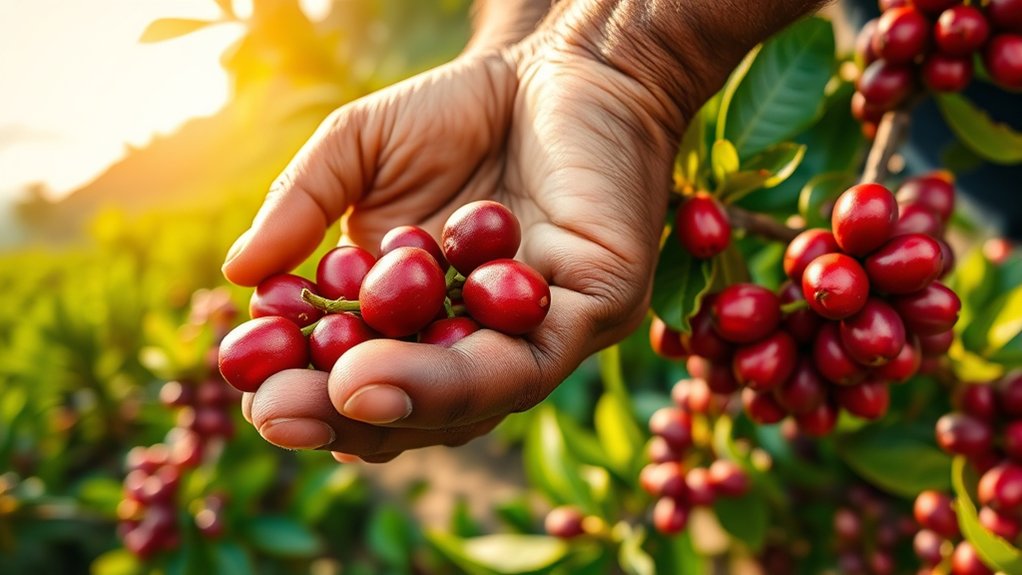
Although many coffee buyers rely on intermediaries, direct trade coffee lets roasters purchase beans straight from farmers, cutting out exporters and brokers. This approach streamlines the coffee supply chain, enabling greater transparency in pricing and ensuring farmers receive fairer payments.
When you engage in direct trade, you build long-term relationships with specific farms or cooperatives. This fosters collaboration on quality improvements and sustainable practices. These partnerships give you detailed insights into farming methods and payment structures, which commodity markets often hide. Additionally, understanding factors like water setup and maintenance in coffee production equipment can further enhance quality and consistency throughout the supply chain.
How Direct Trade Coffee Differs From Fairtrade and Other Certifications?
When you choose direct trade coffee, you engage in a purchasing process that skips third-party certifications and intermediaries, unlike Fairtrade and other certification systems. Direct trade emphasizes direct communication and transparent negotiations between roasters and farmers, offering detailed insights into farm practices and pricing.
While Fairtrade sets standardized minimum prices and social standards verified by third parties, direct trade allows flexible premiums based on quality and individual relationships. These premiums often exceed Fairtrade minimums.
Certifications like Fairtrade provide baseline guarantees through formal seals, but direct trade builds accountability through traceability and mutual trust without relying on certification labels. This focus on transparency and quality fosters long-term partnerships.
That’s what really distinguishes direct trade coffee as a more personalized and flexible approach compared to conventional certification models.
Understanding factors like espresso pressure during extraction can also help roasters tailor their processes to highlight the unique qualities of direct trade coffee.
Economic and Social Benefits of Direct Trade Coffee for Farmers
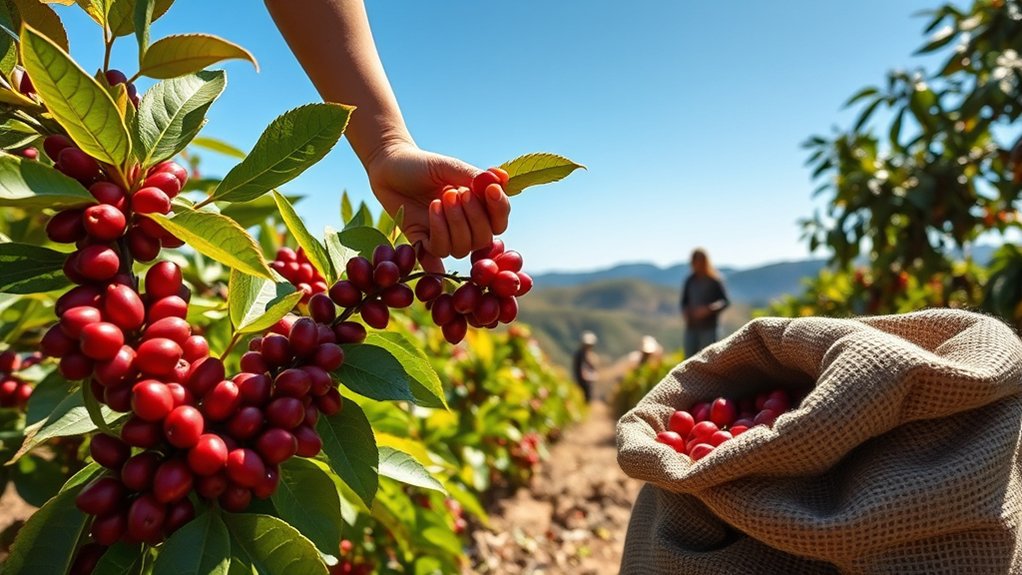
You’ll notice that direct trade coffee really helps farmers earn more by cutting out the middlemen and giving premiums based on quality. It’s a win-win because farmers get paid better, and roasters get top-notch beans.
Plus, it builds stronger, long-term relationships with roasters, which means farmers can count on more financial stability and have clear reasons to keep improving their crops.
But it’s not just about the money. These partnerships also back sustainable community growth. That means better working conditions for everyone involved and support for local social projects that make a real difference in people’s lives.
Ensuring quality standards through proper coffee processing and brewing techniques helps maintain the value of direct trade coffee from farm to cup.
Higher Farmer Earnings
How exactly does direct trade coffee boost farmers’ earnings? By cutting out intermediaries, roasters pay premiums directly to farmers, resulting in higher prices for their beans. These direct trade relationships ensure transparent, upfront payments that accurately reflect the quality and rarity of the coffee.
Because farmers receive premiums that often exceed industry minimums, their earnings increase substantially, providing them with greater income stability. This financial boost allows you to reinvest in your farm and community.
Plus, emphasizing quality coffee means you get rewarded for producing superior beans that command higher market values. Overall, direct trade empowers you to negotiate better prices and benefit from a more equitable, sustainable coffee economy that directly enhances your livelihood.
Maintaining optimal water temperature during brewing highlights the quality of your coffee, ensuring that the superior beans you produce are fully appreciated by consumers.
Strengthened Farmer Relationships
Beyond boosting your earnings, direct trade coffee builds stronger relationships between you and roasters. These strengthened farmer relationships create a foundation for mutual trust and long-term partnerships that benefit both parties.
Here’s how direct trade impacts you:
- You gain predictable income and stability through long-term partnerships.
- Transparency in pricing empowers you with clear knowledge of your earnings.
- Direct communication allows you to improve coffee quality tailored to buyer preferences.
- Strengthened relationships encourage investments in sustainable farming and community development.
This model fosters a collaborative environment where you’re not just a supplier but a valued partner. These benefits enhance your ability to adopt sustainable farming practices and contribute meaningfully to community development.
In the end, this means your livelihood grows alongside your coffee’s quality and market demand. It’s a win-win for everyone involved. Additionally, understanding different brewing methods can help you align your coffee production with market preferences, further strengthening your partnerships.
Sustainable Community Development
Why does sustainable community development matter in direct trade coffee? It matters because it ensures economic and social benefits flow directly to farmers, fostering long-term growth. When you engage in direct trade, premium payments provide farmers with income security, enabling them to plan ahead confidently.
These payments, coupled with strengthened farmer relationships, grant access to resources that promote sustainable development through improved environmental practices. You’ll see farmers adopting eco-friendly methods, reducing their environmental footprint while enhancing crop quality.
Furthermore, direct trade often supports community projects like clean water, education, and healthcare that uplift the entire coffee-growing region. This holistic approach not only sustains farmers’ livelihoods but also builds resilient communities. Maintaining precise measurement consistency in coffee production further empowers farmers to deliver high-quality beans that meet market demands.
Why Transparency in Pricing and Practices Matters in Direct Trade Coffee
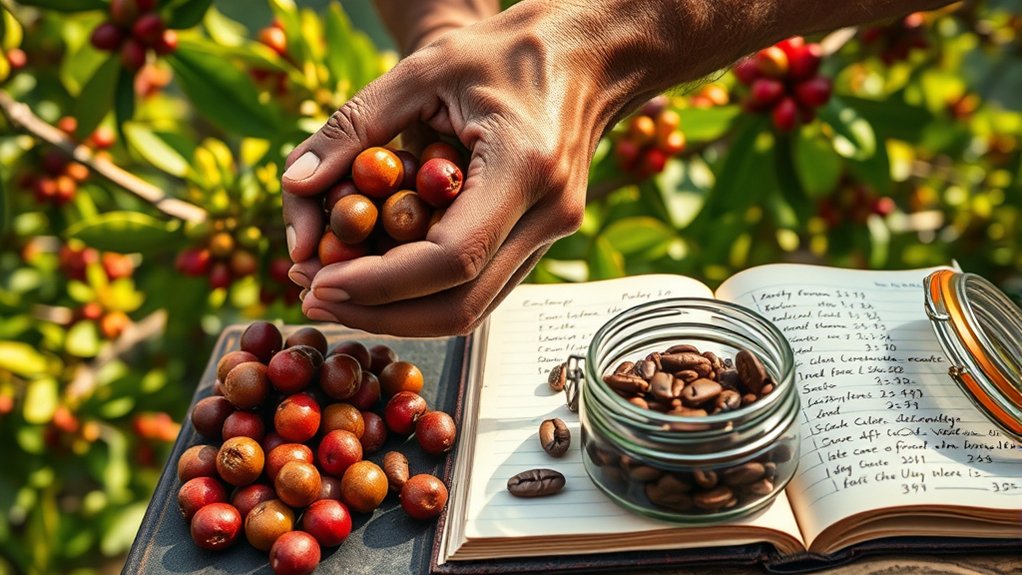
What impact does transparency in pricing and practices have on direct trade coffee? It builds trust and accountability by showing exactly how much farmers earn, guaranteeing ethical sourcing and fair compensation. When pricing is clear, premiums go directly to farmers, supporting sustainable livelihoods and stronger farmer relationships.
Transparency also discourages exploitation by revealing true costs and negotiations behind the scenes. For you as a consumer, understanding these details lets you make ethical, informed choices aligned with your values.
- Transparency reveals farmer earnings, fostering trust.
- Clear pricing ensures premiums reach farmers directly.
- Open practices prevent exploitative pricing tactics.
- Transparent relationships encourage investment in community development.
This clarity strengthens the entire supply chain, benefiting both producers and buyers. Moreover, just as manual brewing allows for precise control and optimization in coffee preparation, transparency in direct trade empowers all parties to achieve better outcomes through informed decisions.
How Direct Trade Boosts Coffee Quality and Flavor
Transparency in pricing and practices not only fosters trust but also directly influences the quality of the coffee you enjoy. Through direct trade, roasters work closely with farmers to select specific coffee lots, making sure the coffee quality matches your flavor preferences.
This relationship-building allows for ongoing feedback, so adjustments can be made to refine flavor profiles consistently. Since direct trade often pays farmers above market rates, they can invest in better farming practices like improved processing and harvesting techniques that boost bean quality.
Plus, this transparent and consistent sourcing from top farms leads to more uniform and exceptional flavor characteristics. By focusing on sustainable farming and maintaining strong partnerships, direct trade encourages farmers to prioritize quality.
This means you get a richer, more nuanced coffee experience with every cup.
How Roasters Choose Direct Trade Coffee
How do roasters guarantee the coffee they select through direct trade meets both quality and ethical standards? You’ll find they focus on building strong relationships and evaluating sustainability alongside flavor. Here’s how they do it:
- Visit farms personally to check out growing practices and make sure the quality is there firsthand.
- Negotiate prices directly with farmers, offering premiums that truly reflect quality and sustainable efforts.
- Keep things transparent by sharing detailed info about the farm and processing with customers.
- Conduct rigorous tastings and quality checks to confirm the coffee meets their standards.
It’s all about trust, quality, and making sure the coffee is as good for the planet as it’s for your cup.
How Consumers Can Identify and Support Direct Trade Coffee
Wondering how to spot direct trade coffee when you shop? Start by seeking transparency on roasters’ websites. Many detail their direct relationships with specific farms, offering clear traceability.
Look out for certifications or labels that verify direct trade coffee. These often list farm names and explain sourcing practices. Specialty roasters usually emphasize these commitments, showing they prioritize long-term partnerships with farmers.
Reading product descriptions or reviews can reveal the region of origin. This helps highlight traceability and sourcing practices. And don’t hesitate to ask your local coffee shop or roaster about their sourcing.
Direct trade coffee suppliers are generally open about their approach.
The Role of Sustainability in the Direct Trade Coffee Movement
Supporting direct trade coffee means more than just knowing where your beans come from. It also involves understanding how this approach fosters sustainability. This movement prioritizes ethical sourcing and environmental conservation, directly impacting farmer income and ecosystem health.
Supporting direct trade coffee enhances ethical sourcing and environmental care, benefiting farmers and ecosystems alike.
Here’s how it works:
- Direct payments encourage farmers to adopt sustainable farming practices, reducing harmful chemical use.
- Transparency in pricing motivates investment in renewable energy and water conservation on farms.
- Stable farmer income enables long-term commitment to climate-resilient, eco-friendly techniques.
- Building relationships promotes biodiversity preservation and soil health, ensuring coffee quality and environmental balance.
Frequently Asked Questions
How Does Direct Trade Coffee Impact Global Coffee Market Prices?
Direct trade coffee impacts global prices by introducing premium payments directly negotiated with farmers, which often exceed standard commodity rates.
You’ll see price disparities emerge across regions as these tailored premiums shift supply dynamics.
Because these prices fluctuate based on quality and sustainability, you’ll notice increased volatility in the market.
What Challenges Do Roasters Face in Maintaining Direct Trade Relationships?
You’ll face logistical hurdles managing complex supply chains and varying harvest times. Maintaining transparency and verifying that premiums reach farmers directly proves tough without formal certifications.
You’ll invest significant time and cultural insight to build lasting relationships, which can strain resources.
Market fluctuations complicate negotiating fair prices, and limited farm-level data restricts your ability to fully confirm ethical sourcing claims.
All of this makes consistent direct trade partnerships challenging to sustain.
Can Direct Trade Coffee Practices Be Applied to Other Agricultural Products?
Yes, you can apply direct trade coffee practices to other agricultural products like tea, cocoa, and spices. By building transparent, long-term relationships directly with producers, you reduce intermediaries and improve farmers’ earnings.
You’ll also enhance traceability and product quality while promoting sustainability.
Although challenges exist, you can overcome them through certifications and strong buyer commitments. This helps ensure ethical standards and builds consumer trust across various agricultural markets.
It’s definitely a promising approach for many types of crops.
How Do Farmers Verify the Authenticity of Direct Trade Agreements?
You verify direct trade agreements by maintaining signed contracts that outline pricing, quality, and delivery terms.
You keep detailed records of shipments, payments, and communications to show transparency.
Consistent communication with roasters helps confirm authenticity.
You might also participate in third-party audits to validate your practices.
Visual proof like photos or farm visits strengthens trust.
These steps guarantee your direct trade relationships remain genuine and accountable.
What Role Do Technology and Innovation Play in Direct Trade Coffee Sourcing?
Imagine you’re a roaster using blockchain to trace your coffee’s journey from farm to cup. Technology and innovation let you verify ethical practices and quality instantly. This builds trust with farmers.
Digital platforms enable real-time negotiations, while data analytics help you maintain consistent standards. These tools reduce costs and delivery times, ensuring fresher coffee.
Conclusion
Understanding direct trade coffee empowers you to support farmers more transparently and sustainably. Take Stumptown Coffee Roasters, for example. They work directly with Ethiopian farmers, ensuring fair prices and fostering quality improvements.
By choosing direct trade, you not only enjoy superior flavor but also contribute to ethical practices that uplift communities. Your informed choice drives greater accountability and sustainability in the coffee industry. It proves that where your coffee comes from truly matters.