You’ll find Arabica and Robusta differ mainly in flavor, caffeine content, and cultivation. Arabica beans offer smoother, sweeter notes with higher sugars and lipids. They thrive in cooler, high-altitude climates.
Robusta, grown at lower elevations, packs nearly double the caffeine and has a bolder, more bitter taste. It also boasts greater pest resistance. These distinctions influence price, usage, and flavor profiles.
Keep exploring to uncover how these factors shape your coffee experience. There’s a lot to learn about what makes each bean unique. So, which one suits your taste?
What Are Arabica and Robusta Coffee Beans?
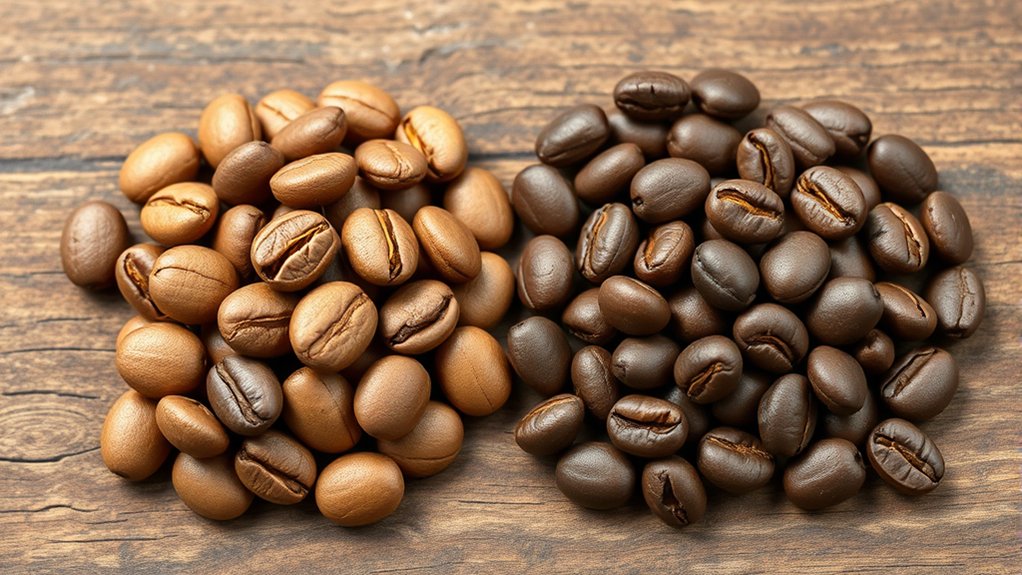
Although you mightn’t realize it, the coffee beans you enjoy primarily come from two species: Arabica and Robusta. These coffee species dominate global production, with Arabica accounting for about 70% and Robusta around 30%.
Arabica beans are oval and flatter, prized for their sweeter, more nuanced, and aromatic flavor profile.
Arabica beans, oval and flat, offer a sweeter, more nuanced, and aromatic coffee experience.
In contrast, Robusta beans are smaller, rounder, and deliver a harsher, more bitter taste due to their higher caffeine content. This caffeine also grants Robusta greater pest resistance.
When comparing Arabica vs Robusta, understanding their distinct caffeine content and flavor profile is essential. Both coffee species differ markedly in physical traits and taste, shaping your coffee experience.
Recognizing these differences helps you appreciate the science behind your favorite brew. Additionally, selecting the right coffee bean variety can influence the espresso quality & consistency depending on the machine and brewing environment.
How Growing Conditions Affect Arabica and Robusta Coffee
You’ll notice that Arabica really thrives at high altitudes where the climate is cooler and more stable.
On the other hand, Robusta does well at lower elevations and can handle a wider range of temperatures.
When you understand these preferences for altitude and climate, it really helps shape how farmers decide where and how to grow each type.
Plus, Robusta is pretty tough—it’s more resistant to pests and environmental stress.
Arabica, meanwhile, tends to be more sensitive, which is why you’ll find these two coffee types growing in different parts of the world.
It all comes down to their unique needs and strengths.
Beans grown at high altitudes like Arabica typically have higher acidity levels, which influences their flavor profile and extraction characteristics.
Altitude And Climate
Because Arabica and Robusta coffee plants grow in markedly different altitudes and climates, their cultivation environments directly influence their bean characteristics and resilience.
Arabica coffee plants thrive at high elevations between 600-2000 meters, favoring cooler, subtropical climates that promote slower bean maturation and richer flavor profiles.
In contrast, Robusta coffee plants grow at low altitudes, from sea level up to 800 meters, tolerating higher temperatures and more variable climate conditions. This adaptability allows Robusta to withstand greater climate variability and diverse environments.
The delicate high-altitude habitats of Arabica are increasingly vulnerable to rising temperatures and shifting rainfall patterns, while Robusta’s lowland regions offer more stable growing conditions.
Understanding how altitude and climate shape these plants helps you appreciate the differences in their cultivation and resulting coffee qualities. Additionally, the choice of brewing method can highlight the distinct flavor characteristics influenced by these growing conditions, as different techniques offer varying levels of flavor control and customization.
Cultivation And Resilience
When you consider the distinct growing conditions of Arabica and Robusta coffee, it’s clear that their cultivation demands vary markedly. Arabica cultivation thrives under high-altitude farming between 600-2000 meters, requiring cooler, nutrient-rich environments and meticulous care due to its sensitivity.
In contrast, Robusta resilience shines as hardy coffee plants adapt from sea level up to 800 meters. They tolerate heat, pests, and diseases with robust pest resistance. This adaptability influences yield differences and farming costs substantially.
Climate change impact further complicates Arabica’s delicate habitat, while Robusta may expand into new regions.
Picture the contrast: Arabica’s precise high-altitude farming, Robusta’s hardy coffee plants and pest resistance, and yield differences shaped by resilience and adaptability.
Understanding these factors clarifies the cultivation and resilience divide. Additionally, controlling water temperature during brewing can help highlight the unique flavor profiles that arise from these differing cultivation conditions.
Flavor Profiles: Arabica’s Smoothness vs Robusta’s Boldness
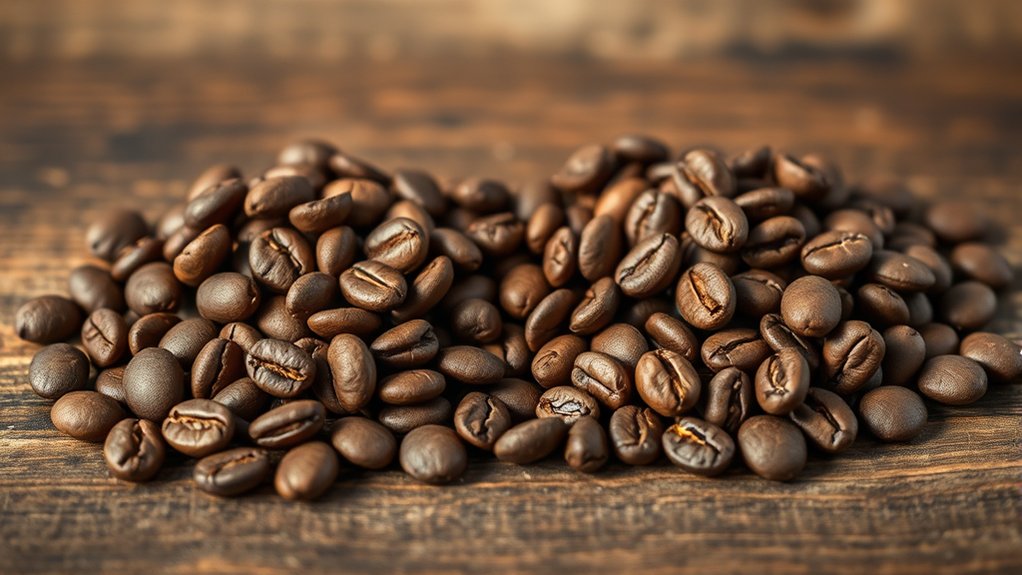
Although both Arabica and Robusta beans deliver caffeine, their flavor profiles set them distinctly apart. Arabica offers a smooth, nuanced taste characterized by bright acidity and fruity notes, thanks to its higher sugar and lipid content. This complexity is often showcased in specialty brews, where clarity and aroma are paramount.
Robusta, by contrast, presents a bold, earthy flavor profile with bitter, nutty, and chocolatey undertones. Its naturally lower sugar content and natural processing method accentuate this harsher taste.
This harsher taste adds full-bodied richness and enhances espresso crema. When you choose between Arabica and Robusta, understanding these distinct flavor profiles helps you select the coffee that best matches your preference for smoothness or bold intensity. Additionally, selecting the appropriate roast level can further highlight the unique characteristics of each bean type.
How Caffeine Levels Impact Arabica and Robusta Coffee
The flavor differences between Arabica and Robusta beans come partly from their caffeine content, which plays a big role in shaping each bean’s profile. Robusta coffee beans have nearly double the caffeine of Arabica, with about 2.7% compared to 1.5%. This difference in caffeine levels directly affects coffee strength and flavor, making Robusta more bitter and robust.
When you compare Arabica vs Robusta, think about how caffeine acts as a chemical defense in Robusta. It protects the plant from pests and diseases.
Plus, you need less Robusta to get the same caffeine boost as Arabica.
Picture this: sharp, bitter coffee flavor from higher caffeine content, enhanced coffee strength needing smaller doses, and natural chemical defense mechanisms in Robusta coffee beans.
Knowing caffeine levels can help you pick your perfect brew. Additionally, understanding the impact of water temperature on extraction can further optimize the flavor profile of your coffee.
How Sugars, Oils, and Antioxidants Influence Coffee Flavor
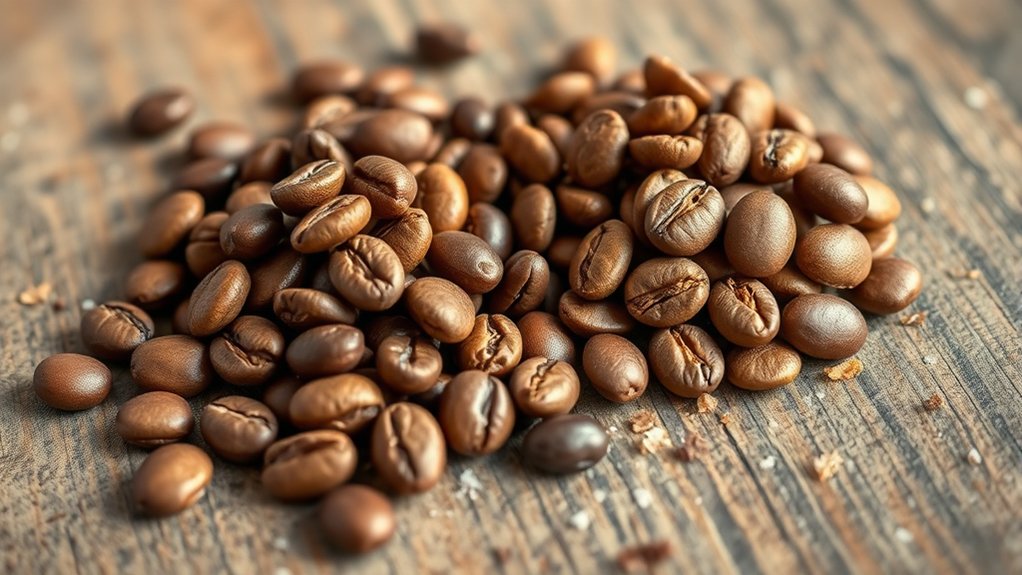
You’ll notice that Arabica beans have more sugar and lipids, which give the coffee a sweeter, smoother flavor. This also helps bring out a richer aroma and better mouthfeel.
On the other hand, Robusta beans have higher levels of antioxidants, like chlorogenic acids. These compounds give Robusta its bold and slightly astringent taste.
Knowing how these ingredients work helps you appreciate the unique flavors each type of bean offers.
For the best extraction of these flavors, using the correct grind size in your brewing method is essential.
Sugar And Lipid Impact
When you compare Arabica and Robusta beans, you’ll notice that the higher sugar and lipid content in Arabica profoundly shapes its flavor profile. These chemical differences influence not only taste but also aroma, smoothness, and mouthfeel.
Arabica’s nearly double sugar and 60% more lipids increase sweetness and richness, while Robusta’s lower levels create more bitterness and earthiness.
Specifically, you’ll experience enhanced aroma complexity and a richer mouthfeel from Arabica’s elevated lipids. Plus, a sweeter, smoother cup comes from Arabica’s higher sugar content.
On the other hand, Robusta brings a bolder, more bitter flavor with nutty undertones.
Knowing these sugar and lipid variations helps you appreciate why Arabica is preferred for specialty brewing. It also explains why Robusta delivers a stronger, more robust taste. Makes sense, right?
Antioxidants And Flavor
Understanding the roles of sugars and lipids sets the stage for exploring how antioxidants further shape coffee’s flavor. Arabica beans, with higher sugar content and lipids, develop richer aromatic compounds during roasting. This results in a complex flavor with fruity sweetness.
Robusta’s elevated chlorogenic acid levels increase its antioxidants but also intensify its bitter taste. That bitterness contributes to a bold, earthy profile. This balance between sugar, lipids, and antioxidants directly impacts each bean’s distinct flavor nuances.
| Component | Arabica | Robusta |
|---|---|---|
| Sugar Content | Nearly double Robusta | Lower |
| Lipids | 60% more, richer oils | Less |
| Chlorogenic Acid | Lower, milder antioxidants | Higher, intense bitter taste |
These factors define coffee’s antioxidant-driven flavor complexity.
Cultivation and Harvesting Differences Between Arabica and Robusta
Although both Arabica and Robusta coffee plants require careful cultivation, their different environmental needs and growth patterns really affect how they’re farmed and harvested.
Arabica cultivation thrives in high-altitude coffee regions, usually between 600 and 2000 meters. It prefers cooler, more precise environmental conditions, so farmers have to be pretty attentive with their practices.
On the other hand, Robusta harvesting happens mostly at low elevations, from sea level up to about 800 meters. Robusta plants are more resilient, so they tolerate higher temperatures and a wider range of conditions without much trouble.
Here are some key differences to keep in mind:
Arabica beans ripen unevenly, which means they need to be picked by hand to maintain quality. Robusta beans ripen much more uniformly, making it easier to use machines for harvesting.
Also, Robusta plants grow taller and produce more coffee, which helps cut down cultivation costs compared to the more sensitive Arabica.
Price and Availability of Arabica and Robusta Coffee
How do price and availability shape your choice between Arabica and Robusta coffee? Arabica coffee price tends to be higher because it’s more delicate to grow and produces lower yields. This reflects its premium flavor and the specialized conditions it needs.
Arabica coffee costs more due to delicate growth and lower yields, reflecting its premium flavor and unique needs.
On the other hand, Robusta is more widely available and dominates the global coffee supply. That’s mainly because it’s tougher and more productive, especially in places like Vietnam and Africa.
This difference has a big impact on the coffee market. Robusta’s easier production lowers its cost, making it more affordable for everyday consumption.
So, when you’re deciding between Arabica and Robusta, think about it this way: Arabica offers quality but at a higher price, while Robusta gives you economic efficiency and wider accessibility.
Knowing these factors helps you make smarter choices when it comes to price and availability in the coffee world.
Which Coffee Bean Should You Choose and Why?
Why choose one type of coffee bean over the other? Your decision hinges on taste preferences, caffeine content, and cultivation factors.
Arabica beans offer a sweeter, nuanced flavor profile with lower caffeine. They’re perfect for those seeking a smooth, aromatic cup.
Robusta beans deliver a bold, bitter taste and higher caffeine levels. This makes them ideal if you want a stronger brew or a cost-effective option.
Consider these points when selecting coffee beans:
- Arabica’s complex flavor suits specialty brews and single-origin coffees.
- Robusta’s resilience in cultivation makes it affordable and widely available.
- Espresso blends often combine both to balance crema, strength, and flavor complexity.
Understanding these differences helps you pick the right bean for your desired taste and caffeine needs. It’s all about what suits you best!
Frequently Asked Questions
Can Arabica and Robusta Beans Be Mixed in Home Brewing?
Yes, you can mix Arabica and Robusta beans in home brewing to create a balanced flavor and adjust caffeine content. Grinding and blending both beans evenly before brewing guarantees consistent extraction and flavor integration.
How Do Storage Methods Affect Arabica and Robusta Bean Freshness?
Think of your coffee beans as delicate treasures in a vault. When you store Arabica and Robusta in airtight, opaque containers, you shield them from oxygen, light, and moisture, preserving their essence.
Arabica, being more sensitive, demands extra care to keep its nuanced flavors intact. Robusta resists staling better but still needs cool, dry conditions.
Neglecting storage accelerates oxidation, degrading freshness and aroma. So, handle your beans like precious artifacts.
Are There Health Benefits Unique to Arabica or Robusta Coffee?
You’ll find unique health benefits in both coffee types. Robusta offers higher chlorogenic acids, boosting antioxidants that may protect against diseases and inflammation. Its elevated caffeine content also enhances metabolism and alertness more than Arabica.
Arabica, richer in lipids and sugars, provides a milder antioxidant profile, potentially aiding digestion and reducing oxidative stress gently.
Choosing between them depends on whether you prioritize stronger stimulation or subtler antioxidant effects. It really comes down to what you want from your cup of coffee.
What Are the Environmental Impacts of Cultivating Each Bean Type?
You might assume both coffee types impact the environment equally, but that’s not the case. Arabica demands high-altitude, shaded conditions with intensive water use and careful soil management. This increases environmental sensitivity.
Robusta’s hardiness lets you cultivate it in diverse, lower-altitude areas with less pesticide use and fewer inputs, which reduces chemical footprints.
However, both can cause deforestation if mismanaged. So, your farming choices directly influence sustainability and ecological balance.
How Do Roasting Techniques Differ for Arabica Versus Robusta Beans?
You’ll roast Arabica beans gently, focusing on light to medium profiles to preserve their delicate flavors and aromatic complexity.
For Robusta, you can push darker roasts more aggressively, building bold, intense flavors while managing bitterness through precise temperature control.
Arabica develops nuanced notes in later roasting stages, while Robusta’s characteristics emerge quickly during darker roasts.
So, you’ll adjust time and heat accordingly to highlight each bean’s strengths.
It’s all about bringing out the best in each type without overdoing it.
Conclusion
You’ll find Arabica offers smooth, nuanced flavors perfect for a refined palate, while Robusta delivers bold, robust intensity with higher caffeine punch. Growing conditions, chemical makeup, and processing methods create these contrasts, shaping your coffee experience.
Whether you prefer Arabica’s delicate sweetness or Robusta’s strong, earthy bite, understanding these differences helps you choose confidently. So, pick the bean that matches your taste and caffeine needs, knowing both bring unique value to your cup.