To make the best espresso martini, start with fresh, hot espresso pulled in about 25-30 seconds for rich crema and flavor. Combine it with vodka and coffee liqueur, then shake vigorously with ice for at least 15 seconds to create a velvety, frothy top.
Strain into a chilled martini glass and garnish elegantly with coffee beans or a dusting of cocoa. Master these techniques, and you’ll elevate your cocktail game. There’s more to perfecting taste and presentation ahead.
Ingredients and Equipment for the Best Espresso Martini

While you can substitute espresso with cold brew concentrate, using strong, fresh espresso brewed in a machine guarantees the best flavor and a rich crema that’s key to a perfect espresso martini.
You’ll need coffee liqueur like Mr. Black, Tia Maria, or Kahla to add sweetness and deepen the coffee profile.
For the spirit base, vodka is classic, but gin, bourbon, or tequila work if you want a unique twist.
Don’t skip the right equipment: a cocktail shaker is essential for mixing ingredients thoroughly and chilling the drink.
Also, have chilled martini glasses on hand to ensure the martini stays cold and looks elegant.
Combining these ingredients and tools sets you up for a flawless espresso martini experience.
To ensure the best extraction, timing your espresso shot to within the 25-30 second window is crucial for optimal flavor and crema development.
Brewing Espresso for Perfect Foam
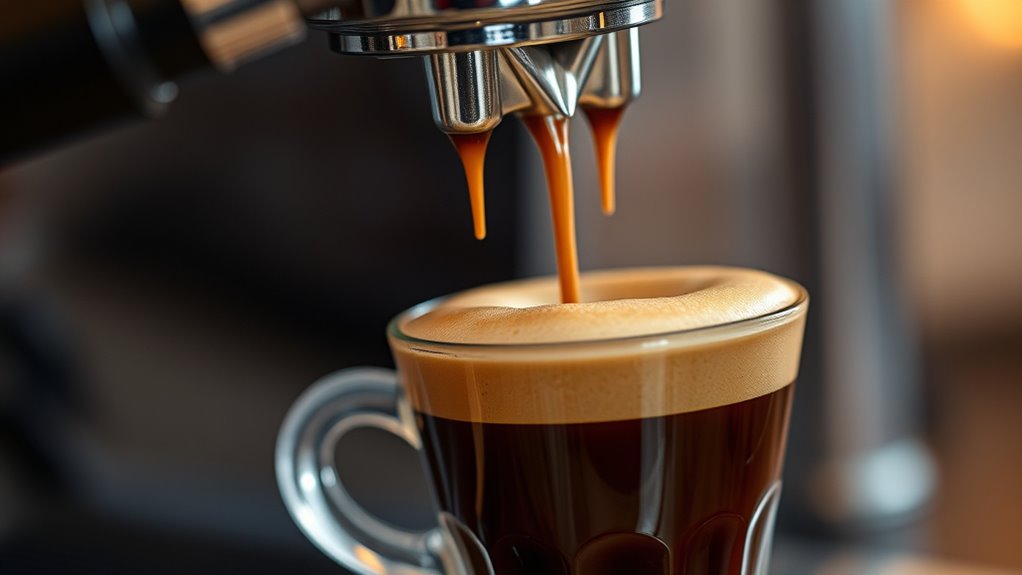
To achieve the perfect foam on your espresso martini, start with freshly brewed espresso that boasts a rich crema. This layer of oils and pressure is essential for foam stability. Avoid cold brew or drip coffee because they lack the necessary oils, which results in weaker foam.
Once brewed, let the espresso cool slightly. This helps prevent melting the ice during shaking, which can ruin the foam structure.
When you shake the cocktail, make sure to shake vigorously for at least 15 seconds. This traps air bubbles and coffee oils, creating a dense, frothy top.
For an extra creamy finish, some bartenders add egg whites or professional cocktail foam. But fresh espresso is still the best base for that signature, velvety foam layer on your espresso martini.
Using espresso made from a fine grind and extracted under high pressure ensures the optimal flavor and crema needed for the best foam quality.
How to Shake and Mix Your Espresso Martini

You’ll want to shake your espresso martini vigorously for at least 15-20 seconds to trap air and create that signature frothy foam.
Using a cocktail shaker filled with ice helps chill the drink quickly while mixing everything thoroughly.
Just focus on a firm, quick motion to blend the coffee oils and aerate the mixture perfectly.
Choosing blonde espresso can add a brighter flavor and slightly higher caffeine content to your cocktail.
Shaking Techniques Explained
Because the perfect espresso martini relies on its rich, frothy top, mastering the shaking technique is essential. Start by filling your cocktail shaker with ice to chill the mixture quickly.
Shake vigorously for at least 15-20 seconds using a firm grip and energetic motion. This traps air bubbles in the liquid, creating the signature foam you want.
Keep shaking until the outside of the shaker feels cold and frosty, signaling proper aeration. Once done, strain the cocktail immediately into a chilled glass to preserve that delicate foam and prevent it from collapsing.
With these steps, you lock in both flavor and texture, delivering the smooth, velvety espresso martini every time. It’s all about that perfect balance between technique and timing, really making your drink stand out.
Regular maintenance, such as descaling frequency, ensures that your espresso machine consistently produces the best quality espresso for your cocktails.
Foam Creation Tips
Although mastering the right shaking technique is essential, achieving the perfect foam on your espresso martini also depends on the quality of your ingredients and how you combine them. Use freshly brewed espresso with a rich crema, as coffee oils help stabilize the foam by trapping air bubbles.
Shake your cocktail vigorously with ice for at least 15 seconds until the shaker feels frosty. That’s your cue for enough aeration. This vigorous motion emulsifies the coffee oils and air, creating a thick, creamy foam that lasts.
For an extra frothy touch, consider adding egg whites or a professional cocktail foam before shaking. With these tips, you’ll consistently craft espresso martinis topped with a luscious, inviting foam that elevates every sip.
To maximize flavor and crema quality, ensure your espresso is brewed within the ideal 90–96°C temperature range for the best extraction.
Serving and Garnishing Your Espresso Martini Like a Pro
When you chill your martini glass in the freezer for at least 20 minutes, you set the stage for a perfectly cold cocktail that holds its frothy foam longer.
After shaking your espresso martini vigorously for at least 15 seconds, pour it swiftly into the chilled glass. This preserves the rich, stable foam layer, showcasing your cocktail’s signature texture.
Shake your espresso martini vigorously for 15 seconds, then pour swiftly into a chilled glass to preserve its signature foam.
For a professional finish, garnish with three coffee beans placed evenly on top. They symbolize health, wealth, and happiness, adding tradition and elegance.
Use freshly brewed espresso or cold brew concentrate in your mix to enhance flavor and foam quality.
Optionally, sprinkle a light dusting of instant espresso or cocoa powder for visual appeal.
Serve immediately to impress with a flawless presentation every time.
To maintain the best flavor in your espresso martini, regularly cleaning and descaling your espresso machine is essential to prevent mineral buildup that can affect taste and performance.
Creative Variations to Customize Your Espresso Martini
You can mix things up with your espresso martini by swapping vodka for gin, bourbon, or rum. Each one brings a fresh twist to the flavor profile.
Why not try flavored coffee liqueurs too? Adding a splash of vanilla or peppermint extract can really boost the aroma and add some extra depth.
And hey, don’t forget about the garnishes! Creative touches like whipped cream or chocolate shavings not only make your drink look amazing but also take the taste to the next level.
For a lower caffeine impact while keeping great taste, consider using decaf espresso made from high-quality beans processed via the Swiss Water or CO2 methods.
Flavorful Spirit Alternatives
If you’re looking to add a personal twist to your espresso martini, swapping vodka for spirits like rum, tequila, or bourbon can reveal exciting new flavors. Try mezcal for smoky depth or bourbon to introduce warm caramel undertones.
Flavored coffee liqueurs such as Tia Maria or Frangelico layer in complexity and sweetness.
Irish cream or Bailey’s create a richer, creamier texture. You can also experiment with cognac or flavored vodkas to elevate the classic cocktail with unique nuances.
Don’t forget to infuse your simple syrup with spices like cinnamon or vanilla. These subtle aromas perfectly complement the coffee and spirit blend.
For the best flavor, ensure your espresso shot is pulled with precise timing and consistent pressure to maintain the rich crema and balanced extraction.
Unique Garnish Ideas
Exploring unique garnish ideas takes your espresso martini from simply delicious to visually stunning and memorable. Start by placing three coffee beans atop the foam, symbolizing health, wealth, and happiness with a classic Italian flair.
For extra aroma and contrast, dust cocoa powder, cinnamon, or finely ground espresso on the surface.
Before pouring, drizzle chocolate or caramel syrup inside the glass to create elegant swirls that enhance presentation.
If you want to impress, add edible gold leaf or metallic flakes on the foam for a luxurious touch.
Finally, consider skewering a coffee bean or chocolate-covered espresso bean for a crunchy, flavorful bite that intensifies the coffee notes.
These creative garnishes elevate your cocktail and personalize every sip. Give them a try and watch your espresso martini go from great to unforgettable!
Keep in mind that using three shots of espresso in your martini will provide approximately 180-225 mg caffeine, giving the cocktail a strong and energizing kick.
Common Espresso Martini Mistakes to Avoid
While crafting the perfect espresso martini, many bartenders overlook key details that can compromise the drink’s texture and flavor. Avoid these common mistakes to guarantee your cocktail shines:
- Using stale espresso or instant coffee. Fresh, hot espresso is critical for rich crema and flavor.
- Shaking under 15 seconds. If you don’t shake it long enough, you won’t get that frothy, creamy foam.
- Overusing ice or overly cold ingredients. Too much chill dulls foam stability and texture.
- Skipping proper straining. Coarse coffee grounds will ruin the smooth, velvety top you’re aiming for.
Remember that a double shot of espresso typically contains around 126 mg of caffeine, which can influence the cocktail’s energy boost and overall effect.
Frequently Asked Questions
Can I Use Instant Coffee Instead of Fresh Espresso?
You could choose instant coffee, but it’s like wearing a tuxedo to a beach party. Functional, yet missing elegance.
For a rich, frothy espresso martini, freshly brewed espresso delivers deeper flavor and authentic crema every time. It really makes a difference in taste and texture. So, if you want the best, go fresh.
What Type of Vodka Works Best for an Espresso Martini?
You want a high-quality, smooth, neutral vodka like Ketel One or Stolichnaya. Use clear, unflavored vodka around 80-100 proof, chilled, to keep your espresso martini balanced, clean, and flavorful.
This way, you avoid any unwanted sweetness or artificial notes that can mess with the drink’s profile. It’s all about letting the espresso and coffee liqueur shine through. So, stick with something straightforward and smooth for the best results.
How Long Can I Store a Premixed Espresso Martini?
You can store a premixed espresso martini in the fridge for up to 24 hours. Just make sure to shake it well before serving.
For the best taste and foam, though, it’s ideal to enjoy it fresh within a few hours. That way, you get the full flavor and the perfect creamy top.
Is It Possible to Make a Non-Alcoholic Espresso Martini?
Imagine savoring that rich espresso taste without a drop of alcohol. It’s totally possible! You can shake brewed espresso with flavored syrups and ice, creating a frothy, non-alcoholic espresso martini.
This drink delights your senses perfectly. It’s a great way to enjoy the classic flavor without the buzz. Give it a try next time you want something special!
What Glassware Alternatives Suit an Espresso Martini?
You can use chilled coupe, Nick & Nora, or cocktail glasses to highlight your espresso martini’s frothy top. If you don’t have those, no worries! Small stemmed wine glasses work just fine.
Even acrylic martini-style glasses are a good shout, especially if you’re going for a casual or outdoor vibe. It’s all about enjoying your drink in style, no matter the glass.
Conclusion
Now that you know how to craft the perfect espresso martini, remember: the secret isn’t just in the ingredients but in the technique. Some say pre-chilling the glass enhances the foam. Try it and see for yourself.
Master the shake, nail the espresso’s crema, and customize your garnish to impress. With practice, you’ll serve a cocktail that’s as smooth and bold as your favorite barista’s brew.
Cheers to your new signature drink!