Yes, espresso liqueur does contain caffeine, but usually much less than a shot of espresso or brewed coffee. Most servings have about 5-15 mg of caffeine, though some brands can approach 100 mg per 1.5 oz. This caffeine comes from infused brewed espresso or coffee extract, diluted during production.
If you’re concerned about caffeine’s effects on your body or sleep, understanding this can help you choose wisely. And there’s more to learn about its composition and alternatives.
Does Espresso Liqueur Contain Caffeine?
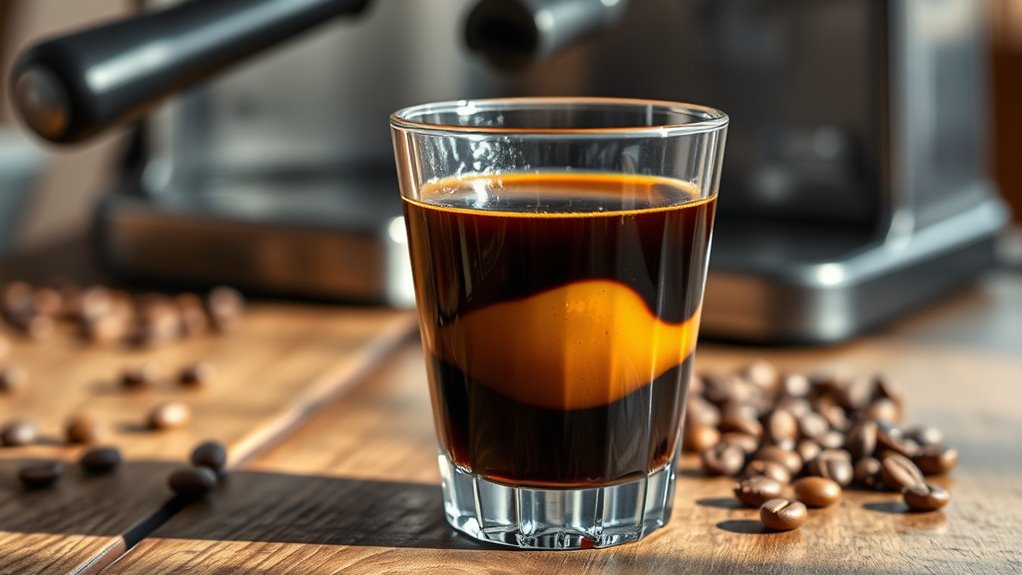
Although espresso liqueur is primarily known for its rich flavor, it typically contains caffeine because producers infuse it with brewed espresso or coffee extract. You’ll find caffeine levels vary widely, usually between 10 mg and over 100 mg per 1.5-ounce serving, depending on the espresso’s strength and quantity used.
Brands like Kahlúa and Tia Maria include caffeine since they use real coffee, while some craft or decaffeinated options have little to none.
Compared to a standard cup of brewed coffee, the caffeine in espresso liqueur is generally lower but can still offer a mild stimulant effect. If you’re sensitive to caffeine, be aware that producers can adjust caffeine content by using decaffeinated espresso or modifying infusion methods during production.
Because espresso extraction involves high pressure, the caffeine content in the brewed espresso used for liqueurs can be quite concentrated even in small amounts.
What Is Espresso Liqueur and How Is It Made?
You’ll find that espresso liqueur is made by infusing vodka or rum with brewed espresso or coffee extract. This process involves steeping the mixture for several weeks to really draw out those rich coffee flavors.
Sometimes, the method changes a bit—like when decaffeinated coffee is used to keep the caffeine levels in check.
In the end, the liqueur usually has about 40% alcohol by volume. Its taste is a delightful blend of strong coffee notes with lovely hints of vanilla, chocolate, or even some spices.
The quality of the espresso used can be influenced by factors such as extraction time, which affects the intensity and balance of the coffee flavors in the liqueur.
Espresso Liqueur Ingredients
When you explore how espresso liqueur is made, you’ll find it involves infusing spirits like vodka or rum with brewed espresso or coffee extract. The key ingredients work together to create its distinct flavor and caffeine content.
Typically, espresso liqueur contains:
- High-quality espresso or coffee extract: This provides the core coffee flavor and caffeine, often derived from roasted espresso beans.
- Neutral spirits such as vodka or rum: They act as the alcohol base, balancing the coffee’s intensity.
- Sweeteners and flavorings: These enhance taste and smoothness, contributing to the final profile.
Brands like Kahlúa and Mr. Black use roasted beans to boost flavor and caffeine. The caffeine level depends on coffee type, quantity, and infusion duration.
This ensures a nuanced balance between richness and potency.
Production Process Overview
Because espresso liqueur combines the boldness of coffee with the warmth of alcohol, its production requires careful balancing of ingredients and processes.
You start by brewing high-quality espresso, which delivers the essential coffee flavor and caffeine. Then, you blend this espresso with a neutral spirit like vodka or a sweeter base such as rum.
You add sugar and sometimes flavorings like vanilla or chocolate to refine the taste. The mixture undergoes an infusion period lasting several weeks, allowing the flavors to concentrate and harmonize fully.
Commercial producers often filter the liqueur to remove solids, ensuring a smooth texture.
The caffeine content depends directly on the strength and quantity of espresso infused, resulting in a moderate caffeine level typical of most espresso liqueurs.
Using espresso brewed at optimal temperature control helps maintain the coffee’s flavor and caffeine integrity during production.
Flavor Profiles Explained
Although espresso liqueur owes its character to the infusion of concentrated espresso or brewed coffee into spirits, its distinctive flavor profile emerges from a careful balance of bitterness, sweetness, and aromatic complexity. You’ll notice rich coffee aromas combined with roasted notes and nuances like chocolate, caramel, or vanilla depending on added ingredients.
This complexity comes from a few key things. First, the type of coffee bean and how it’s roasted, which influence bitterness and aroma intensity. Then, there’s the combination of alcohol and sweeteners, which balances the bold coffee bitterness with smooth sweetness.
Finally, any extra flavorings or aging techniques bring in subtle spicy, nutty, or creamy undertones. Understanding these factors helps you appreciate how espresso liqueurs achieve their signature smooth yet intense coffee flavor, tailored by each producer’s unique recipe.
How Much Caffeine Is in Espresso Liqueur?
You’ll find that caffeine levels in espresso liqueur can vary quite a bit depending on the brand and how it’s made. Usually, a 1.5-ounce serving has anywhere from about 5 to 15 milligrams of caffeine, which is much less than what you’d get in a typical shot of espresso.
That said, some brands like Kahlúa and Tia Maria pack a bigger caffeine punch — around 97 to 105 milligrams — because they use real coffee extracts.
The caffeine content in espresso liqueur is influenced by factors such as the type of coffee beans and extraction methods used during production.
Caffeine Content Levels
How much caffeine does espresso liqueur actually contain? The caffeine content varies a lot depending on things like the type of coffee bean and how strong the extraction is. Usually, espresso liqueurs fall within a certain range that you can measure.
Most espresso liqueurs have between 47 to 125 milligrams of caffeine per 1.5-ounce serving. Popular brands like Kahlúa average around 97 milligrams per serving, but some can be a bit lower or higher.
Darker, more concentrated espresso infusions tend to have higher caffeine levels because the coffee extract is more intense.
Knowing these factors helps you figure out your caffeine intake more accurately. If you’re looking to cut down, decaffeinated espresso liqueurs are a great option. They keep the flavor but have almost no caffeine, so you get the taste without the stimulant effects.
Since caffeine levels in espresso beans can vary from 5 to 12 milligrams per bean depending on bean type and roast, the caffeine content in liqueurs made from espresso extracts can also fluctuate accordingly.
Comparison With Coffee
Understanding the caffeine content in espresso liqueur becomes clearer when you compare it directly with a standard shot of espresso. Typically, a 1-ounce serving of espresso liqueur like Mr. Black contains about 47 mg of caffeine, while a standard 1-ounce shot of espresso has approximately 63 mg.
This difference arises because espresso liqueur’s caffeine depends on the espresso concentration used during production, which is usually lower than a straight shot.
Additionally, some brands offer decaffeinated versions, eliminating caffeine altogether.
It is important to note that the total caffeine content in espresso and espresso liqueur can vary based on factors such as bean type and roast level.
Comparing Espresso Liqueur’s Caffeine to Other Coffee Drinks
Where does espresso liqueur stand when compared to other coffee drinks regarding caffeine content? You’ll find its caffeine levels considerably lower. Here’s how it measures up:
- A 1.5-ounce serving of espresso liqueur contains about 5 to 15 milligrams of caffeine, depending on brand and recipe.
- An 8-ounce brewed coffee packs roughly 95 milligrams, making it substantially stronger in caffeine.
- A single shot of espresso, typically 1 ounce, has around 63 milligrams, surpassing espresso liqueur’s caffeine content.
The caffeine in espresso liqueur comes from coffee extracts, often espresso beans, but the infusion process dilutes it.
When mixed in cocktails like an Espresso Martini, caffeine levels rise but rarely match straight espresso or brewed coffee.
Because espresso extraction relies heavily on grind size and pressure, the caffeine content in espresso liqueur is influenced by how the coffee was originally brewed before infusion.
Decaf and Caffeine-Free Espresso Liqueurs Explained
Although espresso liqueurs typically contain caffeine from coffee extracts, decaf and caffeine-free versions offer alternatives with substantially reduced stimulant effects.
Decaf espresso liqueurs use decaffeinated coffee beans, lowering caffeine content to less than 5 milligrams per serving. That’s a stark contrast to the 60+ milligrams in regular espresso drinks.
Despite decaffeination, trace caffeine may remain due to residual amounts from the process. Some brands clearly label their products as decaf or caffeine-free, which helps consumers who want to avoid stimulants.
Caffeine-free espresso liqueurs often rely on alternative flavorings or fully decaffeinated coffee to eliminate caffeine entirely.
Understanding these distinctions helps you choose a liqueur that matches your caffeine sensitivity or dietary preferences. You get to enjoy the espresso flavor without the usual caffeine kick.
Decaffeination methods like the Swiss Water Process remove at least 97% of caffeine, ensuring minimal stimulant effects in decaf espresso liqueurs.
How Espresso Liqueur’s Caffeine Affects Your Body and Sleep
Since espresso liqueur contains caffeine derived from brewed coffee or espresso, it can produce noticeable stimulant effects on your body. The caffeine content ranges from 10 to 125 milligrams per 1.5-ounce serving, affecting individuals differently based on sensitivity and quantity consumed.
Espresso liqueur’s caffeine content varies widely, influencing stimulant effects based on individual sensitivity and serving size.
Here’s how it influences you:
- Alertness Boost: The caffeine stimulates your central nervous system, increasing alertness and reducing fatigue temporarily.
- Sleep Disruption: Consuming espresso liqueur late can delay sleep onset and reduce sleep quality because caffeine interferes with adenosine receptors.
- Variable Impact: The wide caffeine content variance means the stimulant effect isn’t consistent. So, knowing your liqueur’s caffeine level is vital to predicting how it affects your body and sleep cycle.
- The caffeine concentration in espresso liqueur can vary significantly depending on the coffee dose and extraction process used in its production.
Tips for Choosing Espresso Liqueurs If You’re Sensitive to Caffeine
When selecting an espresso liqueur, you should prioritize brands that clearly indicate their caffeine content, especially if you’re sensitive to stimulants. Look for products labeled as decaffeinated, which contain minimal or no caffeine, reducing the risk of unwanted effects.
Some brands explicitly list caffeine levels, often under 10 mg per 1.5 oz serving, allowing you to choose lower-caffeine options confidently. Consider craft or specialty liqueurs designed for sensitive consumers, as they frequently offer caffeine-free or reduced-caffeine versions.
Remember that traditional espresso liqueurs typically contain 10-15 mg of caffeine per serving, which might be too high. Alternatively, you may substitute with naturally caffeine-free flavored liqueurs, such as chocolate or nut varieties, to avoid caffeine altogether while still enjoying a rich flavor experience.
For a smoother and more balanced taste, consider the benefits of aeration and flavor development used in shaken espresso preparation when pairing liqueurs with coffee-based drinks.
Frequently Asked Questions
Can Espresso Liqueur Be Used in Coffee-Based Cocktails?
Yes, you can use espresso liqueur in coffee-based cocktails. It adds a rich coffee flavor and a bit of caffeine, which makes your drink more exciting. Plus, it really simplifies the preparation process.
Espresso liqueur blends smoothly with spirits like vodka or rum. This helps create consistent and flavorful cocktails that are also convenient to make. So, it’s a great choice if you want to mix up something tasty without too much fuss.
What Are Popular Brands of Espresso Liqueur?
You’ll find popular espresso liqueurs like Kahlúa, Tia Maria, Mr. Black, and Coffee Baileys. Each offers distinct caffeine levels and flavor profiles, letting you choose based on intensity, sweetness, or craft origins for cocktails or sipping.
They all bring something a little different to the table, so it’s fun to try a few and see which one suits your taste best. Whether you want something bold or smooth, there’s an option out there for you.
How Long Does Espresso Liqueur Last After Opening?
You should consume espresso liqueur within 1-2 years after opening to enjoy the best flavor. Properly sealed and stored in a cool, dark place, it remains safe but may experience gradual flavor degradation over time.
Is Espresso Liqueur Gluten-Free?
Espresso liqueur is generally gluten-free since it uses distilled spirits like vodka or rum, which don’t contain gluten.
However, you should check labels carefully. Some brands add flavorings or additives that might contain gluten.
Can You Cook or Bake With Espresso Liqueur?
Absolutely, you can cook or bake with espresso liqueur! It adds bold coffee flavors to your dishes. Just keep in mind that heat reduces both the caffeine and alcohol content.
Use it wisely to boost desserts like tiramisu, brownies, and mousse. It can really elevate the taste without overpowering your recipe. So go ahead and experiment a little!
Conclusion
If you’re wondering whether espresso liqueur packs a caffeine punch, the answer is yes. But how much caffeine you get depends on the brand and brewing method.
Think of it like a double-edged sword: the caffeine can give you a nice boost, but it might also mess with your sleep.
By understanding how much caffeine is in your drink and choosing decaf versions when you want to avoid jitters, you can still enjoy that rich espresso flavor.
Just pick wisely, and enjoy your drink in a way that feels good for you.