Nespresso gives you a convenient espresso-like shot by using pre-measured capsules and high pressure, but it doesn’t always meet the strict standards of true espresso. True espresso requires about 9 bars of pressure, precise grind size, and thick, rich crema.
While Nespresso offers consistent flavor and quick brewing, authentic espresso demands manual control and exact extraction parameters for deeper taste and crema quality.
If you want to understand the full difference between these options, there’s more to explore.
What Defines True Espresso?
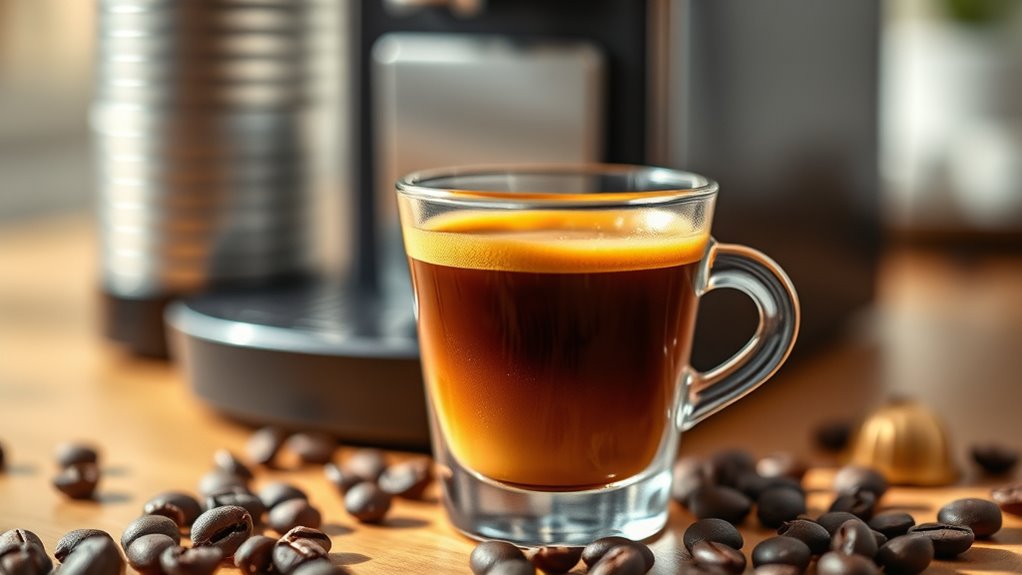
Although many enjoy espresso-like drinks from various machines, true espresso is defined by strict technical standards you should know. It requires forcing hot water through finely ground coffee at about 9 bars of pressure, producing a dense, rich crema on top.
True espresso demands hot water at 9 bars pressure through finely ground coffee, creating a rich, dense crema.
You’ll find that traditional espresso machines tamp the grounds firmly to guarantee uniform extraction, controlling variables like water temperature and freshness meticulously.
These factors, like precise coffee quantity, consistent pressure, and optimal temperature, are vital for authentic flavor and texture.
While capsule systems can mimic this process, they don’t always meet these exact standards.
To qualify as true espresso, the beverage must adhere closely to these regulated parameters, ensuring the characteristic boldness and crema that define genuine espresso.
Consistent extraction time within 25-30 seconds is also essential for achieving the ideal balance of flavor and crema in true espresso.
How Do Nespresso Capsules Differ From Traditional Grounds?
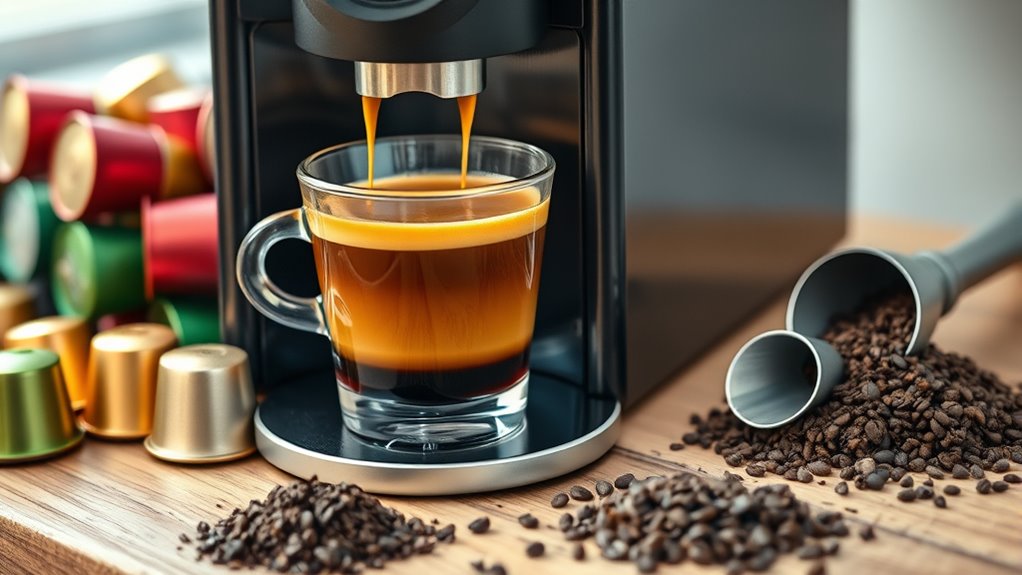
You’ll notice that Nespresso capsules come with pre-measured, sealed coffee grounds made specifically for a certain pressure and extraction process. This is quite different from using loose traditional grounds.
Because of this setup, Nespresso machines can deliver consistent espresso shots with very little effort on your part.
On the other hand, when you use traditional grounds, you have to manage a bunch of brewing variables yourself, depending on the method you choose. This means more room for customization, but it also means it’s less convenient compared to the simplicity of Nespresso capsules.
Achieving the perfect shot with traditional grounds requires mastering tamping pressure to ensure even extraction and balanced flavor.
Capsule Composition Differences
When comparing Nespresso capsules to traditional coffee grounds, you’ll notice some pretty significant differences in composition and packaging.
Nespresso capsules are sealed pods made from aluminum or plastic, designed for single use. They enclose compressed coffee to keep it fresh and control how it brews.
Traditional grounds, on the other hand, are loose and exposed, without any protective packaging. Some capsule brands, like Metropolis, use plant-based, compostable materials, which is great if you’re into eco-friendly options. Traditional grounds are naturally biodegradable too, but they don’t come encapsulated.
Capsules contain a precise amount of coffee, so you get consistent caffeine content and efficient extraction every time. They’re made to work with specific machines, making the process pretty straightforward.
With traditional grounds, though, you have more flexibility—you can adjust grind size and quantity however you like.
This difference in composition really changes how you interact with and prepare your coffee. It’s all about what suits your taste and routine best.
Additionally, the pressure-driven process used by Nespresso machines extracts coffee differently than traditional espresso methods, affecting flavor and crema quality.
Brewing Method Variations
Since Nespresso capsules contain pre-measured ground coffee designed for high-pressure brewing, they offer a more controlled and consistent extraction compared to traditional espresso methods.
Traditional espresso requires you to grind fresh coffee, tamp it into a portafilter, and extract at around 9 bars of pressure.
In contrast, Nespresso machines usually operate at 19 bars, though actual pressure can vary depending on the model. The capsule’s internal design, including grind size and distribution, optimizes extraction efficiency.
This delivers a beverage with crema and intensity similar to espresso.
However, differences in capsule materials, grind consistency, and brewing parameters mean the taste, aroma, and crema of Nespresso coffee may not perfectly match that of freshly ground espresso.
Understanding the impact of grind size and tamping is crucial to appreciating how these differences affect the final flavor and texture.
What Makes Nespresso Brewing Pressure Different?
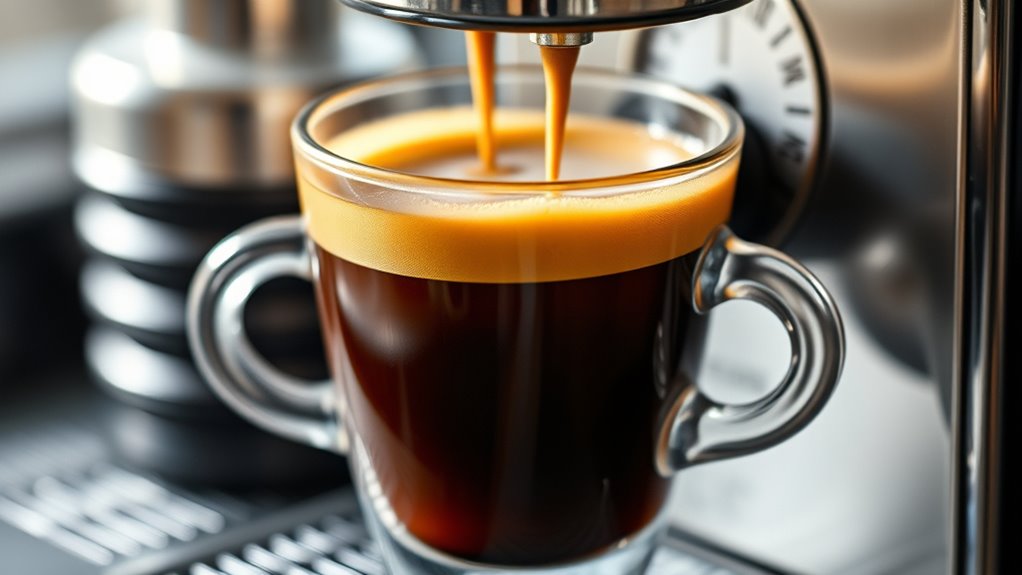
How does Nespresso achieve the pressure needed for its signature brew? Nespresso machines use a high-pressure pump to force hot water through the coffee capsule at around 19 bars. This is markedly higher than traditional espresso machines, which usually operate between 9 and 10 bars.
Nespresso machines use a high-pressure pump delivering around 19 bars, surpassing traditional espresso machines’ 9 to 10 bars.
This elevated pressure makes up for the shorter extraction time and the unique capsule design. It ensures you get a rich and consistent brew every time.
While the exact pressure may vary slightly by model and usage, Nespresso machines are built to mimic professional espresso extraction pressures.
You won’t usually find internal pressure gauges on these machines, but the advertised 19-bar pressure represents the maximum during extraction. This lets you enjoy a crema-rich shot that rivals traditional espresso, even with the compact, automated brewing process.
Understanding the extraction pressure is key to appreciating how Nespresso balances flavor and strength in its coffee.
Why Does Crema Matter in Espresso Quality?
Because crema forms the visible signature of a well-extracted espresso, it plays an essential role in defining the quality of your shot. This golden, frothy layer results from emulsified oils and carbon dioxide released under high pressure, trapping tiny air bubbles.
When crema is thick and persistent, it signals proper extraction, enhancing your espresso’s aroma, flavor, and mouthfeel.
You’ll notice that freshness, grind size, water temperature, and brew pressure influence crema’s amount and stability. With high-quality equipment and precise preparation, crema becomes more vibrant and long-lasting, marking authenticity.
So, when you see rich crema crowning your espresso, it’s not just aesthetic.
It guarantees a fuller, richer tasting experience that reflects skilled brewing and quality beans.
The color and texture of crema also provide important visual cues about the extraction quality and freshness of the coffee.
How Does Capsule Design Impact Flavor and Crema?
When you examine capsule design, you’ll find it plays a crucial role in shaping both flavor and crema quality. The internal structure, including the shape and size of perforations, controls how water flows through the coffee grounds, directly influencing extraction.
Capsules that maintain precise pressure and flow optimize emulsification of coffee oils, producing a richer, thicker crema.
Maintaining precise pressure and flow enhances coffee oil emulsification, yielding a richer, thicker crema.
The materials used also affect temperature stability, which is essential for preserving delicate flavor notes.
Additionally, the amount of coffee and grind size inside the capsule work in tandem with design features like microholes or channels to ensure even water distribution.
This uniform saturation prevents under- or over-extraction, delivering consistent, balanced flavor and a well-formed crema in every cup you brew.
Maintaining approximately 9 bars pressure during extraction is essential to achieving the optimal crema and flavor profile.
What Do Taste Tests Reveal About Nespresso vs. Espresso?
When you compare Nespresso to traditional espresso, taste tests show some clear differences in flavor and crema quality.
A lot of people appreciate Nespresso for its convenience and consistent taste.
That said, others feel it doesn’t quite match the rich complexity and authentic crema you get from a classic espresso.
Ultimately, how authentic you find it depends on what you value most in your coffee experience.
Blonde espresso, for example, highlights origin-specific notes through its lighter roast, which may differ significantly from Nespresso capsules.
Flavor Comparison Insights
Although taste tests reveal varied opinions, traditional espresso machines consistently deliver richer, more complex flavors and a thicker crema compared to Nespresso capsules.
When you taste espresso from a manual machine, you notice deep, nuanced notes shaped by precise grind size and pressure.
Nespresso offers convenience and satisfying flavor, but it often lacks that layered complexity.
Your experience with Nespresso also depends on capsule type, freshness, and machine calibration, which cause noticeable variation.
It really comes down to what you value more.
Consider how Nespresso and espresso differ in flavor:
- Espresso’s bold, multi-dimensional taste contrasts Nespresso’s simpler profile
- Manual brew highlights subtle fruity or floral undertones
- Nespresso’s flavor intensity varies by capsule freshness and storage
- Some find Nespresso smoother and more accessible, others crave espresso’s depth
Ultimately, your preference hinges on flavor complexity versus convenience. Which do you lean toward?
Additionally, understanding factors like extraction time and pressure can explain why espresso offers a more concentrated and textured experience compared to Nespresso.
Crema Quality Differences
Since crema plays a crucial role in defining an espresso’s texture and flavor, understanding its differences between Nespresso and traditional espresso machines is essential.
Taste tests reveal that traditional espresso machines produce a thicker, richer crema due to consistent high pressure, typically 9 to 15 bars, ensuring ideal extraction.
While Nespresso capsules can generate crema that looks similar, its texture and mouthfeel often don’t match that of fresh espresso.
Blind tastings show many consumers can tell the difference and usually prefer the traditional crema’s complexity.
Factors like coffee grind, freshness, and capsule design also impact crema quality.
Additionally, the roast level and type of beans used influence the extraction and taste profile of the crema.
Perceived Authenticity Variation
If you’ve ever wondered how Nespresso stacks up against traditional espresso in taste tests, you’ll find the results are surprisingly varied. Some tasters can’t reliably tell the difference between the two, while others detect clear contrasts. Your perception of authenticity depends on what you expect and how familiar you’re with espresso’s nuances.
Critics point out that Nespresso often lacks the complex flavor layers and rich crema found in manual espresso shots. Still, many appreciate Nespresso for its convenience and surprisingly comparable taste.
Consider these points: blind tests sometimes fail to distinguish Nespresso from espresso. Nespresso generally delivers a thinner crema, and flavor complexity often feels reduced in Nespresso. Personal expectations shape authenticity perception.
In essence, your experience with each can differ widely.
What Are the Cost Differences Between Nespresso and Espresso Machines?
When comparing the costs of Nespresso machines and traditional espresso machines, you’ll find that the initial investment differs considerably. A Nespresso machine with capsules typically costs around $1,138 in the first year, while a Breville Barista Express espresso machine is about $962, making the espresso machine more economical upfront.
Over five years, you could save approximately $3,680 by choosing a traditional espresso machine due to the high cost of Nespresso capsules, which average $0.70 each. You can find compatible capsules for as low as $0.25, or use reusable capsules with foil to reduce ongoing expenses.
Generally, if you drink coffee regularly, the breakeven point for switching to an espresso machine is between 2 to 3 years. So, it’s usually a more cost-effective option in the long run.
Why Does Convenience Lead People to Choose Nespresso?
While traditional espresso machines offer long-term savings, many people still opt for Nespresso because of its unmatched convenience. You get your coffee ready in under a minute, thanks to its fully automatic process that requires minimal effort or skill.
The capsule system removes the need for grinding, tamping, or cleaning, making your routine faster and simpler. Pre-measured capsules guarantee consistent flavor without wasting time or resources.
People with busy schedules or limited kitchen space find Nespresso especially appealing. Imagine popping a capsule into the machine within seconds. Then, just press a button and watch the coffee brew automatically.
No messy coffee grounds or cleanup to worry about. And you get reliable taste every single time. This ease of use is why convenience drives many to choose Nespresso.
When Does ‘Real’ Espresso Matter?
You’ll find that “real” espresso matters most when authenticity and precise brewing standards shape your experience, especially in specialty settings.
If you care about rich flavor and texture more than convenience, then the technical details and traditional methods really come into play.
But for casual drinkers, a close replica from capsules often does the trick, satisfying taste without sticking strictly to espresso’s exacting rules.
Authenticity Versus Convenience
Although capsule machines often produce a crema that rivals traditional espresso, they don’t always meet the strict standards of pressure and coffee dosage that define true espresso. When you prioritize convenience, these machines offer a quick, consistent cup that often satisfies casual drinkers.
But if authenticity matters to you, the nuanced pressure and precise coffee amount in traditional espresso extraction become essential.
Consider when ‘real’ espresso matters to you:
- Pulling a perfectly balanced shot with 9 bars of pressure
- Savoring the rich crema layer that signifies precise extraction
- Experiencing the complexity of flavors revealed by manual dosing
- Engaging in the ritual of crafting espresso by hand
Understanding these differences helps you decide when convenience suffices and when authenticity matters most.
Taste Versus Technicality
Even when a Nespresso capsule falls short of traditional espresso’s technical standards, you might find its taste indistinguishable or even preferable.
The hallmark of genuine espresso, 9 bars of pressure and precise coffee dose, sets a high technical bar that many capsule machines approximate but don’t always meet exactly.
Yet, taste tests reveal that the sensory experience often matters more to you than strict adherence to these parameters.
When Nespresso delivers a rich crema, vibrant aroma, and balanced flavor, the technical gaps blur.
For you, “real” espresso isn’t solely about meeting rigid standards; it’s about whether the cup satisfies your palate.
In this way, taste can outweigh technicality, making authenticity a flexible concept shaped by your personal preference rather than absolute rules.
Contextual Importance Of Espresso
When you prioritize authenticity and quality, such as in specialty cafes or professional settings, the distinction between real espresso and other coffee methods becomes essential.
Real espresso demands exact parameters: 9 bars of pressure, a precise grind, and a rich, velvety crema. This guarantees a consistent flavor and honors espresso’s cultural roots.
In contrast, for everyday home use, many find capsule-based options acceptable, focusing more on convenience than strict authenticity.
You’ll notice the importance of real espresso when serving connoisseurs who expect genuine crema and robust flavor, competing in barista championships or professional tastings, maintaining traditional brewing standards in high-end cafés, or preserving the cultural ritual and craft of espresso preparation.
Understanding this context helps you appreciate when “real” espresso truly matters.
How to Choose Between Nespresso and Traditional Espresso Machines?
Since your brewing preferences and lifestyle play an essential role, choosing between a Nespresso and a traditional espresso machine depends on how much time, skill, and customization you want in your coffee experience.
If you prioritize speed and convenience, Nespresso’s capsule system delivers consistent espresso-like drinks with minimal effort. It’s ideal for busy mornings.
However, if you value rich flavor, crema quality, and control over grind size and water temperature, a traditional machine suits you better. Though it demands skill and a higher upfront cost, it offers long-term savings and flexibility to use freshly ground or organic beans.
Plus, traditional machines support reusable capsules, reducing waste.
Frequently Asked Questions
Can Nespresso Machines Make Other Coffee Drinks Besides Espresso?
Yes, you can make more than espresso with a Nespresso machine. By adding accessories like milk frothers or using capsule adapters, you’ll craft drinks like lungos, Americanos, lattes, and cappuccinos efficiently and deliciously.
It’s pretty simple once you get the hang of it. Just experiment a little, and you’ll be surprised at the variety you can create with your Nespresso!
How Long Do Nespresso Capsules Stay Fresh After Opening?
Once you crack open Nespresso capsules, you’ve got about a week before the flavor starts to fade. Keep them sealed tight and stored cool to stretch freshness up to 6-9 months. But don’t push your luck.
Make sure you store them in a dry place away from heat or sunlight. That way, you can enjoy your coffee tasting good for longer. Just remember, the sooner you use them after opening, the better the taste.
Are There Environmentally Friendly Options for Nespresso Capsule Disposal?
Yes, you can choose aluminum Nespresso capsules for recycling through specific programs or pick compostable brands like Metropolis.
Just collect and return used capsules to reduce waste. This way, you make sure they’re processed properly at certified facilities when available.
It’s a simple step that helps the environment. Plus, there are options to fit different preferences, so you’re not stuck with just one choice.
What Maintenance Is Required for Nespresso Machines?
You’ll need to descale your Nespresso machine every 300 uses. It’s important to keep the water tank, drip tray, and capsule container clean by regularly washing them.
Also, take a moment to inspect the seals and brew head. This helps prevent buildup and leaks, which can affect your coffee’s taste.
Doing these little maintenance tasks ensures you get consistent coffee quality every time. It’s easier than it sounds and definitely worth the effort!
Can I Use Third-Party Capsules With Nespresso Machines?
Using third-party capsules with your Nespresso machine is like fitting a key into a lock. It works only if the dimensions match precisely.
Choose reputable brands to guarantee proper brewing. This helps avoid damage and protects your machine’s warranty.
Conclusion
Whether you call it coffee or espresso, Nespresso offers a quick, convenient sip of sophistication. It doesn’t fully mimic the rich ritual of traditional espresso, though.
Like a well-crafted sonnet compared to a free verse poem, each has its charm and purpose. When you crave precision and authenticity, traditional espresso stands tall.
But for effortless flavor and crema at a button’s press, Nespresso delivers. So, your choice really comes down to taste, time, and technique.