You’ll need about 55 espresso beans to make a single shot, which weighs roughly 7 grams. Keep in mind, this exact count can vary based on bean size, roast level, and density. Darker roasts tend to be lighter and require more beans.
To get consistent shots, focus on weighing your coffee rather than just counting beans. If you want to perfect your espresso, understanding grind size, dosing methods, and bean characteristics plays a key role.
How Many Grams of Espresso Beans Make One Shot?
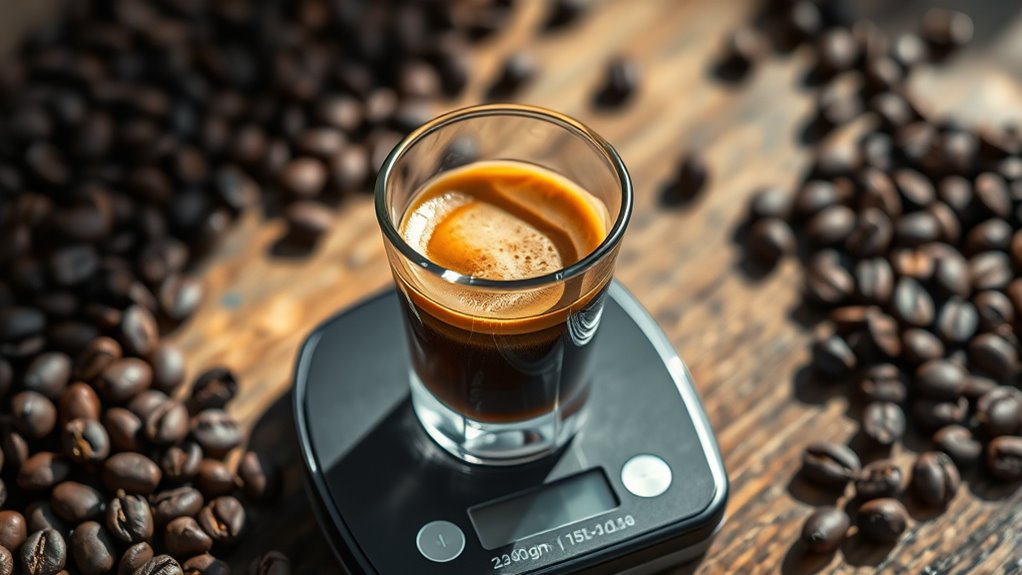
A standard single shot of espresso typically requires about 7 grams of espresso beans. When you prepare your shot, this weight guarantees the right extraction and flavor balance.
Keep in mind, the exact number of beans to reach 7 grams varies because of differences in bean size, shape, and roast level.
Bean size, shape, and roast level all influence how many beans make up 7 grams.
Darker roasted beans tend to be lighter, so you’ll need more of them to hit that 7-gram mark.
On average, you’ll use around 55 to 60 whole beans for a single shot, but this can range from 55 to 70 depending on the beans’ density.
By focusing on weight rather than bean count, you achieve consistency in every espresso shot you pull.
It makes all the difference when you want that perfect cup every time.
It’s also important to consider that the roast level influences caffeine and overall shot strength, impacting your espresso’s effect.
How Many Espresso Beans Are in a Single Shot?
You’ll typically need about 55 espresso beans for a single shot, but this number can vary a bit. It really depends on things like the size of the beans, their density, and the roast level.
For example, darker roasts tend to weigh less, so you might end up using more beans to get the same dose. Using a digital scale to measure the dose by weight rather than counting beans ensures greater accuracy and consistency.
Beans Per Shot
Between 55 and 65 whole espresso beans typically make up the coffee grounds for a single shot. The exact number depends on several factors you should be aware of.
A standard single shot uses about 7 grams of coffee, roughly equating to 55-60 beans.
Bean size affects the count; larger beans mean fewer are needed. Darker roasts weigh less, so you might need more beans to reach the right weight.
Processing methods slightly impact bean density, influencing how many beans fill 7 grams.
Understanding these basics helps you gauge how many beans to use for a perfect shot.
The roast profile also influences bean weight and flavor, which can affect the number of beans required.
Factors Influencing Bean Count
Knowing the typical range of 55 to 65 beans per shot gives you a baseline, but several factors can shift this number. The size and density of your beans play a pivotal role. Larger beans mean fewer are needed, while denser beans increase the count.
Roasting level also matters. Darker roasts weigh less, so you’ll use more beans to reach the standard dose compared to lighter roasts. Moisture content affects bean weight, causing further variation.
Additionally, wastage from broken or imperfect beans can cause fluctuations in the actual count. Understanding these factors helps you adjust your bean quantity precisely.
This way, you’ll ensure consistent espresso quality every time.
How Bean Size and Roast Level Affect Espresso Bean Count
Although the number of espresso beans per shot might seem straightforward, variations in bean size and roast level play a crucial role in determining the exact count. You need to take these factors carefully to get an accurate dose.
Bean size and roast level significantly impact the number of espresso beans needed for an accurate shot.
Larger beans mean fewer beans per gram, reducing the total count needed for a shot. Darker roasts lose moisture, making beans lighter and increasing the number required for the same weight.
Different varieties, like Arabica and Robusta, vary in size, influencing bean count.
Lighter roasts are denser, so you need fewer beans to reach your target dose compared to porous dark roasts.
Understanding these details helps you measure your espresso dose more precisely for consistent results. Additionally, the development of surface oils during roasting affects bean weight and extraction, thereby influencing the ideal bean count for each shot.
Best Grind Size for Consistent Espresso Shots
You need a very fine grind—think powdered sugar fine—to get the best espresso extraction. It’s all about consistency because even small changes can throw off your shot’s balance. Aim for a grind resembling gritty table salt to achieve optimal extraction and flavor.
Ideal Grind Texture
When dialing in your espresso, the grind size plays a crucial role in achieving a consistent shot. The ideal texture is slightly finer than table salt, resembling powdered sugar, to guarantee proper extraction.
Here’s what you should focus on:
- Use a burr grinder for a uniform grind; blade grinders won’t deliver consistency.
- Aim for a fine grind that increases water resistance, extending contact time for richer flavor.
- Avoid making the grind too fine because it leads to over-extraction and bitterness.
- Adjust grind size in small steps to balance shot time, flavor, and crema quality perfectly.
Consistent and uniform particle size prevents channeling and ensures even extraction for a richer espresso flavor.
Grind Consistency Importance
Since grind consistency directly impacts extraction, maintaining a uniform particle size is essential for pulling balanced espresso shots. You need a grind size slightly finer than table salt, close to powdered sugar, to optimize pressure and extraction time.
Burr grinders are your best choice because they deliver precise, consistent particle sizes, unlike blade grinders that produce uneven grounds. If your grind varies, you risk channeling or under-extraction, which can result in weak or bitter espresso.
To keep your grind consistent, regularly calibrate your grinder and use a scale to measure your grounds accurately. Using freshly roasted light-roast beans can further enhance the brightness and sweetness in your espresso shots.
Adjusting Grind Size
Maintaining consistent grind size sets the foundation for adjusting your espresso grind to suit each bean and roast profile. The ideal grind size is slightly finer than powdered sugar, around 200-300 microns, ensuring balanced extraction.
To dial in your grind, start by using a burr grinder. This helps maintain uniform particle size and reduces shot variability. Adjust your grind size in small increments—around 0.1 mm—to fine-tune extraction time and flavor.
Be careful not to grind too fine. Grinding too much can cause over-extraction, bitterness, and slow flow.
Also, remember to calibrate your grinder regularly. Keep in mind bean freshness and roast level to maintain precise grind size.
Mastering espresso crafting techniques, including water temperature and stirring, complements grind size adjustments for optimal flavor and crema.
How to Measure and Dose Espresso Beans Accurately
Although it might seem simple, measuring and dosing espresso beans accurately is essential for achieving a consistent and flavorful shot.
Start by weighing around 7 grams of coffee using a precise scale. This guarantees the right amount for ideal extraction.
Begin with 7 grams of coffee measured precisely for perfect extraction every time.
Since each bean weighs about 0.1 grams, you can estimate needing between 55 and 110 beans depending on size and density. Measure the beans before grinding to avoid under- or over-dosing, which directly impacts shot quality.
To maintain consistency, use a funnel or scoop when transferring beans into your grinder. This helps prevent spillage or uneven dosing.
Adjusting your dose and grind size will help you maintain the ideal espresso extraction time and flavor balance.
How Espresso Dose Influences Flavor and Extraction
When you adjust the espresso dose, you directly influence the shot’s flavor and extraction quality. Getting the dose right is crucial for a balanced cup. Here’s how it impacts your espresso:
- Flavor balance: Under-dosing leads to weak, sour shots; over-dosing causes bitterness.
- Extraction time: Dose size changes brew time, affecting the soluble compounds extracted.
- Tamping pressure: More coffee requires consistent tamping pressure to ensure even extraction.
- Consistency: Using a scale to measure doses lets you replicate ideal flavors shot after shot.
Stick to the standard 7-9 grams for a single shot to maintain proper extraction. Precise dosing helps you control the intensity and complexity of your espresso, making each cup a perfect reflection of your beans. Keep experimenting with dose adjustments regularly; each tweak moves closer to the ideal shot and helps prevent channeling during extraction.
How Many Beans Go Into a Double Espresso Shot?
Wondering how many beans you need for a double espresso shot? Typically, you’ll use about 100 to 140 whole coffee beans. This range depends on bean size, density, and roast level.
Since one gram contains roughly 55 to 70 beans, a 14-gram double shot usually equals 110 to 140 beans. Darker roasts are lighter, so you might need more beans to hit the correct weight.
The exact count varies, but aiming for that 14-gram dose guarantees proper extraction and flavor balance. Keep in mind that consistency in bean weight and grind size helps maintain shot quality.
Common Mistakes When Dosing Espresso Beans
Since dosing espresso beans requires precision, many beginners make avoidable mistakes that affect shot quality. To guarantee you get it right, avoid these common errors:
- Overestimating bean count: Bean size and density vary, so guessing leads to inconsistent doses and flavors.
- Skipping the scale: Relying on sight alone causes inaccurate dosing, harming shot consistency.
- Grinding imprecisely: Using whole beans without precise grinding creates uneven extraction and poor taste.
- Ignoring bean characteristics: Not accounting for moisture or roast level changes the bean weight, distorting the proper dose.
Recognizing these pitfalls helps you avoid dosing errors that compromise your espresso’s flavor and balance.
Stay mindful of these details to maintain shot quality without guesswork or inconsistency.
Tips for Consistent Espresso Bean Measurement and Dosing
Avoiding common dosing mistakes is just the start of mastering espresso preparation. To achieve consistent espresso shots, use a scale to measure about 7 grams of coffee beans per shot, which is roughly 55 beans. Regularly count and weigh your beans to identify the average number, since size and density can vary.
Store beans in airtight containers to prevent moisture absorption. This helps keep weight and dosing consistent.
Also, maintain a consistent grind size and tamping pressure because these factors ensure uniform extraction and complement accurate dosing.
Keep a detailed record of the bean count per shot to fine-tune your process over time.
Frequently Asked Questions
Can You Reuse Espresso Beans After Brewing a Shot?
You shouldn’t reuse espresso beans after brewing a shot because most oils and flavors are extracted the first time. Reusing them leads to weak, dull coffee with off-flavors. So, always use fresh beans for each shot.
Trust me, your taste buds will thank you! Fresh beans make a big difference in the quality of your espresso.
How Does Water Temperature Affect Espresso Extraction?
You’ll find water temperature vital for espresso extraction. Too hot over-extracts, causing bitterness, while too cool under-extracts, making it sour and weak.
Maintaining 90°C to 96°C guarantees balanced flavors and consistent crema every shot. It’s all about hitting that sweet spot to get the best taste from your coffee.
What Is the Ideal Pressure for Pulling an Espresso Shot?
You want to pull your espresso shot at around 9 bars of pressure for ideal extraction. Staying between 9 and 10 bars ensures balanced flavors and rich crema. This range helps you avoid bitterness or sourness from improper pressure.
It’s really about finding that sweet spot where everything comes together just right. Once you nail the pressure, your espresso will taste smooth and full-bodied every time.
How Long Should a Perfect Espresso Shot Take to Brew?
A perfect espresso shot should take 20 to 30 seconds to brew. If it’s too fast, the shot tastes sour. Too slow, and it turns bitter.
You’ll want to adjust the grind and pressure to nail that sweet extraction window just right. It’s all about finding the balance that works for your beans and setup. Keep tweaking until it tastes just right!
Are There Specific Espresso Beans Recommended for Beginners?
You should start with medium roast Arabica beans. They’re balanced and easier to extract.
Pre-ground espresso blends or single-origin beans with consistent roast help you get predictable, quality shots. This way, you avoid the complexities of light roasts. It makes the whole process simpler for beginners.
Conclusion
You now know that a single espresso shot uses about 7 grams of beans, roughly 45 to 50 individual coffee beans. Imagine those tiny beans, carefully ground and packed, transforming into that rich, aromatic shot you savor.
Precise dosing isn’t just about numbers; it’s about unlocking consistent flavor every time. By mastering your bean count and grind, you guarantee each espresso delivers the perfect balance you crave.
Keep measuring, keep tasting!