You don’t need special “espresso beans” to pull a great espresso; any quality roasted coffee bean can work with the right technique. Dark roasts are popular for their bold flavor and thick crema, but medium and light roasts offer unique, vibrant profiles when brewed carefully.
Just adjust grind size and extraction to highlight their strengths. Your choice depends on taste and skill. Exploring these factors helps you understand espresso’s rich nuances even better.
What Are Espresso Beans : Are They Different From Regular Coffee?
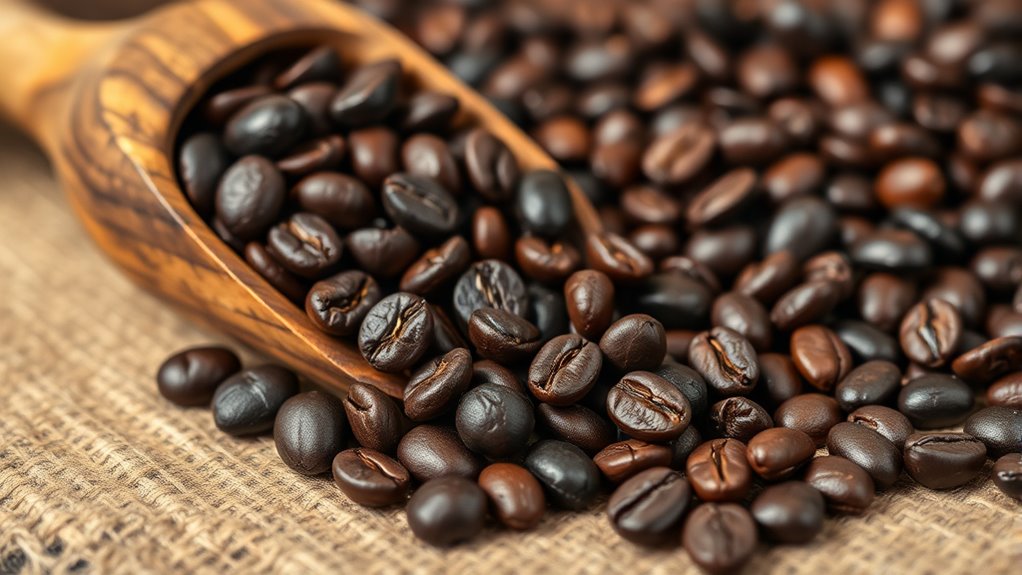
Although you might hear the term “espresso beans” tossed around, these beans aren’t a special variety. They’re simply coffee beans that have been roasted darker to bring out bold flavors ideal for espresso brewing.
The beans themselves aren’t inherently different from regular coffee beans. Any variety or origin can be used to make espresso.
The key distinction lies in the roast level. Espresso beans are typically dark roasted to emphasize richness, depth, and intensity in the cup.
This roasting choice enhances caramelization and reduces acidity, producing the signature bold profile you associate with espresso.
Additionally, espresso beans are often blended and roasted specifically to optimize flavor and crema during high-pressure extraction.
Can Any Coffee Beans Make Espresso?
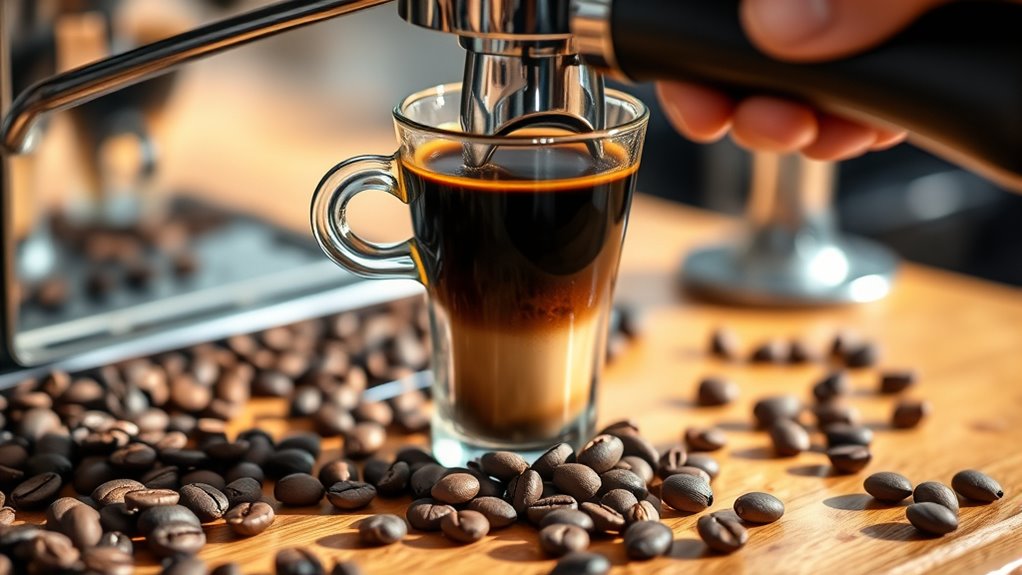
You can use any roasted coffee bean to make espresso because espresso is all about the brewing method, not the type of bean itself. Sure, the roast level does influence the flavor, but both light and dark roasts work just fine.
Traditionally, people tend to go for dark roasts.
That said, what really makes a difference is your grind size and how you extract the coffee. Those factors matter way more than the specific bean when you’re crafting a good espresso.
Adjusting your grind size based on roast level characteristics is key to achieving the best flavor extraction from any bean.
Espresso Beans Defined
What makes a coffee bean an “espresso bean”? Simply put, there’s no unique coffee bean called an espresso bean. Any roasted coffee bean can be used to make espresso because espresso refers to a brewing method, not a specific bean type or origin.
You force hot water through finely ground coffee under pressure to extract espresso. While many people associate espresso beans with dark roasts, you can use lighter roasts too, as long as you adjust your technique.
The label “espresso beans” mostly serves marketing purposes, highlighting beans suited for espresso but not defining a different species or variety. Ultimately, the quality of your espresso depends more on grind size, pressure, and brewing skill than the beans themselves.
For best results, it is important to grind your beans to a fine, consistent texture just before brewing to preserve flavor and aroma.
Roast Level Importance
While many assume that only dark roasted beans work for espresso, any roasted coffee bean can make a great shot if you master the brewing variables. Roast level influences flavor and texture, but it doesn’t limit your espresso options.
Dark roasts offer boldness and a rich crema, making extraction more forgiving. Lighter roasts, on the other hand, reveal complex, nuanced flavors when brewed precisely.
Keep these points in mind:
- Any roast level can yield excellent espresso with the right grind, pressure, and timing.
- Dark roasts provide a classic, robust profile and easier crema formation.
- Light roasts demand careful technique but reward you with vibrant, distinctive notes.
- Don’t get stuck on “espresso beans.” Focus on your brewing skills instead.
Your espresso’s quality depends less on the roast and more on your mastery of extraction. Controlling extraction time within the ideal range is essential to unlock the best flavors from any roast level.
Brewing Method Flexibility
Understanding how roast levels affect espresso sets the stage for exploring the broader question: can any coffee beans make espresso? The answer is yes. Espresso is a brewing method, not tied to a specific bean. You can use any roasted coffee bean, adjusting grind size, pressure, and extraction time to craft a balanced shot.
Dark roasts are common for their boldness, but lighter roasts can shine with the right technique. Experimenting with single-origin or blends opens a world of flavor profiles. This really proves espresso’s versatility. However, the grind size and extraction process are more critical than the bean type to achieve a quality espresso shot.
| Bean Type | Roast Level | Grind Size | Pressure | Flavor Potential |
|---|---|---|---|---|
| Single-origin | Light | Fine | High | Bright, nuanced |
| Single-origin | Dark | Fine | High | Bold, rich |
| Blend | Medium | Fine | High | Balanced, complex |
| Blend | Dark | Fine | High | Full-bodied, smooth |
| Any roasted | Any | Fine | High | Wide flavor spectrum |
How Roast Level Affects Espresso Flavor
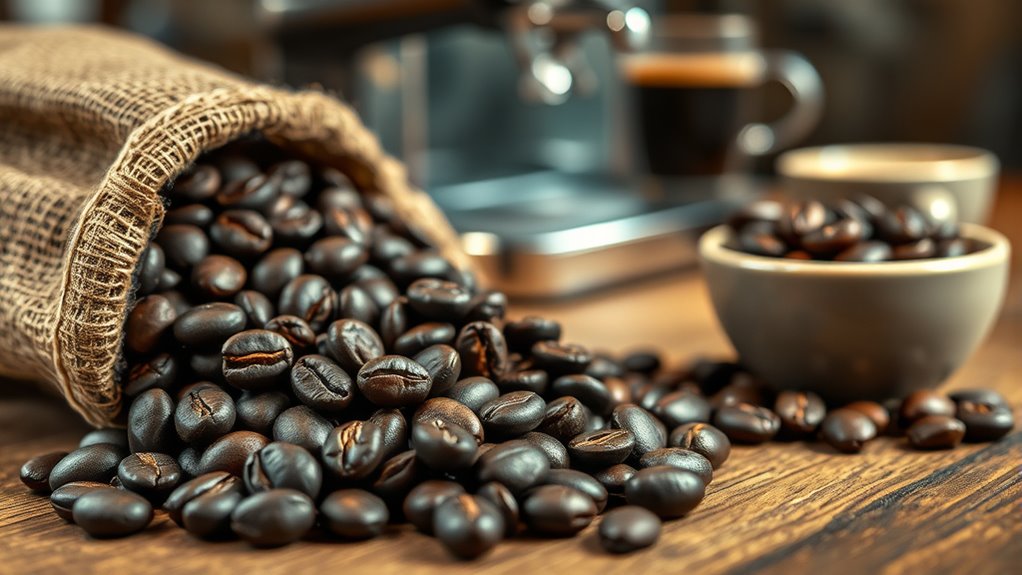
You’ll notice that roast levels play a big role in shaping your espresso’s flavor. Dark roasts bring out a bold bitterness, while lighter roasts tend to have a bright, lively acidity.
Each roast level offers its own unique tasting notes. So, knowing these differences can really help you pick the perfect roast that matches what you like in your espresso.
Darker roasts also create a thicker, more stable crema that enhances the texture and visual appeal of your espresso.
Roast Levels Explained
Because the roast level shapes every sip you take, knowing how it affects espresso flavor is essential for crafting the perfect shot. Roast levels determine acidity, body, aroma, and bitterness, guiding your choice to match your taste. Here’s what you need to know:
Light roasts offer bright, acidic espresso with distinct origin flavors. Medium roasts balance acidity and sweetness, revealing nuanced complexity. Dark roasts deliver bold, smoky, chocolatey richness with fuller body.
Increasing roast darkness generally reduces acidity and heightens bitterness.
Understanding these differences lets you tailor your espresso experience precisely. Whether you crave a lively, crisp shot or a deep, velvety brew, the roast level is your flavor blueprint. Embrace it, and your espresso will reward you with every pull. Additionally, the balance of bitterness, acidity, and sweetness creates the layered, high-quality espresso taste that defines an exceptional cup.
Flavor Profiles By Roast
Roast level doesn’t just influence your espresso’s acidity and bitterness. It shapes the entire flavor profile you experience.
If you choose a light roast, expect brighter acidity and vivid origin-specific flavors that highlight the coffee’s unique character.
Medium roasts strike a balance, offering a smooth, complex cup with caramel and cocoa undertones that suit espresso perfectly.
Dark roasts deliver a bold, full-bodied espresso marked by chocolatey, smoky notes and reduced acidity thanks to longer roasting times.
This roast intensity lets you customize your espresso from fresh and fruity to deep and rich.
Understanding how roast level affects flavor empowers you to select beans that match your taste.
That way, every shot reflects exactly what you want from your espresso experience.
Espresso quality is also significantly enhanced by machines like the Mastrena espresso machine, which ensures consistent extraction and flavor precision.
How Bean Origin Affects Espresso Taste
When selecting espresso beans, understanding their origin can really transform your coffee experience. It reveals distinct flavor profiles tied to specific regions. Each origin brings unique characteristics that shape the taste and complexity of your espresso.
Think about Ethiopian beans—they deliver fruity, floral notes. These are perfect if you want a bright, vibrant shot.
Colombian beans, on the other hand, offer a balanced, nutty profile. They’re ideal for a smooth, approachable espresso.
Beans grown at high altitudes in cooler climates tend to be denser. This results in brighter, more nuanced flavors.
Plus, some origins give you more acidic or earthy, spicy tones. This lets you match beans with your preferred flavor intensity.
Blending beans from different regions can create a balanced flavor that enhances body and brightness in your espresso.
Why Are Dark Roasts Often Sold As Espresso Coffee?
Although you can use any roast level to pull an espresso shot, dark roasts have become synonymous with espresso coffee because of their bold, intense flavors and full-bodied profile. The longer roasting process brings out natural oils and caramelization, which creates a richer taste that pairs perfectly with espresso’s high-pressure extraction.
You’ll notice dark roasts produce a thicker crema and offer more forgiving extractions, making them ideal for espresso-based drinks. Marketers also take advantage of this by labeling dark roasts as “espresso” to attract those craving a strong, robust coffee experience.
While any roast can work, dark roasts remain popular because they deliver that classic, powerful espresso flavor you expect. It’s really about that familiar, bold taste people associate with espresso. Darker roasts are also preferred for decaf espresso beans to mask milder decaffeination effects and preserve traditional espresso flavor.
Which Beans Work Best For Espresso?
What makes a coffee bean ideal for espresso? It’s all about how the bean’s flavor and roast level respond to espresso’s intense brewing. While any roasted bean can work, some characteristics make certain beans stand out.
Dark roasts often dominate because they deliver bold, rich flavors and stable crema. Medium roasts strike a balance, offering complexity and smoothness. Ultimately, your taste guides the best choice.
Dark roasts bring bold richness; medium roasts balance complexity and smoothness—your taste decides the perfect espresso.
Consider these points: Dark roasts produce deep, robust espresso with a thick crema. Medium roasts add nuanced flavors and balanced acidity. Single-origin beans offer unique, delicate profiles but need precision.
At the end of the day, personal preference drives your perfect espresso bean selection. Choose what excites your palate.
Espresso’s versatility lets you experiment and find your ideal cup.
Can Light Roast Beans Make Good Espresso?
If you’re curious about pushing espresso’s flavor boundaries, light roast beans can deliver a vibrant, complex shot that contrasts sharply with traditional dark roasts. Because light roasts preserve more of the bean’s original flavors, your espresso will showcase nuanced, origin-specific notes, often floral or fruity, with a bright acidity that adds liveliness.
However, these beans are denser and less oily, so you’ll need precise grinding and extraction to avoid under-extraction or sourness. While less common in classic espresso culture, many specialty cafes and home baristas embrace light roasts to highlight subtle characteristics usually masked by darker roasts.
If you’re after a lighter, more intricate espresso experience, experimenting with light roast beans can open a rewarding new flavor dimension. It’s definitely worth a try if you want to discover something different from the usual dark, intense espresso.
How Should You Adjust Brewing Based On Bean Type?
When you adjust your brewing technique based on the bean type, you reveal the full flavor potential each roast offers.
Lighter roasts need a finer grind and longer extraction to uncover their brightness and acidity.
Darker roasts, on the other hand, allow coarser grinds with consistent crema.
Medium roasts provide a forgiving balance and are adaptable to various settings.
To optimize your espresso, try using a finer grind and longer brew time for lighter beans.
You can also lower the water temperature or shorten extraction to keep acidity in check.
For darker beans, opt for a coarser grind to maintain richness.
And since medium roasts are flexible, feel free to fine-tune the grind and temperature until it suits your taste.
Frequently Asked Questions
What Is the Ideal Grind Size for Making Espresso?
You need a very fine grind size, like powdered sugar, to make espresso. This lets your machine extract flavors perfectly under pressure, balancing bitterness and strength.
Adjust gradually to find that ideal, rich 25–30 second shot. It’s all about dialing it in until it tastes just right. Keep tweaking until you hit that sweet spot!
How Does Water Pressure Influence Espresso Extraction?
Water pressure forces hot water through your finely ground coffee, extracting rich flavors and creating crema. Too low pressure yields weak espresso, while too high causes bitterness. You must control pressure precisely for balanced, delicious shots.
Getting it just right makes all the difference. Too little pressure means your espresso will taste flat and watery. On the other hand, too much pressure over-extracts the coffee, making it bitter and harsh.
Can Espresso Machines Use Pre-Ground Coffee?
Yes, you can use pre-ground coffee in your espresso machine, but you’ll want it ground very fine for proper extraction.
Freshly ground beans usually deliver better flavor, so grind just before brewing whenever possible. It really makes a difference in taste.
If you’re in a pinch, pre-ground works, but for the best espresso experience, fresh is always the way to go.
How Important Is Tamping Pressure in Espresso Brewing?
Tamping pressure is the backbone of espresso brewing. If you don’t apply roughly 30 pounds evenly, your shot can taste weak or bitter.
Consistency guarantees balanced extraction. This lets your espresso’s true flavors shine through every time. It’s really about getting that perfect press down every single shot.
What Equipment Is Essential for Home Espresso Preparation?
You need a quality espresso machine, burr grinder, tamper, and scale to nail home espresso. These tools guarantee consistent pressure, fine grind, even tamping, and precise measurement.
They help deliver rich, balanced shots every time you brew. It’s all about getting those details right so your espresso tastes just like it does in a café. With the right gear, making great espresso at home becomes a breeze.
Conclusion
You don’t necessarily need “espresso beans” to pull a great shot, but choosing the right beans makes all the difference. Whether dark or light roast, origin and roast level shape your espresso’s soul. Think of your beans as partners, not just ingredients.
Embrace experimentation and adjust your brewing to highlight their unique character. Ultimately, the perfect espresso reflects your personal journey. So trust your palate and savor the art behind every cup.