Decaf espresso roast offers you the rich, aromatic experience of espresso with over 90% less caffeine. You get about 3 to 15 mg per shot compared to 63 mg in regular espresso. It’s made by removing caffeine from medium to dark roasted beans using methods like Swiss Water® or CO₂ extraction. These methods help preserve flavor and crema.
The roast level shapes its smoky, chocolatey, or bright notes. Careful brewing also helps maximize the taste. If you’re curious, explore further to see how roast, origin, and preparation can impact your cup.
What Is Decaf Espresso Roast?
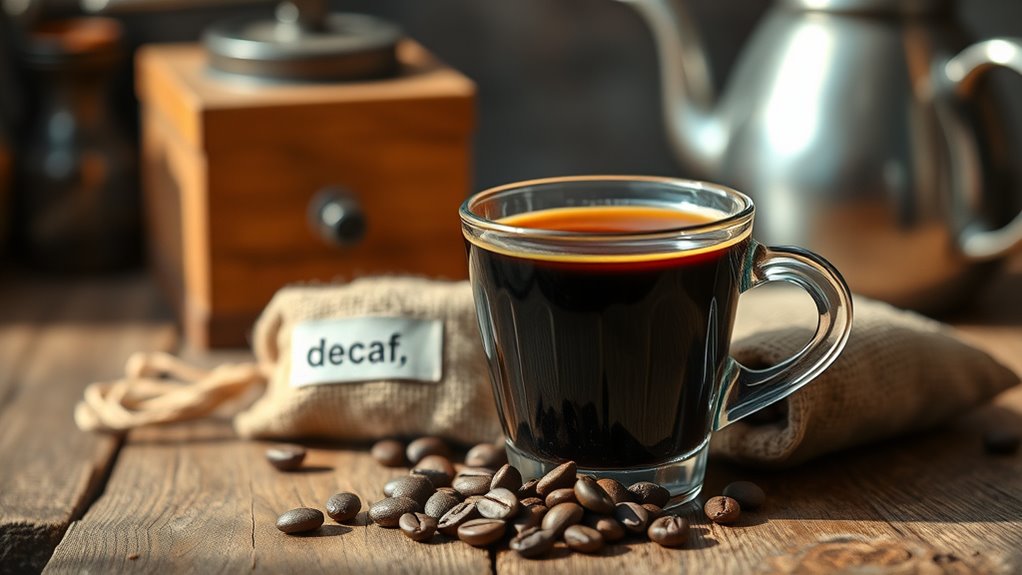
Although decaf espresso roast removes most of the caffeine, it still delivers the rich, concentrated flavor you expect from a traditional espresso. You’ll find it’s made from coffee beans that are decaffeinated but roasted to similar medium or dark levels as regular espresso.
When brewed under pressure with hot water, it produces a dense shot with a characteristic crema.
The decaffeination process eliminates roughly 97% of caffeine, leaving just about 3 to 15 mg per ounce, which is much lower than a typical shot.
Despite this, decaf espresso retains key aromatic and flavor notes like chocolate, caramel, and spice, depending on the bean origin and roast.
Decaf espresso beans are often processed using water-based decaffeination methods to preserve more of the beans’ original flavor and aroma.
How Is Decaf Espresso Roast Made?
You start with green coffee beans that go through a careful decaffeination process. Often, methods like Swiss Water® or CO₂ are used to remove the caffeine but still keep the flavor intact.
After that, the beans get roasted to medium or dark levels. This roasting helps bring out the bold profile you expect from an espresso.
Knowing how these steps affect the taste makes it easier to appreciate the craftsmanship behind decaf espresso roast.
Decaf espresso typically contains 3-15 mg caffeine per shot, offering a lower-caffeine alternative while preserving much of the espresso’s character.
Decaffeination Methods Overview
When you choose decaf espresso roast, you’re selecting beans that have undergone specialized processes to remove most of their caffeine content while preserving their rich flavor.
The Swiss Water® Process uses only water and natural osmosis, avoiding chemicals and maintaining the coffee’s original taste.
Alternatively, the Carbon Dioxide method employs pressurized CO₂ to selectively extract caffeine, preserving aroma and flavor.
Some decaf methods involve solvents like Methylene Chloride or Ethyl Acetate, which effectively dissolve caffeine but are less favored by health-conscious consumers.
Decaffeination typically happens before roasting, ensuring the beans retain their core characteristics.
However, some processes decaffeinate after roasting, subtly influencing the espresso’s final flavor and aroma.
Understanding these methods helps you appreciate the care behind your decaf espresso.
To achieve the best flavor balance in your decaf espresso, it’s important to consider factors like grind size and extraction time during brewing.
Roast Level Impact
Since decaf espresso beans lose some flavor during decaffeination, roasters apply a darker roast level to restore depth and complexity. This approach enhances boldness, reduces acidity, and masks milder flavor notes caused by the decaffeination process.
The roasting involves high heat to develop rich, smoky, and bittersweet flavors while maintaining the decaf’s integrity. You’ll notice darker roasts deliver a more robust, full-bodied espresso experience compared to medium roasts, which balance acidity and flavor brightness.
Because espresso extraction occurs under high pressure, the roast profile must be adjusted to optimize flavor even in decaf varieties.
| Roast Level | Flavor Impact | Emotional Response |
|---|---|---|
| Medium | Balanced acidity | Invigorating, light |
| Dark | Smoky, bittersweet | Bold, comforting, intense |
| Darker Decaf | Rich, complex | Satisfying, robust |
Understanding these nuances helps you select the perfect decaf espresso roast. It’s all about finding what suits your taste and mood best.
How Much Caffeine Does Decaf Espresso Roast Contain?
You might be surprised to learn that a decaf espresso shot contains only about 3 to 15 milligrams of caffeine. That’s quite a bit less compared to roughly 63 milligrams in a regular shot.
This big drop happens because over 97% of the caffeine is removed during processing.
Knowing these differences can really help you find the right balance between flavor and how much caffeine you want to consume.
Despite the caffeine reduction, decaf espresso still retains many of the nutritional benefits found in regular espresso, such as antioxidants and phytonutrients.
Caffeine Levels Explained
How much caffeine does decaf espresso roast really contain? Typically, it ranges from 3 to 15 mg per 1-ounce shot, depending on the decaffeination method and bean origin. Even though it’s labeled “decaf,” a small caffeine amount remains, usually less than 5% of a regular espresso shot’s 63 mg.
This makes decaf espresso an excellent choice if you want to reduce caffeine intake without losing flavor. Here’s a breakdown:
| Shot Type | Caffeine Content (mg) | % of Regular Espresso |
|---|---|---|
| Regular Espresso | 63 | 100% |
| Decaf Espresso | 3 – 15 | 5% – 24% |
| One-Third Decaf | 1 – 5 | 1.5% – 8% |
This table highlights how decaf espresso keeps caffeine levels low yet present. The rich flavor and aroma of decaf espresso are preserved through precise extraction techniques similar to those used for regular espresso.
Comparing Decaf And Regular
Understanding the caffeine content in decaf espresso roast becomes clearer when directly comparing it to regular espresso. A standard 1-ounce shot of regular espresso contains about 63 mg of caffeine, whereas decaf espresso typically has between 3 to 15 mg.
This means decaf holds less than 10% of the caffeine found in its regular counterpart.
The exact amount depends on the decaffeination method, such as the Swiss Water Process or CO₂ extraction, which remove roughly 97% or more of the caffeine.
For partial shots, one-third decaf contains about 1 to 5 mg, and two-thirds decaf ranges from 2 to 10 mg.
While decaf espresso isn’t completely caffeine-free, its markedly reduced caffeine content makes it a suitable choice if you want the espresso flavor without the full stimulant effect.
What Does Decaf Espresso Roast Taste Like?
Although decaf espresso roast lacks the caffeine kick of regular espresso, it delivers a complex flavor profile that varies with roast level and bean origin. When you taste dark roast decaf, expect smoky, bittersweet chocolate notes with a fuller body but milder acidity.
Medium roasts offer you balanced, nuanced flavors that reveal subtle sweetness and gentle fruitiness. Blonde decaf espresso, on the other hand, presents higher acidity with floral or citrus highlights, creating a lighter, smoother cup.
The bean origin also shapes the taste. Arabica beans typically bring a sweeter, smoother profile.
Plus, decaffeination methods like Swiss Water® help preserve these natural flavors, so you enjoy a richer, more authentic espresso experience even without the caffeine.
The roast level’s effect on acidity and sweetness is especially important for balancing the flavor in decaf espresso, enhancing its smoothness and richness.
Brewing Decaf Espresso Roast for Best Flavor
When brewing decaf espresso roast, you’ll want to focus on precise grind size, temperature, and timing to reveal its full flavor potential. Follow these key steps:
- Use a fine grind between 200–300 microns for ideal extraction within 20–30 seconds.
- Preheat your espresso machine to around 93°C (200°F) to support proper flavor development.
- Dose 7–9 grams of ground decaf coffee per shot, distribute evenly, and tamp with 20–30 pounds of pressure for consistency.
- Pull a slow shot, aiming for about 30 grams of espresso in 20–30 seconds. Adjust the time based on roast and bean origin to avoid under- or over-extraction.
Mastering these variables guarantees a balanced, flavorful decaf espresso with the complexity you expect.
Because grind size directly affects extraction time and flavor, slight adjustments can dramatically improve your shot quality.
Give it a try, and you’ll taste the difference!
Health Benefits of Decaf Espresso Roast
If you’re looking to enjoy the rich taste of espresso without the jittery side effects of caffeine, decaf espresso roast offers a smart alternative. With 97% or more of its caffeine removed, it’s ideal for reducing caffeine intake while savoring espresso’s bold flavor.
Regularly drinking decaf espresso may lower your risk of type 2 diabetes by 6-9%, according to studies. It also supports bladder comfort since it lacks the caffeine that often causes urinary urgency.
Additionally, decaf espresso helps prevent spikes in blood pressure and cortisol levels, which are common with caffeine consumption.
To fully enjoy its flavor, it is important to use freshly ground beans just before brewing to preserve aroma and taste.
Side Effects of Decaf Espresso Roast
While decaf espresso roast eliminates most caffeine, it still carries side effects worth considering. You might experience some unintended effects due to compounds other than caffeine or residual caffeine content. Here are four side effects to keep in mind:
- It can inhibit nonheme iron absorption by 60 to 90%, so avoid drinking it with iron-rich meals to prevent anemia risk.
- Decaf may cause a temporary increase in systolic blood pressure, especially if you’re not a regular coffee drinker.
- Cortisol levels might slightly rise because of non-caffeine compounds, which could affect stress responses.
- It can trigger acid reflux or heartburn by stimulating gastric acid, similar to regular coffee, and may stain your teeth over time due to tannins and pigments.
Being aware helps you enjoy decaf espresso more safely. Just keep these points in mind, and you can still savor your cup without worry. Proper cleaning and maintenance of your espresso machine can also help ensure the best flavor and reduce unwanted residues affecting your brew.
Best Decaf Espresso Roast Beans and Brands
Which decaf espresso roast beans deliver the richest flavor without compromising on quality? You’ll want to choose beans that undergo chemical-free decaffeination methods, like the Swiss Water® Process or CO₂ extraction.
Colipse Decaf Espresso beans, processed with Swiss Water®, offer vibrant berry, caramel, and chocolate notes.
Colipse Decaf Espresso beans deliver vibrant berry, caramel, and chocolate flavors through the Swiss Water® process.
Lavazza’s Decaf Espresso, made from 100% Arabica beans using CO₂ decaffeination, preserves a rich, full-bodied profile.
Trusted brands like Starbucks and Illy also provide excellent decaf options, featuring flavor notes from caramel to toasted bread.
When selecting your beans, consider freshness, origin, and roast level to guarantee a robust, satisfying cup.
Prioritizing these factors guarantees you get decaf espresso with depth and complexity, closely mirroring the experience of traditional espresso without the caffeine.
Frequently Asked Questions
Can Decaf Espresso Roast Be Used in Coffee-Based Cocktails?
Yes, you can use decaf espresso roast in coffee-based cocktails. It delivers bold flavor and rich aroma without caffeine. It also maintains crema and intensity, making it perfect for late-night drinks or anyone avoiding caffeine but craving authentic taste.
How Long Does Decaf Espresso Roast Stay Fresh After Opening?
You’ll enjoy decaf espresso roast’s freshness for 2 to 4 weeks unopened. But once opened, it’s best to consume whole beans within 4 weeks. Ground coffee should be used up within 1 to 2 weeks.
Make sure to store it airtight, in a cool place, and away from light. This way, you’ll keep that fresh flavor longer and enjoy every cup.
Is Decaf Espresso Roast Suitable for Cold Brew Preparation?
Yes, you can use decaf espresso roast for cold brew. Its dark, rich profile creates a smooth, full-bodied drink with chocolate notes. Plus, the lower acidity means you get a less tangy, flavorful caffeine-reduced beverage.
This makes it perfect for cold brewing. You’ll enjoy all the depth and richness without the jitters. So go ahead and give it a try!
Can Decaf Espresso Roast Be Combined With Regular Espresso?
You can definitely combine decaf espresso roast with regular espresso, blending flavors and caffeine levels perfectly. This mix lets you enjoy rich complexity while controlling your caffeine intake.
It makes your coffee experience both balanced and satisfying. Plus, it’s a great way to get the best of both worlds without going overboard on caffeine. Give it a try and see how you like the blend!
What Equipment Is Best for Grinding Decaf Espresso Roast Beans?
You’ll want a burr grinder for decaf espresso roast beans because it delivers consistent, fine grounds essential for proper extraction. Avoid blade grinders, and grind just before brewing to preserve the delicate flavors and aromas.
It really makes a difference in taste when you get the grind right. Plus, fresh grinding keeps all those subtle notes intact. So, taking a little extra time here is definitely worth it.
Conclusion
Now that you know decaf espresso roast isn’t completely caffeine-free but still offers rich, bold flavors, you can enjoy your cup without guilt or jitters. The myth that decaf espresso lacks depth is simply untrue. Careful roasting preserves its complex taste.
By choosing quality beans and brewing properly, you get the best of both worlds: the robust espresso experience with minimal caffeine. So go ahead, savor your decaf confidently and guilt-free.