You can use any coffee beans for espresso, but your choice of roast, grind size, and origin really impacts the flavor and crema quality. Darker, oilier beans roasted specifically for espresso tend to give you richer, fuller shots.
Regular or lighter beans often result in weaker, under-extracted espresso with less aroma and thinner crema. This happens because of the coarser grind and lower oil content.
If you want to get the best out of your espresso using different beans, understanding these factors can make a big difference. It’s all about tweaking your approach to match the beans you have.
What Is Espresso and How Is It Different From Regular Coffee?
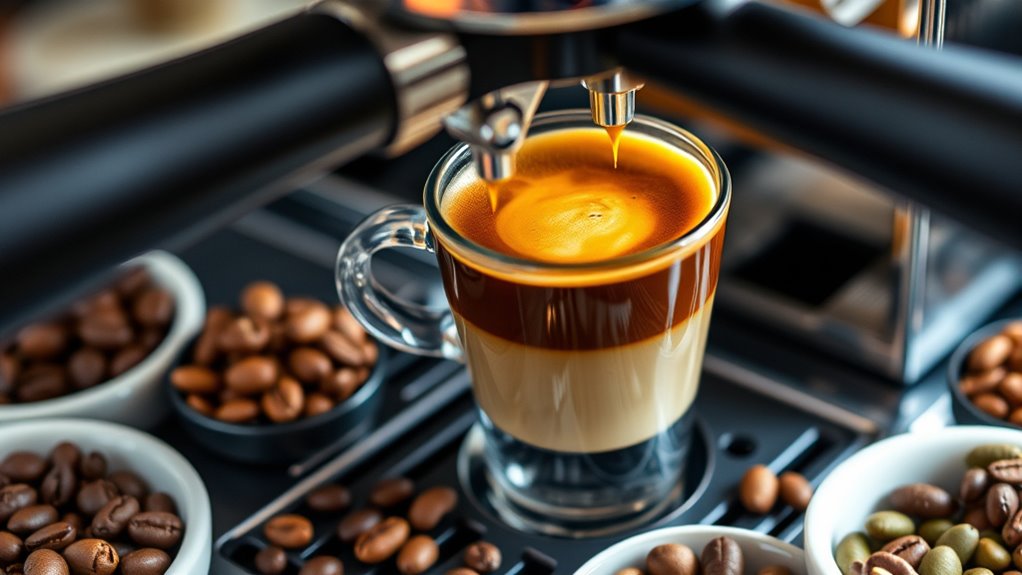
Although you might think espresso is just a stronger coffee, it’s actually a distinct brewing method. It uses high pressure to force hot water through finely ground beans, resulting in a concentrated shot with a thick crema and rich flavor.
Unlike regular coffee brewed slowly through gravity-based methods like drip or French press, espresso demands a very fine grind and quick extraction. This usually takes about 20 to 30 seconds under around nine bars of pressure.
The process produces a small 25–35 ml shot with a velvety texture that regular coffee can’t replicate.
The defining differences lie in grind size, pressure, and brewing time, not the beans themselves. Understanding these factors makes it clear why espresso stands apart as its own unique preparation rather than just a stronger coffee variant.
To achieve the best results, it is essential to control the extraction time carefully, typically aiming for 25-30 seconds to balance flavor and crema development.
How Espresso Beans Are Different From Regular Coffee Beans
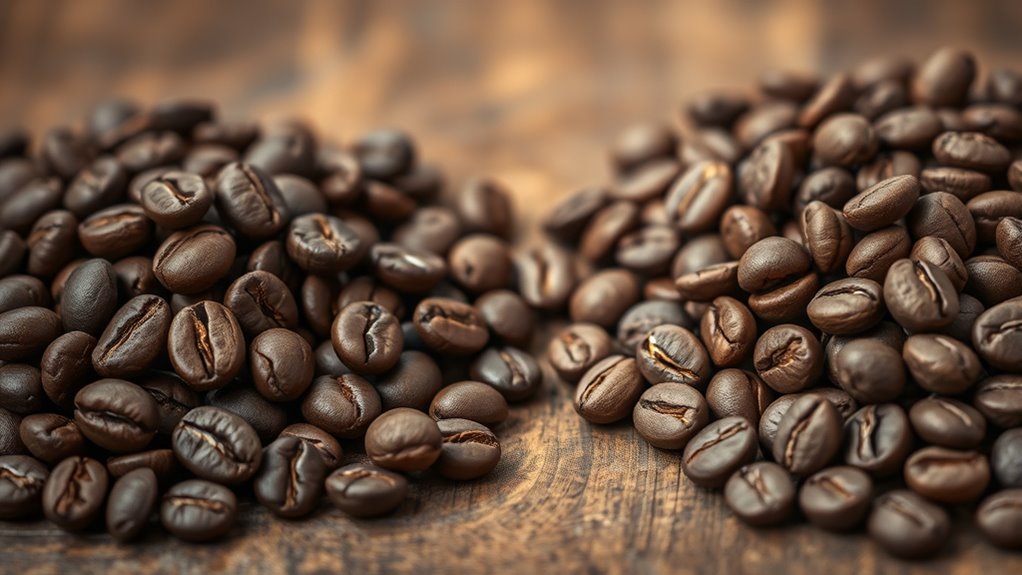
You’ll notice that espresso beans are roasted darker and ground finer than regular coffee beans. This is because they need to handle the intense pressure of espresso machines.
Plus, the higher oil content in these beans is really important—it helps create that rich crema and full-bodied flavor you’re after.
Knowing these differences makes it easier to pick the right beans for a true espresso experience.
The roast level and blend directly influence the flavor and strength of your espresso shot.
Roast Level Differences
When you look at the roast levels of espresso beans compared to regular coffee beans, you’ll notice some clear differences in how long and at what temperature they’re roasted. Espresso beans are roasted longer and hotter, which helps the oils come to the surface, giving them that shiny, oily look.
This hotter roasting also boosts caramelization, creating a bold, rich flavor that’s key for espresso’s signature crema and depth.
On the other hand, regular coffee beans used for drip or pour-over usually get roasted for less time and at lower temperatures. This results in lighter roasts that stay dry and bring out brighter, more delicate flavors.
The amount of oil on the beans, influenced by how they’re roasted, really changes the texture of espresso and how the crema forms.
Additionally, the roast profile adjustments enhance flavor specifically for high-pressure extraction in espresso machines.
Grind Size Importance
Roast level affects the oils on espresso beans, but grind size plays an equally important role in shaping the final cup. You need to grind espresso beans to a very fine, powdery consistency to guarantee proper extraction under high pressure. This fine grind promotes ideal oil emulsification, which is essential for producing that rich crema espresso is known for.
Regular coffee beans, on the other hand, are ground coarser for methods like drip or French press. These methods don’t require the same pressure or extraction precision as espresso.
If you use a grind that’s too coarse for espresso, you’ll end up with under-extracted coffee that tastes weak and sour.
To keep things consistent and precise, you should use a burr grinder. It delivers the consistent grind size that’s critical for reliable, high-quality espresso results. Trust me, it makes all the difference!
Additionally, making small adjustments to grind size of about 5-10 microns can help fine-tune extraction time and flavor for the perfect shot.
Oil Content Impact
How does the oil content in espresso beans set them apart from regular coffee beans? Espresso beans have a higher natural oil content because they are roasted longer and at hotter temperatures. This oil emulsifies during brewing, creating the signature rich crema.
This oilier surface helps pull out more flavor and gives espresso a thicker, velvety mouthfeel. On the other hand, regular coffee beans have less surface oil. That means they produce less crema and tend to have a lighter body.
The oil content directly affects how coffee reacts under pressure, influencing both flavor intensity and texture. Proper extraction time and pressure are crucial to fully develop the rich flavors and crema associated with espresso.
| Feature | Espresso Beans |
|---|---|
| Oil Content | High, oily surface |
| Roasting Profile | Longer, high temperature |
| Crema Formation | Thick, rich |
| Flavor & Texture | Full-bodied, velvety mouthfeel |
How Roast Level and Origin Influence Espresso Flavor
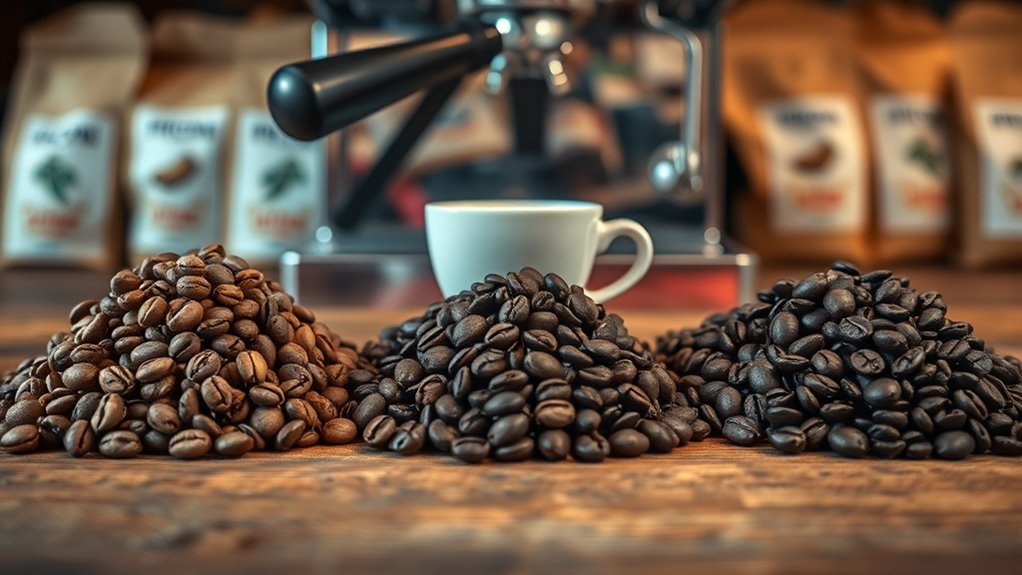
Because the roast level and bean origin directly shape espresso’s flavor, understanding their impact is essential for crafting the perfect shot. Dark roasts yield bold, robust espresso with smoky, chocolate notes, while lighter roasts emphasize brightness and acidity. Medium roasts balance these traits, showcasing origin-specific flavors alongside a rounded profile.
Origin adds another layer. African beans tend toward floral and fruity nuances, whereas South American beans offer nutty and caramel undertones. Roast level also influences oil development on the bean surface, which affects crema quality and espresso richness. Precise blending for balance results in a sweet, syrupy, well-rounded espresso where no single flavor dominates.
Can Any Coffee Bean Be Used for Espresso?
While the origin and roast level shape espresso’s flavor, you might wonder if any coffee bean can actually be used to make espresso. The answer is yes. Espresso refers to the brewing method, not a specific bean. Here’s what you need to know:
Any roasted coffee bean, regardless of origin or type, can be used for espresso. Darker roasts tend to produce richer crema and are more forgiving during extraction. Lighter roasts require precise technique but can yield complex, nuanced flavors.
Any roasted bean can make espresso; dark roasts offer richer crema, while light roasts reveal complex flavors.
Freshness and quality of beans profoundly impact the espresso’s taste and overall quality. Ultimately, experimenting with different beans allows you to tailor your espresso experience.
Brewing technique and bean characteristics combine to create unique flavor profiles. Using a burr grinder to achieve a consistent, fine grind is essential for proper extraction and optimal espresso quality.
What Happens When You Use Regular Coffee Beans in an Espresso Machine?
When you use regular coffee beans in an espresso machine, the flavor often turns sour or flat. That happens because the coarser grind messes with proper extraction.
You might also notice weak crema, or sometimes none at all. This is because the machine can’t build the right pressure with larger grounds.
Adjusting the grind size to a very fine consistency is crucial for achieving optimal extraction time and flavor balance.
Flavor Profile Changes
If you use regular coffee beans in an espresso machine, you’ll likely end up with a shot that feels weak and under-extracted. It often carries sour or flat flavor notes. This happens because regular beans aren’t optimized for the fine grind and high-pressure extraction espresso demands.
Here’s what changes in flavor profile you can expect:
First, coarser grounds cause uneven extraction. This brings out bitter and acidic compounds. The shot also lacks intensity, missing espresso’s characteristic richness and complexity.
You might notice sour or metallic notes becoming more pronounced. That’s due to insufficient extraction of oils and sugars. Overall, the espresso tastes thinner, less balanced, and less aromatic compared to shots made with espresso-specific beans.
Using the right beans guarantees a fuller, more vibrant flavor profile tailored to espresso’s unique brewing method. So, it’s definitely worth choosing beans made specifically for espresso. Proper grind size is crucial to control extraction speed and achieve the ideal flavor balance.
Extraction And Crema Effects
Understanding how regular coffee beans affect flavor leads naturally to examining their impact on extraction and crema quality. When you use regular beans, their coarser grind and lower oil content cause under-extraction. This results in a weaker, less aromatic shot with diminished crema.
The espresso machine struggles with inconsistent flow, which can risk clogging or channeling. So, it’s not just about taste—it’s about how smoothly everything works together.
| Factor | Regular Beans Effect | Resulting Espresso Quality |
|---|---|---|
| Grind Size | Coarser | Sour, flat, or overly acidic |
| Oil Content | Lower in lighter/pre-ground beans | Thin, light crema |
| Extraction Consistency | Inconsistent flow | Weak, less concentrated shot |
Using regular beans compromises both extraction efficiency and crema formation. That means your espresso loses its signature richness and texture. Simply put, the quality just isn’t the same.
Tips for Making Great Espresso With Any Beans
Here’s how to make great espresso with any beans:
- Use a burr grinder for a consistent, fine grind size essential for proper extraction.
- Apply even, firm tamping pressure to compress grounds uniformly, enhancing extraction quality.
- Experiment with brew time and machine pressure settings to find the *ideal* balance, especially with non-espresso-specific beans.
- Grind beans fresh just before brewing to preserve oils and aroma critical for crema and richness.
- Measuring espresso yield by weight rather than volume helps achieve consistent flavor and strength across shots.
Frequently Asked Questions
How Should Espresso Beans Be Stored to Maintain Freshness?
You know what they say: “Freshness is fleeting.” So, it’s best to store espresso beans in an airtight container. Keep them away from light, heat, and moisture.
Try to find a cool, dark spot where the temperature stays around 60-70°F. That way, your beans stay fresh longer. And remember, grind your beans just before brewing to get the best flavor and aroma.
Can Espresso Beans Be Used for Other Brewing Methods?
You can use espresso beans for other brewing methods, but you’ll need to adjust the grind size. Expect a bolder, oilier flavor compared to beans roasted specifically for those methods.
Just be cautious. The oils in espresso beans might clog filters and cause bitterness if not properly managed. So, keep an eye on your equipment and taste as you go.
What Grind Size Is Best for Espresso Extraction?
You want a very fine grind, almost powdery, to guarantee proper extraction under pressure. Consistency is key, so use a burr grinder.
Adjust the grind size slightly to perfect the flavor and avoid bitterness or sourness. It’s all about finding that sweet spot. Keep tasting and tweaking until it’s just right.
How Does Water Temperature Affect Espresso Taste?
When your espresso machine’s water hits between 195°F and 205°F, you’ll extract balanced flavors. Too cool, and your shot tastes sour. Too hot, and bitterness overwhelms.
Keeping the temperature steady means you get consistent, rich espresso every time. It’s pretty simple, but it makes a huge difference in taste. So, don’t overlook this little detail when brewing your shot!
Are Single-Origin Espresso Beans Better Than Blends?
Single-origin espresso beans aren’t inherently better than blends. You’ll find unique, complex flavors in single-origin, but blends offer balanced, consistent taste.
Your choice really depends on whether you value complexity or reliability in your espresso experience. It’s all about what you prefer in your cup!
Conclusion
You can technically use any coffee bean for espresso, but choosing the right roast and origin really shapes your shot’s flavor. Notably, a 2023 study found that 72% of baristas prefer medium to dark roasts for espresso. This shows how roast level influences crema and body.
By understanding these factors and adjusting your grind and extraction, you can consistently pull excellent espresso no matter the bean. Precision and experimentation are key to mastering your perfect cup. Give it a try and see what works best for you!