A ristretto shot uses the same coffee dose as espresso but extracts with half the water in just 12-14 seconds. This creates a thicker, sweeter, and more intense coffee with a velvety body.
You get a darker, richer shot that emphasizes natural sugars while reducing bitterness and acidity. It pulls fewer caffeine compounds, so it’s slightly milder yet packed with complex flavors.
Keep exploring, and you’ll discover how to perfect this bold brewing technique.
What Is a Ristretto Shot?
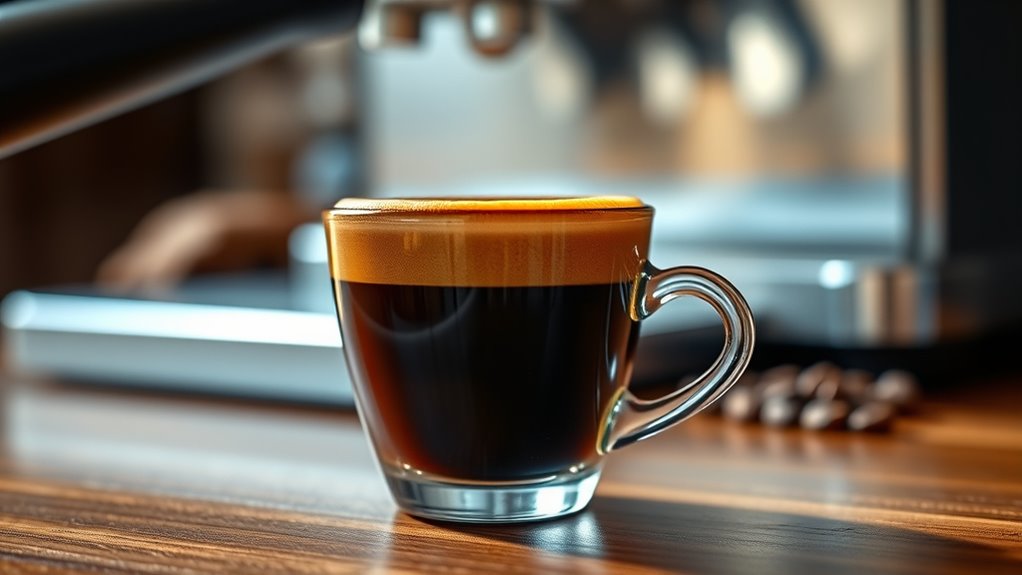
While it uses the same amount of coffee grounds as a standard espresso, a ristretto shot extracts with roughly half the water, producing a highly concentrated brew. You’ll get about 0.5 to 0.75 ounces of coffee instead of the usual 1 ounce.
This happens because you stop the extraction early, around 15 to 20 seconds, resulting in a thicker, more intense shot. By doing this, you emphasize sweeter, brighter flavor notes and reduce bitterness since over-extraction hasn’t occurred.
The result is a full-bodied, velvety espresso with a rich aroma that captivates the senses. When you prepare a ristretto, you’re crafting a bold, nuanced experience that highlights coffee’s complexity in a compact, powerful form. It is important to maintain consistent extraction timing to ensure the desired flavor profile and shot quality.
How Does Ristretto Differ From Espresso?
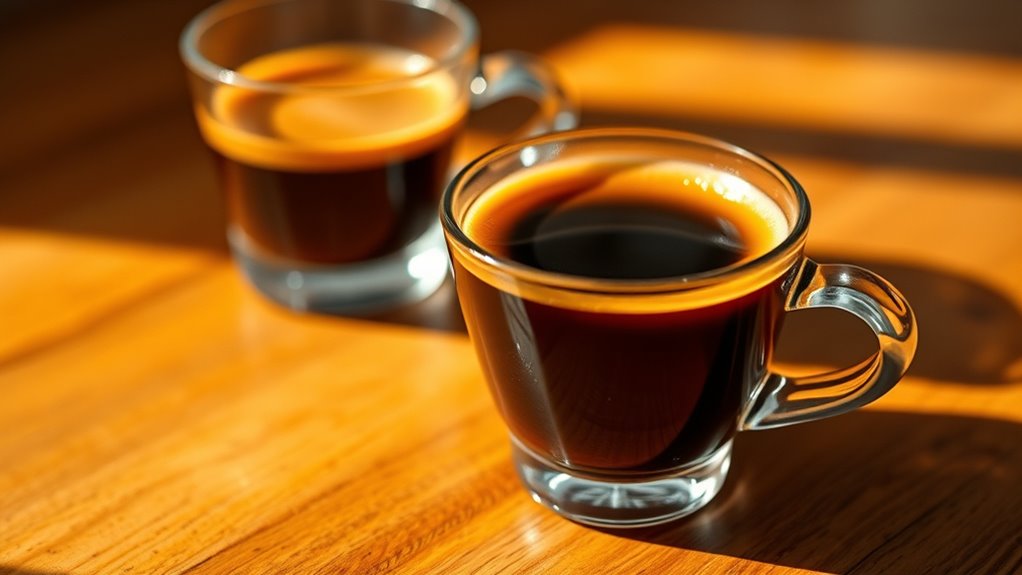
Although ristretto and espresso share the same coffee grounds, they differ fundamentally in water volume and extraction time, which dramatically affects flavor and texture.
Ristretto uses about half the water of an espresso shot and pulls in roughly 15 seconds, compared to espresso’s 18 to 23 seconds. This shorter, more concentrated extraction produces a darker, more uniform shot, often resembling dark chocolate hues rather than espresso’s gradient of shades.
Ristretto’s shorter extraction yields a darker, richer shot with deep chocolate tones and uniform color.
You’ll notice ristretto emphasizes sweeter, brighter notes with reduced bitterness because it extracts fewer bitter compounds.
Despite using the same grounds, ristretto typically contains slightly less caffeine due to its abbreviated extraction.
When you taste ristretto, you experience a bolder, richer profile that highlights the coffee’s nuanced sweetness and complexity.
This difference in extraction time also means ristretto generally has a lower caffeine content than a traditional double shot of espresso.
How to Brew a Ristretto Shot
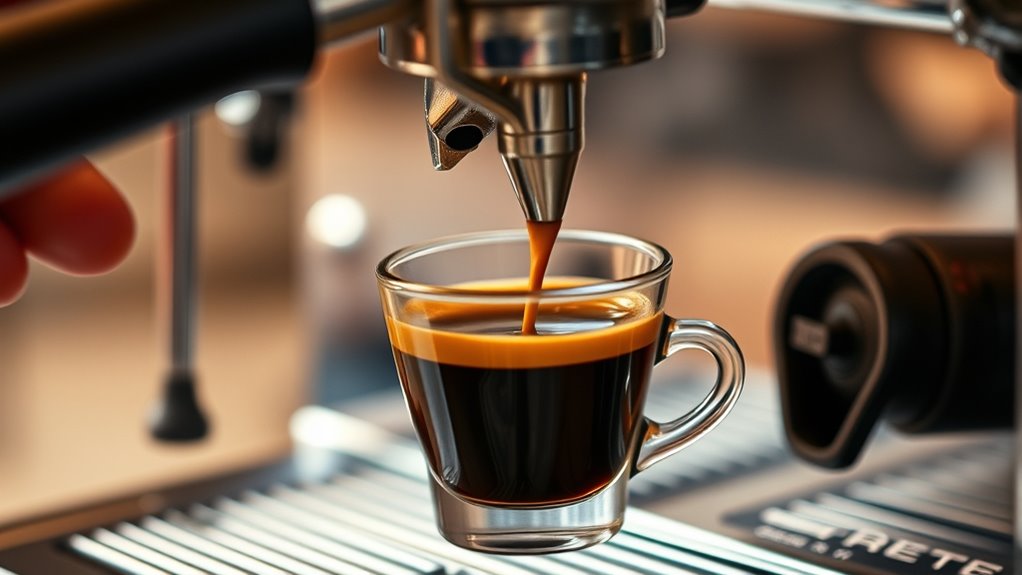
You’ll start by dosing 7 grams of finely ground coffee. Make sure the grind size is consistent and tamp it evenly—this is key for a good extraction.
Then, use about 1 1/2 ounces of purified water.
Stop the shot between 12 to 14 seconds to capture that intense ristretto concentration. Timing and water volume are really important here because this balance defines the shot’s rich, bold character.
For the best results, aim for a grind resembling gritty table salt to ensure optimal extraction and flavor.
Coffee Dose And Grind
A precise coffee dose of 7-9 grams is vital for brewing a ristretto shot, matching the amount used for a standard espresso. Your grind size plays a pivotal role; you need it very fine to increase resistance and guarantee concentrated extraction within a shorter time frame.
To master this, focus on three essential steps:
- Grind finely enough to slow water flow but avoid clogging or over-extraction.
- Aim for water to pass through the grounds in about 15 seconds.
- Tamp evenly to create uniform resistance, promoting consistent extraction.
Because extraction time influences caffeine strength, controlling these variables is crucial to managing the caffeine concentration in your ristretto shot.
Timing And Water Volume
When dialing in your ristretto shot, controlling timing and water volume is critical to achieving that intense, concentrated flavor. Aim for about 1 1/2 ounces of water, roughly half the amount of a standard espresso.
Extraction time should hover between 12 to 14 seconds, noticeably shorter than regular espresso’s 18 to 23 seconds.
You’ll want to grind finer to slow the flow rate, ensuring water passes evenly through the grounds within this tight window. Watch the shot’s color and flow carefully.
Stop the extraction the moment the color lightens and flow slows.
This precise timing prevents over-extraction, preserving the rich, syrupy body that defines a ristretto.
Mastering these variables is essential to reveal its bold, nuanced profile. It might take a few tries, but once you get it, the flavor payoff is huge.
Measuring espresso yield by weight rather than volume is crucial for consistency and accuracy when dialing in a ristretto shot.
Best Grind Size and Coffee Dose for Ristretto
You want a grind size that’s as fine as powdered sugar to get the right resistance for a true ristretto extraction.
Using around 8-9 grams of coffee works well to keep the shot concentrated without going overboard on extraction.
It’s all about precise dosing and consistent tamping—they’re key to bringing out the ristretto’s intense, balanced flavor.
Regular cleaning, including descaling with vinegar solution, is essential to maintain the machine’s performance and ensure the best extraction quality.
Optimal Grind Size
Although dialing in the grind size can be challenging, achieving a very fine grind, like powdered sugar, is essential for pulling a perfect ristretto. This ultra-fine grind increases resistance, slowing water flow and ensuring extraction of intense, concentrated flavors within a short shot time.
To master the ideal grind size, focus on grinding fine enough to create consistent resistance without clogging the portafilter. Also, maintain tamping pressure around 30 pounds to compact grounds evenly.
Using approximately 17 grams of coffee for a double ristretto helps balance extraction and flavor intensity.
Each step demands precision because a slight deviation alters extraction, impacting taste and body. When you get your grind size right, your ristretto shot reveals a bold, syrupy essence that really defines this espresso style.
Regularly calibrating your grinder every 50–100 shots ensures consistent grind particle size and optimal extraction quality.
Ideal Coffee Dose
Because the ristretto shot demands intense concentration of flavor in a brief extraction, dialing in the ideal coffee dose is critical. You’ll want to use approximately 7 to 9 grams of finely ground coffee for a single ristretto shot.
This dose, paired with a grind size finer than standard espresso, ensures water flows through quickly yet extracts the rich, intense flavors within about 15 seconds.
Precise dosing and consistent tamping pressure are essential; slight deviations can disrupt flow rate and lead to under- or over-extraction.
By carefully adjusting your grind size and dose, you’ll control extraction speed, balancing acidity and sweetness while avoiding bitterness.
Mastering this balance lets you pull a ristretto that’s concentrated, vibrant, and perfectly nuanced. It’s a true affirmation of your technical skill and passion for espresso.
Because grind size directly affects extraction time and flavor balance, slight adjustments can dramatically improve your ristretto’s quality and consistency.
How Extraction Time Affects Ristretto Flavor
When you dial in the extraction time for a ristretto, every second counts toward shaping its flavor profile. You want to capture the ideal balance of sweetness, concentration, and smoothness without veering into bitterness.
Here’s what you need to know:
- Extraction between 12-15 seconds targets early-stage solubles, like sugars and aromatics, that craft a sweeter, more concentrated shot.
- Beyond 15 seconds, bitter compounds start to emerge, dulling the ristretto’s signature smoothness and brightness.
- Over-extraction mimics traditional espresso, increasing bitterness and complexity but sacrificing the ristretto’s distinctive flavor clarity.
Mastering this timing precision is essential. It guarantees your ristretto stays vibrant and intense, highlighting its unique character rather than blending into a standard espresso profile.
Controlling extraction variables such as pressure, grind size, and water temperature is crucial to maintain this precise timing and flavor balance.
Why Does Ristretto Taste Sweeter?
Since ristretto uses a shorter extraction time and less water, it pulls fewer bitter compounds and highlights the coffee’s natural sugars. This limited water flow prevents the release of harsh tannins and acidic elements, resulting in a smoother, sweeter profile.
Shorter extraction and less water in ristretto emphasize natural sugars, creating a smoother, sweeter coffee experience.
By grinding finer and extracting rapidly, you maximize sugar solubility, intensifying those sweet notes.
The shorter extraction also preserves the coffee bean’s bright, sweet aromatics, enhancing your sensory experience. Because fewer bitter compounds dissolve, the ristretto’s taste strikes a more balanced, sweeter chord than traditional espresso.
When you sip a ristretto, you’re tasting a concentrated essence where precision in time, water, and grind combine to emphasize natural sugars and aromatics, creating a distinctly sweeter, more refined espresso shot.
This is achieved by maintaining high pressure extraction, which ensures the optimal balance of flavor compounds is drawn out efficiently.
Caffeine in Ristretto vs. Espresso
How much caffeine do you really get from a ristretto compared to a traditional espresso? Despite its bold, concentrated flavor, a ristretto typically delivers less caffeine. Here’s why:
Both start with the same coffee dose, but ristretto’s shorter extraction time means fewer caffeine compounds dissolve into the shot.
A ristretto generally contains 20-30% less caffeine than a full-length espresso, due to its abbreviated brewing process.
Espresso’s longer extraction pulls more caffeine-soluble compounds, increasing caffeine content in the final cup.
Popular Ways to Enjoy Ristretto
Where can you truly appreciate a ristretto’s bold, concentrated flavor? Straight from a demitasse, you get to experience its intense sweetness and aromatic complexity firsthand.
Or, use ristretto as a base in specialty drinks. It enhances their richness without overpowering.
| Serving Style | Description | Flavor Profile |
|---|---|---|
| Straight Shot | Served in small demitasse cups | Bold, concentrated, sweet |
| Double Shot | Two ristretto shots combined | Intensified richness |
| With Milk | In lattes, macchiatos, flat whites | Creamy, smooth, less bitter |
| Black (No Milk) | Pure espresso extraction | Intense, complex, aromatic |
Each method offers a precise balance. You can tailor ristretto’s powerful essence to your own preference.
Common Ristretto Mistakes and Fixes
Enjoying ristretto in various forms is rewarding, but crafting that perfect shot demands attention to detail. Avoid these common mistakes to elevate your ristretto:
- Over-extraction: Pulling the shot too long creates bitterness. Limit extraction time to around 15 seconds for best flavor concentration.
- Grind size: Using a grind that’s too coarse results in weak, underdeveloped flavors. Always use finely ground coffee for proper extraction.
- Water temperature: Fluctuating temperature causes flavor imbalance. Calibrate your espresso machine to maintain a consistent, ideal temperature.
Also, use fresh beans and measure your dose accurately (7-9 grams) to prevent flat flavors and poor extraction.
Master these elements, and your ristretto will deliver the intense, balanced profile you’re aiming for.
Frequently Asked Questions
Can I Use a Ristretto Shot in Espresso-Based Drinks?
Yes, you can use a ristretto shot in espresso-based drinks. It really intensifies the flavor, adds a nice sweetness, and brings out a richer aroma.
Just remember to adjust the milk or water amounts to balance its concentrated profile. This way, you get a bolder, smoother experience without it being overpowering. It’s a great way to switch things up!
What Coffee Beans Are Best for Ristretto Shots?
Think of choosing coffee beans for ristretto like selecting jewels for a crown. You’ll want high-quality, freshly roasted single-origin beans, like Costa Rican or Ethiopian. These varieties have balanced acidity and sweetness.
Make sure to grind the beans extra fine to bring out a rich, velvety complexity. It really makes a difference in the final shot. Picking the right beans is key to nailing that perfect ristretto.
How Does Water Temperature Impact a Ristretto Shot?
You’ll find that water temperature directly impacts your ristretto’s flavor. Too hot extracts bitterness, and too cool yields sourness.
Maintaining 195°F to 205°F guarantees balanced extraction. This helps preserve the shot’s concentrated sweetness and velvety body.
Is Ristretto Suitable for Beginners in Espresso Brewing?
You’ll find ristretto perfect as a beginner because it’s like a precise symphony in a cup. It’s short, intense, and forgiving.
You’ll master grind, dose, and extraction without bitterness, making your espresso journey smoother and more rewarding.
Can I Make Ristretto Shots With a Home Espresso Machine?
Yes, you can make ristretto shots with your home espresso machine by using finer grounds and controlling the extraction time around 15-20 seconds. Make sure to maintain consistent tamp pressure, too.
It’s all about experimenting with the water volume to get that intense, balanced flavor you’re after. Give it a try, and you’ll find the sweet spot that works best for your taste!
Conclusion
Now that you know a ristretto shot uses about half the water of a standard espresso, you can appreciate why it’s nearly 30% more concentrated in flavor. This means you’re getting a richer, sweeter, and bolder experience in every sip.
When you pull your ristretto, focus on grind size and extraction time to reveal its unique profile. Mastering this shot elevates your coffee game with precision and passion. It’s perfect for those who crave intensity in every drop.