To make your espresso less bitter, start by adjusting your grind to medium-fine for balanced extraction. Keep a precise 1:2 coffee-to-water ratio and aim for a 25–30 second extraction to avoid harsh flavors.
Choose a medium or light roast, and make sure your water temperature stays between 92°C and 96°C using filtered water. Regularly clean your machine to keep things tasting fresh.
You can also try adding a pinch of salt or a splash of milk to soften bitterness. With a few simple tweaks, you’ll discover even more ways to perfect your espresso’s taste.
Adjust Your Espresso Grind to Cut Bitterness
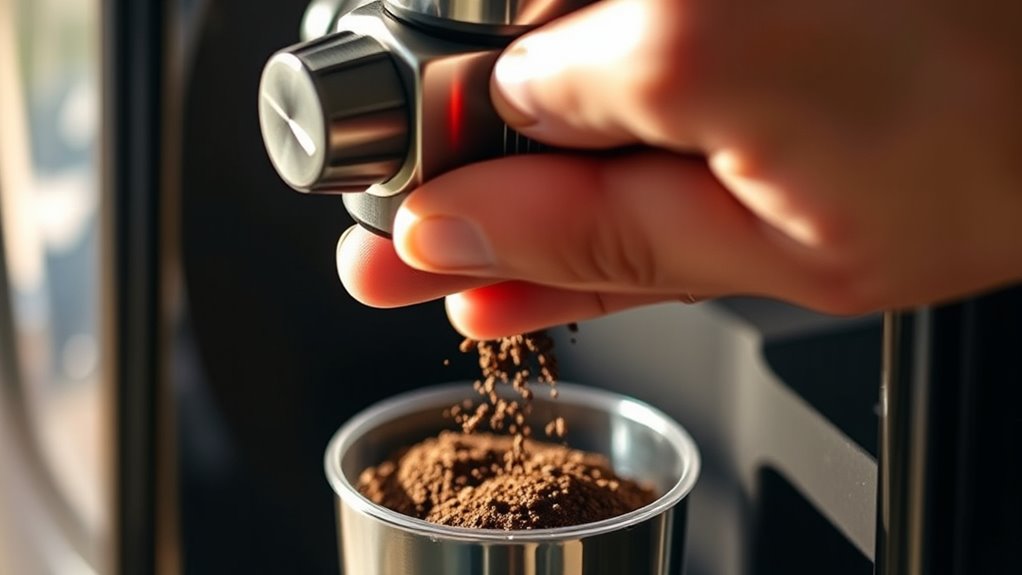
Although dialing in your espresso grind can seem tricky at first, adjusting it to a slightly coarser setting can substantially reduce bitterness. When your grind is too fine, it increases the surface area exposed to water, speeding up extraction and often resulting in harsh, bitter flavors.
Adjusting to a slightly coarser espresso grind can significantly cut bitterness by slowing over-extraction.
By using a medium-fine grind instead of a powdery texture, you slow extraction to a more balanced pace. This allows water to flow evenly through the coffee puck, preventing channeling that causes over-extraction.
Regularly tasting your espresso and tweaking the grind based on extraction results helps you find the sweet spot that minimizes bitterness.
With consistent adjustments, you’ll master a grind size that delivers smoother, more enjoyable espresso every time. Proper extraction time is crucial for optimal flavor and crema quality.
Balance Espresso Coffee-to-Water Ratio
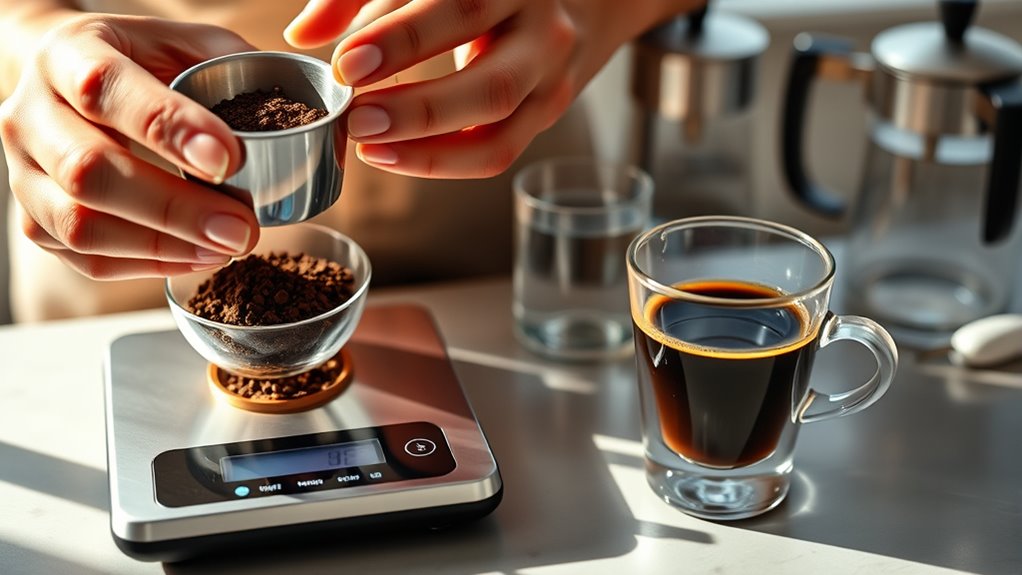
To make your espresso less bitter, start by balancing the coffee-to-water ratio. A good target is something like 18 grams of coffee to 36 grams of espresso.
Try adjusting the coffee dose while keeping the amount of water the same. This helps you find the right extraction time and flavor.
Getting the ratio just right prevents over-extraction, so you end up with a smoother, richer shot every time.
Also, controlling the extraction time is crucial to avoid bitterness and achieve a balanced flavor.
Ideal Brew Ratios
When you dial in your espresso, balancing the coffee-to-water ratio plays a crucial role in controlling bitterness. The ideal brew ratio usually involves about 18-20 grams of coffee yielding 36-40 grams of espresso, maintaining a 1:2 ratio. This balance helps extract flavors without tipping into over-extraction, which causes bitterness.
If you increase the coffee dose or reduce the yield within this range, you can minimize bitterness by avoiding excessive extraction. On the flip side, using too much water or too little coffee weakens the shot and can introduce sourness.
Consistently measuring your coffee and espresso output ensures you can repeat your results and fine-tune the taste.
Try experimenting within this ratio range to find your perfect balance. It’s all about highlighting sweetness and reducing bitterness. With a little practice, you’ll nail that smooth, delicious shot every time.
Remember that maintaining an appropriate extraction time is essential to avoid over-extraction, which can lead to bitterness.
Adjust Coffee Dose
Since bitterness often comes from an imbalance in your espresso’s coffee-to-water ratio, adjusting the coffee dose is a straightforward way to improve flavor. Increasing the dose from, say, 18g to 20g boosts the coffee’s strength and helps reduce bitterness by creating a richer, more balanced shot.
You’ll want to pair this with less water, aiming for a tighter ratio like 1:1.5 instead of 1:2 to avoid over-dilution.
Keeping a consistent, precise brew ratio makes sure your extraction hits the sweet spot and cuts down harsh, bitter notes.
Using a digital scale to measure espresso yield by weight ensures you maintain this precise ratio consistently.
Optimize Extraction Time
Although dialing in your coffee dose and water ratio sets the foundation, optimizing your extraction time is essential for reducing bitterness and achieving a balanced espresso. Aim for an extraction time between 25 and 30 seconds. Going longer often pulls out bitter compounds.
If your shot runs too long, try adjusting your grind to be slightly coarser. This speeds up extraction and prevents over-extraction. You can also tweak your coffee dose or water-to-coffee ratio to fine-tune flavor balance.
Keep a close eye on your brewing time and stop the shot a bit earlier if needed. Additionally, adjusting your machine’s pressure settings can help you control extraction more precisely. This results in a smoother, less bitter espresso every single time. Choosing beans with an appropriate roast level can further help minimize bitterness in your espresso.
Shorten Extraction Time to Reduce Bitterness
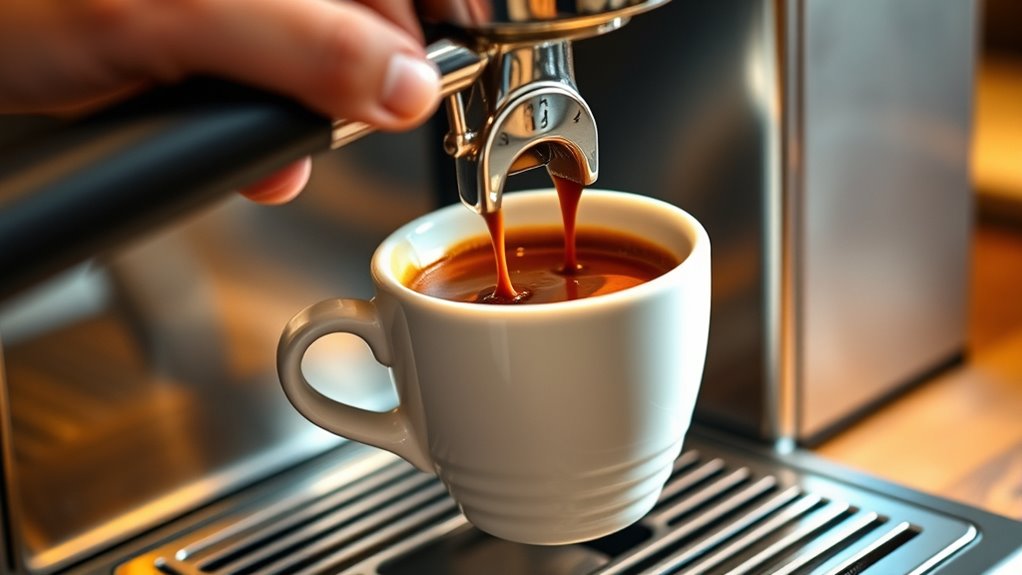
You’ll want to keep your espresso extraction between 25 and 30 seconds to avoid pulling bitter compounds.
Using a timer or shot clock makes it easier to consistently hit this sweet spot and stop over-extraction.
If your shot is taking too long, try adjusting your grind size to be a bit coarser.
This naturally speeds up the process and helps keep bitterness in check.
Since the espresso’s extraction time influences flavor but not calorie content, you can focus on taste without worrying about added calories.
Optimal Extraction Duration
When you keep your espresso extraction time within the ideal range of 25 to 30 seconds, you prevent over-extraction that pulls out excessive bitter compounds. This careful timing ensures your espresso stays smooth and balanced. It helps you avoid harsh flavors caused by tannins and chlorogenic acids.
To hit this sweet spot, you can adjust your grind size or machine settings. This will help you craft a less bitter shot every time.
Focus on these key points:
- Use a timer or scale to consistently monitor extraction duration
- Aim to stop the shot before bitterness creeps in
- Fine-tune grind size to control flow rate and extraction speed
Mastering precise extraction duration transforms your espresso into a rich, enjoyable experience every time. It’s all about dialing in that perfect timing for flavor. Additionally, understanding the impact of extraction time on flavor balance is essential for achieving a smooth, well-rounded espresso.
Timing Adjustment Techniques
Since bitterness often results from prolonged extraction, shortening your espresso shot time is a powerful way to enhance flavor balance. Aim for an extraction time between 25 and 30 seconds to prevent over-extracting bitter compounds.
You can achieve this by adjusting your grind to a slightly coarser setting, which naturally decreases the shot duration.
Use a timer to monitor your extraction consistently and avoid letting the brew run too long. If you notice your espresso tastes bitter, try stopping the extraction a few seconds earlier.
It often makes a significant difference in flavor. Additionally, incorporating a brown sugar cinnamon syrup can help balance bitterness with sweetness and spice.
Pick the Best Roast Level for Less Bitterness
Although dark roasts are popular for their bold flavor, choosing a medium or light roast can considerably reduce bitterness in your espresso. Medium roasts preserve fruity and floral notes, while light roasts bring higher acidity and a smoother taste with fewer bitter compounds.
Dark roasts develop more bitterness due to longer roasting times, so selecting a lighter roast level balances flavor complexity and minimizes harshness.
Longer roasting times in dark roasts increase bitterness; choosing lighter roasts balances flavor and reduces harshness.
When picking your roast, keep in mind:
- Medium roasts offer a rich, balanced profile without overpowering bitterness.
- Light roasts highlight bright, nuanced flavors for a lively espresso experience.
- Freshly roasted, high-quality beans at these levels ensure a smoother, less bitter cup.
Opting for the right roast level is a simple yet effective step toward a more enjoyable espresso. It’s an easy way to make your coffee taste better without extra effort. Just pick the roast that suits your flavor preferences and enjoy! Additionally, lighter roasts tend to retain more caffeine content and original bean characteristics, enhancing the espresso’s profile.
Set Ideal Water Temperature and Use Filtered Water
Because water temperature plays a crucial role in espresso extraction, you’ll want to keep it between 92°C and 96°C (198°F to 205°F) to prevent bitterness caused by over-extraction. Temperatures above 96°C can scorch the coffee grounds, intensifying bitter flavors, so precise control is key.
Use filtered or spring water instead of tap water to reduce minerals that can enhance bitterness and dull your espresso’s flavor profile.
Consistency matters, too. Make sure the water temperature stays steady throughout the brewing process to extract the best taste.
Regularly calibrate your espresso machine to maintain this ideal range.
Machines with PID temperature control help maintain precise and stable water temperature, improving flavor consistency.
Keep Espresso Equipment Clean to Prevent Off-Flavors
Keeping your espresso equipment clean plays a vital role in preventing bitter and off-flavors that can ruin your shot. Residue buildup from coffee oils and mineral deposits can quickly turn a rich espresso into something harsh and unpleasant.
To keep your espresso tasting fresh and balanced, focus on these key cleaning habits:
- Rinse and wipe down filters, baskets, and shower screens daily to remove coffee oils that cause rancid notes.
- Deep clean your machine monthly using descaling agents or vinegar to eliminate mineral buildup that alters flavor.
- Thoroughly clean the steam wand and water nozzles to prevent dried milk or minerals from contaminating your espresso.
Add Milk or Salt to Soften Espresso Bitterness
If you find your espresso too sharp or bitter, adding a small pinch of salt or a splash of milk can work wonders to soften its edge. Just about 1/8 teaspoon of salt per cup interferes with bitterness receptors and enhances the coffee’s natural sweetness. This helps balance the overall flavor.
Alternatively, adding milk, cream, or oat milk binds to bitter compounds, mellowing harsh notes and creating a smoother, creamier profile. Whole milk or butter adds fats that further neutralize bitterness and round out the taste.
Just be careful not to overdo it. Small amounts soften bitterness without masking the espresso’s character. This simple adjustment lets you enjoy a richer, less abrasive espresso experience without losing its distinctive flavor.
Frequently Asked Questions
Can the Type of Coffee Bean Affect Espresso Bitterness?
Yes, the type of coffee bean definitely affects espresso bitterness. You’ll find Arabica beans smoother and less bitter, while Robusta’s higher caffeine and bitterness impact taste.
Choosing your beans wisely helps control your espresso’s flavor profile. It’s all about what kind of experience you want in your cup. So, picking the right bean makes a big difference!
How Does Tamping Pressure Influence Espresso Taste?
You’ll find that tamping with about 30 pounds of pressure guarantees even extraction, preventing bitterness.
Too hard or too soft tamping disrupts flow, causing over- or under-extraction that markedly changes your espresso’s taste profile.
It’s all about finding that sweet spot so your espresso tastes just right every time.
Does Water Hardness Impact Espresso Bitterness?
Yes, water hardness impacts espresso bitterness. If your water’s too hard, minerals over-extract bitter compounds, making your espresso harsh.
It’s best to use filtered or softened water with balanced minerals. This helps keep bitterness in check and keeps the flavors vibrant. Give it a try and taste the difference!
Can Using a Different Espresso Machine Reduce Bitterness?
Yes, switching to an espresso machine with precise temperature and pressure control can reduce bitterness. You’ll get more consistent extraction and better heat stability, which prevents over-extraction and results in smoother, less bitter espresso shots.
It’s pretty straightforward—better control means you avoid those harsh flavors. So, if bitterness is an issue, trying a different machine might be the way to go.
How Often Should Espresso Grind Size Be Recalibrated?
Think of your grind size like a dance partner. You’ll want to recalibrate it every few weeks or whenever you switch beans to keep things smooth and balanced.
Environmental changes and new burrs also mean it’s time to adjust. Doing this helps keep bitterness at bay and your espresso tasting just right.
Conclusion
If you want to make your espresso less bitter, remember that every detail counts, from grind size to water quality. Adjust your grind, balance the coffee-to-water ratio, and keep extraction time in check.
Choose the right roast, maintain your equipment, and don’t shy away from adding a splash of milk or a pinch of salt. After all, “a stitch in time saves nine.” Small tweaks now will save you from bitterness later, ensuring a smooth, enjoyable espresso every time.