When you see “20 bar” on an espresso machine, it means the pump can generate up to 20 bars of pressure, its maximum capacity, not the actual brewing pressure. During extraction, the machine typically maintains a steady 9 bars. That pressure is ideal for balanced flavor and rich crema.
The extra pump capacity helps keep pressure stable despite tamping or grind differences. So even if your tamping isn’t perfect or your grind is a bit off, the machine can still deliver consistent pressure.
If you want to understand how pressure stability and build quality influence your espresso results, there’s more to explore. It’s definitely worth learning about if you want better espresso every time.
What Does “20 Bar” Mean in an Espresso Machine
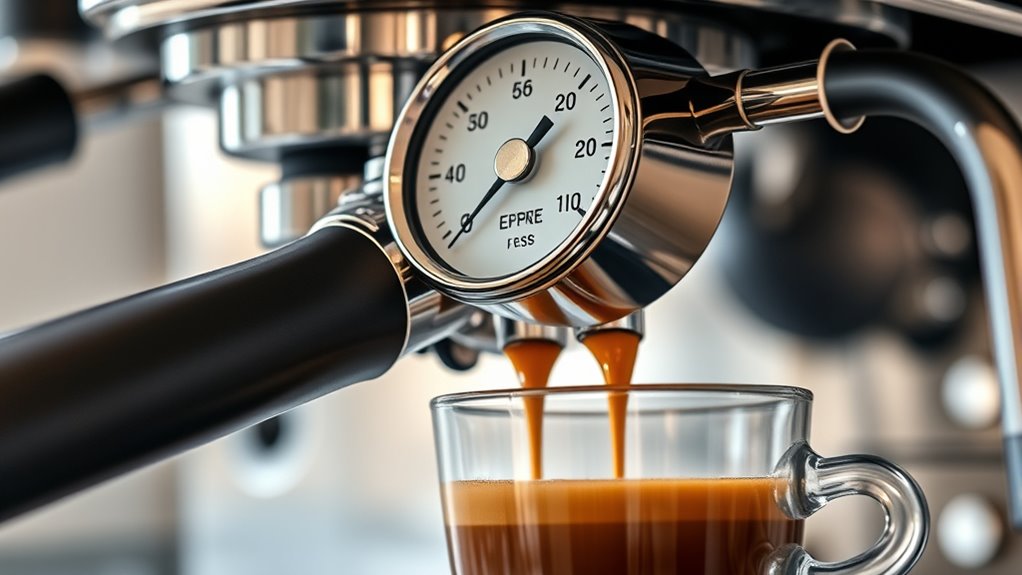
Although you might see “20 Bar” advertised on an espresso machine, this number actually refers to the maximum pump pressure the machine can generate, not the pressure it uses during brewing.
This rating indicates the pump’s capacity to produce up to 20 bars of force to push water through the coffee grounds.
However, during actual brewing, the machine typically delivers around 9 bars of pressure.
The higher 20-bar rating is essential for overcoming resistance caused by tamped coffee grounds and guarantees the pump can maintain stable pressure throughout extraction.
It’s important to understand that a 20-bar pump doesn’t automatically yield better espresso than one with a lower rating, as long as the machine regulates brewing pressure effectively and consistently.
Maintaining steady machine pressure is key to balancing extraction and achieving rich, full-bodied espresso shots.
Why 9 Bars Is the Ideal Brewing Pressure, Not 20 Bars
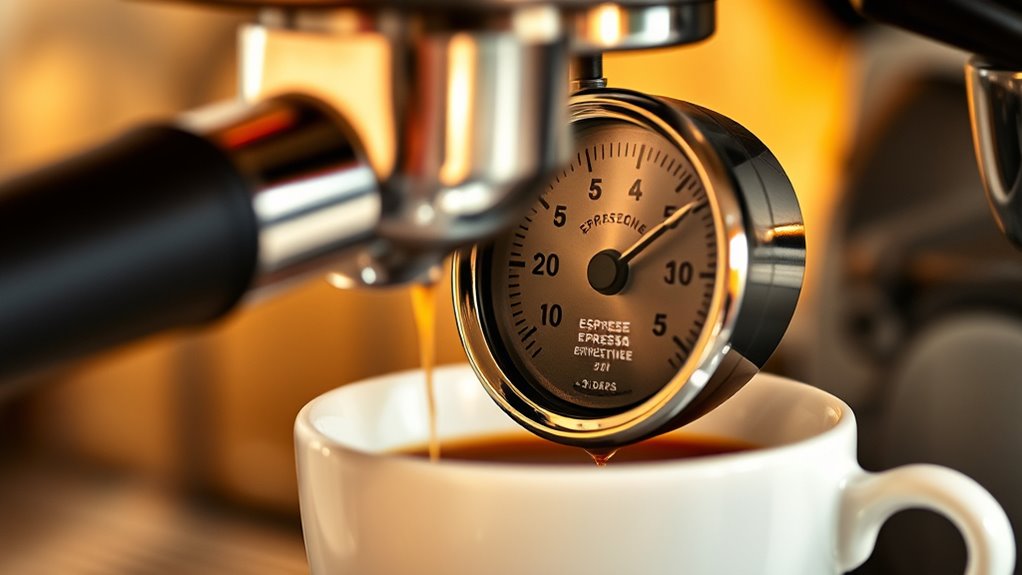
You might assume that higher pressure automatically means a better espresso, right? But actually, 9 bars is the sweet spot for brewing pressure to get that perfect extraction and rich crema.
Most professional espresso machines are built to keep a steady 9-bar pressure, no matter how powerful their pumps are. If you push past 9 bars, it can end up causing over-extraction, which makes your coffee taste bitter and throws off the balance of flavors.
To maintain optimal pressure and flavor, it is important to adjust grind size and tamping pressure accurately before brewing.
Optimal Pressure for Extraction
Why does 9 bars, rather than 20 bars, serve as the ideal brewing pressure for espresso? The truth lies in precision and balance. Although many espresso machines advertise 20 bar pumps, the actual extraction pressure hovers around 9 bars because:
- Balanced Extraction: 9 bars deliver optimal water flow through coffee grounds, extracting the ideal flavors without bitterness.
- Flavor Preservation: Pressures above 9 bars risk over-extraction, resulting in harsh, bitter notes and diminished aroma.
- Crema and Mouthfeel: Consistent 9-bar pressure produces the rich crema and smooth mouthfeel that define quality espresso.
In essence, 20 bar ratings reflect maximum pump capacity, not brewing pressure. For perfect espresso, you want steady 9 bars, ensuring flavor clarity and a satisfying sip every time. Maintaining water temperature between 93–96°C alongside proper pressure is essential for balanced, rich extraction.
Misconceptions About High Pressure
Understanding the difference between a machine’s maximum pump pressure and its actual brewing pressure clears up common misconceptions about espresso quality. A 20-bar rating indicates the pump’s maximum capacity, not the pressure used during brewing.
You should know that ideal espresso extraction happens around 9 bars, where pressure is stable and controlled.
Machines with 20-bar pumps often employ regulators to reduce pressure to this perfect level. Applying pressure beyond 9 bars can cause over-extraction, bitterness, and degrade crema quality.
So, when choosing an espresso machine, focus on consistent pressure delivery near 9 bars rather than a high maximum rating.
Stability in pressure is what truly influences the taste and texture of your espresso, not the maximum bar number displayed. Keep that in mind when you’re picking out your next espresso maker.
It’s all about steady, controlled pressure for the best shot. Maintaining the correct grind size also plays a crucial role in achieving optimal extraction at this pressure.
How Pressure Stability Impacts Espresso Quality More Than Bar Rating
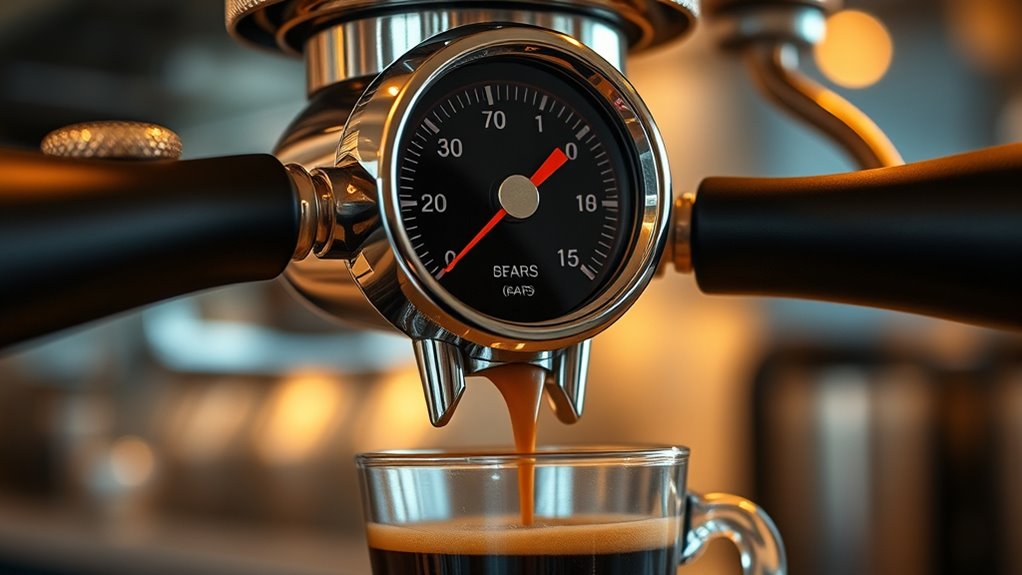
Although many espresso machines boast a high bar rating, it’s the stability of pressure during extraction that truly shapes the quality of your shot. You’ll find that consistent pressure guarantees uniform extraction, which directly impacts flavor, aroma, and crema.
Consistent pressure during extraction is key to unlocking the true flavor, aroma, and crema of your espresso shot.
Fluctuating pressure can cause over-extraction or under-extraction, resulting in bitter or weak espresso. So, it’s really about how steady that pressure stays throughout the shot.
Focus on these key aspects:
- Stable pressure delivers balanced shots with richer aroma and fuller body.
- Machines with poor regulation fail to maintain quality, regardless of max bar rating.
- Pressure consistency promotes ideal crema, enhancing the espresso’s texture and appearance.
Using freshly roasted and ground single-origin Arabica beans also complements pressure stability to maximize flavor in your espresso.
15-Bar vs 20-Bar Espresso Machines: What’s the Difference?
When you’re looking at 15-bar and 20-bar espresso machines, it might seem like the higher number means better pressure. But actually, both types aim to deliver the ideal 9 bars of pressure during brewing.
The key difference is just in the pump’s maximum capacity, not the pressure they actually apply.
So, what really matters is the build quality and how stable the pressure stays throughout the extraction. Those are the things that truly impact how your espresso turns out.
Once you understand this, it becomes easier to pick a machine that consistently makes great espresso, no matter what its max bar rating is.
Regular maintenance, including descaling frequency, also plays a crucial role in ensuring consistent pressure and optimal espresso quality over time.
Brewing Pressure Comparison
Because a 20-bar espresso machine can generate up to 20 bars of pump pressure, you might assume it brews coffee at that level. But in reality, extraction pressure typically stabilizes around 9 bars. This means the 20-bar rating reflects the pump’s maximum capability, not the actual pressure applied during brewing.
When comparing bar vs 20-bar machines, keep these points in mind:
- Both types maintain a consistent 9-bar extraction pressure, which is vital for ideal espresso quality.
- The 20-bar pump better manages resistance caused by grind size and coffee puck density.
- Higher pump capacity ensures stable pressure under varying conditions, but it doesn’t increase the actual brewing pressure.
Performance and Build Quality
Even if a machine boasts a 20-bar pump, what truly impacts your espresso’s quality is how well it maintains stable pressure during extraction.
Both 15-bar and 20-bar machines target the ideal 9-bar pressure, but it’s the consistency that matters most.
You’ll find that a machine with excellent pressure regulation and solid build quality ensures a steady, reliable flow.
This directly influences flavor extraction.
A 15-bar machine with superior components can perform just as well as a 20-bar model, provided it sustains stable pressure throughout.
How a 20-Bar Pump Keeps Your Espresso Pressure Steady
Although your espresso machine’s pump can generate up to 20 bars of pressure, it carefully regulates this power to maintain a steady 9-bar pressure during extraction. This regulation is vital for consistent espresso quality.
Espresso machines use powerful pumps to maintain a precise 9-bar pressure for perfect extraction.
Here’s how a 20-bar pump keeps your espresso pressure steady:
- It compensates for grind size and tamping inconsistencies, adjusting pressure to maintain uniform extraction.
- The pump’s high capacity ensures stable water flow despite resistance from densely packed coffee grounds.
- Built-in pressure control mechanisms modulate output, preventing pressure spikes and maintaining consistent brewing conditions.
Maintaining this steady pressure is crucial for achieving the ideal extraction ratio, which directly influences the espresso’s flavor and texture.
Is a 20-Bar Espresso Machine Better for Home Use?
How much difference does a 20-bar pump make for your home espresso experience? While a 20-bar machine can generate higher pump capacity, the actual brewing pressure usually stays around 9 bars, which is optimal for extraction.
This higher capacity means the machine handles resistance better, maintaining stable water flow and consistent pressure. For you, this translates into a more forgiving operation, especially if you’re still mastering grind size or tamping technique.
However, the true advantage lies not in the maximum pump rating but in how well the machine regulates pressure and its build quality. A well-designed 20-bar machine can perform just as effectively as lower-rated models.
Maintaining stable pressure is crucial as extraction ratio influences caffeine concentration and shot strength.
Key Features to Choose the Best 20-Bar Espresso Machine
When choosing the best 20-bar espresso machine, you’ll want to focus on a high-quality pump that can maintain stable pressure throughout the extraction process.
Consistent 9-bar pressure during brewing is essential, so advanced pressure regulation features are a must.
Maintaining consistent 9-bar pressure is crucial, making advanced pressure regulation a key feature for quality espresso.
Plus, build quality really matters. Durable materials like nickel-plated brass help ensure long-term reliability and pressure stability.
To narrow your options, consider these key features:
- Precise pressure control with easy-to-read gauges and adjustment options for fine-tuning extraction.
- Temperature stability and pre-infusion capabilities to enhance flavor and crema quality.
- Robust construction using premium materials for consistent performance over time.
Additionally, understanding how brewing temperature influences oil extraction can help optimize the flavor and calorie profile of your espresso.
Frequently Asked Questions
How Often Should I Clean a 20-Bar Espresso Machine?
You should clean your 20-bar espresso machine daily by rinsing the portafilter, basket, and steam wand. This keeps everything fresh and ready for your next cup. It’s a quick step that makes a big difference in taste.
Perform a thorough monthly clean to get rid of any buildup that daily rinsing might miss. Also, descale every 2-3 months using approved solutions. This helps maintain the pressure and flavor you love. Regular care keeps your machine working great and your espresso tasting perfect.
Can 20-Bar Machines Use Any Type of Coffee Beans?
You can use any coffee beans with a 20-bar machine. Imagine adjusting grind size and tamping like tuning an instrument. This precision guarantees you extract rich flavors without bitterness.
It’s especially important when working with delicate or darker roasts. Getting it right makes all the difference in your cup.
Does Water Temperature Affect 20-Bar Espresso Extraction?
Yes, water temperature considerably affects 20-bar espresso extraction. You’ll get bitter shots if it’s too hot or weak flavors if it’s too cold.
Maintaining 90 to 96°C guarantees balanced, rich espresso with ideal flavor extraction. It’s all about hitting that sweet spot to enjoy the perfect cup every time.
Are 20-Bar Espresso Machines More Expensive to Repair?
Yes, you’ll find 20-bar espresso machines cost more to repair because of their complex pumps and electronics. You’ll need specialized maintenance, and replacement parts tend to be pricier. So, regular upkeep is essential to avoid costly fixes.
It might feel like a hassle, but staying on top of maintenance can save you money in the long run. Think of it as an investment in keeping your machine running smoothly!
Can I Adjust the Pressure Settings on a 20-Bar Machine?
Yes, you can adjust pressure on a 20-bar machine by turning its over-pressure valve or control knob. Use a pressure gauge to monitor changes carefully. Make sure to follow manufacturer guidelines to avoid damaging your espresso machine.
It’s pretty straightforward, but take your time with adjustments. Small changes can make a big difference in your espresso quality. If you’re unsure, it’s always good to check the manual or ask a professional.
Conclusion
You might think 20 bar means better espresso, but ironically, the ideal pressure is actually around 9 bars. What really matters is how steady that pressure stays during extraction.
A 20-bar pump just guarantees you never drop below that sweet spot, not that you’ll use all 20 bars. So, when choosing your machine, focus less on the max bar number and more on consistent pressure for truly great espresso.