You might think a moka pot makes espresso, but it doesn’t truly qualify. Moka pots brew coffee at about 1 bar of pressure, far less than the 9 bars needed for authentic espresso. That means the coffee lacks the rich, thick crema and the intense, layered flavors espresso delivers.
Plus, moka pots use higher temperatures, which can cause bitterness. So if you want true espresso qualities, moka can’t fully replicate them. It’s interesting to explore how pressure, temperature, and innovation shape these brewing methods.
What Key Differences Separate Espresso and Moka Pot Coffee?
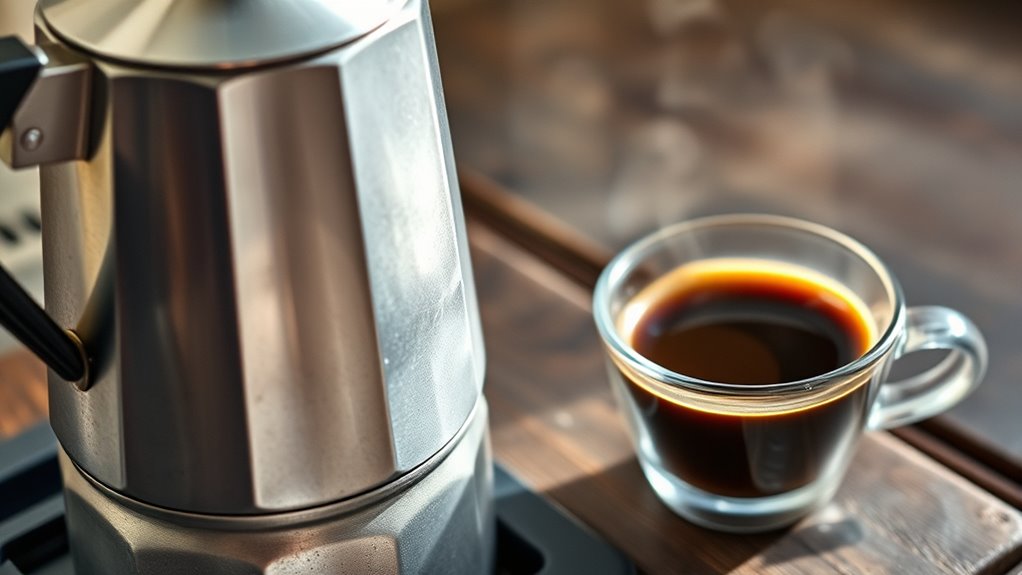
While both espresso and Moka Pot coffee deliver bold flavors, the key differences lie in their brewing methods and pressure levels.
You’ll notice espresso is brewed under high pressure, about 9 bars, using specialized machines that maintain temperatures between 90-95°C. This precise environment extracts a complex, layered flavor and produces a rich crema, the golden foam from emulsified oils and CO2.
In contrast, Moka Pots operate at roughly 1 bar, using steam pressure and boiling water above 100°C. This results in a bold, intense coffee but with a less nuanced profile and typically no crema or only a thin layer.
You’ll find that Moka Pot coffee’s pressure and temperature are less controlled, making its brew fundamentally different from authentic espresso.
Additionally, understanding the caffeine content differences between brewing methods can help tailor your coffee experience to your personal preferences and sensitivity.
How Does Pressure Affect Moka Pot and Espresso Brewing?
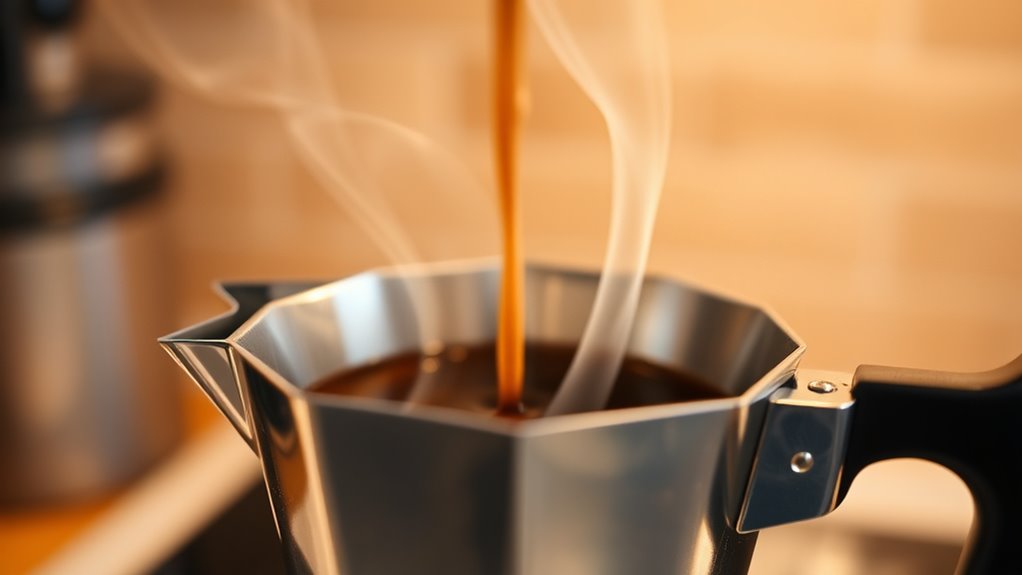
You’ll notice espresso machines use about 9 bars of pressure, which helps extract rich flavors and creates that creamy layer called crema.
On the other hand, moka pots work at just around 1 bar of pressure. This big difference in pressure really changes how concentrated the coffee is and its texture.
Knowing how pressure affects extraction makes it easier to understand why moka pot coffee and espresso taste so different. It’s all about how much pressure is pushing the water through the coffee grounds!
Achieving consistent espresso requires maintaining steady machine pressure, which balances extraction and results in rich, full-bodied shots.
Pressure Levels Comparison
How exactly does pressure shape the differences between moka pot coffee and espresso? The pressure level plays a vital role in determining texture, flavor, and crema.
Espresso requires about 9 bars of pressure, which emulsifies oils and creates a thick, stable crema. Moka pots operate near 1 bar, producing a lighter brew with minimal crema and less aroma complexity.
| Feature | Espresso (9 bars) | Moka Pot (1 bar) |
|---|---|---|
| Pressure | High (9 bars) | Low (1 bar) |
| Crema Formation | Thick, stable, rich | Minimal to none |
| Flavor Profile | Intense, complex | Milder, straightforward |
| Mouthfeel | Full-bodied, creamy | Lighter, less textured |
| Aroma Development | Robust, layered | Limited, simpler |
Pressure really defines the essence of each brew’s character. Additionally, the higher pressure in espresso contributes to a more concentrated caffeine content, typically around 126 mg caffeine per double shot.
Impact On Coffee Quality
What impact does pressure have on the quality of coffee brewed with a moka pot versus an espresso machine? The key difference lies in the pressure applied during extraction.
Espresso machines use around 9 bars, which creates a rich crema and extracts oils and emulsifies solids, producing a syrupy, complex cup with enhanced aroma and mouthfeel.
In contrast, moka pots operate at roughly 1 bar, which isn’t enough for crema formation. This lower pressure yields a bold, intense brew but it lacks the nuanced flavors and thicker texture you get with espresso.
Because moka pots can’t achieve the deep extraction that high pressure enables, their coffee ends up less layered and aromatic.
So, pressure plays a critical role in defining the quality and sensory experience of your coffee. If you want that rich crema and complexity, espresso machines have the edge.
But if you’re after a strong, straightforward cup, moka pots do the job just fine.
Achieving consistent flavor and crema with an espresso machine also depends on factors like grind size and tamping pressure, which moka pots do not accommodate.
Why Moka Pot Coffee Lacks Authentic Espresso Crema?
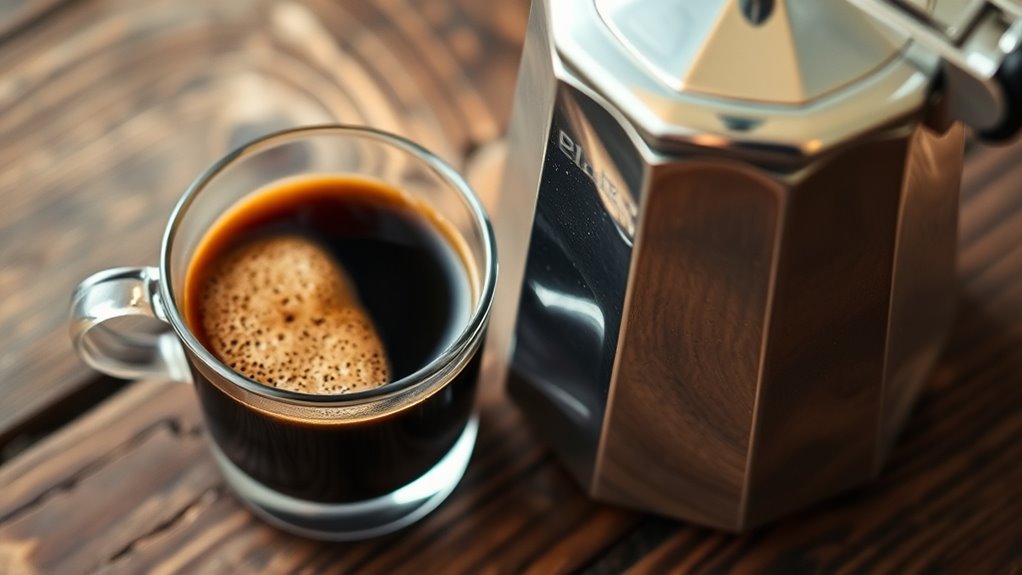
You’ll notice moka pots operate at about 1 bar of pressure, which is way less than the 9 bars that espresso machines use. This difference in pressure directly affects how much crema you get.
Because the pressure and temperature are lower in moka brewing, it can’t really create the emulsification of oils and CO2 that’s needed for that rich, golden crema. So, when you understand how these brewing mechanics work, it’s clear why moka coffee doesn’t have that dense, velvety layer that a true espresso delivers.
Additionally, moka pots do not maintain the ideal espresso brewing temperature range of 90–96°C, which further limits extraction and crema quality.
Pressure Differences Explained
Although moka pots brew coffee using steam pressure, they operate at around 1 bar, far below the 9 bars that true espresso machines generate. This significant pressure difference is why moka pot coffee lacks the dense, stable crema that defines authentic espresso.
Crema forms when high-pressure hot water emulsifies oils and gases in the coffee grounds, creating that rich, velvety layer on top.
At just 1 bar, moka pots can’t achieve this emulsification, resulting in a thinner, less textured coffee surface. The lower pressure also changes the extraction process, affecting the coffee’s body and mouthfeel.
Espresso brewing requires precise control of pressure, temperature, and grind size to achieve optimal extraction and flavor, which moka pots cannot replicate.
Temperature Impact On Crema
The pressure limitations of moka pots not only affect crema formation but also influence the brewing temperature, which plays a significant role in the final coffee profile. Unlike espresso machines that brew at 90–95°C, moka pots exceed 100°C, causing over-extraction and bitterness.
This temperature difference impacts crema in several ways:
First, high temperatures break down coffee compounds quickly, resulting in a thin, unstable crema.
Also, the lower pressure, around 1 bar, in moka pots fails to emulsify oils and CO2 needed for rich crema.
Plus, excess heat produces a bitter, less aromatic coffee that lacks espresso’s complex texture.
And without rapid, pressurized water flow through tamped grounds, moka pots can’t create dense microfoam.
Understanding this temperature impact helps explain why moka pot coffee lacks authentic espresso crema. It’s all about the balance between pressure and temperature working together to create that perfect crema.
Brewing Mechanics Contrast
Because moka pots operate at roughly 1 bar of pressure, far below the 9 bars typical in espresso machines, you won’t get the thick, golden crema espresso lovers expect. The high pressure in espresso machines emulsifies oils and releases CO2, creating that signature crema.
Moka pots use lower pressure and a higher brewing temperature—over 100°C—which leads to over-extraction and no stable crema formation. You still get a strong, rich coffee, but it lacks the crema’s distinctive texture and aroma.
Additionally, espresso requires a fine grind size and precise pressure to produce its characteristic flavor and crema, which moka pots cannot replicate.
| Aspect | Moka Pot | Espresso Machine |
|---|---|---|
| Pressure | ~1 bar | ~9 bars |
| Crema Formation | Minimal to none | Thick, golden crema |
| Brewing Temperature | Above 100°C (over-extract) | ~90-96°C (optimal) |
What Grind Size Works Best for Moka Pot Coffee?
When dialing in your Moka Pot, choosing the right grind size plays a crucial role in achieving a balanced extraction. Aim for a medium-fine grind, resembling fine sand, to get the best results.
Here’s what you need to keep in mind: use a consistent grind size to avoid clogging and ensure even extraction. Avoid grinding too fine because it causes over-extraction and bitterness.
And remember, don’t tamp the coffee; just fill the basket loosely to allow proper water flow.
You can slightly adjust the grind size finer or coarser to tweak brew strength and flavor. It’s all about finding that sweet spot that works for your taste.
Because grind size directly affects water flow and extraction, consistent particle size is essential for a well-balanced cup.
How Temperature Affects Moka Pot Coffee Flavor and Bitterness?
Although many factors influence your Moka Pot coffee’s flavor, controlling the brewing temperature plays a pivotal role in balancing taste and bitterness. When you use higher heat, extraction rates spike, pulling out more bitter and astringent compounds that can overwhelm the cup.
To avoid this, maintain medium-low heat to prevent overheating. This helps ensure a smoother, less harsh profile. Rapid heating leads to over-extraction, which results in a burnt, unpleasant taste because of excessive dissolution of bitter elements.
After brewing, quickly cooling the base stops extraction and minimizes lingering bitterness. By managing temperature consistently and moderately throughout the process, you preserve a balanced flavor with minimal bitterness.
This way, your Moka Pot delivers a rich, clean cup every time. Understanding the extraction process and its effects on oils, sugars, and acids can further enhance your brewing technique.
Can Moka Pots Match Espresso Flavor and Strength?
Even though moka pots brew a strong, intense coffee that rivals espresso in strength, they can’t fully match the rich flavor and texture of a true espresso shot. That’s mainly because moka pots operate at about 1 bar of pressure, far less than the 9 bars needed for authentic espresso extraction.
Moka pots deliver strong coffee but lack the rich flavor and texture of true espresso due to lower pressure.
This affects the crema and overall mouthfeel distinctly.
Here’s why moka pots fall short: Pressure difference means less crema and a thinner texture. Higher brewing temperature often leads to a more bitter taste.
Moka coffee is roughly two-thirds as strong but lacks espresso’s complexity.
True espresso’s flavor layers emerge only with specialized high-pressure equipment.
Achieving the full flavor profile requires precise control of variables like pressure, temperature, and extraction time to balance acids, sugars, and oils.
How the 9Barista Revolutionizes Stovetop Espresso?
Because traditional moka pots lack the pressure needed for true espresso, the 9Barista changes the game by delivering a full 9 bars of pressure right on your stovetop. It uses a sealed boiler heated to 179°C, with a spring-loaded valve that stops water from flowing too soon. This ensures consistent, ideal pressure every time.
Before reaching your coffee grounds, the boiling water cools to 93°C through a built-in heat exchanger. This mimics the temperature profile of commercial espresso machines.
The precise control over pressure and temperature lets you brew authentic espresso with rich crema and complex flavors.
The 9Barista’s innovative design combines the convenience of stovetop use with the high-pressure extraction that traditional moka pots simply can’t achieve. It really changes how you make espresso at home, making it easier and better than ever before.
Who Should Choose a Moka Pot Versus an Espresso Machine?
When deciding between a moka pot and an espresso machine, think about how much control and authenticity you want in your coffee. If you like a strong, espresso-like brew without spending a lot upfront or dealing with complicated upkeep, a moka pot is a great choice.
On the other hand, if you really want true espresso with rich crema and precise pressure, then an espresso machine is where it’s at.
For authentic espresso with thick crema and exact pressure, an espresso machine is the perfect choice.
Ask yourself these questions:
- Do you want hands-on brewing and enjoy experimenting with grind size and heat? Choose a moka pot.
- Do you want authentic espresso with consistent, barista-quality results? Go for an espresso machine.
- Are you a casual drinker who wants quick, strong coffee? A moka pot works perfectly.
- Want complex flavors and that creamy crema? Espresso machines deliver just that.
Tips for Brewing Better Moka Pot Coffee
Choosing a moka pot means embracing a hands-on brewing process that rewards attention to detail. Start with a medium-fine grind, similar to sand, and avoid tamping the coffee grounds to guarantee even water flow and prevent bitterness.
Fill the water chamber just below the safety valve with hot water to shorten brewing time and reduce heat exposure.
Heat the moka pot over medium-low heat with the lid open, and watch for the coffee to gurgle. Remove it from heat immediately to avoid over-extraction.
After brewing, cool the base quickly under cold water to halt the brewing process and preserve your coffee’s balanced strength and flavor.
Following these steps guarantees a richer, smoother moka pot coffee every time.
Frequently Asked Questions
How Do I Clean and Maintain My Moka Pot Properly?
You clean your moka pot by hand-washing all parts with warm water and a soft brush. Avoid using dishwashers because they can damage the pot.
Make sure to replace the rubber gaskets regularly to keep your pot working well. If you have stubborn stains, soak the parts in vinegar or baking soda.
After cleaning, dry everything thoroughly before you put it back together. This helps prevent any rust or buildup. Easy, right? Just a little care goes a long way!
Can I Use Moka Pot Coffee for Espresso-Based Drinks Like Lattes?
You can use moka pot coffee as a bold foundation for lattes, but don’t expect the velvety crema and pressure-packed richness of true espresso.
It’s a strong, convenient alternative, though not a perfect espresso substitute. So, if you’re after that classic espresso vibe, moka pot coffee might not fully deliver.
But for a quick, tasty latte base, it definitely does the job.
What Types of Coffee Beans Are Best for Moka Pot Brewing?
You’ll want medium roast Arabica beans with a consistent medium-fine grind for moka pots. Freshly roasted beans within 2-4 weeks bring out balanced acidity, vibrant flavors, and smoothness. This helps avoid bitterness from dark or over-extracted coffees.
Using the right beans makes a big difference. It’s all about getting that perfect cup every time. So, stick with medium roast Arabica, and you’ll be set!
How Long Does It Take to Brew Coffee With a Moka Pot?
It takes you about 5 to 10 minutes to brew coffee with a Moka Pot. Most extraction happens within 3 to 5 minutes once the water heats up.
Are There Any Safety Tips When Using a Moka Pot on the Stove?
About 60% of moka pot accidents stem from over-pressurization. You should check the gasket and valve regularly to make sure everything’s in good shape. Also, always fill the water below the safety valve.
It’s best to use medium-low heat when brewing and never leave the pot unattended on the stove. Let it cool down before cleaning to avoid burns or damage.
Following these simple tips can help keep your moka pot safe and your coffee delicious!
Conclusion
If you’re chasing authentic espresso, a Moka pot won’t quite hit the mark. It brews a rich coffee, but without that signature crema and pressure punch. Think of the Moka pot as a skilled artist with limited tools, crafting bold flavors but missing espresso’s full canvas.
Still, with the right grind, temperature, and technique, your stovetop coffee can shine. Choose wisely based on your taste and convenience, and elevate every cup you make.