You can drink espresso while pregnant, but you need to watch your caffeine intake carefully. A single 1 oz shot has about 63 mg of caffeine, which is roughly one-third of the recommended 200 mg daily limit.
Drinking more than three shots may increase risks like miscarriage or low birth weight. So, it’s important to pay attention to your total caffeine from all sources and control your portions.
Understanding how caffeine affects your baby and knowing safe limits can help you make informed choices throughout your pregnancy. Just keep an eye on how much you’re having, and you should be fine.
Is Espresso Safe During Pregnancy?
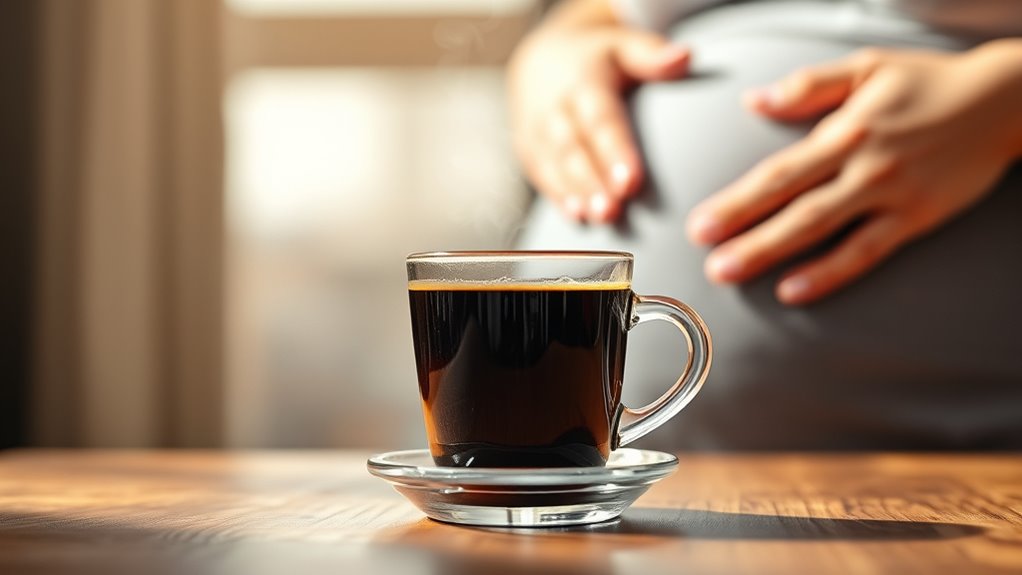
While you might enjoy the bold flavor of espresso, it’s important to consume it cautiously during pregnancy. Each 1-ounce shot contains about 47-64 mg of caffeine, so one shot is generally safe if you stay within the daily recommended limit of 200 mg.
Since espresso is highly concentrated, you must carefully track all caffeine sources throughout the day to avoid exceeding this limit.
Remember, caffeine from espresso is absorbed quickly, which means large amounts can more immediately affect fetal development.
If you prefer to minimize risk, decaffeinated espresso offers a safer alternative, with just about 2 mg of caffeine per 8-ounce cup.
Because espresso contains a concentrated caffeine amount in a small serving, it’s especially important to monitor your total daily intake during pregnancy.
How Much Espresso and Caffeine Is Safe?
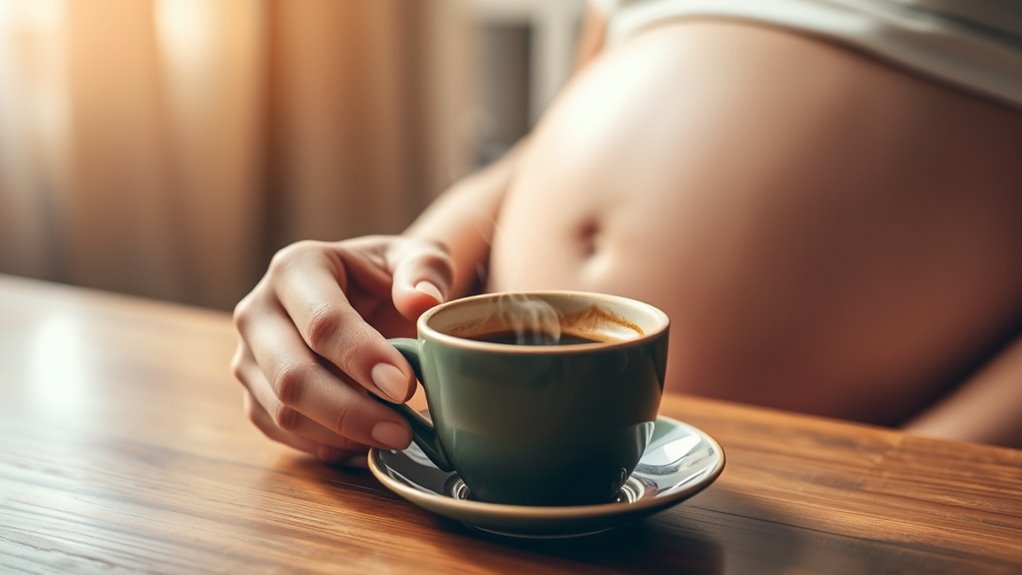
Because a standard shot of espresso contains about 63 mg of caffeine, you should limit yourself to no more than three shots per day during pregnancy to stay within the recommended 200 mg caffeine limit.
Consuming more than this amount may increase risks such as miscarriage and low birth weight.
To stay safe, monitor your total daily caffeine intake from all sources, including tea, chocolate, and medications.
Drinking espresso slowly and in moderation helps you avoid exceeding these limits.
Remember, caffeine accumulates quickly, so even small amounts from other foods and drinks count.
It’s essential to be cautious and deliberate with your espresso consumption during pregnancy to protect your health and your baby’s development.
Always consult your healthcare provider if you have concerns about your caffeine intake.
Paying attention to extraction time can also influence the strength and caffeine concentration of your espresso shots.
What Is the Caffeine Content of Espresso?
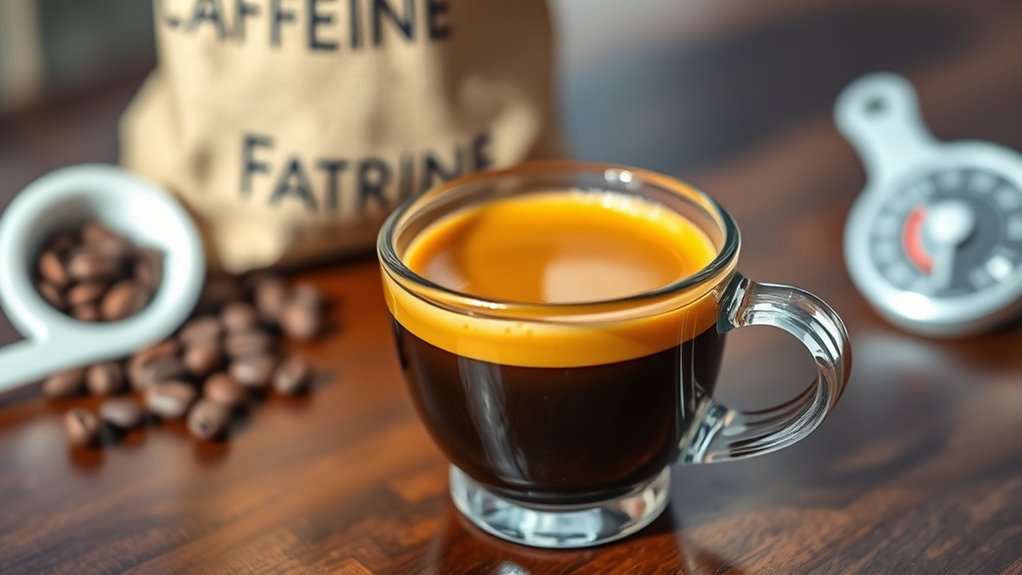
A single 1-ounce shot of espresso contains about 63-64 mg of caffeine. So, it’s important to keep track of how many shots you’re having.
Since espresso is more concentrated than regular coffee, even small servings can add up pretty quickly. Being aware of your serving size really helps you manage your caffeine intake safely during pregnancy.
Decaf espresso typically contains only 3-15 mg of caffeine per shot, making it a lower-caffeine alternative for those looking to reduce intake with minimal caffeine residuals.
Espresso Caffeine Amount
Although espresso shots are small in volume, they pack a significant caffeine punch, typically containing between 47 and 64 mg of caffeine per ounce. The exact amount varies based on the coffee bean, grind size, and brewing time. Compared to regular brewed coffee, espresso’s caffeine concentration per ounce is higher, so it’s important to monitor how many shots you consume.
For pregnant women, sticking to one or two shots, roughly 64 mg of caffeine, aligns with safety guidelines.
| Beverage Type | Volume (oz) | Approximate Caffeine (mg) |
|---|---|---|
| Espresso (single) | 1 | 47–64 |
| Brewed Coffee | 8 | 95–165 |
| Espresso (double) | 2 | 94–128 |
| Decaf Espresso | 1 | 2–5 |
| Instant Coffee | 8 | 27–173 |
Serving Size Impact
Two to three ounces of espresso can contain between 47 and 64 mg of caffeine, depending on factors like bean type and brewing method. Since espresso is served in small amounts, it lets you control your caffeine intake more easily compared to larger coffee servings.
However, keep in mind that espresso is more concentrated, with higher caffeine per ounce than regular brewed coffee. Drinking just one shot might fit within safe pregnancy limits, but multiple shots can quickly push your caffeine consumption beyond recommended levels.
To stay cautious, monitor how many shots you drink and be aware of the total caffeine from all sources throughout your day. This careful approach helps you enjoy espresso while minimizing potential risks during pregnancy. On average, three shots of espresso contain roughly 189 mg of caffeine, which is within the FDA’s recommended daily limit for most adults.
How Does Espresso Affect Fetal Development?
When you consume espresso during pregnancy, the caffeine it contains, about 63 mg per shot, crosses the placenta and can directly affect your developing baby.
Since the fetal liver is immature, it processes caffeine slowly, causing prolonged exposure that may influence fetal development.
Elevated caffeine levels from excessive espresso intake have been linked to increased fetal heart rate and arrhythmias.
While moderate consumption within recommended limits is generally considered safe, high intake raises concerns because of its association with risks like miscarriage and low birth weight.
To protect your baby’s health, it’s essential to monitor how much espresso you drink and stay within established guidelines.
Always consult your healthcare provider to make sure your caffeine consumption supports ideal fetal development.
Because a double shot contains roughly 126 mg of caffeine, it can quickly approach the pregnancy caffeine limit, making portion control important.
What Are the Risks of Drinking Espresso While Pregnant?
You need to be careful with espresso during pregnancy because it has a lot of caffeine. Too much caffeine can affect your baby’s development and might increase the chances of miscarriage or low birth weight.
If you drink several shots, you could easily go over the recommended caffeine limit. That can lead to complications like preterm birth.
Knowing these risks can help you make safer choices for both you and your baby. So, it’s a good idea to keep an eye on how much espresso you’re having.
A standard espresso shot contains roughly 60 mg of caffeine, so monitoring your intake is crucial during pregnancy.
Caffeine Impact On Fetus
Because caffeine from espresso crosses the placenta, your developing fetus is directly exposed to its stimulant effects. The fetus can’t metabolize caffeine efficiently, leading to prolonged exposure that may affect development.
High caffeine intake, especially beyond recommended limits, can cause several concerns for fetal well-being. To protect your baby, keep in mind:
- Increased fetal heart rate due to caffeine’s stimulant properties
- Sleep disturbances and irregular activity patterns in the fetus
- Prolonged caffeine presence in fetal circulation because of limited metabolism
Recommended caffeine limit is under 200 mg daily to minimize risks. It is important to remember that total caffeine depends more on volume and amount of coffee consumed, not just the concentration in espresso.
Miscarriage And Birth Risks
The stimulant effects of caffeine on the fetus extend beyond immediate developmental concerns and can influence pregnancy outcomes. When you consume high amounts of caffeine, especially from espresso, you raise your risk of miscarriage. Since a single espresso shot contains about 63 mg of caffeine, drinking multiple shots daily can push your intake beyond the recommended 200 mg limit.
Studies indicate even moderate caffeine intake might slightly increase early pregnancy loss. Your fetus’s immature liver processes caffeine slowly, meaning high consumption could be more harmful.
To reduce miscarriage and birth risks, it’s essential to limit your espresso intake and track your total daily caffeine.
Staying within safe caffeine limits helps protect your pregnancy and supports healthier birth outcomes. So, keeping an eye on how much espresso you drink is really important. It’s all about balancing your caffeine intake to keep both you and your baby safe.
Additionally, maintaining consistent temperature stability during espresso extraction ensures a predictable caffeine content per shot, aiding in better intake management.
Can Moderate Espresso Intake Benefit Pregnancy?
While pregnant, you can enjoy moderate espresso intake without exceeding the recommended daily caffeine limit of 200 mg. Consuming espresso in moderation may offer some benefits when carefully balanced within this limit.
Here’s what moderate espresso intake can do for you during pregnancy:
- Provide antioxidants and polyphenols that support overall maternal health
- Help alleviate headaches and boost alertness, improving mood and energy
- Offer a controlled caffeine source to avoid excessive intake risks
- Allow you to indulge in a comforting beverage without compromising safety
It is important to ensure that your espresso machine is properly maintained, including regular descaling procedures, to guarantee safe and consistent coffee quality during pregnancy.
How to Monitor Espresso and Total Caffeine Intake
Enjoying moderate espresso during pregnancy means you need to pay close attention to how much caffeine you’re consuming throughout the day. One shot of espresso usually has between 47 and 64 mg of caffeine. So, if you have multiple shots, it’s easy to go over the recommended 200 mg daily limit.
To stay within safe limits, make sure to track all sources of caffeine. This includes tea, chocolate, and even some medications. Using a caffeine content chart can really help you figure out your total intake accurately.
It’s also a good idea to measure your espresso with a standardized shot glass. That way, you control your portions and avoid any surprises. Always check product labels and menu descriptions because caffeine content can vary, especially with specialty espresso drinks.
Keep in mind that extraction time and grind size affect the caffeine concentration in your espresso, so understanding extraction parameters can help you better estimate your intake.
When Should You Talk to Your Doctor About Espresso?
If you experience symptoms like jitteriness, heart palpitations, or sleep disturbances after drinking espresso, you should talk to your doctor promptly. Your healthcare provider can help determine if your caffeine intake is safe for you and your baby.
Also, make sure to consult your doctor if you have a history of pregnancy complications such as miscarriage or low birth weight. Or if you notice signs of excessive caffeine intake like increased fetal activity or dehydration.
It’s important to reach out if you’re taking medications containing caffeine or have sensitivity to stimulants. And definitely talk to your doctor if you plan to exceed the recommended 200 mg caffeine limit per day during pregnancy.
These precautions help you manage espresso consumption safely and minimize risks to your pregnancy. So, always prioritize professional guidance over assumptions about how much caffeine you can tolerate.
Frequently Asked Questions
Can Espresso Affect Breastfeeding After Pregnancy?
Yes, espresso can affect breastfeeding since caffeine passes into your breast milk.
You should limit your intake to under 200 mg daily to avoid causing irritability or sleep disturbances in your baby.
It’s a good idea to keep an eye on how your little one reacts after you have caffeine. If you notice any fussiness or trouble sleeping, you might want to cut back a bit more.
Are Decaf Espressos Safe During Pregnancy?
Decaf espressos are generally safe during pregnancy, but don’t throw caution to the wind. They contain minimal caffeine, so you should still keep your intake moderate.
Also, it’s a good idea to check the decaf process for safety before enjoying your cup. Better safe than sorry, right? Just enjoy your coffee mindfully!
How Does Espresso Compare to Other Caffeinated Drinks in Pregnancy?
Espresso has higher caffeine per ounce than most drinks, so you’ll need to limit your intake carefully. Compared to tea or soda, it’s more concentrated, making moderation essential to stay within safe pregnancy caffeine limits.
It’s a good idea to keep track of how much espresso you’re drinking. That way, you can enjoy it without worrying about going over the recommended amount during pregnancy. Just remember, a little goes a long way!
Can Espresso Cause Dehydration in Pregnant Women?
Espresso can act like a sneaky thief, stealing your hydration during pregnancy. You should limit intake and drink plenty of water to prevent dehydration, headaches, and fatigue.
This helps keep both you and your baby safe and comfortable. So, it’s a good idea to balance your espresso with lots of fluids throughout the day.
Does Espresso Affect Pregnancy-Related Heartburn or Nausea?
Yes, espresso can worsen pregnancy-related heartburn and nausea because its caffeine relaxes your esophageal sphincter and increases stomach acid. It’s best to limit intake to reduce discomfort and manage these symptoms effectively.
Keeping your caffeine consumption in check can really help. If you notice your heartburn or nausea getting worse after espresso, it might be a good idea to cut back or switch to a gentler alternative. Your body will thank you!
Conclusion
So, can you enjoy espresso while pregnant? Yes, but with caution. Keeping your caffeine intake within recommended limits is essential to protect your baby’s development and avoid risks like low birth weight or preterm birth.
Moderate espresso might even offer some benefits, but monitoring your total caffeine from all sources is vital. When in doubt, always consult your doctor to guarantee both your health and your baby’s stay safe throughout pregnancy.