To clean your espresso machine with vinegar, start by emptying and rinsing the water reservoir. Mix equal parts white vinegar and water, then fill the reservoir with this solution. Run a full brewing cycle without coffee to circulate the mixture and dissolve mineral deposits.
You might need to repeat this until the reservoir is empty. After that, flush the machine with fresh water through multiple cycles to get rid of any vinegar residue.
Doing this regularly helps keep your machine running efficiently and your espresso tasting great. It’s a simple way to maintain your machine for long-lasting performance.
Why Descale Your Espresso Machine With Vinegar
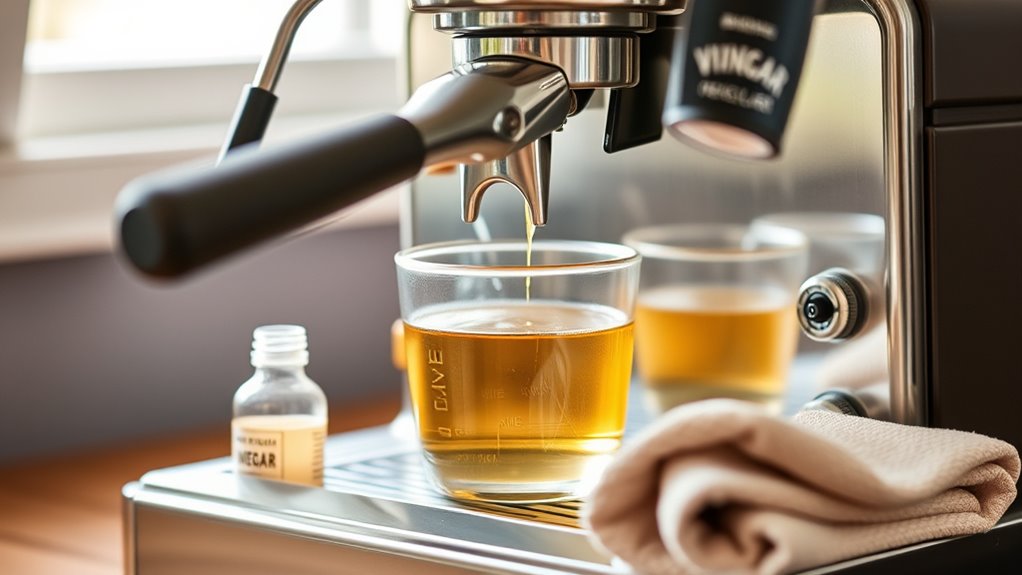
Although you mightn’t see it, mineral deposits like calcium and limescale build up inside your espresso machine over time, affecting its performance. Using vinegar to descale effectively dissolves these deposits, restoring ideal water flow and pressure. This guarantees your coffee maintains consistent quality with every brew.
Vinegar’s acidic properties make it a natural and cost-effective solution for removing hard water buildup. Regular descaling with vinegar prevents clogs and prolongs the lifespan of your machine’s internal components.
Many manufacturers recommend vinegar as a safe descaling agent when used correctly, so you can trust it to keep your machine running smoothly.
Regular maintenance, including descaling, supports consistent machine pressure and optimal espresso extraction.
Prepare Your Espresso Machine And Water Reservoir
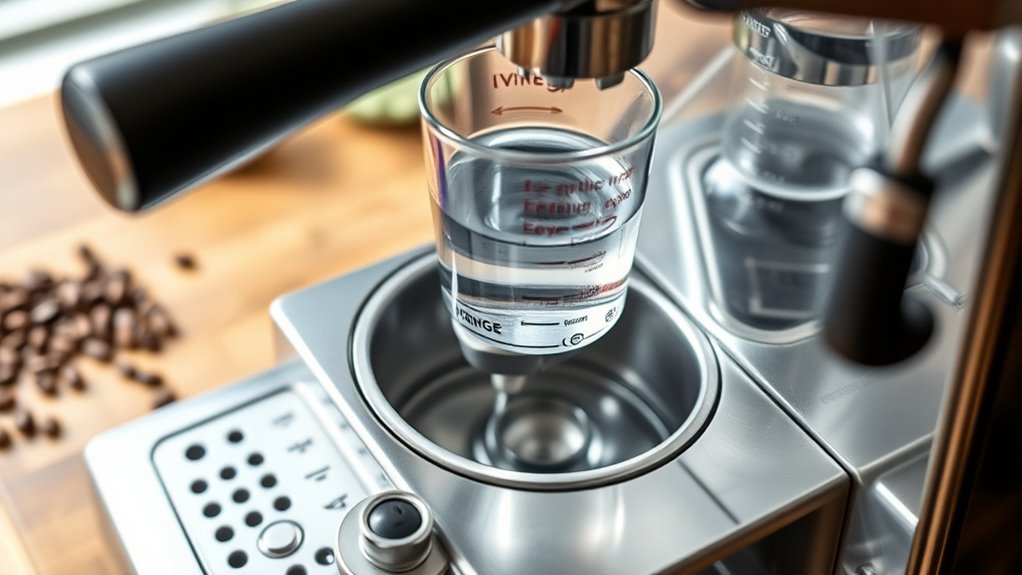
After deciding to descale your espresso machine with vinegar, the next step is to prepare both the machine and its water reservoir properly. Begin by removing the water reservoir and emptying any remaining water. Rinse the reservoir thoroughly with clean water to remove dust or debris that might interfere with the cleaning process.
Once clean, you’re ready to refill it with your vinegar solution, but hold off on mixing the solution just yet. Before proceeding, check that the reservoir lid fits securely to prevent spills during operation.
Finally, confirm the water level is appropriate. Make sure there’s enough to complete a full descaling cycle without overfilling.
Keep in mind that many manufacturers recommend using approved descaling solutions rather than vinegar to avoid damage to seals and components.
Preparing your machine and reservoir this way sets a solid foundation for effective cleaning and helps maintain your espresso machine’s performance. It’s a simple step that really makes a difference!
Mix The Vinegar Solution For Your Espresso Machine
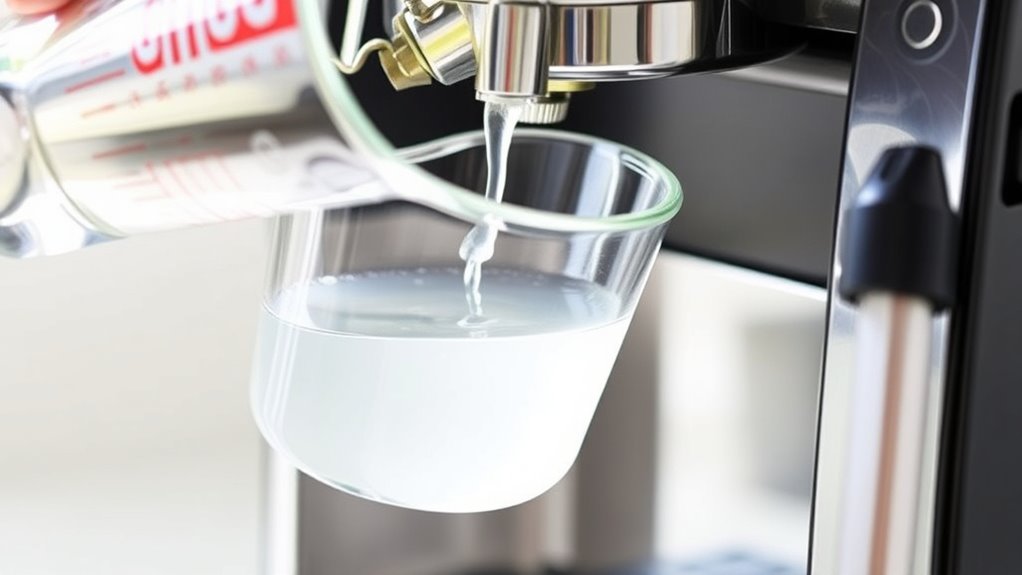
Start by mixing equal parts of white vinegar and water—that’s the key to making a great cleaning solution for your espresso machine.
Make sure to use plain, unflavored white vinegar so you don’t end up with any stains or residue inside the machine.
Once you’ve got your vinegar and water ready, combine them in a clean container.
Then, just pour the mixture into the water reservoir, and you’re all set to begin cleaning.
It’s important to follow up with several cycles of fresh water to fully remove any descaling agents from your machine.
Vinegar To Water Ratio
When you mix the vinegar solution for your espresso machine, using the right ratio is crucial to effectively remove mineral buildup without causing damage. A common approach is to use equal parts white vinegar and water. This strikes a good balance between cleaning power and safety.
Keep these points in mind:
- Use a 1:1 ratio (vinegar to water) for regular maintenance and effective descaling.
- For a gentler clean, dilute to 1 part vinegar to 2 parts water, which reduces acidity.
- Always consult your espresso machine’s manual for any specific ratio recommendations.
- Avoid higher concentrations of vinegar to prevent damage to internal components and lingering odors.
It’s important to note that vinegar should be avoided on aluminum parts to prevent corrosion and potential damage.
Following these guidelines helps ensure your espresso machine stays clean and functional without any risk. It’s pretty straightforward once you get the hang of it!
Choosing The Right Vinegar
Understanding the right vinegar to use goes hand in hand with selecting the proper vinegar-to-water ratio for cleaning your espresso machine. You should always use white distilled vinegar because it’s the most effective for descaling and won’t leave residues or odors.
Avoid flavored or apple cider vinegar, as they can cause unwanted residues and affect your espresso’s taste.
Typically, mixing equal parts white vinegar and water creates a safe, effective solution. If you face stubborn mineral buildup, you can temporarily increase the vinegar concentration to a 2:1 ratio, but only if your machine’s manufacturer approves.
Always check your espresso machine’s guidelines to ensure the type and concentration of vinegar won’t damage internal components.
Choosing the right vinegar is vital for effective, safe descaling. So, take a moment to pick the right one and follow your machine’s instructions carefully.
That way, you’ll keep your espresso tasting great and your machine running smoothly. Regular descaling every 1-3 months helps prevent mineral buildup and maintain your machine’s optimal performance.
Preparing The Cleaning Solution
Although mixing the vinegar solution might seem straightforward, getting the ratio exactly right is essential for safely and effectively removing mineral buildup from your espresso machine.
You’ll need to combine white vinegar and distilled water in equal parts to create an effective descaling solution.
Use a clean container to measure and mix thoroughly before pouring it into the machine’s reservoir.
Avoid flavored or colored vinegars to prevent residues or taste alteration.
Prepare the solution just before use to maintain its cleaning power.
Keep these tips in mind:
- Mix 50/50 white vinegar and distilled water precisely.
- Use a clean container for mixing.
- Avoid any vinegar with added flavors or colors.
- Prepare the solution fresh immediately before cleaning.
Regular descaling is vital since machine maintenance directly impacts espresso quality and flavor.
Run The Vinegar Descaling Cycle
Because vinegar effectively breaks down mineral buildup, you’ll want to start by filling your espresso machine’s water reservoir with an equal mix of white vinegar and water.
Start by mixing equal parts white vinegar and water to dissolve mineral buildup in your espresso machine.
Turn on the machine and run a brew cycle without coffee grounds to circulate the solution through its internal system.
Place a container under the group head, steam wand, or drain outlet to catch the descaling liquid.
Repeat this cycle multiple times until the reservoir is empty, making sure the vinegar thoroughly dissolves any mineral deposits.
This process cleans the essential parts of your machine, enhancing performance and longevity.
Adjusting the water temperature during descaling can help optimize the cleaning effectiveness and protect your espresso machine’s components.
Rinse Your Espresso Machine Thoroughly After Descaling
After descaling with vinegar, you’ll want to run several full water cycles to flush out any leftover solution completely. Make sure to use fresh water each time—that way, you avoid any residual flavors and keep your espresso tasting just right.
And while you’re at it, don’t forget to wipe down the exterior and steam wand. It helps get rid of any remaining residue and keeps everything looking clean.
It’s important to be cautious around electrical parts when cleaning to prevent any damage.
Importance Of Thorough Rinsing
When you finish descaling your espresso machine, rinsing it thoroughly is essential to prevent any vinegar or cleaning solution residue from altering the flavor of your espresso. Skipping this step can leave behind chemicals that not only affect taste but may also corrode internal parts over time.
Multiple rinse cycles with clean water flush out all mineral deposits and descaling agents, ensuring your machine stays in top condition. Proper rinsing also prevents blockages caused by leftover solution, preserving your machine’s performance.
Additionally, thorough rinsing eliminates lingering odors and guarantees pure flavor extraction every time you brew.
Remember to:
- Run several rinse cycles with clean water
- Check for any residual taste or smell
- Avoid shortcuts to protect internal components
- Maintain consistent rinsing after each descale session
Consistent maintenance, including proper rinsing, helps optimize espresso quality and consistency and extends the lifespan of your machine.
Steps To Flush Residue
To effectively flush out any vinegar residue from your espresso machine, run multiple cycles of clean water through both the brew head and steam wand. Place a large container under each to catch the rinse water. Repeat this water-only brewing process 2-3 times, refilling the water reservoir with fresh water before each cycle.
Keep going until the water runs clear and no vinegar smell remains. Finally, wipe down the portafilter, steam wand, and all accessible parts with a damp cloth to remove any lingering traces.
Proper rinsing maintains optimal brewing ratios, performance, taste quality, and chemical-free operation, which is crucial after descaling with any solution, including vinegar, to preserve your machine’s longevity and efficiency. This practice is part of recommended post-descaling maintenance.
| Step | Action | Tip |
|---|---|---|
| 1 | Fill reservoir with fresh water | Prevent diluted rinse |
| 2 | Run water through brew head | Use container to catch water |
| 3 | Run water through steam wand | Repeat 2-3 times |
| 4 | Wipe down parts | Remove residual vinegar traces |
Prevent Mineral Buildup In Your Espresso Machine Between Cleanings
Although mineral buildup can gradually impair your espresso machine’s performance, you can prevent it by using filtered or softened water and flushing the machine regularly with a vinegar solution. These simple steps reduce mineral deposits and keep your machine running smoothly between deep cleanings.
Try these practical tips to prevent buildup:
- Use filtered or bottled water to lower mineral content.
- Flush your machine with a vinegar solution every few weeks.
- Install a water softener if your tap water is hard.
- Watch for signs like sputtering or slow flow to catch buildup early.
Frequently Asked Questions
Can Vinegar Damage My Espresso Machine’s Internal Parts?
Yes, vinegar can damage your espresso machine’s internal parts if used undiluted or too often. It corrodes metals, breaks down rubber seals, and may void warranties. So, it’s really important to be careful with it.
Always follow the manufacturer’s guidelines when cleaning your machine. And don’t forget to rinse thoroughly afterward to avoid any leftover vinegar causing harm.
How Often Should I Descale With Vinegar for Optimal Performance?
Wondering how often to descale with vinegar? You should do it every 3 to 6 months, or more if you have hard water.
Don’t overdo it. Stick to your machine’s guidelines for the best performance.
Is It Safe to Use Vinegar on All Espresso Machine Brands?
No, it’s not safe to use vinegar on all espresso machines. You should check your manufacturer’s guidelines first.
Vinegar can damage certain materials or void warranties, especially on machines with delicate or proprietary components. So, it’s always better to be cautious and follow the recommended cleaning methods.
Can I Use Lemon Juice Instead of Vinegar for Descaling?
Yes, you can use lemon juice for descaling, but it’s less acidic than vinegar. So, you might need a stronger solution or a longer soak to get the same results.
Just be sure to rinse thoroughly afterward. You don’t want any leftover acidity messing with your espresso’s flavor. Easy enough, right?
What Should I Do if My Machine Still Tastes Like Vinegar?
If your espresso still tastes like vinegar, coincidentally, running multiple plain water cycles helps flush residues. Also, clean the reservoir, try baking soda rinses, and air out the machine thoroughly to banish that stubborn vinegar flavor.
Give it some time and maybe a couple more water cycles. Sometimes the taste just needs a little more flushing out. Keep at it, and soon enough, that vinegar flavor should disappear.
Conclusion
Now that you know how to clean your espresso machine with vinegar, you’re all set to enjoy smoother, tastier coffee. It’s funny how something as simple as vinegar can save your machine from mineral buildup and extend its life.
Just remember to rinse thoroughly and descale regularly to keep every cup perfect. With these easy steps, your espresso machine will thank you. And so will your morning routine!