You can use any roasted coffee bean to make espresso as long as you control the grind size, pressure, and extraction time carefully. Fine, consistent grounds and about 9 bars of pressure help release rich flavors and create that signature crema.
While dark roasts are traditional for bold results, lighter or medium roasts also work well with proper technique. Master these basics, and you’ll discover how different beans uniquely transform your espresso experience.
What Is Espresso and How Is It Made?
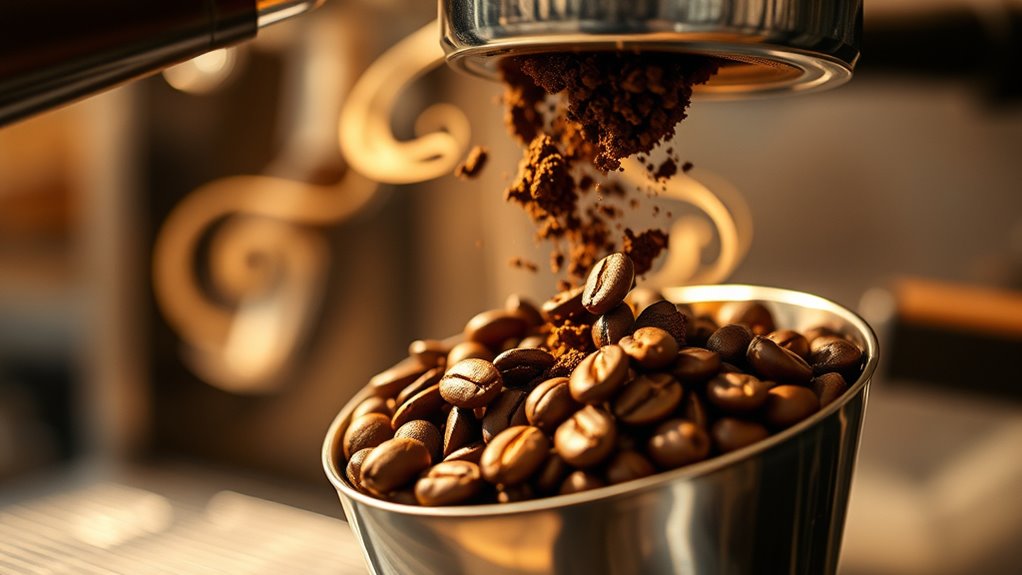
Although espresso might seem simple, it’s a carefully crafted beverage made by forcing hot water at 195°–205°F through finely ground coffee under intense pressure, around 9 to 10 atmospheres.
This process usually lasts 20 to 30 seconds, producing a concentrated shot topped with a thick, dark golden crema.
When brewed right, espresso delivers a rich flavor, a strong aroma, and a velvety, honey-like texture that’s unmistakable.
You can enjoy it as a standalone shot or use it as the foundation for popular drinks like cappuccinos and lattes.
The precise balance of temperature, pressure, and grind guarantees you extract the coffee’s deepest flavors and create that signature crema.
It really makes espresso an art form worth mastering. Proper extraction timing is essential to achieve consistent flavor and crema quality.
Why Do Grind Size and Pressure Matter for Espresso?
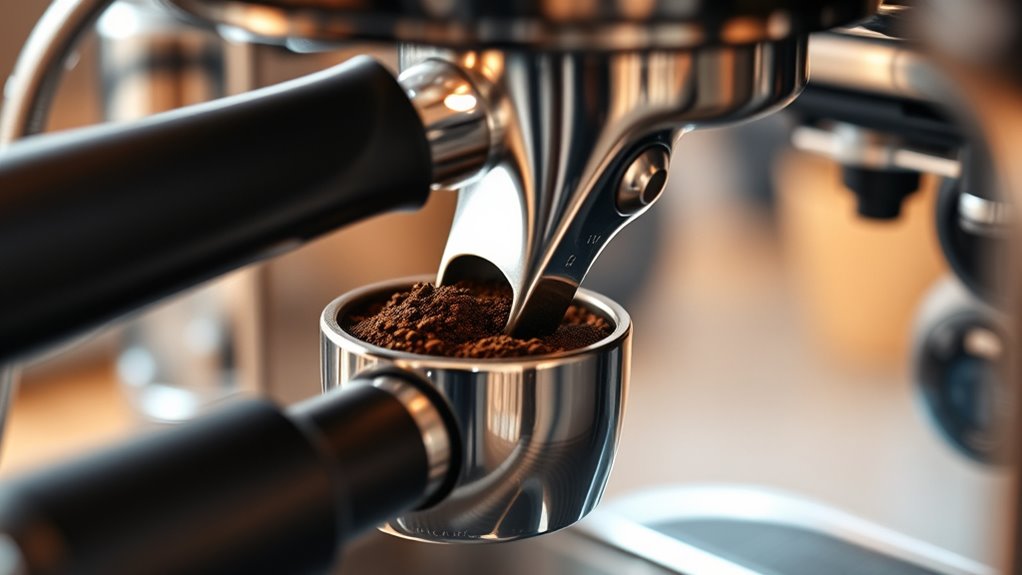
You need a precise, fine grind to get the most out of your espresso. When you brew under high pressure—around 9 bars—it helps bring out that rich flavor and the perfect crema.
But if your grind is a bit off or the pressure isn’t steady, the water won’t flow evenly. That can make your espresso taste sour or weak, which is a real bummer.
Adjusting the grind size within the ideal range of 200-400 microns ensures balanced extraction and flavor clarity.
Grind Size Precision
Because grind size directly influences extraction and pressure, dialing in a very fine, uniform grind is essential for pulling a perfect espresso shot. You need that precise grind to create the right resistance against the 9-bar pressure your machine applies, ensuring water flows evenly through the coffee.
If your grounds are too coarse, water rushes through, causing under-extraction and a weak, sour taste. Too fine, and you risk clogging and over-extraction, which brings bitterness.
Consistency is key. Uniform particles maintain stable pressure and maximize contact between water and coffee, revealing rich oils, complex flavors, and that coveted crema.
Mastering grind size precision means you control the extraction process, elevating every shot into a balanced, flavorful experience that truly showcases your beans’ potential. It’s all about getting that perfect balance, so each shot tastes just right every time.
Regularly recalibrating your grinder when switching beans or roast levels helps maintain accurate grind size and consistent extraction, ensuring the best results with every shot. grinder recalibration
Importance Of Pressure
When aiming for the perfect espresso, maintaining the right pressure is just as essential as dialing in your grind size. Proper pressure, around 9 bars, forces hot water through finely ground coffee, extracting the rich flavors and oils that define espresso.
If the pressure drops too low, water rushes through, causing under-extraction and sour, weak flavors. On the flip side, too much pressure squeezes out bitter, harsh notes from over-extraction.
Your grind size plays a vital role here. It must be fine enough to resist the water pressure, ensuring a balanced flow rate.
By mastering both consistent pressure and precise grind size, you get espresso’s signature thick crema, velvety texture, and full-bodied flavor.
That’s what really elevates your coffee experience to true perfection.
Additionally, tamping pressure is crucial to create uniform resistance, preventing channeling and ensuring an even extraction throughout the puck.
Can Any Coffee Bean Work for Espresso Brewing?
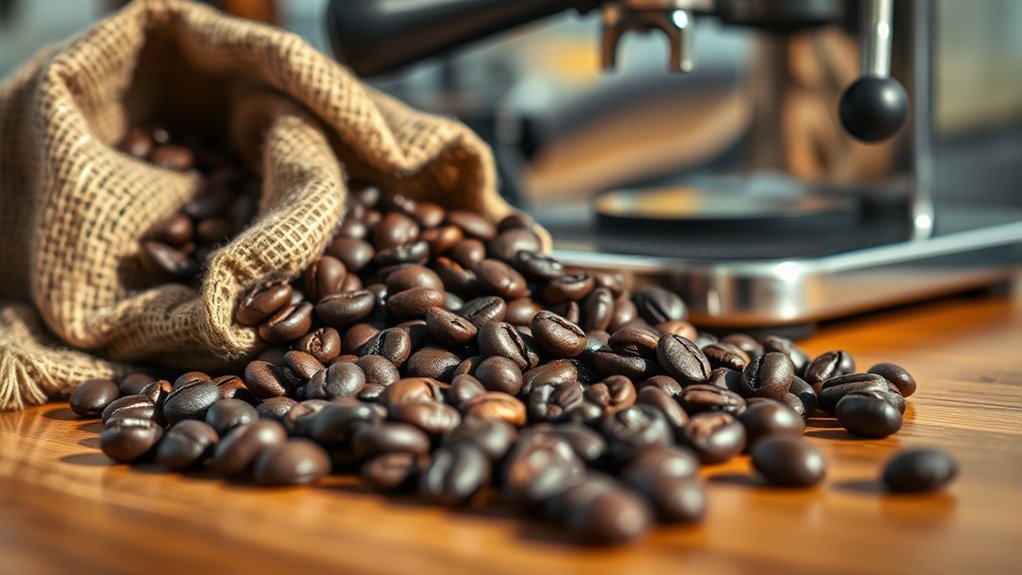
You can use any roasted coffee bean for espresso, but the real magic is in how you grind and brew it. It’s not so much about the bean’s roast or where it comes from.
Instead, your technique and the freshness of the beans make all the difference. When you get those right, you can pull a rich, nuanced espresso from just about any bean. However, achieving the best results often requires attention to grind size and extraction time to bring out optimal flavors.
Bean Versatility
Although espresso brewing relies heavily on pressure and grind size, any roasted coffee bean can work effectively for this method. You don’t have to limit yourself to a specific bean type. The key lies in matching roast level and grind consistency to your taste preferences.
Dark roasts offer bold flavors and rich crema, while lighter roasts require fine-tuning but deliver vibrant notes. Both single-origin beans and blends provide versatile flavor options, letting you craft a truly personalized espresso.
| Bean Type | Roast Level | Flavor Profile |
|---|---|---|
| Single-Origin | Light to Dark | Unique, nuanced |
| Blend | Medium to Dark | Balanced, bold |
| Any | Any | Adaptable with technique |
| Dark Roasts | Dark | Bold, crema-rich |
| Light Roasts | Light | Bright, complex |
Brewing Method Impact
Because espresso extraction depends heavily on pressure and grind size, any roasted coffee bean can deliver a great shot if brewed correctly. You don’t need a specific bean type or origin. The espresso machine’s high pressure uniquely pulls flavors from any roast.
Darker roasts often shine here, producing a richer crema and more forgiving extraction. However, if you prefer light or medium roasts, you can still achieve excellent espresso by dialing in your grind size and adjusting your technique precisely.
Freshness matters too. Stale beans will never perform well, no matter the method.
Ultimately, the brewing method’s impact lies in your control over grind, pressure, and timing. This allows you to access the full potential of any roasted coffee bean for espresso. Understanding the importance of grind size and consistent extraction is key to mastering espresso brewing.
What Are Espresso Beans and How Are They Different From Other Beans?
While many people assume espresso beans are a distinct variety, the term actually refers to any coffee beans roasted and ground specifically for espresso brewing.
Espresso beans aren’t a unique variety but coffee beans roasted and ground for espresso brewing.
You’ll find that espresso beans are typically roasted darker to create bold, intense flavors and to endure the high-pressure extraction process unique to espresso machines.
The difference lies not in the bean itself but in how it’s prepared. They’re roasted to a specific profile and ground finely to optimize brewing under pressure.
Any coffee bean, regardless of origin or species, can become an espresso bean if treated this way.
Freshly ground beans just before brewing are essential to preserve the aroma and crema that define a great espresso.
Using Regular Coffee Beans for Espresso: Pros and Cons
If you decide to use regular coffee beans for espresso, you’ll need to grind them very finely to achieve a proper extraction. Coarser grounds will lead to weak, sour, or under-extracted shots, which won’t satisfy your espresso cravings.
Regular beans, often designed for drip or filter brewing, can work, but they usually lack the richness and balance that dedicated espresso beans deliver. You might notice a thinner body and less crema, especially if your beans are light roast.
Grinding these beans to espresso fineness helps improve extraction, but the flavor profile will still differ from specialized espresso beans.
Ultimately, using regular coffee beans is a flexible option, but expect compromises in depth and intensity compared to beans crafted specifically for espresso. Maintaining approximately 9 bars pressure during extraction is also essential to achieve the best possible shot.
How Roast Level Affects Espresso Coffee Beans’ Flavor
Choosing the right coffee beans is only part of the espresso equation. How those beans are roasted plays an equally essential role in shaping your shot’s flavor.
Darker roasts deliver bold, robust flavors rich in chocolate and caramel notes. They’re perfect if you crave intensity.
Lighter roasts preserve origin-specific acidity and delicate floral nuances. This gives you a brighter, more complex espresso experience.
Medium roasts strike a balance by blending brightness with richness for a well-rounded cup.
Roasting also affects bean oil content. Darker roasts produce more surface oil, which enhances crema and mouthfeel.
Understanding these roast-level differences lets you tailor your espresso to your taste, whether you want sweetness with less acidity or a vibrant, nuanced profile.
Your roast choice directly influences every sip you savor. So, next time you pick your beans, think about how the roast will shape your coffee experience.
Also, maintaining your espresso machine with regular descaling cycles ensures the flavors you extract from your beans remain pure and consistent over time.
Tips for Brewing Great Espresso With Any Coffee Beans
Even though the type of coffee bean you use influences the flavor, mastering your brewing technique plays an equally essential role in pulling a great espresso shot. Start with a burr grinder to guarantee a consistent, fine grind. This is crucial for proper extraction no matter the bean.
Adjust your tamping pressure carefully to achieve even compression. This enhances flavor and extraction. Don’t hesitate to experiment with brewing time and pressure settings. These variables impact flavor and crema more than the bean type.
Always grind your beans just before brewing to capture maximum aroma and richness. Finally, be open to trying various beans and roast levels. Your refined technique can reveal unique qualities in any coffee, helping you craft exceptional espresso every time.
Keep in mind that espresso typically requires extra-fine grind to ensure proper extraction under high pressure and to optimize caffeine and flavor profiles.
How Bean Freshness and Quality Impact Your Espresso Shot
Because the freshness and quality of your coffee beans directly influence extraction, they play a critical role in shaping your espresso’s flavor and crema. Fresh beans, used within 2-4 weeks of roasting, retain oils and carbon dioxide that enhance extraction, resulting in a vibrant, aromatic shot.
High-quality beans with consistent roast and grind size ensure a smooth, balanced espresso. Conversely, stale beans produce flat flavors and weak crema, diminishing your experience. Grinding beans immediately before brewing preserves volatile compounds, maximizing taste.
| Bean Freshness | Quality Aspect | Impact on Espresso |
|---|---|---|
| 0-2 weeks | Uniform roasting | Bright, rich flavor, strong crema |
| 2-4 weeks | Consistent grind size | Balanced extraction, smooth taste |
| 4+ weeks (stale) | Inconsistent roast | Flat flavor, weak crema |
| Freshly ground | Presence of oils | Enhanced aroma and mouthfeel |
| Pre-ground old beans | Low CO2 content | Dull, lifeless shot |
Choosing Coffee Beans for Your Espresso Taste
While personal taste ultimately guides your espresso bean selection, understanding how roast level and origin shape flavor can really help you make a better choice.
If you like bold, rich espresso, dark roasted beans are your best bet. They produce fuller-bodied shots and a crema that’s pretty forgiving.
For a more nuanced experience, medium roasts bring out complex, balanced notes that highlight subtle flavors.
Choosing single-origin beans introduces distinct regional characteristics, which adds unique layers to your espresso.
On the other hand, blends offer consistency and harmony, balancing flavor and body.
No matter what you prefer, always pick high-quality, freshly roasted beans.
That way, you get the best aroma and taste every time.
When you match your bean choice with your flavor goals, you create espresso that truly satisfies your palate.
Frequently Asked Questions
Can I Use Flavored Coffee Beans for Espresso?
You can use flavored coffee beans for espresso, but expect an altered taste and potential machine clogging. Flavored oils can sometimes gum up your espresso machine, which means more cleaning and maintenance.
For the purest, richest espresso, it’s better to stick to unflavored, high-quality beans. You can always add flavors separately, like syrups or spices, to keep the quality intact and enjoy a fresh, clean shot every time.
How Does Water Temperature Affect Espresso Extraction?
You’ll want to keep water between 195°F and 205°F to extract balanced flavors. Too cool, and your espresso tastes sour; too hot, it turns bitter.
Consistent temperature guarantees perfect crema and a rich, smooth shot every time. It really makes a difference in how your espresso turns out. So, keeping that water temperature steady is key!
Is It Necessary to Tamp Coffee Grounds Evenly?
Yes, you need to tamp coffee grounds evenly to avoid channeling. When you apply consistent pressure, you guarantee uniform extraction, which brings out balanced flavors and rich crema in your espresso.
Uneven tamping ruins the shot’s quality. So, taking the time to tamp properly really makes a difference in your coffee. It’s all about getting that perfect, smooth taste every time.
Can Espresso Be Made With Decaffeinated Beans?
You absolutely can make espresso with decaffeinated beans. Just like a knight trusts his sword, trust fresh, properly ground decaf beans. They deliver a rich, concentrated shot, though the flavor might be a bit gentler.
It’s pretty straightforward, really. The magic of espresso comes from the brewing method, not just the caffeine content. So go ahead and enjoy your decaf espresso without any worries.
How Do Espresso Machine Types Influence Bean Choice?
Your espresso machine type dictates bean choice. High-end machines handle lighter roasts with precision, while simpler home models favor darker, robust beans.
You’ll want to adjust grind size and tamping to match your machine’s pressure and temperature capabilities. That way, you get the perfect extraction every time. It’s all about finding the right balance for your setup.
Conclusion
You can use almost any coffee bean for espresso, but understanding grind size, pressure, and roast level is key to revealing great flavor. Imagine a home barista experimenting with a light roast African bean. By adjusting grind and pressure, they craft a bright, nuanced shot that defies traditional dark roast norms.
With attention to freshness and quality, you’ll tailor your espresso to your taste. It just goes to show that the right technique can elevate any bean into an exceptional espresso experience.