Espresso beans aren’t a unique variety but regular coffee beans roasted darker to develop surface oils essential for crema and rich flavor. You’ll grind them finer for high-pressure extraction, which enhances body and intensity.
Darker roasting reduces acidity, increases bitterness, and caramelizes sugars, producing bold, full-bodied shots with better crema stability. Origin and blend influence flavor nuances, but it’s the roast and grind tailored for espresso that truly define these beans.
Understanding this reveals deeper insights into espresso’s complexity. It’s pretty interesting once you get what’s really going on behind that perfect shot!
What Are Espresso Beans Really?
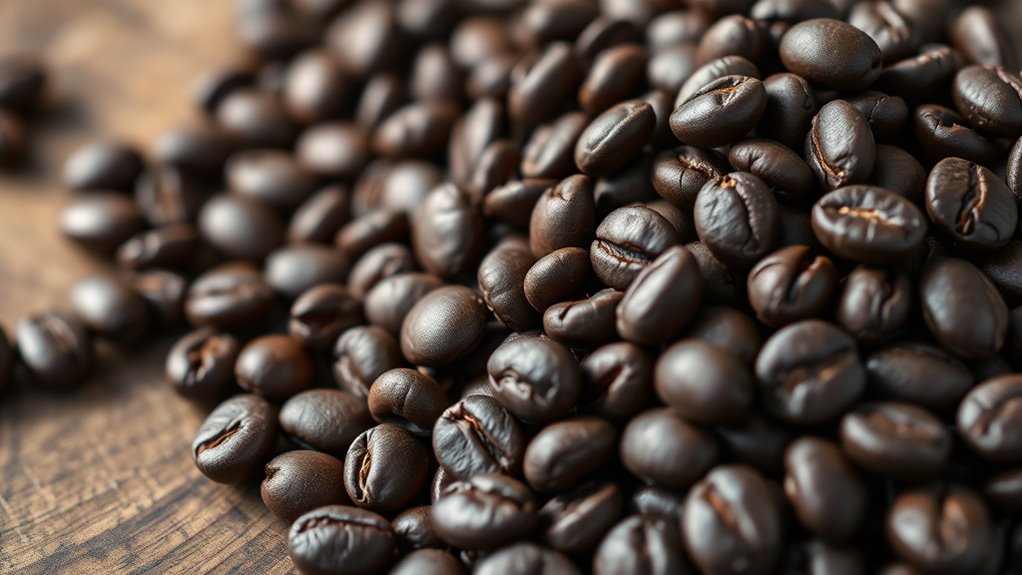
Although the term “espresso beans” might suggest a unique coffee variety, it actually refers to regular coffee beans roasted darker to suit espresso brewing. You should understand that espresso beans are defined primarily by their roast level and blend composition, not by species or origin.
The dark roasting process enhances oil extraction, which is critical for creating the thick, rich crema that defines espresso. This roasting depth also influences flavor concentration and solubility during the high-pressure extraction.
When selecting espresso beans, focus on how they’ve been roasted and blended rather than searching for a special bean type. Remember, any coffee bean can become an espresso bean if roasted and blended with the espresso method in mind, emphasizing the importance of roasting parameters in shaping the final espresso profile.
The dark roasts recommended for espresso contribute to richness and freshness, crucial for achieving a deep, full-bodied flavor.
Can Any Coffee Bean Be Used to Make Espresso?
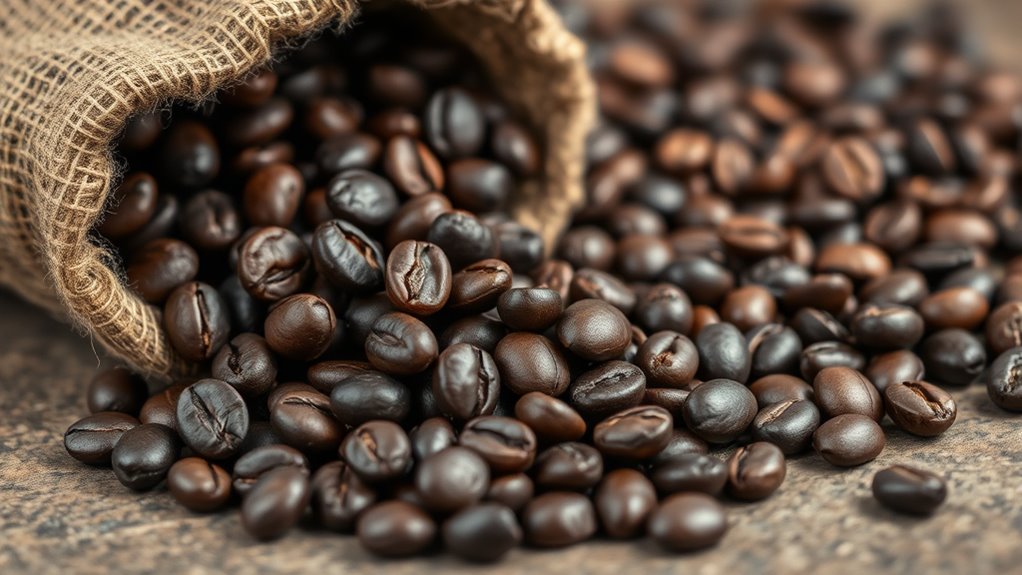
You can use any coffee bean to make espresso, but the roast level really changes the flavor and how well it extracts. Lighter roasts tend to have more acidity and a lighter body.
On the other hand, darker roasts bring out the oils and give you that nice, balanced shot.
No matter what type of bean you choose, getting the grind size just right is key. A fine grind helps make sure the pressure extraction works perfectly.
The roast level’s effect on flavor also influences how well espresso pairs with milk and the quality of the crema produced.
Bean Versatility
Since espresso extraction relies heavily on finely ground coffee and high pressure, technically any coffee bean can be used to make espresso. The key lies in the grind size and tamping pressure, which guarantee proper extraction.
However, beans differ in flavor profiles and how they respond to this process.
Light or medium roasts often yield higher acidity and more pronounced sour notes in espresso, while darker roasts deliver the classic bold, rich flavors.
Though you can use any bean, roasters optimize specific varieties through targeted dark roasting and blending to enhance crema, body, and flavor balance.
Ultimately, the inherent characteristics of the bean shape the espresso’s taste, making bean selection vital despite the universal applicability of espresso brewing methods.
Adjusting extraction timing based on roast level, such as longer times for light roasts and shorter times for dark roasts, is essential for achieving optimal flavor balance and crema development, as demonstrated in extraction time guidelines.
Roast Level Impact
Building on how bean selection shapes espresso flavor, roast level plays a defining role in determining the shot’s character and extraction dynamics. While any coffee bean can technically be used for espresso, roast level influences oil content, crema, and acidity.
Dark roasts yield bold, full-bodied shots with robust oils that improve extraction and crema. Medium roasts balance acidity and body, providing nuanced flavor profiles with moderate oil development. Light roasts produce higher acidity and less body, often requiring finer grind and precise technique to avoid under-extraction.
Regardless of roast, grind size, freshness, and brewing method critically impact espresso quality. You’ll find that adjusting these variables lets you tailor the roast’s influence, ensuring ideal espresso regardless of bean origin or roast level. Proper machine maintenance, including descaling, is vital for quality extraction and flavor consistency.
How Roasting Changes Espresso Bean Flavor
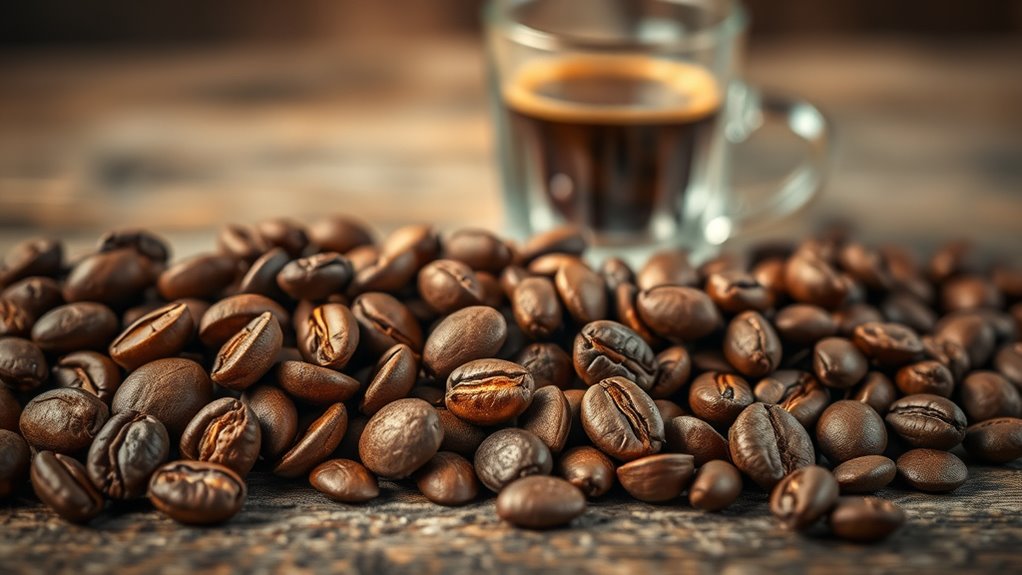
Although espresso beans start as green and relatively flavorless, the roasting process transforms them through a series of complex chemical reactions. You’ll notice that longer exposure to high heat caramelizes sugars, deepening flavor and reducing acidity. The Maillard reaction produces smoky, roasted notes while bitterness intensifies, crafting espresso’s bold profile.
Darker roasts cause oils to surface, contributing to espresso’s characteristic shine and robust taste. The degree of roast also affects aroma, body, and crema production, all vital for quality espresso.
| Aspect | Chemical Change | Flavor Impact |
|---|---|---|
| Sugar caramelization | Sugars break down | Sweeter, richer taste |
| Maillard reaction | Amino acids + sugars react | Roasted, smoky notes |
| Acidity reduction | Acid compounds degrade | Less sharp, more balanced |
| Oil emergence | Oils migrate to surface | Boldness, glossy appearance |
| Bitterness increase | Complex compounds form | Robust, intense flavor profile |
Why Espresso Beans Have More Natural Oils
You’ll notice that espresso beans have more natural oils. That’s because they’re roasted longer and at higher temperatures, which pushes those oils right to the surface.
These oils aren’t just there for show—they’re key to making that rich, creamy layer on top of your espresso shot, known as crema.
When you brew espresso under high pressure, those oils emulsify, which really boosts the flavor and gives the coffee a fuller, smoother mouthfeel.
It’s what makes espresso taste so intense and satisfying.
Additionally, these oils contribute to the higher caffeine concentration found in espresso compared to other coffee drinks.
Oil Content In Beans
Because espresso beans undergo a longer, darker roasting process, the natural oils within them migrate to the surface, giving the beans their distinctive shiny, oily appearance. This oil migration is essential for the espresso’s rich body and flavor intensity.
Here’s why the oil content matters:
- Roasting drives internal oils outward, enhancing bean surface oiliness.
- These oils contribute considerably to the coffee’s depth and mouthfeel.
- Higher oil content intensifies flavor complexity and richness.
- Maintaining oils requires airtight storage to prevent oxidation and staleness.
- The development of surface oils during roasting impacts flavor intensity and mouthfeel, shaping the espresso experience.
Impact On Crema
The natural oils that surface during the extended roasting of espresso beans play a direct role in forming crema, the thick, golden foam crowning a shot. When you roast espresso beans longer and at higher temperatures, those oils migrate to the surface, increasing the beans’ oil content.
During brewing, these oils emulsify under pressure, creating the dense, velvety crema you expect from a quality espresso.
Darker roasts exude more oils, intensifying crema formation compared to lighter roasts. These natural oils not only contribute to crema but also enhance the espresso’s full-bodied texture and robust flavor.
To maximize crema, you need precise roasting techniques that optimize oil retention without degrading bean integrity.
This way, each shot delivers that signature espresso richness and visual appeal you’re after. It’s all about balancing the roast to bring out those oils just right.
Additionally, the roast level influences both the oil content and caffeine concentration, affecting the overall espresso profile.
Choosing Espresso Beans by Roast and Origin
When selecting espresso beans, understanding how roast level and origin influence flavor and crema is essential. You’ll need to consider these key factors:
- Roast Level: Espresso beans are usually roasted darker than regular coffee to boost oil extraction. This enhances boldness and crema stability under high-pressure extraction.
- Origin Profiles: Latin American beans deliver chocolate and nutty notes. On the other hand, African beans contribute bright citrus and berry flavors.
- Blending: Combining beans from different regions balances body, acidity, and sweetness. This creates a harmonious espresso profile.
- Single-Origin Options: These emphasize distinct regional characteristics. They offer complex and unique flavor experiences compared to blends.
- Additionally, espresso beans undergo longer, hotter roasting cycles to develop surface oils that are crucial for producing rich crema during the high-pressure brewing process, highlighting the importance of roast profile differences.
Why Dark Roasts Are Popular But Not Essential for Espresso
Although dark roasts have gained popularity for espresso because of their bold, smoky flavors and enhanced crema stability, you don’t have to rely exclusively on them to craft a quality shot.
Medium and light roasts often reveal more nuanced, origin-specific flavors. They help you avoid the burnt or bitter notes that can come from over-roasting.
So, your choice depends more on what flavors you like and the complexity you want rather than just sticking to tradition.
| Roast Level | Flavor Characteristics | Espresso Suitability |
|---|---|---|
| Dark | Bold, smoky, less acidic | Popular but can mask bean origin |
| Medium | Balanced, complex, sweet | Preferred for nuanced espresso |
| Light | Bright, acidic, origin-driven | Highlights unique bean qualities |
For consistent and optimized flavor profiles, professional espresso machines often use programmable software to adjust extraction settings precisely.
Picking the right roast lets you customize your espresso’s flavor just the way you want it, instead of defaulting to dark roasts.
How Espresso Beans Are Ground Differently
Since espresso brewing relies on rapid high-pressure extraction, you need to grind your beans to an extremely fine consistency, comparable to powdered sugar. This maximizes the surface area exposed to water. Getting this right is key to achieving the dense, creamy crema that authentic espresso demands.
Grinding beans to a fine, powdered sugar consistency is essential for rich, creamy espresso crema.
Here’s how grinding differs for espresso:
- The fine grind size helps extract rich oils and flavors quickly under high pressure.
- Consistent particle size is super important, and burr grinders give you the uniformity you need.
- If the grind is too coarse, you end up with under-extraction. That means weak, sour shots that lack body.
- Adjusting the grind size precisely lets you tailor the extraction time and shot quality. It takes some careful calibration, but it’s worth it.
Grinding beans just before brewing is essential to preserve aroma and CO2 freshness for optimal espresso flavor.
How Espresso Brewing Highlights Espresso Beans’ Flavor
Mastering the grind size sets the stage for espresso’s unique flavor extraction. When you brew espresso, the high-pressure water forces through the finely ground dark roast beans, extracting concentrated oils and soluble compounds quickly. This rapid extraction emphasizes the beans’ bold caramelized sugars and smoky, roasted notes.
The crema you see is a fine emulsion of emulsified oils and proteins, more pronounced in darker roasts. It carries intense aroma and mouthfeel. Because espresso pulls flavors in under 30 seconds, it really brings out the bitter and rich elements that longer methods might dilute.
Ultimately, the brewing process magnifies subtle flavor nuances in espresso beans. It reveals complex layers that standard brewing techniques often suppress. That’s why each shot is such a dense and vibrant flavor experience.
Home Grinding and Brewing Tips for Espresso Beans
When you grind espresso beans at home, using a burr grinder guarantees a fine, uniform particle size that’s essential for consistent extraction. Freshly grind your beans just before brewing to preserve the flavor and the crucial oils that create crema.
Using a burr grinder ensures uniform grind and fresh beans preserve flavor and oils for perfect crema.
Adjust your grind size based on taste feedback. If your shot tastes bitter, grind finer. If it’s sour, go coarser. Aim for a grind time of 25-30 seconds to hit the ideal extraction window.
Store any ground espresso in an airtight container, away from light and heat, to keep it fresh until you use it.
- Use a burr grinder for precise, consistent particle size.
- Grind immediately before brewing to retain oils and aroma.
- Modify grind size to balance shot bitterness or sourness.
- Control grind time to target 25-30 seconds extraction.
How Blends and Origins Shape Espresso Bean Profiles
Although you can enjoy espresso from a single origin, blending beans from different regions allows you to tailor the flavor profile with greater complexity and balance.
By combining Latin American beans, which impart chocolate and nutty notes, with African beans that contribute citrus and berry flavors, and Asian beans offering earthy and spicy qualities, you create a nuanced, layered shot. This blend enhances sweetness and complexity while balancing body and acidity.
Single-origin espresso emphasizes distinctive regional traits, but blends aim for consistency and harmony, adjusting components to meet specific taste goals.
When crafting your espresso, understanding how each origin influences aroma, acidity, and mouthfeel enables you to customize a blend that delivers a precise, well-rounded sensory experience.
Frequently Asked Questions
How Should Espresso Beans Be Stored for Maximum Freshness?
You should store espresso beans in an airtight container, away from light, heat, and moisture. Keep them in a cool, dark place. Reseal the container promptly after use.
Try to grind the beans just before brewing. This helps keep your espresso as fresh and flavorful as possible. It really makes a difference in taste!
Can Espresso Beans Be Used for Other Brewing Methods?
Yes, you can use espresso beans for other methods, but you’ll need to adjust grind size and brewing time to avoid bitterness, over-extraction, or clogging. This is because of their dark roast and higher oil content. Making these tweaks will help ensure ideal flavor extraction.
It might take a little experimenting to get it just right, but it’s definitely possible. Just keep an eye on how your coffee tastes and adjust from there.
What Equipment Is Best for Grinding Espresso Beans at Home?
Don’t think hand grinders can’t deliver. Electric burr grinders like Baratza Encore give you consistent, ultra-fine espresso grounds with precise adjustments. They prevent uneven extraction, ensuring rich crema and balanced flavors every time you pull a shot at home.
It’s all about getting that perfect grind size, and these grinders make it easy. Plus, the consistency really shows in the taste. So, whether you’re a newbie or a pro, this kind of grinder is a solid choice.
How Long Do Espresso Beans Stay Fresh After Roasting?
Espresso beans stay fresh for about 2 to 4 weeks after roasting if you store them airtight, opaque, and away from heat or moisture.
Grinding reduces freshness faster, so grind just before brewing to maintain ideal flavor. It really makes a difference to wait until the last minute.
That way, you get the best taste in every cup!
Are There Any Health Benefits Specific to Espresso Beans?
Think of espresso beans as tiny warriors, packed with antioxidants like chlorogenic acids. When you drink espresso, you tap into their power, boosting alertness, reducing inflammation, and supporting liver and cardiovascular health with precise bioactive compounds.
It’s pretty amazing how such a small bean can have so many benefits. Plus, the way espresso is brewed helps concentrate these compounds, making them easy for your body to absorb. So next time you sip on an espresso, remember you’re getting more than just a caffeine kick!
Conclusion
Think of espresso beans as the precision instruments in the symphony of coffee. They’re carefully roasted, oiled, and ground to release intense, concentrated flavors.
You can use many beans, but espresso-specific roasting and grinding sharpen their profile, much like tuning a fine watch. Mastering these details lets you draw out espresso’s bold essence with every shot.
It’s all about transforming ordinary beans into a powerhouse of rich, complex taste right in your cup.