An espresso machine forces hot water at about 9 bars of pressure through finely ground coffee to extract a rich, concentrated shot topped with velvety crema. It precisely controls temperature and pressure using pumps and PID controllers to guarantee consistent flavor and strength.
Some models automate brewing and milk frothing for perfect lattes and cappuccinos every time. You’ll discover how these components and controls work together to transform beans into café-quality espresso you can master at home.
How Espresso Machines Make Coffee Under Pressure
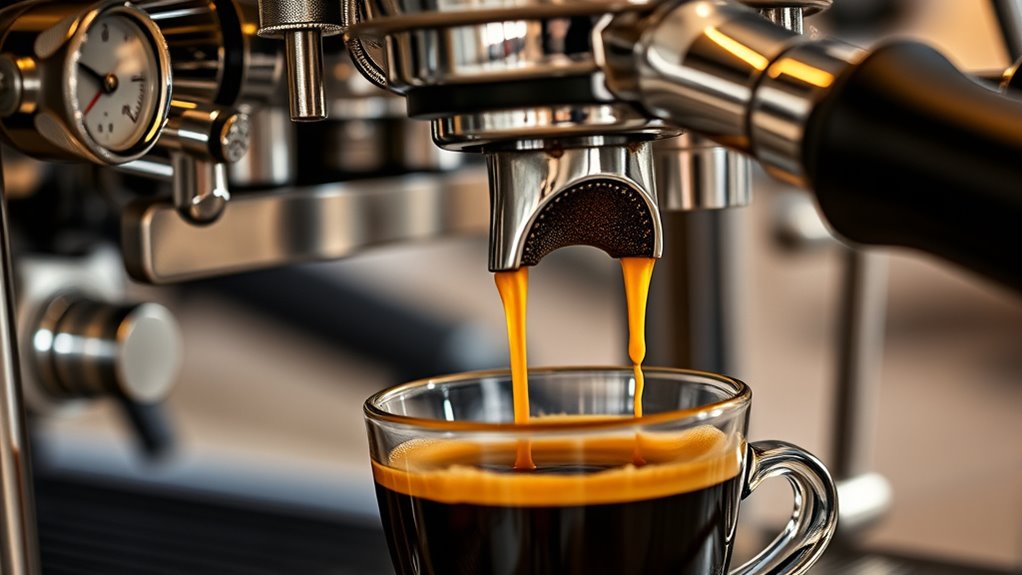
Ever wondered how espresso machines create that rich, intense coffee shot you love? They do it by generating high pressure, usually around 9 bars, to force hot water through finely ground coffee. This pressure pushes water swiftly through the coffee puck in about 20-30 seconds, extracting a concentrated, flavorful shot topped with that luxurious crema.
The machine’s grouphead plays a vital role by directing the pressurized water evenly over the grounds. This ensures every bit of flavor is pulled out uniformly.
Without precise pressure control, you’d miss the bold taste and velvety crema that define quality espresso.
The pump generates the necessary pressure to move hot water through the coffee grounds, ensuring consistent extraction and flavor.
Key Components of Pump-Driven Espresso Machines
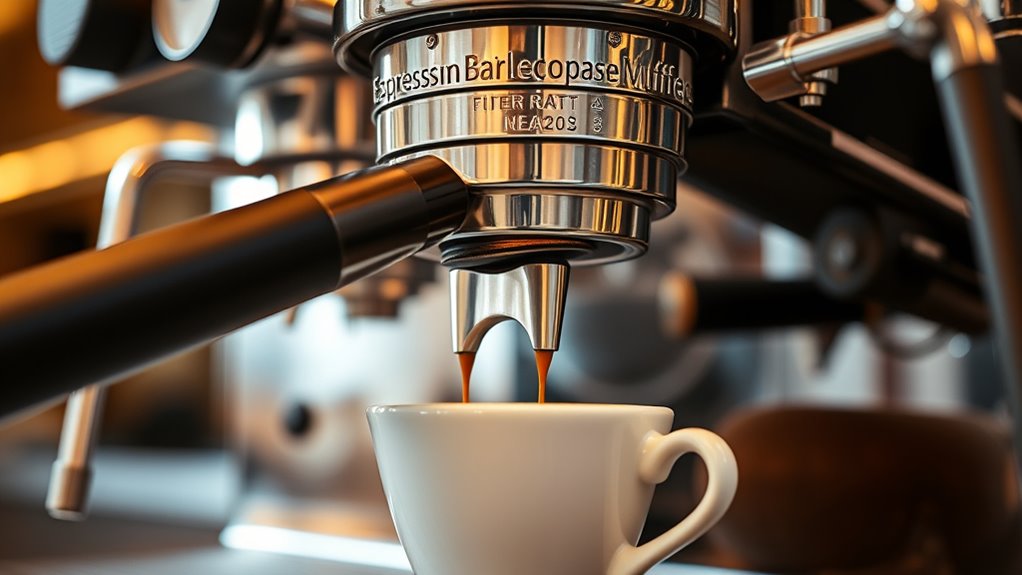
While the magic of espresso happens under pressure, it’s the pump-driven system inside your machine that truly makes it possible. At its core, an electric pump, either vibratory or rotary, generates the intense 15 bars of pressure essential for extraction.
This pump draws water from the reservoir or water line, pushing it through the heating chamber and finally into the portafilter.
Vibratory pumps, common in home machines, create rapid piston movements, causing slight pressure fluctuations. Rotary pumps, found in commercial or high-end models, deliver a steady, unwavering pressure vital for consistency.
Your pump’s precision directly impacts the espresso’s flavor and crema quality. Maintaining steady machine pressure is crucial for balanced extraction and a rich, full-bodied shot.
Why Temperature and Pressure Matter in Espresso
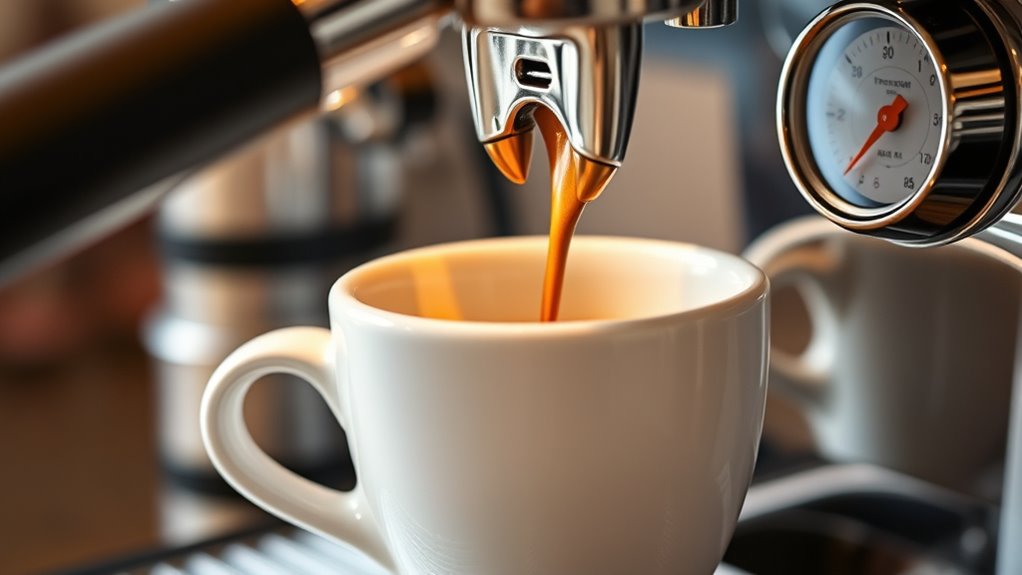
Because espresso extraction hinges on a delicate balance, controlling temperature and pressure becomes essential to revealing the coffee’s full potential. You need the water temperature to stay within 195-205°F (90-96°C) to release rich flavors without dragging out bitter, unpleasant notes.
Pressure is just as vital. About 9 bars (130 psi) forces hot water through the grounds, creating that velvety crema and intense concentration you crave. Push pressure too high, and your espresso turns harsh and over-extracted. Too low, and it comes out weak and sour.
Maintaining consistent temperature and pressure guarantees each shot delivers balanced aroma, body, and flavor. Modern machines use precise PID controllers and quality pumps to keep these variables steady, ensuring every cup you pull meets the highest standards. Even minor temperature fluctuations within ±1°F can significantly influence extraction balance, making temperature stability critical for flavor consistency.
Types of Espresso Machines and How They Work
When you immerse yourself in the world of espresso machines, you’ll find a fascinating variety of designs that shape how your coffee is brewed. Each type harnesses a unique mechanism to extract flavors, giving you control over your espresso experience.
Here are the main types:
- Steam-driven machines use steam pressure (1-1.5 bars), but produce less crema and subtle flavor.
- Lever-driven machines demand manual effort, letting you control pressure precisely through a lever or spring.
- Pump-driven machines employ electric pumps to deliver consistent 9-bar pressure, with advanced models like heat exchangers and dual boilers offering precise temperature control and simultaneous steaming.
Understanding these differences empowers you to select a machine that matches your taste, technique, and brewing ambitions perfectly. Advanced boilers with PID control systems help maintain optimal temperature for consistent espresso quality.
Why Consistency Matters in Espresso Brewing
You know, even small shifts in pressure or temperature can totally change how your espresso tastes and how strong it is. Keeping those factors steady means every shot comes out just as rich and balanced as the one before.
Getting the hang of this consistency is the secret to avoiding those annoying variations from shot to shot and making espresso you can count on every single time. Maintaining approximately 9 bars pressure is essential for proper extraction and crema development.
Pressure Stability Importance
Although many factors influence the perfect espresso shot, maintaining consistent pressure throughout the brewing process plays a critical role in revealing the coffee’s true potential. When pressure wavers, you risk uneven extraction, which can make your espresso taste bitter, sour, or weak.
Keeping stable pressure, ideally around 9 bars, ensures a balanced flavor, rich crema, and consistent shot volume.
To master pressure stability, focus on uniform extraction that highlights nuanced flavors. Also, avoid shot inconsistencies caused by pressure fluctuations.
Using advanced espresso machines equipped with stable pumps and digital PID controls really helps with this.
Maintaining a stable pressure near 9 bars ensures balanced extraction and preserves the flavor complexity of your espresso.
Temperature Control Effects
How does temperature shape the essence of your espresso shot? It controls the delicate balance of flavors extracted from your coffee grounds.
When your machine keeps a steady temperature, it ensures the perfect extraction, avoiding sourness from under-extraction or bitterness from over-extraction.
Temperature changes affect how coffee compounds dissolve, which changes the crema quality and the aroma you enjoy.
Advanced espresso machines use PID controllers to maintain a consistent water temperature. This creates a reliable brewing environment that delivers uniform shots every time.
Without this control, your espresso might have unpredictable strength and texture, and you could get stale or burnt notes.
Shot-to-Shot Variation
When you aim for excellence in espresso, maintaining shot-to-shot consistency becomes non-negotiable. Each shot should deliver uniform flavor, strength, and crema quality, ensuring your coffee experience stays top-notch every time.
Variations in pressure, temperature, or grind size can disrupt extraction, causing noticeable differences.
To master this, you need to control key brewing variables meticulously. Focus on these critical factors to minimize inconsistencies: consistent tamping pressure and precise brewing time.
Also, keep your machine settings stable with regular calibration.
Don’t forget to monitor water flow and temperature stability. Even minor fluctuations can impact your espresso’s profile.
Features That Improve Espresso Performance
You’ll notice that precise pressure control systems are key when it comes to pulling the perfect shot. They make sure the coffee extracts just right every single time.
Then, there are temperature stability features, like PID controllers, which keep your brew consistent and flavorful by maintaining exact heat levels.
And if you combine those with automation for dose and grind, you end up with a machine that delivers barista-quality espresso with every cup. It’s all about making the process smoother and the results better, shot after shot.
Additionally, understanding the alcohol content in espresso-based cocktails can help you appreciate the balance of flavors when pairing espresso with spirits.
Pressure Control Systems
Why does pressure matter so much in crafting the perfect espresso shot? Because pressure control systems regulate water force, ensuring optimal extraction and consistent quality. Without the right pressure, your espresso risks being under or over-extracted, losing flavor and crema richness.
Modern machines often use PID controllers to maintain a steady 9 bars throughout brewing. Advanced models apply pressure profiling, adjusting pressure at each stage to reveal deeper flavor layers and enhance crema texture. These systems even compensate for temperature changes, keeping pressure stable for every cup.
When you understand pressure control, you grasp the heart of espresso excellence.
Key features include:
- Precise pressure regulation via PID controllers
- Pressure profiling for dynamic extraction control
- Automatic pressure adjustment compensating temperature fluctuations
Controlling pressure precisely also influences the caffeine extraction, affecting the final caffeine content and flavor balance in your espresso.
Temperature Stability Features
Just as precise pressure control shapes the espresso’s extraction, maintaining stable temperature plays an equally essential role in crafting a flawless shot. Temperature stability features like PID controllers, dual boilers, and heat exchangers guarantee your machine delivers water at the perfect temperature consistently.
Digital sensors adjust heating elements in real time, preventing fluctuations that can ruin flavor. This steady temperature prevents over- or under-extraction, enhancing crema and taste.
| Feature | Function | Benefit |
|---|---|---|
| PID Controller | Regulates boiler temp precisely | Consistent brewing temp |
| Dual Boiler System | Separates brewing and steaming processes | Independent temp control |
| Heat Exchanger | Heats water while steaming simultaneously | Stable temps during use |
| Digital Sensors | Provide real-time temp feedback | Auto adjust heating elements |
| Stable Temp Control | Prevents extraction inconsistencies | Rich, balanced espresso |
Maintaining temperature stability is critical because fluctuations can negatively impact the extraction time, grind size, and overall flavor balance of the espresso shot.
Automation And Consistency
Although mastering espresso extraction requires skill, automation takes the guesswork out of the process. It delivers consistent, high-quality shots every time.
Automated espresso machines use digital controls and sensors to tightly regulate water temperature, pressure, and brewing time. This guarantees every shot meets your expectations.
Features like programmable shot volumes and automatic milk frothing guarantee uniformity, especially when you’re making multiple drinks.
Advanced components such as dual boilers and PID controllers maintain ideal brewing conditions. This helps reduce variability and keeps your espresso tasting great.
Key automation features include:
- Precise pump control and temperature stabilization for flawless extractions
- Programmable shot volumes to replicate your perfect espresso every time
- Automated milk frothing that ensures consistent texture and temperature
With automation, you get to focus on enjoying your espresso while the machine handles the science behind every cup. Managing the caffeine content in multiple espresso shots is also easier with consistent extraction control.
How Automation Improves Espresso Brewing
When you embrace automation in espresso brewing, you gain unmatched control over every critical parameter: water temperature, pressure, and extraction time. This ensures each shot is consistent and perfectly balanced.
Automated machines use advanced digital controls and PID systems to keep these variables within narrow tolerances, which eliminates guesswork and human error.
With built-in sensors and programmable settings, you can customize and store your favorite recipes. That way, you can effortlessly reproduce your preferred coffee style every time.
Fully automatic machines even handle grinding and tamping, making the process smoother and more precise. This integration not only boosts efficiency but also elevates your espresso’s quality by delivering ideal extraction conditions with every brew.
In short, automation transforms your espresso experience into a seamless blend of convenience and expert-level consistency.
How Milk Frothing Works on Espresso Machines
How exactly does milk frothing on espresso machines create that luscious, velvety texture you love in your lattes and cappuccinos? It all starts with the steam wand introducing hot steam into the milk. This heats it while rapidly incorporating air to form microfoam.
You position the wand just below the surface to aerate, then submerge it to heat evenly, aiming for about 150°F (65°C). This technique produces the smooth, creamy texture essential for quality drinks.
Key factors for perfect frothing include correct steam wand placement for balanced aeration and heating. You also want to maintain the ideal milk temperature to avoid scalding. Using the right steam pressure and milk type helps prevent large bubbles.
Mastering these details transforms ordinary milk into silky microfoam. It really elevates every espresso-based beverage.
Common Mistakes to Avoid When Brewing Espresso
You really can’t overlook how you grind and tamp your coffee. If the grind is too coarse or the pressure uneven, it throws off the extraction and ruins the flavor.
And temperature and pressure? They matter just as much. Skipping preheating or overpacking the portafilter can lead to bitterness or weak shots.
Getting these details right is the key to making sure every espresso you pull hits that perfect balance of strength and smoothness.
Grinding And Tamping
Although dialing in the perfect grind size can feel like an art, it’s vital to get it right to avoid over- or under-extraction that ruins your espresso’s flavor. Too fine a grind clogs the machine and over-extracts, making your shot bitter, while too coarse leaves it weak and sour.
Equally important is consistent tamping: applying about 30 pounds of even pressure creates a uniform coffee puck, essential for balanced water flow. Avoid tapping or shaking the portafilter after tamping, as this disrupts the grounds and leads to uneven extraction or channeling.
To master grinding and tamping, focus on using a scale to measure tamping pressure for consistency, distributing grounds evenly before tamping, and avoiding agitation of the coffee bed after tamping.
These steps guarantee every shot you pull tastes exceptional.
Temperature And Pressure
Mastering grind size and tamping sets a strong foundation, but getting the right temperature and pressure really takes your espresso to the next level. You want to maintain about 9 bars of pressure. Too low, and your espresso will be weak; too high, and it can become bitter.
Water temperature should stay between 195-205°F (90-96°C). Hotter water scorches the coffee, while cooler water under-extracts the flavors. It’s important to avoid overheating your machine because that can lead to burnt notes.
Fluctuations in pressure or temperature usually come from poor maintenance or incorrect settings. Using a PID controller is a smart way to keep water temperature steady, which helps ensure balanced shots every time.
Choosing the Right Espresso Machine for Your Needs
When selecting an espresso machine, understanding your skill level and brewing preferences plays a crucial role in narrowing down your options. Whether you crave full manual control or prefer automated ease, matching the machine to your expertise guarantees satisfying results.
Budget also guides your choice, as prices range widely from entry-level to professional-grade models. Space constraints in your kitchen further influence the ideal size and style.
Focus on these key considerations: your preferred drinks like espresso shots, lattes, or cappuccinos, and the features you need, such as milk frothers or multiple boilers.
Think about machine capabilities too, like programmable settings, temperature stability, and boiler design to match your desired control.
Also, consider the available counter space so the machine fits comfortably without cluttering your kitchen.
Frequently Asked Questions
How Do I Clean and Maintain My Espresso Machine Regularly?
Want your espresso machine to last and taste great? You’ll need to descale it regularly. Also, clean the portafilter and group head after each use.
Don’t forget to flush and wipe the steam wand, too. It keeps everything working smoothly. Plus, replace water filters as needed.
Running cleaning cycles with commercial solutions helps maintain your machine in top shape. It might sound like a lot, but these simple steps keep your espresso tasting amazing every time.
Can I Use Any Coffee Beans for Espresso Machines?
You can use coffee beans for your espresso machine, but choose dark roasted, finely ground beans labeled for espresso to get the best flavor and crema.
Avoid lighter roasts or flavored beans for ideal results every time. Trust me, it makes a big difference in taste. Stick to what works best!
What Is the Difference Between Espresso and Regular Coffee?
You’ll notice espresso’s intense flavor and crema come from high-pressure extraction with fine grounds. Regular coffee brews slower with gravity, producing a milder, larger cup.
Each delivers a unique taste and caffeine experience you’ll appreciate. It’s pretty cool how different brewing methods change the whole vibe of your coffee.
How Long Does It Take to Make a Shot of Espresso?
You don’t have time to watch paint dry, so your espresso shot takes about 20-30 seconds. That’s perfectly timed to extract bold flavors without bitterness.
Nail the grind, tamp, and pressure, and you’ll savor espresso perfection every time. It’s all about getting those details right. Trust me, it makes a big difference.
Are Espresso Machines Energy Efficient?
Espresso machines can be energy efficient, especially newer models with advanced temperature controls and sleep modes. You’ll save energy by choosing well-designed machines and maintaining them properly to avoid wasted power and improve overall performance.
It really pays off to pick a machine that’s made with energy savings in mind. Plus, keeping it in good shape means it won’t use more power than it needs to. So, a little care goes a long way in cutting down energy use.
Conclusion
Now that you know how an espresso machine orchestrates pressure, temperature, and precision, you’re ready to master the art of espresso brewing. Think of your machine as a symphony conductor, balancing every element to create that perfect shot.
With the right knowledge and care, you’ll avoid common pitfalls and enjoy consistent, rich flavors every time. Choose wisely, and let your espresso machine transform your coffee ritual into a daily masterpiece.