To make espresso with a plunger, start by using medium-coarse coffee grounds, about 2 tablespoons per 4-ounce cup. Preheat your French press and cup with hot water. Then pour water heated to around 200°F over the grounds.
Give it a gentle stir and let it steep for 3-4 minutes. After that, press the plunger down slowly to separate the grounds. Serve immediately for the best taste.
Now, this method won’t create true espresso crema but it does deliver a strong, rich brew. Keep exploring if you want tips on boosting flavor and texture!
Espresso vs. French Press: What’s the Difference?
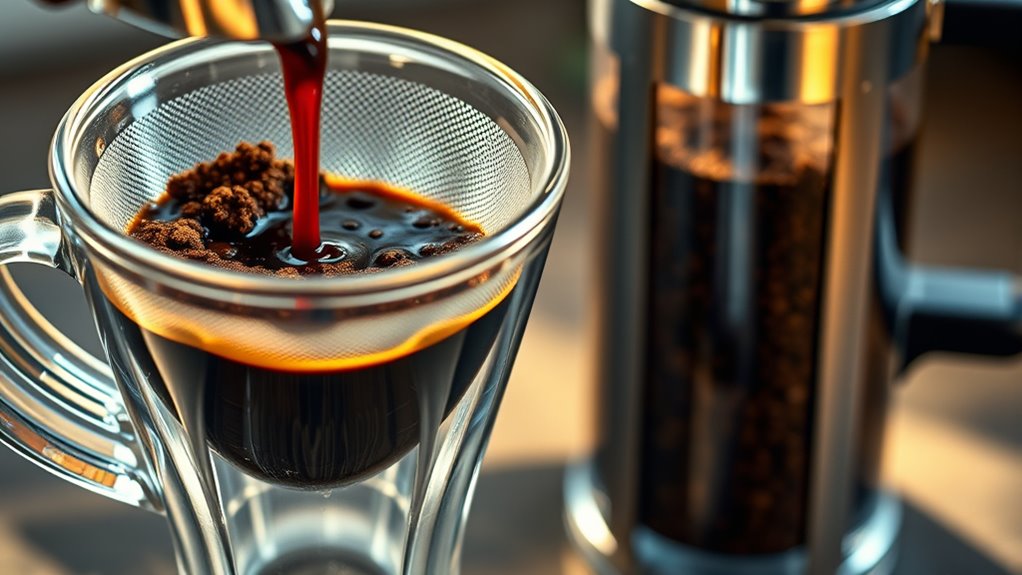
How exactly does espresso differ from French press coffee? You’ll notice espresso is brewed under high pressure, around 9 bars, using finely ground coffee. This produces a concentrated shot topped with crema.
In contrast, the French press uses coarse grounds steeped in hot water for 3-4 minutes. It relies on gravity rather than pressure for extraction. This results in a full-bodied, robust cup with a thicker consistency.
Espresso has an intense flavor thanks to rapid extraction in about 30 seconds. French press coffee typically contains less caffeine per ounce but can be made stronger by adjusting your coffee-to-water ratio.
Understanding these differences helps you appreciate each method’s unique qualities before trying to make espresso with a plunger. Additionally, the caffeine content can vary significantly between espresso and French press due to differences in brewing time and pressure.
Which Grind Size Works Best for French Press Espresso?
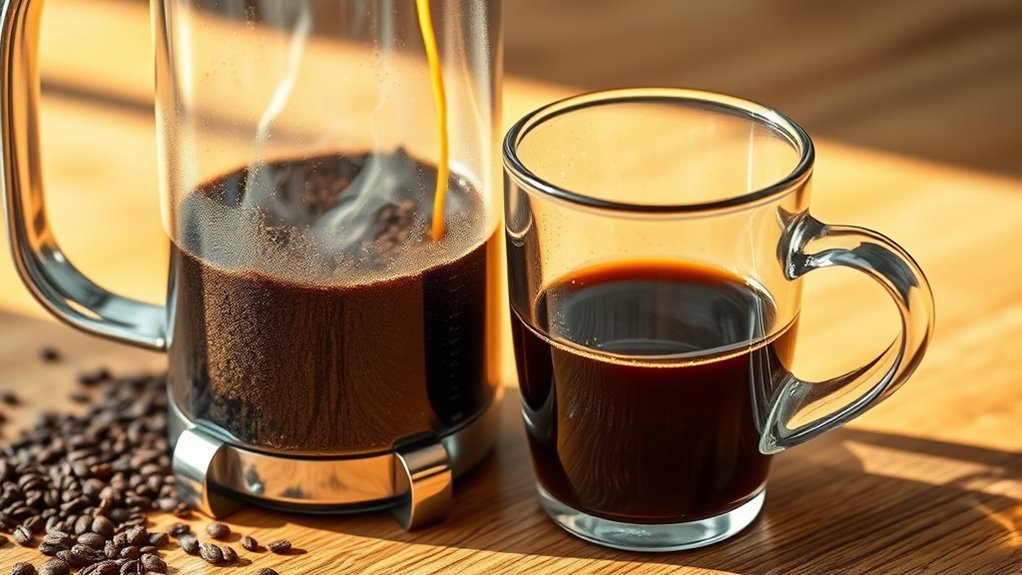
You’ll want to use a medium-coarse grind for your French press espresso to get the best balance of flavor and extraction.
Fine grounds aren’t the way to go—they can slip through the mesh filter and end up making your brew bitter and gritty.
If you play around with the grind size just a bit, you can fine-tune the strength and clarity until it’s just right for your taste.
It’s all about finding that perfect spot that works for you.
Because white espresso beans are dense and hard, they require a dedicated grinder to avoid damage and ensure consistent extraction.
Coarse Vs. Medium Grind
Why does grind size matter so much when making espresso with a French press? It directly affects extraction and flavor. If you use a coarse grind, water passes too quickly through the larger particles, leading to a weaker, under-extracted coffee.
While coarse grounds work well for a regular French press brew, they don’t deliver the stronger, espresso-like shot you want.
On the other hand, a medium grind strikes the right balance. It slows water flow enough to extract richer flavors and fuller body without causing muddiness.
This grind size optimizes brewing time and guarantees your espresso has depth and clarity. Choosing medium grind over coarse is key to revealing the best taste from your plunger espresso.
Maintaining a consistent particle size is essential to avoid uneven extraction and achieve a balanced flavor profile.
Avoid Fine Grounds
While medium grind offers a balanced extraction for your French press espresso, steering clear of fine grounds is just as important. Fine grounds tend to slip through the mesh filter, leaving you with a gritty texture and a cloudy brew. They also increase resistance during pressing, making the plunger harder to push and risking damage to the filter.
Plus, fine grounds promote over-extraction, which results in bitter, overly strong coffee that masks the nuanced flavors you want to enjoy. Instead, opt for a medium-coarse grind to guarantee your espresso is smooth, clear, and easy to press.
This grind size prevents sediment from passing through while allowing ideal water flow. That way, you get a clean, well-balanced cup every time without the drawbacks of fine grounds. It’s really the best way to make the most of your French press experience.
Remember that grind size plays a crucial role in controlling extraction time and flavor balance, so choosing the right coarseness is essential for optimal coffee taste.
Grind Impact On Flavor
Because grind size directly affects extraction, choosing the right coarseness is essential for crafting French press espresso with a clean, rich flavor. You’ll want to aim for a coarse grind to avoid over-extraction and muddiness. Finer grounds easily slip through the mesh filter, resulting in bitter, cloudy coffee.
While very fine espresso-like grounds might seem tempting, they often clog the plunger and extend brewing time, which can be frustrating. A medium grind often strikes the best balance, providing robust flavor without making pressing difficult.
Maintaining the proper grind size is crucial because it influences extraction quality, flavor, and brewing time.
Step-by-Step Guide to Making Espresso With a French Press
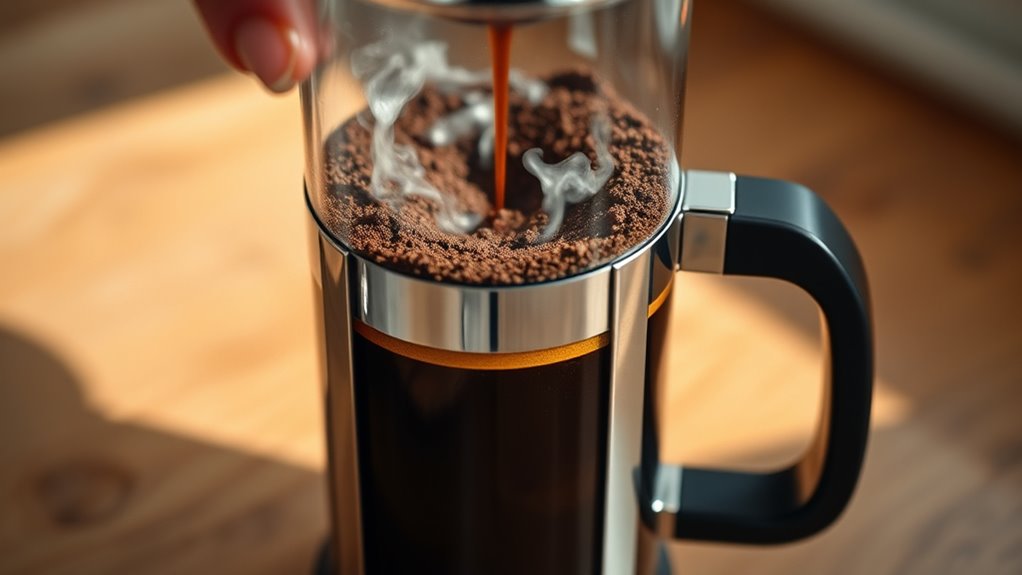
Start by measuring about two tablespoons of medium-coarse coffee grounds per cup. This helps make sure you get a balanced extraction.
Then, pour hot water that’s just below boiling over the grounds. Give it a quick stir and let it steep for 3 to 4 minutes.
When the time’s up, press the plunger down slowly to separate the grounds. And just like that, you’ve got a rich, espresso-like brew to enjoy!
Keep in mind that using a digital scale to measure your coffee and water can help you achieve consistent results every time.
Preparing Coffee Grounds
To achieve a rich, espresso-like brew with your French press, you’ll want to begin by selecting the right grind and measuring your coffee accurately. Use a medium grind, roughly the texture of sand, to optimize extraction and flavor.
Measure about 2 tablespoons (10 grams) of coffee per 4-ounce cup of water to create a concentrated brew.
Once measured, place the grounds into your French press.
When you’re ready to brew, pour hot water just off the boil (around 200°F) over the grounds. Stir gently to ensure every particle is evenly saturated.
This sets the stage for bold, intense flavors.
This preparation is vital for achieving that espresso-like strength before you move on to brewing and pressing.
It might take a bit of practice, but it’s worth it for the great taste you’ll get.
For best results, use fresh beans ideally roasted within 5-14 days post-roast to ensure optimal flavor extraction.
Brewing And Pressing
Once you’ve prepared your grounds and water, pour the hot water just off the boil over the coffee in your French press.
Use about 2 tablespoons of medium-coarse grounds per cup for the right balance. Fill the press to your desired level, then stir gently to saturate all the grounds evenly.
Let the coffee steep for 4 to 5 minutes to extract a bold, rich flavor.
After steeping, press the plunger down slowly and steadily to separate the grounds from the liquid. This controlled pressing creates a concentrated brew with a crema-like foam on top.
Serve your espresso immediately to enjoy its full aroma and depth. That way, you really capture that authentic espresso experience using your French press.
For the best results, always use freshly roasted beans ground just before brewing to preserve flavor and aroma.
Preparing Your French Press and Coffee for Espresso Brewing
Although a French press isn’t a traditional espresso machine, you can still craft a rich, concentrated brew by preparing it correctly. Start with a French press of at least 8 ounces capacity to allow enough room for brewing and pressing.
A French press can create a rich, concentrated brew when prepared with care and the right size.
Use medium-coarse ground coffee, about the size of sea salt, to guarantee balanced extraction without bitterness.
Preheat both the French press and your serving cup with hot water. This helps maintain temperature during brewing.
Measure roughly 2 tablespoons (10 grams) of coffee for every 4-ounce cup to achieve a strong, espresso-like flavor.
Heat your water to around 200°F (93°C) just before pouring to avoid scalding the grounds.
With these steps, you set the foundation for a robust, delicious espresso alternative using your plunger. Keep in mind that brewing at a slightly higher temperature can help bring out the bright, citrusy notes often found in lighter roasts like blonde espresso.
Tips to Boost Flavor and Strength of French Press Espresso
When you want to boost the flavor and strength of your French press espresso, paying attention to grind size and steeping time makes all the difference.
Use a medium grind, similar to sand, to optimize extraction and prevent bitterness or weak brews. Steep your coffee for at least 4 minutes to fully unlock rich flavors and caffeine.
Preheat your French press and mug to maintain consistent temperature during brewing, which enhances strength. After adding hot water, stir thoroughly to ensure even saturation and extraction of robust notes.
This little step really helps bring out the bold flavors you’re after.
Finally, tweak your coffee-to-water ratio by adding a bit more coffee to intensify flavor and caffeine content. These adjustments create a bold, satisfying espresso experience with your plunger.
Keep in mind that water temperature plays a crucial role in extraction, so using water between 195°F–205°F can significantly enhance your brew’s flavor.
Creating Crema-Like Foam With Your French Press
If you want to replicate the rich crema found on traditional espresso, your French press can deliver a surprisingly similar foam with the right technique.
Start by using freshly ground, medium roast coffee with a slightly finer grind than usual to increase resistance during pressing.
Begin with freshly ground medium roast coffee, ground finer than usual for better pressing resistance.
Heat your water to about 200°F (93°C) and pour it evenly over the grounds.
Stir gently, then let it steep for 4-5 minutes to maximize extraction.
When you press the plunger, do so slowly and steadily.
The pressure helps create that frothy, crema-like layer on top.
For an extra touch, briefly swirl or gently tap the French press after pressing.
This helps enhance the foam’s stability and appearance.
You’ll get a visually appealing, creamy finish without needing an espresso machine.
Espresso Alternatives Without a Machine
Mastering crema-like foam with a French press sets the stage for exploring other ways to enjoy espresso-style coffee without a machine. You can create a strong, concentrated brew by steeping coarsely ground dark roast coffee in hot water (around 200°F/93°C) for 4–5 minutes. Stir the grounds before pressing the plunger slowly to maximize extraction.
While it won’t replicate true espresso’s pressure-driven crema, this method delivers a rich, full-bodied coffee with bold flavor.
To experiment further, try these alternatives:
- Adjust steeping time and coffee-to-water ratio for intensity.
- Use a finer coarse grind, similar to sea salt, to enhance flavor.
- Explore other manual devices like AeroPress or Moka pot for espresso-style brews.
These options let you enjoy espresso-like coffee without needing a machine.
Frequently Asked Questions
Can I Use Light Roast Beans for French Press Espresso?
You can use light roast beans, but expect a brighter, more acidic cup. You’ll need a finer grind and longer steeping to boost flavor. Just be careful not to over-extract or you’ll get bitterness instead of espresso richness.
It’s a bit of a balancing act, but it can definitely work if you adjust your technique. Give it a try and see how the flavors develop!
How Do I Clean My French Press After Making Espresso?
Did you know 75% of coffee residue can harden if not cleaned promptly? You should rinse your French press immediately after use.
Then, disassemble it and scrub with mild soap. It’s a good idea to soak it in vinegar water occasionally to keep it spotless and working efficiently.
Keeping up with this routine makes your French press last longer and tastes better every time you brew.
What Type of Water Is Best for French Press Espresso?
You’ll want to use filtered or spring water with balanced minerals for your French press espresso. Avoid distilled or softened water since it lacks minerals, which can make your coffee taste flat and dull rather than rich and vibrant.
Minerals are what bring out the best flavors in your coffee, so having the right balance really matters. Using good water can make a noticeable difference in how your espresso turns out. Give it a try, and you’ll likely taste the difference yourself!
Can I Store French Press Espresso for Later Use?
You can store French press espresso, but it’s like capturing a sunset in a jar. Its vibrant flavors fade quickly.
Keep it airtight and refrigerated for up to 24 hours. But honestly, fresh brewing always delivers the best experience.
How Much Caffeine Is in French Press Espresso Compared to Regular Espresso?
You’ll find French press espresso packs about the same or slightly more caffeine than regular espresso, depending on how strong you brew it and the serving size.
It really comes down to your coffee-to-water ratio. Adjust that, and you can control the caffeine levels pretty precisely.
Conclusion
Now that you know how to craft espresso with your trusty French press, you’re equipped to brew bold, rich coffee without a fancy machine. Remember, the grind size and brewing time are your time-traveling tools, bridging old-school plunger methods with modern espresso cravings.
So, channel your inner barista and enjoy that perfect cup. No DeLorean needed. With practice, your French press espresso can rival any café pour, giving you flavor and crema-like foam every time.