To get more crema in your espresso, start with fresh beans roasted within 2–4 weeks to keep that essential CO₂ locked in. Grind them finely and consistently using a burr grinder. Then, dose evenly in your portafilter for the best results.
Apply firm, level tamping with about 30 pounds of pressure so the extraction is uniform. Aim for a shot that pulls in 25–28 seconds at around 200°F and 9 bars of pressure.
You can fine-tune these factors to get rich, lasting crema. And if you want to master every step, there’s plenty more to explore.
Why Crema Makes Your Espresso Better
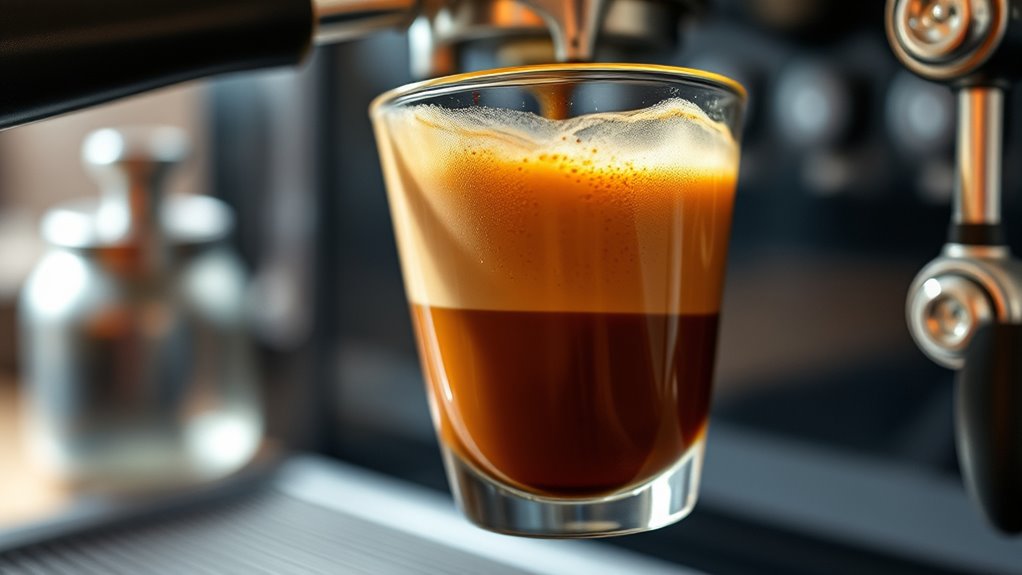
Although it might seem like just a thin layer on top, crema plays an essential role in elevating your espresso experience. It traps volatile compounds and oils, boosting aroma and flavor complexity, so every sip delivers a rich, nuanced taste.
Crema enhances espresso by capturing aromas and oils, enriching each sip with deeper, complex flavors.
When you see a thick, persistent crema, it signals proper extraction and freshness. This means your espresso is balanced and enjoyable.
Crema also acts as a natural barrier, protecting delicate flavors from oxidation and staling. This helps preserve that fresh, vibrant profile longer.
Its presence confirms your coffee was brewed with ideal pressure and temperature, ensuring quality in every cup.
Plus, that golden, velvety layer visually enhances your espresso, making it more enticing and pleasurable before you even taste it.
The composition of crema includes emulsified oils, proteins, and microbubbles, which contribute to its rich texture and flavor complexity.
How Fresh Beans Boost Crema Quality
How exactly do fresh beans enhance the crema on your espresso? When you use beans roasted within the past 2-4 weeks, you tap into their peak freshness, which is key for ideal crema formation.
Fresh beans retain higher levels of CO₂ gas, essential for creating the tiny bubbles that form the rich, velvety crema during extraction.
As beans age beyond four weeks, much of this CO₂ escapes. This leads to a thinner, less stable crema.
To keep that freshness locked in, store your beans in airtight containers to preserve their CO₂ and aromatic oils.
These vibrant oils contribute to a richer, more persistent crema, which signals a well-extracted espresso shot.
Maintaining proper roast profile adjustments also helps enhance crema quality by optimizing flavor for high-pressure extraction.
Grind Coffee Right for Better Crema
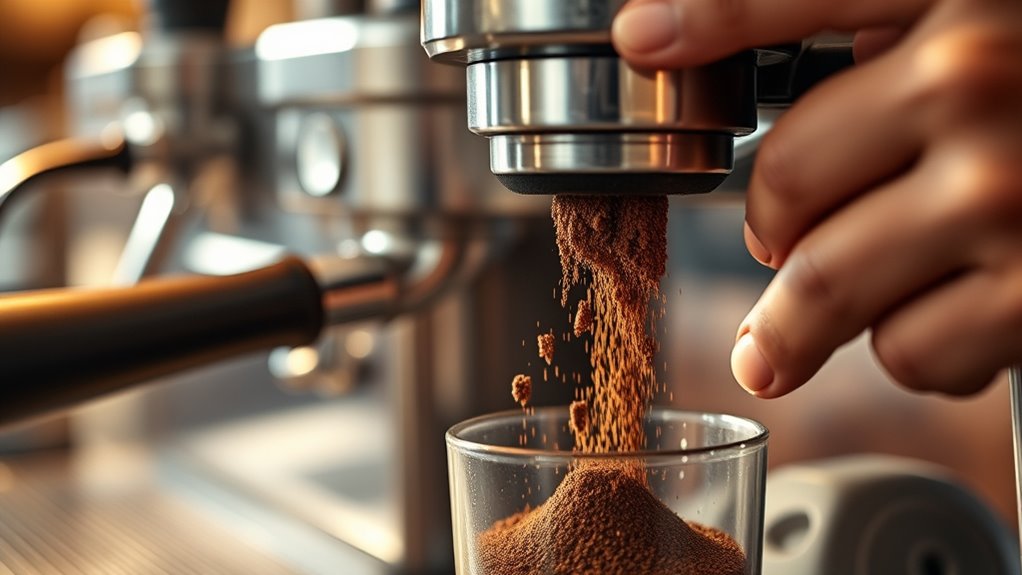
Fresh beans provide the foundation for great crema, but getting the grind just right takes it a step further. Use a burr grinder to guarantee a consistent, fine grind. This promotes peak extraction and crema formation.
Adjust your grind size depending on humidity and bean freshness. A slightly finer grind often yields richer crema. Avoid over-grinding because it causes over-extraction and weak crema. Under-grinding leads to under-extraction.
Regularly calibrate your grinder to maintain precision.
| Grind Size | Effect on Crema |
|---|---|
| Too Fine | Over-extraction, thin crema |
| Optimal Fine Grind | Balanced extraction, rich crema |
| Too Coarse | Under-extraction, sparse crema |
Fine-tune your grind to extract the best crema every time. Because extraction time influences both flavor and caffeine levels, maintaining the right grind size helps optimize your espresso’s overall quality.
Tamping Techniques That Improve Crema
You want to apply consistent pressure—about 30 pounds—to make sure the coffee grounds are compressed evenly and you don’t end up with weak spots.
Before you tamp, it’s a good idea to level the coffee in the portafilter. This helps prevent channeling when the water flows through during extraction.
Then, go for a smooth, controlled tamp using a flat-bottom tamper. Doing this sets the stage for rich, stable crema every single time.
Proper tamping reduces shot variability and improves reproducibility, making your espresso more consistent.
Consistent Pressure Application
Although dialing in the perfect espresso shot involves many factors, applying consistent pressure during tamping plays a crucial role in developing rich crema. You should apply firm, even pressure, about 30 pounds, to compact the coffee grounds uniformly.
Using a tamper with a flat, smooth base helps distribute this pressure evenly across the coffee puck, preventing uneven extraction.
Make sure to maintain a level, perpendicular tamping motion. This minimizes channeling and encourages uniform water flow during brewing.
Before tamping, confirm the grounds are evenly distributed to avoid weak spots that weaken crema quality.
Focus on gradual, controlled pressure rather than excessive force so you achieve ideal puck density.
Mastering this technique maximizes crema formation and elevates your espresso’s flavor and texture. It’s all about finding that perfect balance!
Regular practice with a scale helps improve consistency and reproducibility of the tamping pressure.
Leveling The Coffee Bed
When aiming for rich crema, leveling the coffee bed before extraction is essential. Start by evenly distributing the coffee grounds in your portafilter to prevent uneven extraction.
Use a tamper with a flat base and apply consistent, firm pressure, about 30 pounds is ideal, to compress the grounds uniformly.
Press straight down to create a smooth, compact surface, ensuring the coffee bed is level. Avoid pressing too hard or too lightly, as either can disrupt water flow and reduce crema quality.
Finish with a slight twist or polish of the tamper to perfect the level surface.
This precise tamping technique promotes uniform water resistance. It helps you extract maximum flavor and achieve that thick, velvety crema every time.
Consistent tamping pressure is crucial because it influences flow rate and helps maintain proper shot timing for optimal crema extraction.
Avoiding Channeling Errors
Since channeling can quickly ruin an espresso shot, mastering tamping techniques that prevent it is essential for rich crema. First, make sure your coffee grounds are evenly distributed in the portafilter before tamping. Uneven distribution creates weak spots where water flows through, causing under-extraction and less crema.
Apply consistent, firm pressure, about 30 pounds, using a straight, centered tamp to form a compact, level coffee bed. Avoid tilting the tamper because uneven pressure leads to irregular water flow.
After tamping, check for a smooth, flat surface. Any ridges can cause channeling.
To boost consistency, consider using a tamper with a built-in level or guide. These precise tamping habits ensure uniform extraction and help you pull espresso shots with a thick, flavorful crema every time.
Additionally, maintaining proper water temperature between 90-96°C during extraction supports optimal crema formation and flavor balance.
Measuring Your Coffee Dose for Better Crema
Getting the perfect crema starts with measuring your coffee dose accurately. Using a scale to weigh 7-10 grams for a single shot is essential. Precise dosing ensures consistent extraction, which directly influences the richness and texture of your crema.
If you over- or under-dose, water flow changes and that messes with crema formation and the quality of your espresso. To get reliable results, keep your dose consistent with each shot. That consistency helps develop a stable flavor profile and dependable crema.
Remember, you might need to tweak your dose slightly based on bean freshness or grind size. Fresher beans often require a bit less coffee, while coarser grinds might call for a higher dose. Proper dosing and grind size balance control extraction time within 25–30 seconds, which is crucial for optimal crema development.
Set Water Temperature & Pressure for Perfect Crema
You want to keep your water temperature steady around 200°F (93°C) and maintain pressure near 9 bars to get that perfect crema.
Keeping these settings consistent makes sure the oils and CO₂ extract just right, which creates a rich, stable layer on your espresso.
And don’t forget, timing your extraction precisely really helps balance everything for the best results.
Starbucks uses fully automated machines with precise temperature control to ensure consistent crema quality every time.
Optimal Water Temperature
Although dialing in your espresso machine’s water temperature can seem subtle, setting it to around 200°F (93°C) plays a vital role in producing a rich, velvety crema. This temperature guarantees the coffee oils emulsify properly, creating stable microbubbles essential for a thick, lasting crema.
If the water’s too hot, you risk over-extracting, which can degrade crema quality. Conversely, too cold water results in weak, thin crema.
Consistency is key. Small temperature shifts have a significant impact. Regularly calibrate your machine’s temperature to maintain this sweet spot. Machines equipped with PID temperature control can maintain this precision within ±1°F, ensuring consistent crema quality shot after shot.
Ideal Pressure Settings
When aiming for the perfect crema, maintaining an extraction pressure around 9 bars is essential to emulsify coffee oils effectively and achieve that rich, velvety texture.
You’ll want to use a calibrated espresso machine to keep water temperature steady at about 200°F, as this temperature complements the ideal pressure for extracting crema.
Make sure your machine’s pressure gauge is accurate to monitor and maintain stable pressure throughout the shot. Fluctuations can cause under- or over-extraction, which weakens crema quality.
Consistently stable pressure helps produce a dense, long-lasting crema with vibrant flavor and appealing visuals.
By precisely controlling these settings, you’ll enhance both the taste and appearance of your espresso, bringing your barista skills to the next level.
It’s all about those small details that really make a difference.
Consistent Extraction Timing
Achieving the ideal pressure and temperature sets the stage, but consistent extraction timing seals the deal for perfect crema. You need to maintain water temperature around 200°F and pressure near 9 bars throughout extraction to guarantee fine bubble formation and rich crema.
Using a calibrated timer to pull shots between 25 to 28 seconds helps you avoid over- or under-extraction, which can compromise crema thickness and texture.
Consistent timing stabilizes pressure and temperature, producing a velvety, persistent crema that enhances your espresso’s flavor and appearance. Regularly calibrate your machine to prevent fluctuations that undermine consistency.
Timing Your Espresso Shot for Maximum Crema
Because timing directly impacts the quality of your espresso’s crema, you need to extract your shot within 25 to 28 seconds. Pulling your shot too quickly causes under-extraction, resulting in a thin, pale crema.
Timing is key: extract espresso within 25-28 seconds to avoid thin, pale crema from under-extraction.
Conversely, over-extraction beyond this window produces a bitter, dark crema that’s less appealing.
Use a timer to track each shot precisely, so you hit this sweet spot consistently. If your shot runs too fast or slow, adjust your grind size finer or coarser, and tweak tamping pressure accordingly.
This fine-tuning helps control extraction speed and maximize crema thickness and longevity.
How to Calibrate Your Espresso Machine
To get more crema, you’ll want to calibrate your espresso machine by adjusting a few key things: the grind size, the ideal temperature, and the extraction time.
Each one plays a big role in how well your shot extracts and how rich that crema turns out.
By fine-tuning these settings, you’re making sure the flow is balanced and the pressure is just right for every pull.
It’s all about finding that perfect combo to get the best shot possible.
Adjust Grind Size
When you adjust your grind size to be very fine, almost like powdered sugar, you increase resistance and pressure during extraction. This directly boosts crema formation.
Consistency matters, so aim for an even grind to guarantee uniform water flow and a rich, stable crema.
If you’re using older or slightly stale beans, dialing in a finer grind can help compensate for their reduced oils and CO₂. This gives your crema a better boost.
Keep these key tips in mind:
- Use a grind setting that offers slight resistance when pressing the portafilter, signaling ideal pressure.
- Regularly recalibrate your grinder based on humidity and bean roast level.
- Fine-tune grind size frequently to maintain peak crema quality.
Mastering grind size calibration is crucial for that perfect espresso crema every time.
Set Optimal Temperature
Although grind size plays a crucial role, setting the perfect water temperature is equally essential for maximizing crema. You should calibrate your espresso machine to maintain a consistent water temperature around 200°F, ideal for extracting rich crema. Use a reliable thermometer or your machine’s temperature probe to monitor the boiler temperature precisely.
Always let your machine fully heat and stabilize before pulling shots to avoid temperature fluctuations. Regularly descale and maintain your machine, as mineral buildup can cause uneven heating and affect crema quality.
Adjust temperature settings gradually, testing with small shots to pinpoint the heat level that produces the best crema. This careful calibration ensures your espresso extracts evenly, enhancing flavor and the signature velvety crema layer.
It might take a few tries, but once you dial it in, you’ll notice a big difference in your espresso.
Control Extraction Time
Since extraction time directly influences the flavor balance and crema quality, you’ll want to carefully calibrate your espresso machine for a precise 25-28 second shot. Achieving this sweet spot ensures a rich, balanced espresso with thick crema.
Start by adjusting your grind size: make it finer if the shot pulls too quickly, or coarser if it drags. Use a calibrated timer to keep your extractions consistent and monitor water temperature (around 200°F) and pressure (about 9 bars) to stabilize flow.
Remember to tamp evenly with about 30 pounds of pressure and regularly clean your machine to avoid blockages that can disrupt timing. These small steps make all the difference in getting that perfect shot every time.
- Adjust grind size for ideal extraction duration
- Use a timer for consistent shot timing
- Maintain temperature, pressure, and clean equipment consistently
Troubleshoot Common Crema Problems
If your espresso’s crema looks thin or fades quickly, you’ll want to start by examining a few key factors. First, verify you’re using fresh beans roasted within the last 2-4 weeks. Stale beans kill crema.
Next, check your grind size. Uneven or coarse grounds can cause inconsistent crema, so adjust for a finer, uniform grind.
Confirm your machine’s pressure hits around 9 bars. Low pressure weakens crema formation.
Also, tamp your coffee puck evenly and firmly with about 30 pounds of pressure to maintain proper water flow.
Finally, maintain your water temperature near 200°F. Too hot or too cold disrupts crema development.
Addressing these factors will drastically improve your espresso’s rich, lasting crema. It’s all about those little details coming together just right!
Espresso Styles: How They Influence Crema
When you choose different espresso styles, you directly shape the crema’s character and durability.
For example, ristretto shots use less water and a higher coffee-to-water ratio, producing a thicker, more persistent crema.
In contrast, lungo espressos extract longer with more water, resulting in a thinner crema.
Understanding these differences lets you tailor the crema to your taste.
Knowing how extraction impacts crema helps you customize your espresso experience perfectly.
Key points to contemplate:
- Ristretto: shorter, more concentrated, richer crema
- Lungo: longer extraction, thinner, less dense crema
Water volume and extraction time directly affect crema thickness and longevity
Frequently Asked Questions
Can Different Coffee Bean Varieties Affect Crema Thickness?
Yes, different coffee bean varieties definitely affect crema thickness. You’ll notice Robusta beans produce thicker, richer crema than Arabica due to higher oils and proteins.
Choosing beans with more natural oils helps you get that perfect crema. It really makes a difference in the texture and richness of your espresso. So, picking the right variety matters a lot!
Does Water Quality Impact Crema Formation?
You might not realize it, but water quality directly impacts crema formation. Using filtered water with balanced minerals guarantees ideal extraction, producing rich, stable crema.
Try to avoid hard or overly soft water. This helps keep your espresso’s flavor and texture perfect. It’s a simple tweak that makes a big difference.
How Does Milk Frothing Influence Crema Retention?
You’ll preserve crema best by frothing milk gently to create smooth microfoam. Avoid thick, dense froth or overheating milk, as that breaks down crema.
A light milk layer helps anchor and extend crema’s texture and appearance. So, keep it simple and gentle when frothing to get the best results.
Can Altitude Affect the Crema on Espresso?
Altitude can totally sabotage your crema, making it thinner and less stable. You’ll need to tweak grind size, pressure, and temperature because lower air pressure and boiling points dramatically alter extraction and crema quality.
Adjust smartly!
What Role Does Espresso Machine Cleanliness Play in Crema Quality?
Your espresso machine’s cleanliness directly affects crema quality by preventing oil and residue buildup that disrupts extraction. Keep your machine spotless to guarantee consistent pressure, even water flow, and a rich, stable crema every time you brew.
It’s all about making sure nothing gets in the way of your espresso’s flavor and texture. When your machine is clean, each shot pulls perfectly, giving you that beautiful golden crema you’re after. So, don’t skip the cleaning—it really makes a difference.
Conclusion
Getting that rich, golden crema on your espresso isn’t just luck. It’s a craft you can totally master.
By using fresh beans, dialing in your grind, tamping just right, and timing your shot perfectly, you’ll bring out espresso’s full potential. Think of crema as the crown jewel atop your coffee masterpiece.
With a little practice and attention to detail, you’ll consistently brew espresso that’s smooth, vibrant, and unforgettable. Keep refining your technique—your perfect shot is waiting!