To descale your Chefman espresso machine, first mix equal parts water and white vinegar or use a commercial descaling solution. Fill the water reservoir, then run the descale cycle as per your manual. Make sure the solution passes through all internal components.
After that, thoroughly rinse the machine with fresh water through several rinse cycles to clear any residues. Regular descaling helps prevent clogs and keeps your machine running smoothly.
Keep following these steps for the best espresso quality and to extend your machine’s life. If you want more detailed guidance, it’s available ahead.
What You’ll Need to Descale Your Chefman Espresso Machine
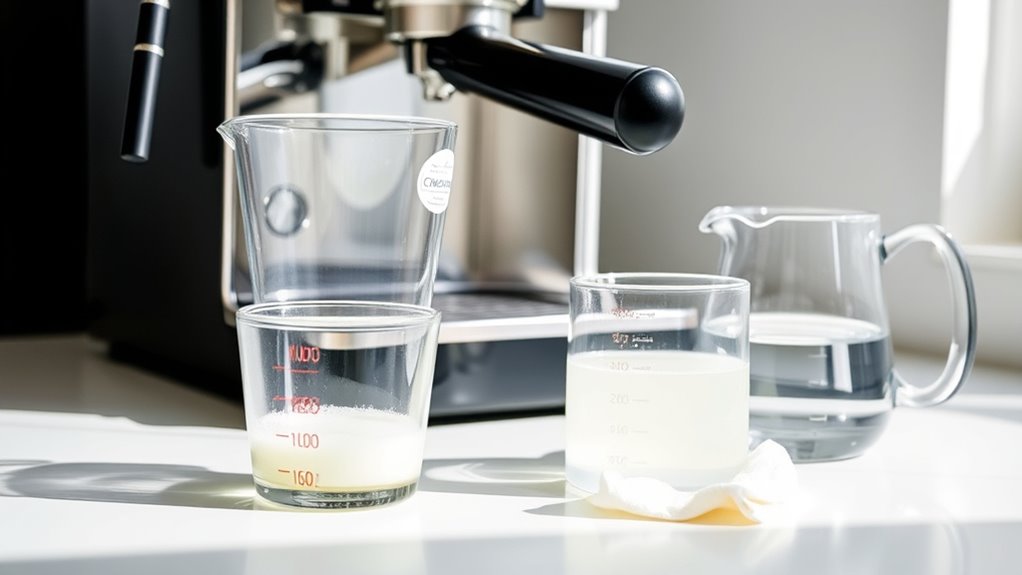
Before you begin descaling your Chefman espresso machine, gather the necessary supplies to guarantee an efficient process. You’ll need a descaling solution or a mixture of white vinegar and water to remove mineral buildup effectively. Have a clean, damp cloth ready for wiping down the machine after descaling.
Prepare a container or cup large enough to catch the water and descaling solution discharged during the process. Make certain you can access the machine’s water reservoir to fill it with the descaling solution.
For safety, always turn off and unplug the espresso machine before starting. Collecting these items beforehand streamlines the procedure and minimizes interruptions, allowing you to maintain your machine’s performance systematically and safely. Maintaining steady machine pressure during use is essential to ensure consistent extraction and flavor quality after descaling.
How to Prepare the Descaling Solution Safely
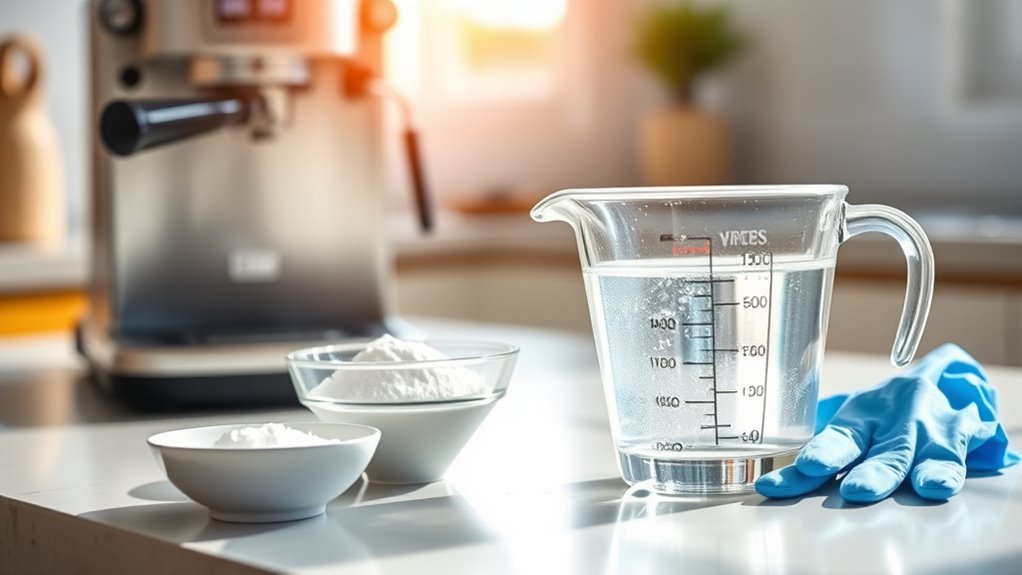
When preparing the descaling solution, mix equal parts of water and white vinegar or follow the instructions on a commercial descaling product precisely.
Use a clean container to avoid contamination that could affect the descaling efficiency. Maintaining the recommended ratio is essential; incorrect dilution risks damaging your espresso machine’s internal components.
Use a clean container and maintain the correct ratio to protect your espresso machine from damage.
If you opt for a concentrated solution, wear gloves to protect your skin from irritation or chemical burns. After mixing, store the solution safely, making sure it’s out of reach of children and pets to prevent accidental ingestion.
Always handle descaling agents carefully and prepare only the amount needed for one cycle to maintain solution effectiveness and safety.
This methodical approach guarantees effective and safe descaling preparation.
Regular descaling is vital for maintaining espresso machine quality and ensuring optimal extraction performance.
How to Run a Descale Cycle on Your Chefman Espresso Machine
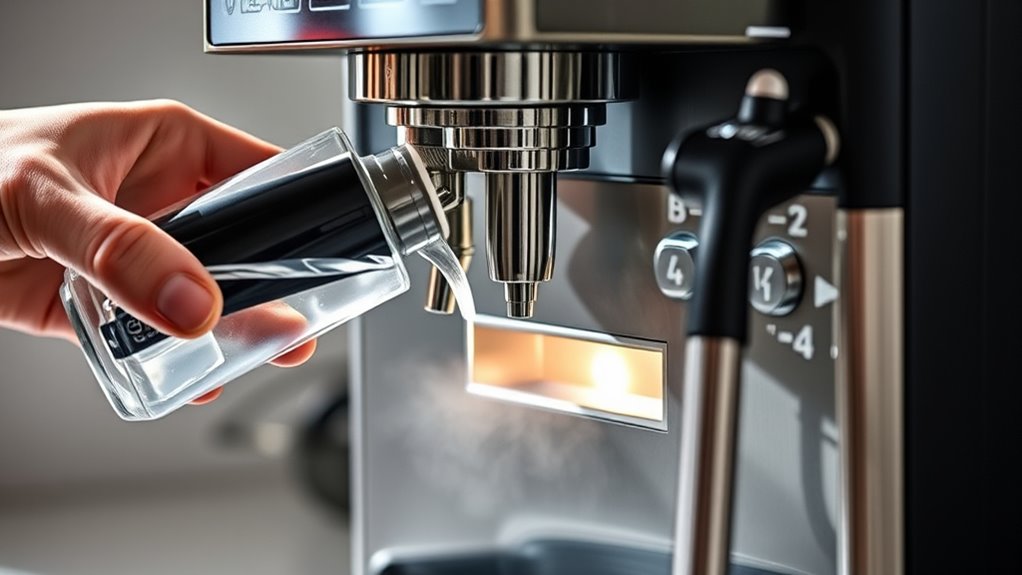
First, go ahead and fill the water reservoir with your prepared descaling solution. Once that’s done, turn on the machine and set it to standby mode.
After that, you’ll want to start the descaling cycle by pressing the specific button or buttons mentioned in your manual.
This whole process helps flush out the internal pipes, making sure all that stubborn scale gets removed effectively.
Preparing Descale Solution
How do you prepare the descaling solution for your Chefman espresso machine? Start by mixing equal parts of white vinegar and water, or you can choose a commercial descaling solution that Chefman specifically recommends.
Pour the prepared solution into the machine’s water reservoir, but be careful not to go past the maximum fill line. This helps ensure the solution flows properly through the internal parts during the descaling cycle.
The solution works by dissolving mineral buildup and scale deposits inside your machine.
Don’t start the descaling cycle until the solution is fully in place. Once the cycle finishes, make sure to flush the system thoroughly by running several clean water rinses.
This step is important because it removes any leftover descaling solution and keeps unwanted flavors from messing with your espresso.
Using approved descaling solutions helps protect your machine’s seals and internal components during the cleaning process.
Taking these steps will help you descale your machine effectively and safely every time.
Initiating Descale Cycle
Why is initiating the descaling cycle crucial for maintaining your Chefman espresso machine? It guarantees thorough removal of mineral buildup inside the machine, preserving peak performance and extending its lifespan.
To start, make sure the machine is powered on and filled with the descaling solution you prepared earlier. Place a container beneath the coffee spout to catch the expelled liquid.
Next, press and hold the descaling button until the indicator light flashes, signaling that the machine is ready. Then, activate the descaling process using the button or button combination specified in your user manual.
The machine will automatically run the cycle, flushing internal components with the solution. Once it’s complete, the machine will stop on its own.
Following these simple steps ensures effective descaling and keeps your espresso tasting great every time.
How to Rinse Your Chefman Espresso Machine After Descaling
Although descaling effectively removes mineral buildup, you’ll need to thoroughly rinse your Chefman espresso machine to eliminate any remaining descaling solution. Start by rinsing the water reservoir thoroughly with clean water to clear residual solution.
Thoroughly rinse your Chefman espresso machine after descaling to remove any leftover solution.
Next, fill the reservoir with fresh, clean water and run a rinse cycle without coffee. This flushes out any descaling agents from the internal components. You might want to repeat the rinse cycle a few times to make sure everything is completely gone.
After rinsing, wipe down the machine’s exterior and drip tray to remove any water splashes or leftover residue.
Following these steps carefully will ensure your espresso machine is free of descaling chemicals and ready for safe, peak operation. It is important to run several cycles of clean water through the machine to prevent chemical residue and ensure no vinegar taste remains.
How to Troubleshoot Common Descaling Issues
Once you’ve finished rinsing your Chefman espresso machine, you might still notice issues like slow water flow or clogs caused by leftover mineral buildup. Don’t worry, this happens sometimes. To troubleshoot, first double-check the descaling solution concentration and make sure you followed the manufacturer’s steps exactly.
Also, take a look at the water filter for any debris and clean it regularly to keep things running smoothly. Always remember to power off and unplug the machine before descaling to avoid any malfunctions. Try not to rush the process because incomplete descaling can leave blockages behind.
| Issue | Solution |
|---|---|
| Slow water flow | Check filter; increase descaling time |
| Persistent clogs | Use correct solution; repeat descaling |
| Machine not powering off | Unplug before cleaning |
| Incomplete scale removal | Follow manufacturer’s procedure precisely |
Why You Should Descale Your Chefman Espresso Machine Regularly
You should descale your Chefman espresso machine regularly to keep mineral buildup from messing with its performance and flavor. When you do it consistently, it helps maintain the perfect water flow and pressure, which means better extraction every time.
Plus, descaling extends your machine’s life by preventing internal damage caused by those stubborn scale deposits. So, it’s really worth making descaling a regular habit! Regular monitoring of water flow and espresso quality helps determine when descaling is necessary.
Prevent Mineral Buildup
Regularly descaling your Chefman espresso machine every 2-3 months prevents mineral buildup that clogs internal components and degrades performance. Hard water deposits cause blockages, which can lead to off-flavors and inefficient brewing.
To prevent this, start by removing mineral deposits that restrict water flow and pressure. This helps keep everything running smoothly.
You’ll also want to avoid corrosion and damage to heating elements and valves. When these parts stay in good shape, your machine lasts longer.
Plus, regular descaling reduces the risk of costly malfunctions and energy waste. It’s a simple step that saves you time and money down the road.
Following the manufacturer’s recommended descaling process helps maintain the optimal temperature and pressure for ideal espresso extraction.
Maintain Optimal Performance
Although mineral buildup may develop gradually, descaling your Chefman espresso machine on a consistent schedule keeps internal components free from clogs and maintains ideal temperature and pressure for brewing.
Regular descaling prevents scale accumulation that disrupts water flow and heat transfer, ensuring consistent extraction and flavor quality.
By removing deposits, you help the machine sustain optimal thermal stability and hydraulic pressure essential for espresso consistency.
Plus, routine descaling reduces the risk of malfunctions caused by mineral interference, which means fewer costly repairs down the line.
Maintaining this schedule also promotes energy efficiency by enabling the machine to operate without strain, preserving the integrity of each shot.
Ultimately, consistent descaling is key to maintaining peak performance and delivering the best-tasting espresso every time you brew.
For best results, it is important to follow manufacturer guidelines to prevent mineral buildup and ensure proper maintenance.
Extend Machine Lifespan
When mineral deposits build up inside your Chefman espresso machine, they cause extra wear on internal parts and make the system work less efficiently. Regular descaling stops this build-up, helping keep your machine’s inside clean and running smoothly.
By descaling regularly, you’ll reduce strain on heating elements and pumps. This helps maintain the right temperature and pressure, which can prevent parts from wearing out too soon.
You’ll also use less energy because the machine won’t have to work harder to heat water through mineral layers. Plus, keeping the brewing components clean preserves the quality of your espresso and cuts down on mechanical wear.
Sticking to the recommended descaling schedule extends your machine’s lifespan. This means more consistent performance and fewer costly repairs or replacement parts.
Taking care of your machine like this is key to making sure it stays reliable and efficient for the long haul. Using water hardness test strips can help you determine the ideal descaling frequency for your machine based on your local water quality.
How Often to Descale Your Chefman Espresso Machine for Best Results
Because mineral buildup can quickly degrade your Chefman espresso machine’s performance, you should descale it every 2 to 3 months under normal conditions. If you notice reduced water flow or unusual noises, increase the frequency accordingly.
In areas with hard water, descaling every 4 to 6 weeks is advisable due to higher mineral content. Regular descaling prevents scale accumulation that compromises espresso taste and can damage internal components.
Adhering strictly to the manufacturer’s recommended intervals guarantees consistent machine functionality and extends its lifespan. Keep an eye on your machine’s operation to catch when descaling is needed beyond the usual schedule.
This proactive maintenance approach keeps your espresso machine running smoothly, preserving both performance and beverage quality over time. Proper maintenance is crucial to ensure the optimal extraction of espresso, which relies on precise pressure and temperature control.
Frequently Asked Questions
Can I Use Lemon Juice Instead of Vinegar for Descaling?
Yes, you can use lemon juice instead of vinegar for descaling. Use pure, unsweetened juice and rinse thoroughly afterward.
It’s less effective on heavy scale because it has lower acidity, but it does leave a fresher scent. So, if you’re after a natural option with a nice smell, lemon juice works well. Just keep in mind it might take a bit longer or more applications for tough buildup.
Is Descaling Safe for All Chefman Espresso Machine Models?
Just like tuning a classic engine, descaling is safe for most Chefman espresso machines if you use recommended solutions and follow instructions carefully.
Be sure to check your model’s manual to avoid damage. This way, you can guarantee peak performance and longevity.
It’s all about taking good care of your machine so it keeps working great for a long time.
What Happens if I Skip Descaling for a Long Time?
If you skip descaling, mineral buildup clogs your machine and reduces water flow. This can weaken your espresso extraction and damage the heating elements.
Over time, these issues shorten your machine’s lifespan. You’ll likely notice a bitter taste in your coffee, which is never fun.
Plus, ignoring descaling can lead to costly repairs or even needing to replace your machine altogether. So, it’s definitely worth keeping up with regular maintenance!
Can I Descale My Machine With Bottled Water?
You can descale with bottled water only if it’s mineral-free or distilled. Otherwise, use a descaling solution or vinegar mixture for effective cleaning.
Always follow the manufacturer’s guidelines to protect your Chefman espresso machine. It’s best to be cautious so you don’t damage your machine. Just keep it simple and stick to what’s recommended!
How Do I Store My Machine Between Uses to Prevent Scaling?
You should store your machine in a cool, dry place, as 60% humidity accelerates scaling. Dry it thoroughly, use descaling solution periodically, and cover it with a breathable cloth to prevent moisture and dust buildup effectively.
Keeping things dry really helps. Just make sure the cloth lets air through so moisture doesn’t get trapped. This way, your machine stays clean and ready for next time.
Conclusion
Regular descaling keeps your Chefman espresso machine running efficiently. It prevents up to 30% loss in brewing performance caused by mineral buildup.
By following these clear, step-by-step instructions, you guarantee ideal water flow and flavor extraction. Remember to descale every 1-3 months, depending on water hardness. This helps maintain machine longevity and coffee quality.
Staying consistent with this simple maintenance prevents costly repairs. Plus, it guarantees every cup tastes just right.