To make a perfect espresso, start by cleaning and preheating your equipment, including the portafilter and cups. Grind 16-19 grams of coffee to a fine, consistent texture, then evenly distribute and tamp it firmly.
Secure the portafilter tightly and start extraction right away. Watch for a smooth, honey-like flow that lasts about 25 seconds.
Serve immediately in warm cups to keep the aroma and crema intact. Master these steps now, and you’ll uncover even deeper espresso-making secrets.
Clean and Preheat Your Espresso Equipment
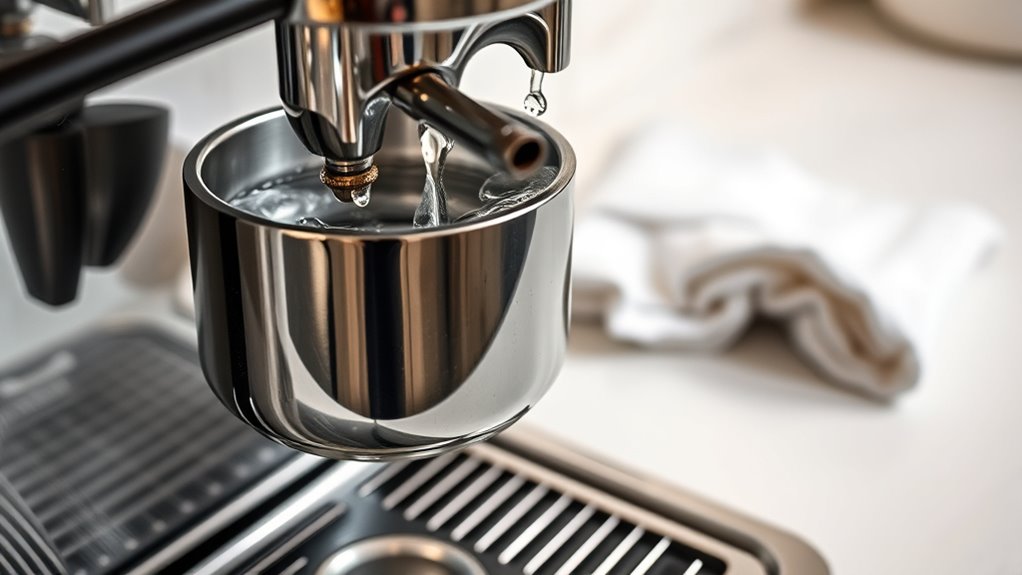
Before pulling your first shot, make sure you thoroughly clean and preheat your espresso equipment to guarantee perfect flavor extraction. Start by rinsing the portafilter, basket, and group head with hot water to eliminate residual coffee oils and debris that can taint flavor.
Thoroughly clean and preheat your espresso gear to ensure flawless flavor in every shot.
Preheat your cups and portafilter by rinsing them with hot water. This helps maintain the ideal brewing temperature throughout extraction. Run a blank shot without coffee through the machine to warm internal components and stabilize temperature.
Use a thermometer to confirm the group head reaches about 200°F (93°C), which is the perfect brewing temperature. Don’t forget to regularly clean the dispersion screen and shower head. Buildup here disrupts water flow and compromises shot consistency.
These steps ensure you extract every nuanced note from your espresso with precision and passion. Taking a little extra time here really makes a difference in flavor. Maintaining the ideal pressure and temperature during brewing is essential for achieving optimal espresso extraction.
Grind and Dose Coffee Precisely for Consistent Shots
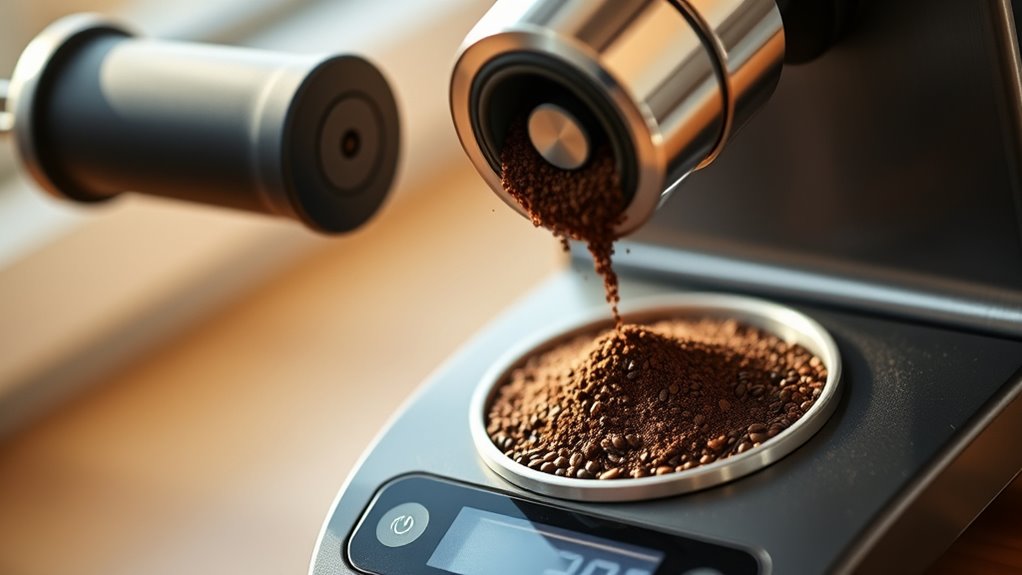
Although dialing in your espresso grind can be challenging, using a burr grinder to achieve a consistent, fine grind size, about the texture of table salt, is essential for extracting every nuanced flavor.
Next, weighing 16 to 19 grams of coffee precisely with a scale ensures each shot starts with the right dose. You want to fill the portafilter completely, avoiding spillage that could lead to uneven extraction.
Distribute the grounds evenly by tapping or using a distribution tool to eliminate air pockets before tamping.
Pay attention to your shot’s flow. If it’s too fast or slow, adjust your grind size accordingly.
Aim for a 25 to 30-second extraction to release balanced, rich espresso flavors every time.
Maintaining a consistent extraction time is crucial for reproducible flavor and crema quality.
Level and Tamp Espresso Grounds Evenly
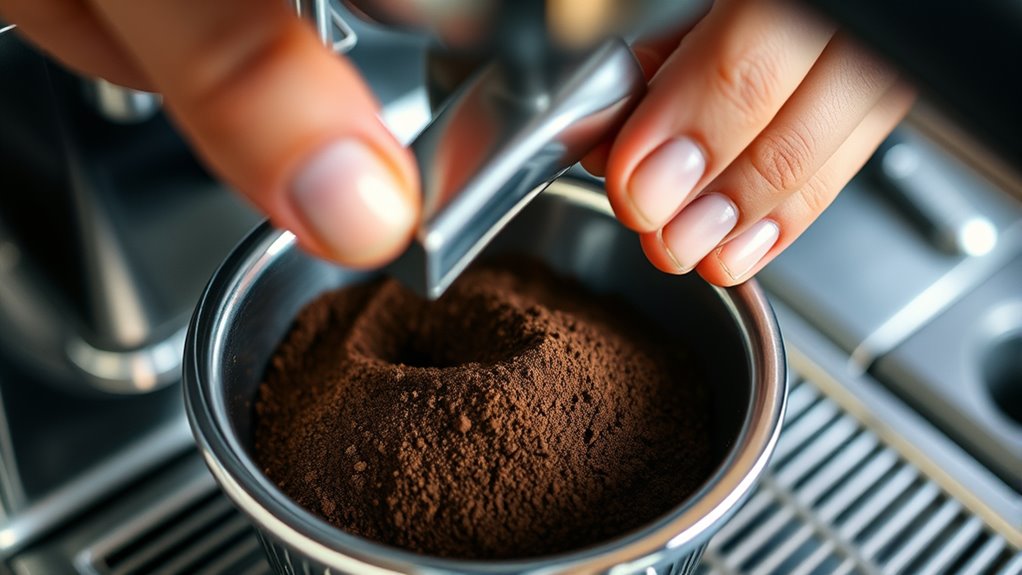
Once you’ve dosed your coffee, leveling the grounds evenly is vital to prevent channeling and guarantee a uniform extraction. Use a distribution tool or tap the portafilter gently to create an even coffee bed. Quickly smooth the surface with your finger or a small tool.
Then, apply firm, consistent pressure with a tamper, keeping it perfectly level to compress the grounds evenly. A smooth, flat tamped surface without ridges ensures water flows uniformly. Developing consistent tamping pressure using a calibrated tamper can greatly improve espresso quality.
| Step | Action | Purpose |
|---|---|---|
| 1. Distribute | Use tool or tap gently | Level grounds evenly |
| 2. Smooth | Finger or small tool | Create flat surface |
| 3. Tamp | Firm, consistent pressure | Compress grounds uniformly |
| 4. Inspect | Check for smoothness, flatness | Prevent uneven extraction |
Lock the Portafilter Carefully and Start Extraction
You’ll want to lock the portafilter gently but firmly, making sure the tamped coffee bed stays perfectly intact. Just align it straight and secure it fully so you don’t get any leaks or pressure loss.
Once it’s locked in place, go ahead and start the extraction right away to capture the espresso’s full flavor potential. Maintaining consistent tamp pressure helps promote even extraction and optimal flavor.
Secure Portafilter Gently
When locking the portafilter into the group head, make sure it sits firmly and evenly to prevent leaks or uneven pressure during extraction. Turn the handle gently until it clicks into place, avoiding excessive force that might disturb your tamped coffee bed. You want a tight seal. That’s essential for maintaining the high pressure needed to pull a perfect shot.
After locking, give the portafilter a slight twist to confirm it’s secure. It shouldn’t wobble or loosen easily. This careful, deliberate action ensures that water flows evenly through the coffee grounds, extracting rich flavor without any unwanted drips.
Always double-check that the handle is fully engaged before you start the shot. This helps guarantee the best espresso flow and a flawless espresso experience. Consistent tamping pressure of 20 to 30 pounds helps create an even coffee bed, which is crucial for preventing channeling and ensuring balanced extraction.
Maintain Tamp Bed Integrity
Although locking the portafilter may seem straightforward, doing so with care is vital to preserving the tamp bed’s level and compactness. You need to gently insert the portafilter into the espresso machine’s group head, avoiding any sudden movements that might disturb the coffee puck.
Twist it firmly and evenly until it’s fully seated and locked in place. This prevents leaks and guarantees even pressure during extraction. Handle the portafilter with precision to maintain the smooth, level surface of the tamped coffee bed, which is essential for balanced water flow.
Before you begin extraction, double-check that the bed remains undisturbed. Proper brewing involves precise grind size, tamping, and extraction time (around 25 seconds) to ensure optimal flavor and caffeine content.
Initiate Extraction Immediately
How quickly should you start extraction after locking the portafilter? You want to begin immediately, within seconds, to preserve the coffee’s freshness, aroma, and CO2.
Carefully insert the portafilter into the group head, making sure it’s securely locked with a firm, even turn. This tight seal is crucial to maintain the necessary 9 bars of pressure for proper extraction.
Don’t rush or disturb the tamped coffee bed. A stable bed ensures even extraction.
Before activating the pump, double-check that the portafilter is fully engaged to prevent leaks or uneven flow.
Starting the shot right away stops coffee oils and grounds from cooling or drying out. It unlocks the espresso’s full flavor potential.
Immediate extraction is key to a perfect cup every time.
Maintaining proper pressure and tamping at this stage helps prevent channeling and ensures a balanced extraction.
Observe Espresso Flow and Color for Quality Indicators
Because the flow and color of espresso reveal crucial details about its extraction, you should watch closely as the shot pours. A quality espresso flows like warm honey in a steady, thin stream lasting about 25 seconds.
Notice the color shift, from a deep, dark core to a golden-brown crema on top. This signals ideal extraction.
Pay attention to the stream’s behavior. Smooth flow means even distribution, while excessive twirling hints at channeling.
Blonding, a light, almost white color, warns you the shot is over-extracted or ending.
The crema’s thickness, caramel hue, and persistence confirm your espresso’s excellence.
A well-formed, persistent crema layer lasting at least 30 seconds is a strong indicator of proper extraction.
Serve Espresso Immediately to Preserve Freshness
You’ve just pulled a perfect shot, so don’t wait—serve your espresso immediately to keep its flavor sharp and temperature just right. Every second counts because the crema and aroma start fading quickly once it’s extracted.
Try pouring it into a pre-warmed cup and acting fast. That way, you preserve the espresso’s delicate balance and deliver the best experience with every sip. Proper serving also highlights the golden crema, which is a signature characteristic of well-made espresso.
Timing Affects Flavor
Although the espresso shot may look complete the moment it finishes brewing, its flavor and aroma start fading within seconds. So, you need to serve it immediately to capture its full essence. Timing is essential to preserving the espresso’s delicate flavors and rich crema.
Waiting too long diminishes freshness, causing a flat taste and less vibrant aroma. To enjoy espresso at its peak, serve within 30 seconds of extraction to maintain ideal flavor.
Also, prevent flavor loss by avoiding delays after brewing. Make sure to capture the crema’s full quality before it dissipates.
Enjoy the espresso while it’s at its hottest and most aromatic. And remember, avoid bitterness from over-extraction as the shot cools and oxidizes.
Adding symbolic touches like the three coffee beans can enhance both aroma and cultural enjoyment of the espresso experience.
Maintain Optimal Temperature
When you serve espresso immediately after brewing, you lock in its ideal temperature and vibrant flavors. The perfect serving temperature, between 160°F and 170°F (71°C to 77°C), ensures the espresso’s rich aroma and crema remain intact.
To maintain this, always pour your shot into a preheated cup, preferably warm porcelain, to prevent rapid cooling.
As soon as espresso hits a cold cup, it starts losing heat, dulling its taste and compromising the delicate balance of oils and acids. Drinking your espresso within one minute of extraction preserves its freshness and complexity.
By prioritizing immediate serving and proper cup warming, you honor the craft of espresso-making and savor every nuanced note in your cup.
Don’t let temperature slip away. It’s pivotal to an unforgettable espresso experience.
Frequently Asked Questions
What Type of Coffee Beans Are Best for Espresso?
You should choose freshly roasted Arabica beans labeled for espresso, ideally dark roast. A blend including Robusta adds boldness and crema. Always grind finely and consistently to reveal the rich, intense espresso flavors you crave.
It’s all about getting that perfect balance. Freshness matters a lot, so try to use beans roasted recently. And remember, the grind size can make or break your shot.
How Often Should Espresso Machine Maintenance Be Performed?
You should clean your espresso machine daily. This keeps it running smoothly and your coffee tasting great.
If you have hard water, descale it weekly to prevent buildup. Deep clean your machine once a month to get rid of any stubborn residue.
Don’t forget to replace the water filters every 2-3 months. And it’s a good idea to get professional servicing annually to keep everything in top shape. Easy, right?
Can I Use Pre-Ground Coffee for Espresso?
You can use pre-ground coffee for espresso, but it’s like trying to catch lightning in a bottle. You’ll need ultra-fine grounds, airtight storage, and precise machine adjustments to avoid weak or bitter shots.
It’s not impossible, but it takes some effort to get it right. So, if you’re up for the challenge, go for it! Just keep in mind that fresh grinding usually gives better results.
What Water Temperature Is Ideal for Extraction?
You want your water temperature between 195°F and 205°F for ideal espresso extraction. Staying in this range prevents bitterness or sourness, ensuring balanced flavor and rich crema.
Don’t let it fluctuate too much! Keeping it steady makes all the difference in a great shot.
How Do I Adjust Grind Size for Different Espresso Machines?
Think of grind size as a dance partner adapting to your machine’s rhythm. Finer for high-pressure, quicker moves. Coarser when temperature wavers.
Adjust incrementally. Measure doses, and fine-tune until your espresso sings perfectly. Keep it simple and enjoy the process!
Conclusion
Making a perfect espresso might seem tricky at first, but once you get the hang of cleaning, grinding, tamping, and extracting, it becomes second nature. You might think it takes too much time, but with practice, it only takes a few minutes. The rich, bold flavor is worth every second.
Trust the process and pay attention to details. You’ll consistently enjoy a café-quality espresso right at home. Keep experimenting and savor every shot!