You can tell a good espresso shot by its dense, velvety crema with rich hazelnut and reddish hues that glisten on top, lasting at least 30 seconds. Look for a uniform 1-2mm thick layer that’s glossy and covers the cup’s surface without large bubbles.
The crema’s color and persistence reveal freshness and proper extraction. Serving it in a pre-warmed cup helps preserve aroma and flavor.
These visual clues help you assess quality and roast balance. Take a closer look and you’ll get a better feel for what makes a great shot.
Key Visual Traits Of A Perfect Espresso Shot
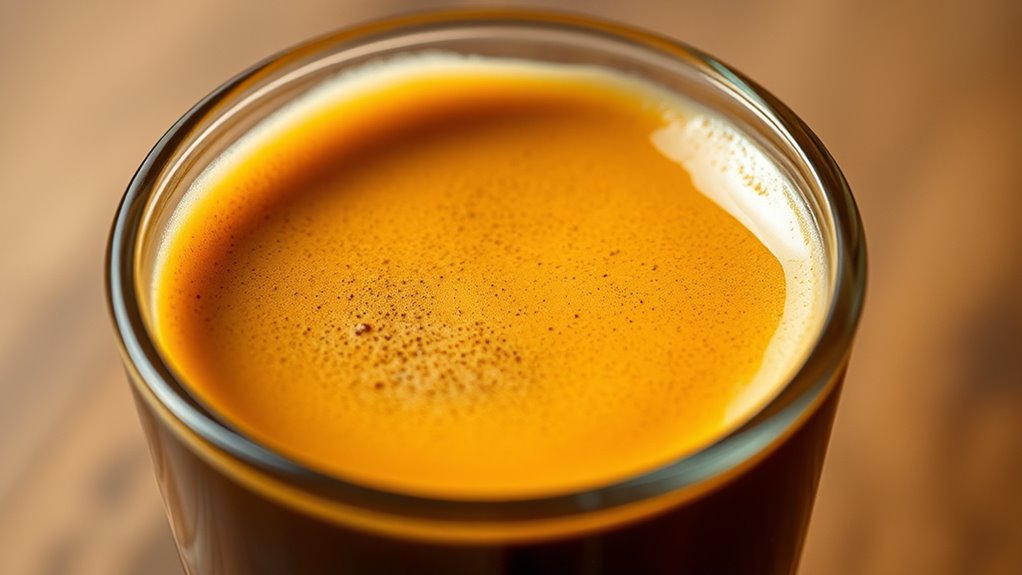
When you pull a perfect espresso shot, you’ll notice a dense, dark crema striped with hazelnut tones and subtle reddish nuances. This crema should be firm and velvety, covering the entire surface of the espresso with a uniform, well-defined layer.
Its rich, reddish-brown color signals proper extraction and ideal quality.
The crema must have a full, glossy appearance, free from bubbles or thin, watery patches. A good shot’s crema remains persistent, intact for at least 30 seconds, indicating stable emulsification of coffee oils.
These visual cues—density, color, texture, and persistence—serve as precise indicators that your espresso extraction was executed correctly.
This ensures a balanced and flavorful shot every time.
Additionally, maintaining the right brew temperature and pressure is crucial to achieving this optimal crema quality and stability.
How Crema Color And Texture Reveal Freshness
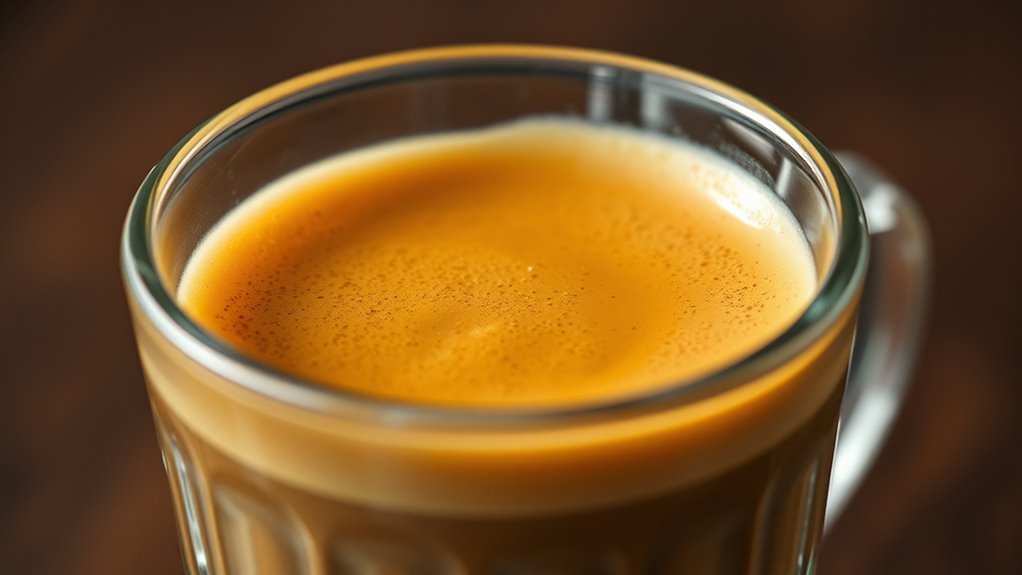
You can tell if an espresso is fresh by taking a good look at the crema’s color and texture. When you see a rich, hazelnut-brown color with a few reddish highlights, that usually means the beans were roasted recently.
Plus, if the crema feels velvety and dense with tiny bubbles, that’s a sign the extraction was just right.
On the other hand, if the crema looks thin, pale, or overly bubbly, it often means the coffee is stale or the extraction didn’t go as well.
Additionally, factors like brew temperature and grind size significantly influence the crema’s quality and overall espresso flavor.
Crema Color Indicators
Although crema might seem like just a thin layer on top of your espresso, its color and texture provide critical clues about the shot’s freshness and extraction quality. Understanding crema color helps you assess your espresso’s condition quickly.
Look for a dense, dark striped crema with hazelnut and reddish nuances. This usually means your shot is fresh and properly extracted.
Bright white or very pale crema usually signals under-extraction or stale coffee beans.
On the other hand, a very dark, almost black crema often means the shot is over-extracted, which can affect the flavor negatively.
Reddish or coppery tones in the crema suggest the coffee beans are well-roasted and fresh. This reflects quality in your shot.
Use these color indicators to consistently evaluate and improve your espresso brewing. It’s a simple way to make sure every cup tastes just right.
Maintaining approximately 9 bars pressure during extraction is essential to develop the perfect crema and optimal flavor.
Texture And Consistency
Since crema texture and consistency directly reflect extraction quality and bean freshness, they offer essential insights into your espresso’s condition. You should expect a dense, velvety crema with a rich hazelnut color and subtle reddish hues, signaling proper extraction.
The crema must be thick and persistent, lasting at least 30 seconds without dissipating quickly. This durability shows ideal freshness and shot quality.
Take a close look at the bubble structure: fine, uniform bubbles confirm balanced extraction. On the other hand, large or uneven bubbles suggest grind or tamping issues.
The texture should feel smooth and creamy, not watery or frothy. That smoothness demonstrates a well-controlled brewing process and fresh coffee.
Conversely, a pale, thin crema often points to under-extraction or stale beans, which can impair flavor and aroma.
Freshness Signs In Crema
When you examine the crema, its color and texture provide clear indicators of freshness and extraction quality. You want to look for these key characteristics:
- A dense, uniform, velvety layer with a rich hazelnut color and reddish highlights signals freshness.
- Fine, persistent bubbles that remain stable for several minutes indicate proper extraction and high-quality coffee oils.
- Bright golden or caramel hues suggest the espresso is freshly brewed under *ideal* conditions.
Thin, watery, or overly frothy crema often reveals stale coffee beans or extraction errors, compromising freshness.
Additionally, reddish-brown streaks within the crema confirm well-preserved coffee oils, further emphasizing the espresso’s freshness. Monitoring these visual cues helps you assess the shot’s quality at a glance.
For the best results, use freshly ground beans and focus on the coffee dose and extraction time to achieve a perfect crema.
How Crema Thickness And Persistence Affect Quality
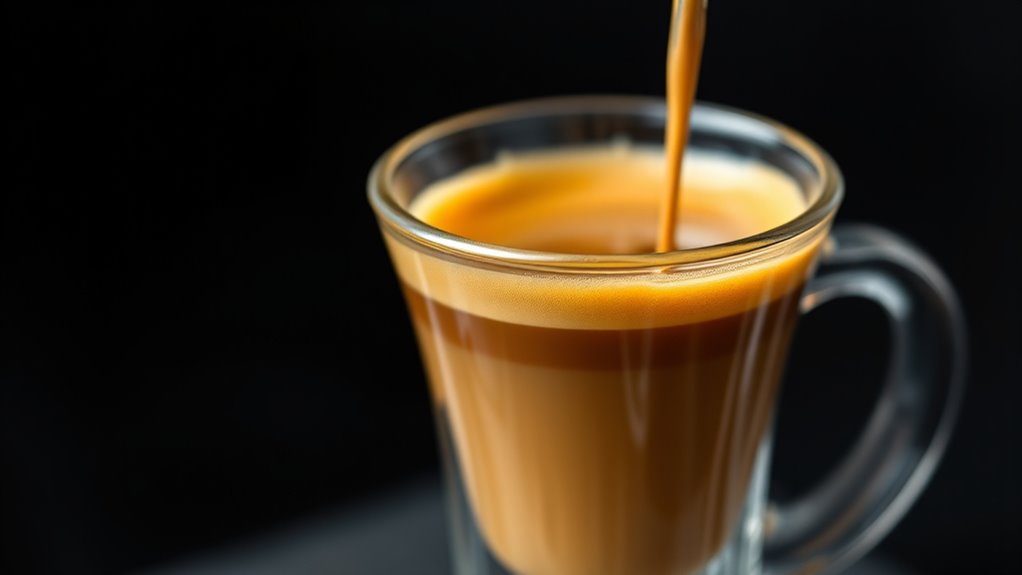
If you want to evaluate espresso quality accurately, you need to examine the crema’s thickness and persistence. A good shot features a thick, dense crema at least 1-2mm high. This thickness signals proper pressure, grind size, and fresh coffee.
Equally important is crema persistence; it should last at least 1-2 minutes, indicating high-quality extraction and fresh beans. Thin or broken crema usually points to under-extraction or stale coffee, which diminishes quality.
However, if crema is excessively thick or unusually persistent, it may suggest over-extraction or excessive brewing pressure, potentially introducing bitterness.
Additionally, the grind size and extraction parameters not only affect crema but also subtly influence the calorie content and nutrient extraction in espresso.
What You Can Tell About Espresso Body At A Glance
You can get a good sense of an espresso’s body just by looking at the crema. If the crema is thick and velvety, with a nice hazelnut color and a few subtle reddish or golden tones, that usually means you’re dealing with a rich, full-bodied shot. This kind of crema often hints at a satisfying mouthfeel and a well-balanced flavor profile. The quality of the crema can also be influenced by factors like extraction consistency, which plays a crucial role in achieving the optimal texture and flavor.
Visual Indicators Of Body
Although espresso’s aroma and taste are essential, its body can be assessed visually through the crema’s appearance. You can quickly gauge the espresso’s body by observing these key visual indicators:
- Crema Color: Look for a dense, caramel-colored crema with reddish or hazelnut hues evenly covering the surface.
- Crema Thickness: The crema should be thick and persistent, lasting at least 30 seconds before it starts to fade.
- Crema Consistency: A golden-brown, dense layer without large bubbles or irregularities signals proper extraction.
- Cup Appearance: The espresso should appear rich and velvety, with a smooth, cohesive surface indicating a full-bodied shot.
Keep an eye on these details next time you pull a shot. It’s a simple way to tell if your espresso has that perfect body without needing to taste it right away. Proper extraction time plays a crucial role in developing a balanced crema and full-bodied espresso.
Texture And Crema Quality
When examining an espresso shot at a glance, the texture and quality of the crema reveal important details about its body and extraction. You want to see a dense, velvety crema with a rich hazelnut color and subtle reddish highlights.
The crema should stay on the surface for at least 30 seconds. This shows that the emulsion is stable and the extraction was done right.
Its texture needs to be fine and consistent. Avoid bubbly or coarse appearances because they usually mean the emulsification was poor.
A well-structured crema will be thick and cohesive. It often coats the sides of the cup, which signals a full-bodied, smooth espresso.
This visual cue confirms a balanced brew with just the right mix of oil and air, giving you a flavorful and satisfying shot every time.
True espresso’s signature 9 bars pressure is what creates this unique crema and velvety texture, distinguishing it from other brewing methods.
How To Spot Visual Signs Of Under-Extraction
If an espresso shot shows a pale, thin crema with persistent bubbles and a lack of density, it often signals under-extraction. You’ll notice the crema’s color is lighter, leaning toward yellowish or pale instead of rich hazelnut tones. The crema may seem watery or frothy due to poor emulsification of oils and gases.
Additionally, the shot might display irregular cup filling and contain visible bubbles or sediments.
To spot visual signs of under-extraction, watch for:
- Pale, thin crema lacking richness and density
- Persistent bubbles within the crema that don’t dissipate
- Watery or frothy crema texture indicating weak emulsification
- Uneven cup filling with visible sediments or bubbles
These indicators help you diagnose under-extracted espresso quickly and accurately. Just keep an eye out for these little details—they can make a big difference in your shot quality! For the best flavor, always use freshly brewed espresso with a rich crema layer to balance the bitterness and enhance smoothness.
How To Identify Over-Extraction Visually
Because over-extraction pulls too many compounds from the coffee grounds, you’ll notice distinct visual cues that signal this imbalance. The crema turns dark, almost black, sometimes with whitish bubbles on top. It may look thick yet oily or greasy.
The espresso liquid often appears dull, burnt, or reddish-brown, reflecting excessive extraction. Below is a precise visual guide to help you identify over-extraction:
| Visual Aspect | Description | Implication |
|---|---|---|
| Crema Color | Dark black with whitish bubbles | Excessive extraction |
| Crema Texture | Thick, oily or greasy | Over-extracted oils |
| Liquid Color | Dull, burnt, reddish-brown | Over-roasted or burnt notes |
| Aroma | Bitter, harsh | Excessive bitter compounds |
| Taste Indicator | Overly bitter, astringent | Hollow, lacking vibrancy |
Look for these signs to diagnose over-extraction accurately. It’s a handy way to make sure your espresso doesn’t end up tasting off. Keep an eye out for these visual clues, and you’ll be able to adjust your brew for a better cup. Adjusting your grind size and brew time are effective strategies to correct over-extraction issues.
How Serving Methods Affect Espresso Perception
How does the way you serve your espresso influence its perception? Serving methods directly impact aroma retention, temperature, and visual appeal. These factors shape the espresso’s sensory profile.
Consider using a pre-heated, truncated-conical cup (~70ml). This helps maintain the ideal temperature and enhances aroma concentration.
Serve the espresso immediately after extraction. This preserves the crema’s dense, dark-striped surface with hazelnut tones, signaling freshness and quality.
Choose a vessel shape that supports aroma diffusion and flavor appreciation. It guides your olfactory and gustatory experience.
Make sure the cup’s temperature complements the espresso’s texture. This prevents rapid cooling, which can dull flavor intensity and mouthfeel.
How Visual Clues Reveal Coffee Quality And Roast
While you examine your espresso shot, visual clues offer immediate insight into coffee quality and roast level. A dense, dark striped crema with hazelnut tones and reddish nuances signals proper extraction and a balanced roast. The crema should be firm, persistent, and evenly distributed, indicating full-bodied coffee.
If the crema appears pale or thin, it often points to under-extraction or a lighter roast, which lacks depth. Conversely, a very dark, uneven crema suggests over-extraction, which can introduce bitterness.
Notice the reddish or golden hues within the crema; these reflect ideal brewing conditions and a well-calibrated roast profile.
Frequently Asked Questions
How Does Water Temperature Influence Espresso Shot Appearance?
You’ll see water temperature impact crema’s color and texture. Too hot creates dark, bitter shades from over-extraction. Too cool yields pale, thin crema.
Keeping a consistent temperature guarantees stable, rich crema with balanced hues and ideal visual quality. It’s all about finding that sweet spot to get the best look and taste.
Can the Type of Coffee Bean Affect Crema Color?
Yes, the coffee bean type directly affects crema color. Robusta beans produce darker, thicker crema, while Arabica yields lighter, golden hues. Bean origin, oil content, and roasting level also influence crema’s shade and texture.
Does Cup Material Change How Espresso Looks?
Absolutely, cup composition changes crema’s clarity and color contrast. Ceramic cups capture crema’s rich hazel hues. Glass grants glowing glimpses of thickness, while metallic materials might mute the visual sharpness, subtly shifting your espresso’s appearance.
It’s pretty interesting how the material of your cup can actually affect what you see in your espresso. So, next time you’re choosing a cup, think about how it might change the look of your coffee too.
How Do Grind Size Variations Impact Espresso Visuals?
You’ll see finer grinds create thicker, darker crema, which means you’re getting a richer extraction. Coarser grinds, on the other hand, produce lighter, thinner crema with uneven color.
Changing the grind size has a direct impact on the crema’s texture and shade. This helps you visually gauge how precise your extraction is. It’s a simple way to tweak your espresso for the best results.
What Role Does Tamping Pressure Play in Espresso Appearance?
You wield tamping pressure like an espresso maestro, sculpting the coffee bed’s density to guarantee flawless extraction. Apply roughly 30 pounds consistently, and you’ll command a rich, stable crema with impeccable color and texture every time.
It’s all about that steady pressure—too light, and the water flows too fast; too hard, and you risk over-extraction. Finding the sweet spot makes your espresso look as good as it tastes. So, next time you tamp, think of it as setting the stage for a perfect shot.
Conclusion
When you pull a perfect espresso shot, picture a rich, amber crema swirling like molten gold. It’s thick and velvety, clinging to the cup’s surface. The body should look dense and syrupy, not watery or thin.
If you see pale, patchy crema or dark, oily streaks, you’re spotting under- or over-extraction. By honing your eye to these precise visual cues, you’ll consistently craft espresso that tastes as vibrant and balanced as it looks.